Kirjojen hintavertailu. Mukana 11 244 527 kirjaa ja 12 kauppaa.

Kirjahaku

Etsi kirjoja tekijän nimen, kirjan nimen tai ISBN:n perusteella.

1000 tulosta hakusanalla Pascal Rodné

Render Safe

Render Safe

Pascal Marco

San Tan Press
2016
nidottu
When a house explodes with a mother and two children inside, Stan Kobe is called to the horrific crime scene. The father, a former Air Force bomb technician, becomes the key suspect, but mysteriously disappears and is never found. Ten years will pass before another triple homicide occurs with similarities only the savvy prosecutor, Kobe, knows are common to his decade-old cold case. Stan begins an entangled journey to flush out a shaky theory both crimes are related. But while doing so he gets more than he bargains for and uncovers what he believes is an imminent plot by domestic terrorists targeted to strike his city's delicate infrastructure. More disturbing, though, is that he discovers he may be a target too.As the countdown to destruction begins, Stan Kobe embarks upon a frantic race to "render safe" the situation and save his beloved city, but maybe, most importantly, those he loves.
Tail Risk Management: Building a Resilient Financial Business in a Volatile World
(This is the Black & White version of the book.)Ever since the collapse of the Bretton Woods system and the deregulation of markets in the 1970-1980s, financial markets have exploded in terms of size, volatility, complexity, and interconnectedness (through globalization and technology). Concomitantly, the frequency and severity of banking crises have equally increased over the last decades.Additionally, the banking regulations of the last decades have focussed a lot on quantitative risk models and probability theories claiming that uncertainty could be measured. However, the severity of the previous banking crisis (2007-2008) proves that disruptions are hard to quantify, and these quantitative risk tools were inadequate in achieving a better resilience of the banks.In other words, large and well-respected financial institutions have experienced failure in the face of tail risks, revealing the inadequate protection provided by current practice. More than just capital management, tail risk management takes a qualitative approach that involves business strategy.As such, although quantitative methods are used most often in risk assessment, their usefulness wanes in the realm of tail risk management. To effectively mitigate extreme risks and preserve a firm's survivability, the focus must be on building a resilient business model. Therefore, this book studies the possibility to enhance the existing risk management framework pertaining to business resilience within the banking industry. Indeed, the dynamic, complex nature of the banking environment necessitates ongoing vigilance to anticipate vulnerabilities, as well as organizational flexibility and agility when disruptions occur.The objective of this book is to borrow risk management concepts from corporate industries that equally operate in extreme environments and transpose them to the banking industry, and see whether they could make the business models of banks more resilient.In Tail Risk Management, author Pascal M. vander Straeten, a twenty-five-year financial services veteran and founder of consulting firm Value4Risk, pulls best practices from across industries to provide a new risk management framework. These principles will guide a business toward necessary changes in modern management practices, regulations, and cultures that can be applied on an enterprise-wide basis, addressing extreme risks at any stage in their development.In the face of a systemic crisis, a resilient business model will provide strong lines of defense against failure. Resilience nowadays is a crucial concern as, notwithstanding the vast array of banking regulations, market participants, as well as other stakeholders, remain wary about the stability of banking organizations. Unquantifiable uncertainties will always exist, and traditional risk management approaches are not adequate. Using this extensive guide, learn what needs to change and why-and how to implement a potentially business-saving strategy.
Tail Risk Management: Building a Resilient Financial Business in a Volatile World
This the COLORED version of the book. Although quantitative methods are used most often in risk assessment, their usefulness wanes in the realm of tail risk management. To effectively mitigate extreme risks and preserve a firm's survivability, the focus must be on building a resilient business model.Over the last ten years, large and well-respected financial institutions have experienced failure in the face of tail risks, revealing the inadequate protection provided by current practice. More than just capital management, tail risk management takes a qualitative approach that involves business strategy.In Tail Risk Management, author Pascal M. vander Straeten, a twenty-five-year financial services veteran and founder of consulting firm Value4Risk, pulls best practices from across industries to provide a new risk management framework. These principles will guide a business toward necessary changes in modern management practices, regulations, and cultures that can be applied on an enterprise-wide basis, addressing extreme risks at any stage in their development.In the face of a systemic crisis, a resilient business model will provide strong lines of defense against failure. Unquantifiable uncertainties will always exist, and traditional risk management approaches are not adequate. Using this extensive guide, learn what needs to change and why-and how to implement a potentially business-saving strategy.

Fatherless

Fatherless

Pascal John Imperato; John Pascal

John Pascal Books
2017
nidottu
Ray thought he would sign up for an easy project at his church: just a couple of visits a week to a hospice patient. He had no idea how God would use His new recruit. Ray found himself trying to save a victim of human trafficking and street kids about to join a Manhattan gang. He considers backing out when he discovers how unhappy organized crime is about losing their source of income. Two goons rough him up, but God still wants him on the job.
Contingency, Time, and Possibility

Contingency, Time, and Possibility

Pascal Massie

Lexington Books
2010
sidottu
If we are to distinguish mere non-being from that which is not, yet may be, from that which was not, yet could have been, or from that which will not be, yet could become, we are committed in some way to grant being to possibilities. The possible is not actual; yet it is not nothing. What then could it be? What ontological status could it possess? In Contingency, Time, and Possibility: An Essay on Aristotle and Duns Scotus, Pascal Massie opens these questions by combining two approaches: First, an original inquiry that analyses the notions of chance, fate, event, contradiction, and so forth, and suggests that the distinction between potency and act arises from a confrontation with the impossible. Second, a historical inquiry that focuses on Aristotle and Duns Scotus, two key figures contributing to a fundamental transformation in the history of Western ontology; namely, the transition from a metaphysics of nature (Aristotle) to a metaphysics of the will (Scotus). In doing so, this book departs from the prevailing interpretation of the history of modal logic according to which Scotus rejected the principle of plenitude attributed to Aristotle and replaced the ancient diachronic theory of possibilities with a synchronic one, thereby contributing to a “possible world’s semantics.” Rather, Massie argues that in its proper ontological import, the question of possibility concerns the limit between being and non-being and that this limit must be thought in terms of temporality. With Scotus, however, a radical shift occurs. Possibilities are understood in terms of will, creation, omnipotence, and transcending freedom. As such, they belong to the realm of what is supremely actual (i.e., superabundant activity). What used to be understood as a lesser degree of being (the quasi non-being of uninformed matter and mere possibilities) becomes the mark of omnipotence.
The Fanaticism of the Apocalypse

The Fanaticism of the Apocalypse

Pascal Bruckner

Polity Press
2013
sidottu
The planet is sick. Human beings are guilty of damaging it. We have to pay. Today, that is the orthodoxy throughout the Western world. Distrust of progress and science, calls for individual and collective self-sacrifice to ‘save the planet’ and cultivation of fear: behind the carbon commissars, a dangerous and counterproductive ecological catastrophism is gaining ground. Modern society’s susceptibility to this kind of thinking derives from what Bruckner calls “the seductive attraction of disaster,” as exemplified by the popular appeal of disaster movies. But ecological catastrophism is harmful in that it draws attention away from other, more solvable problems and injustices in the world in order to focus on something that is portrayed as an Apocalypse. Rather than preaching catastrophe and pessimism, we need to develop a democratic and generous ecology that addresses specific problems in a practical way.
The Fanaticism of the Apocalypse

The Fanaticism of the Apocalypse

Pascal Bruckner

Polity Press
2014
nidottu
The planet is sick. Human beings are guilty of damaging it. We have to pay. Today, that is the orthodoxy throughout the Western world. Distrust of progress and science, calls for individual and collective self-sacrifice to ‘save the planet’ and cultivation of fear: behind the carbon commissars, a dangerous and counterproductive ecological catastrophism is gaining ground. Modern society’s susceptibility to this kind of thinking derives from what Bruckner calls “the seductive attraction of disaster,” as exemplified by the popular appeal of disaster movies. But ecological catastrophism is harmful in that it draws attention away from other, more solvable problems and injustices in the world in order to focus on something that is portrayed as an Apocalypse. Rather than preaching catastrophe and pessimism, we need to develop a democratic and generous ecology that addresses specific problems in a practical way.
Has Marriage for Love Failed?

Has Marriage for Love Failed?

Pascal Bruckner

Polity Press
2013
sidottu
Today we like to think that marriage is a free choice based on love: that we freely choose whom to marry and that we do so, not so much for survival or social advantage, but for love. The invention of marriage for love inverted the old relationship between love and marriage. In the past, marriage was sacred, and love, if it existed at all, was a consequence of marriage; today, love is sacred and marriage is secondary. But now marriage appears to be becoming increasingly superfluous. For the past forty years or so, the number of weddings has been declining, the number of divorces exploding and the number of unmarried individuals and couples growing, while single-parent families are becoming more numerous. Love has triumphed over marriage but now it is destroying it from inside. So has the ideal of marriage for love failed, and has love finally been liberated from the shackles of marriage? In this brilliant and provocative book Pascal Bruckner argues that the old tension between love and marriage has not been resolved in favour of love, it has simply been displaced onto other levels. Even if it seems more straightforward, the contemporary landscape of love is far from euphoric: as in the past, infidelity, loss and betrayal are central to the plots of modern love, and the disenchantment is all the greater because marriages are voluntary and not imposed. But the collapse of the ideal of marriage for love is not necessarily a cause for remorse, because it demonstrates that love retains its subversive power. Love is not a glue to be put in the service of the institution of marriage: it is an explosive that blows up in our faces, dynamite pure and simple.
Cash Return on Capital Invested

Cash Return on Capital Invested

Pascal Costantini

Butterworth-Heinemann Ltd
2006
sidottu
In this book, Pascal Costantini gives a lively and wonderfully readable account of ten years of efforts by a small group of investment analysts to find a reliable, practical and implementable method for valuing and selecting shares. The result of their effort is an original investment methodology called CROCI (Cash Return on Capital Invested), best described as a variation of the economic profit model. For over a decade now, Costantinis group at Deutsche Bank has been using this valuation tool every time it has had to take a view on the pricing of an equity asset, be it a market, a sector or an individual sharein other words, every single working day, since it is this groups job to advise institutional investors on equity valuation. Costantini describes in detail, accompanied by concrete examples in the form of charts and graphs, the precise investment results of the actual implementation of the CROCI approach in the global equity markets since 1996. Readers will enjoy taking this journey with Costantini to see how and why the model was developed, assess the results of ten years of actual implementation and measure the successes of using this model in stock picking and portfolio construction. This book will also make it easy for them to see how the CROCI approach can be used successfully by others now and in the future.The book is divided into four parts. The first part is a review and discussion of the fundamentals of investment analysis. The second part is dedicated to the construction of economic data, with the sole objective of calculating an economically meaningful asset multiple and relative return, the combination of which gives an economic PE ratio, the authors main stock selection tool. While the economic profit model is not exactly new, it is still largely ignored by the investment community. In essence, it does three things: it calculates the real amount of cash, or value created by a business; it compares the market value of an asset to an approximation of its replacement value; and it assumes that the former will converge to the latter through the arbitrage of investors and capital providers. The third part is dedicated to the analysis of economic data, and the last part deals with the actual implementation of the CROCI economic profit model, including real life examples. This final part also discusses how to use the output of the CROCI model with individual stocks, and then with investment portfolios.*Techniques are based on the authors performance record at Deutsche Bank since 1996 *Based on almost ten years of proprietary knowledge and implementation of these techniques*Factual illustrations of the results of the valuation techniques are provided at each step
Risky Work Environments

Risky Work Environments

Pascal Béguin

Ashgate Publishing Limited
2009
sidottu
Risky Work Environments provides new insights into the multiple and dynamic trajectories of both near misses and mistakes in complex work environments, based on actual case examples. It also studies the interactions between various activity systems or work practices (design, maintenance, incident investigation, regulation, operation) and their consequences for operational performance. The role of rules and regulations is explored, considering the consequences of deviations and the limitations of enforced compliance. Further, the book explains how to search for, think about and act on information about vulnerability, near misses and mistakes in a way that emphasizes accountability in ways that are not punitive but instead responsible, innovative and provide opportunities for learning. Writing from different disciplines and theoretical perspectives, the contributors analyse working in risky environments which include air traffic control, offshore mining, chemical plants, neo-natal intensive care units, ship piloting and emergency call dispatch centres. In each chapter the authors present rich empirical data and their analyses illustrate a variety of ways in which, despite imperfect systems, safety and resilience is created in human action. In the chapters where the focus is on error or mistakes, the analysis undertaken reveals the logic of actions undertaken at the time as well as their constraints. The contributors are all active researchers within their disciplines and come from Australia, Finland, France, Norway and the Netherlands. The book will be of direct interest to safety scientists, researchers and scientists, as well as human factors practitioners working in complex technological systems.
Jean Renoir: A Biography

Jean Renoir: A Biography

Pascal Mérigeau; Bruce Benderson; Martin Scorsese

Running Press Adult
2017
pokkari
Originally published in France in 2012, Pascal Mérigeau's definitive biography of legendary film director Jean Renoir is a landmark work,the winner of a Prix Goncourt, France's top literary achievement. Now available in the English language for the first time, Jean Renoir: A Biography , is the definitive study of one of the most fascinating and creative artistic figures of the twentieth century. The French filmmaker made more than forty films from the silent era to the late '60s and today he is revered by filmmakers and seen by many as one of the greatest of all time. Renoir made acclaimed movies in France, America, India, and Italy and became a writer during the last part of his life. An estimated 75 percent of the book details previously unknown information about the filmmaker, including Renoir's close affiliation with Communism in the '30s (when he was the Party's official director) and his work with the fascist regimes during World War II his previously uncredited Hollywood film, The Amazing Mrs. Holiday and new information on the making of his most famous films. Drawing from unpublished or little known sources, this biography is a completely fresh approach to the maker of Grand Illusion and The Rules of the Game , redefining the very function of the movie director and simultaneously recounting the history of a century.
Fundamentals of Electric Aircraft

Fundamentals of Electric Aircraft

Pascal Thalin; Jean-Charles Maré; Sven Taubert; Ravi Rajamani

SAE International
2018
sidottu
Fundamentals of Electric Aircraft was developed to explain what the electric aircraft stands for by offering an objective view of what can be expected from the giant strides in innovative architectures and technologies enabling aircraft electrification.Through tangible case studies, a deep insight is provided into this paradigm shift cutting across various aircraft segments – from General Aviation to Large Aircraft.Addressing design constraints and timelines foreseen to reach acceptable performance and maturity levels, Fundamentals of Electric Aircraft puts forward a general view of the progress made to date and what to expect in the years to come.Drawing from the expertise of four industry veterans, Pascal Thalin (editor/contributor), Ravi Rajamani, Jean-Charles Maré, and Sven Taubert (contributors), it addresses futuristic approaches but does not depart too far from the operational down-to-earth realities of everyday business.Fundamentals of Electric Aircraft also offers analyses on how performance enhancements and fuel burn savings may bring more value for money as long as new electric technologies deliver on their promises.
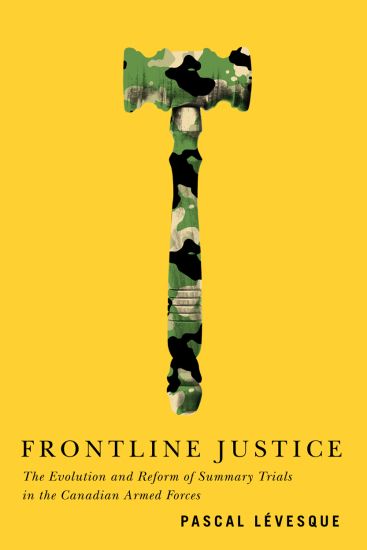
Frontline Justice

Frontline Justice

Pascal Lévesque

McGill-Queen's University Press
2020
sidottu
Compared with its civilian counterpart - which struggles with delays and uncertain results - summary military justice is efficient. From offence until outcome, 90 per cent of cases are dealt with in less than ninety days. The other side of the coin is that there is no right to representation by defence counsel, no transcript produced, and no appeal to a judge. Nine times out of ten, individuals are found guilty. For service members, consequences can include fines, reductions in rank, confinement, and sentences of up to thirty days in military jail, sometimes with a criminal conviction. Addressing important gaps in legal literature, Frontline Justice sets out to examine summary justice in Canada's military and to advocate for reform. Pascal Lévesque describes the origins, purposes, and features of the summary trial system in the Canadian Armed Forces. He then analyzes the system's benefits and flaws and the challenges it faces in maintaining discipline while respecting the Canadian Charter of Rights and Freedoms. Lévesque determines that troubling aspects of the system, including the fact that lower and higher ranks are dealt with and punished differently, are clear indicators of a need for change. Criticizing current legislation, the book takes into account the latest developments in military law and jurisprudence to make concrete recommendations for an alternative model of military justice. A thought-provoking and balanced analysis, Frontline Justice seeks to remedy some of the more unfair and arcane proceedings of the Canadian military's summary trial system.
Frontline Justice

Frontline Justice

Pascal Lévesque

McGill-Queen's University Press
2020
nidottu
Compared with its civilian counterpart - which struggles with delays and uncertain results - summary military justice is efficient. From offence until outcome, 90 per cent of cases are dealt with in less than ninety days. The other side of the coin is that there is no right to representation by defence counsel, no transcript produced, and no appeal to a judge. Nine times out of ten, individuals are found guilty. For service members, consequences can include fines, reductions in rank, confinement, and sentences of up to thirty days in military jail, sometimes with a criminal conviction. Addressing important gaps in legal literature, Frontline Justice sets out to examine summary justice in Canada's military and to advocate for reform. Pascal Lévesque describes the origins, purposes, and features of the summary trial system in the Canadian Armed Forces. He then analyzes the system's benefits and flaws and the challenges it faces in maintaining discipline while respecting the Canadian Charter of Rights and Freedoms. Lévesque determines that troubling aspects of the system, including the fact that lower and higher ranks are dealt with and punished differently, are clear indicators of a need for change. Criticizing current legislation, the book takes into account the latest developments in military law and jurisprudence to make concrete recommendations for an alternative model of military justice. A thought-provoking and balanced analysis, Frontline Justice seeks to remedy some of the more unfair and arcane proceedings of the Canadian military's summary trial system.
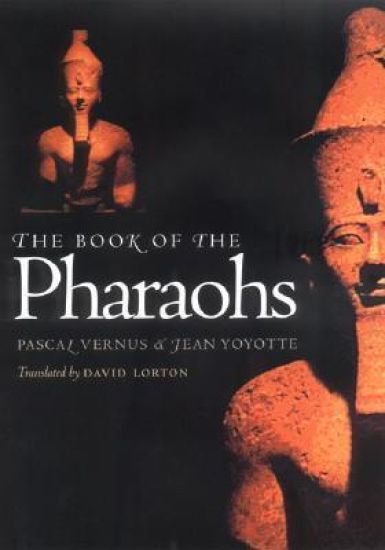
The Book of the Pharaohs

The Book of the Pharaohs

Pascal Vernus; Jean Yoyotte

Cornell University Press
2003
sidottu
The names of ancient Egyptian kings such as Cheops, Akhenaten, and Ramesses II have become part of popular culture. Yet, for all the tombs and statuary that have survived over the millennia, surprisingly little remains that speaks to the workings of government, cabals in the palace, political factions, and the private lives of the royal families. In The Book of the Pharaohs, Pascal Vernus and Jean Yoyotte offer an indispensable, basic reference to the full human reality of royal Egypt. The Book of the Pharaohs is an encyclopedia made up of short essays on the pharaohs themselves, as well as on places, dynasties, personages, subjects, and themes relating to the kings and their rule. Entries range from "Adoratrices" (priestesses of Hathor, the Egyptian Aphrodite, whose role was to arouse the erotic impulse in the creator gods) and "Amarna" (the capital created by the heretic pharaoh Akhenaten) to "Scorpion" (who ruled before the unification of Upper and Lower Egypt) and "Zero Dynasty" (the designation for pre-pharaonic Egypt). In addition, Vernus and Yoyotte include a substantial essay on the sources for Egyptian history, a bibliography of books for general readers, and a chronological table that organizes the major periods of Egyptian history and notes the most illustrious royal names from each.
Lea

Lea

Pascal Mercier

Black Cat
2017
sidottu
Pascal Mercier’s Night Train to Lisbon mesmerized readers around the world, and went on to become an international bestseller, establishing Mercier as a breakthrough European literary talent. Now, in Lea, he returns with a tender, impassioned, and unforgettable story of a father’s love and a daughter’s ambition in the wake of devastating tragedy.It all starts with the death of Martijn van Vliet’s wife. His grief-stricken young daughter, Lea, cuts herself off from the world, lost in the darkness of grief. Then she hears the unfamiliar sound of a violin playing in the hall of a train station, and she is brought back to life. Transfixed by a busker playing Bach, Lea emerges from her mourning, vowing to learn the instrument. And her father, witnessing this delicate spark, promises to do everything and anything in his power to keep her happy.Lea grows into an extraordinary musical talent—her all-consuming passion leads her to become one of the finest players in the country—but as her fame blossoms, her relationship with her father withers. Unable to keep her close, he inadvertently pushes Lea deeper and deeper into this newfound independence and, desperate to hold on to his daughter, Martin is driven to commit an act that threatens to destroy them both.A revelatory portrait of genius and madness, Lea delves into the demands of artistic excellence as well as the damaging power of jealousy and sacrifice. Mercier has crafted a novel of intense clarity, illuminating the poignant ways we strive to understand ourselves and our families.
Lea

Lea

Pascal Mercier

Black Cat
2018
pokkari
Pascal Mercier’s Night Train to Lisbon mesmerized readers around the world, and went on to become an international bestseller, establishing Mercier as a breakthrough European literary talent. Now, in Lea, he returns with a tender, impassioned, and unforgettable story of a father’s love and a daughter’s ambition in the wake of devastating tragedy. It all starts with the death of Martijn van Vliet’s wife. His grief-stricken young daughter, Lea, cuts herself off from the world, lost in the darkness of grief. Then she hears the unfamiliar sound of a violin playing in the hall of a train station, and she is brought back to life. Transfixed by a busker playing Bach, Lea emerges from her mourning, vowing to learn the instrument. And her father, witnessing this delicate spark, promises to do everything and anything in his power to keep her happy. Lea grows into an extraordinary musical talent—her all-consuming passion leads her to become one of the finest players in the country—but as her fame blossoms, her relationship with her father withers. Unable to keep her close, he inadvertently pushes Lea deeper and deeper into this newfound independence and, desperate to hold on to his daughter, Martin is driven to commit an act that threatens to destroy them both. A revelatory portrait of genius and madness, Lea delves into the demands of artistic excellence as well as the damaging power of jealousy and sacrifice. Mercier has crafted a novel of intense clarity, illuminating the poignant ways we strive to understand ourselves and our families.
Night Train to Lisbon

Night Train to Lisbon

Pascal Mercier

Grove Press / Atlantic Monthly Press
2008
nidottu
Raimund Gregorius teaches classical languages at a Swiss lycee, and lives a life governed by routine. One day, a chance encounter with a Portuguese woman inspires him to question his life--and leads him to an extraordinary book that will open the possibility of changing it. Inspired by the words of Amadeu de Prado, a doctor whose intelligence and magnetism left a mark on everyone who met him and whose principles led him into a confrontation with Salazar's dictatorship, Gergorius boards a train to Lisbon. As Gregorius becomes fascinated with unlocking the mystery of who Prado was, an extraordinary tale unfolds.