Kirjojen hintavertailu. Mukana 11 699 587 kirjaa ja 12 kauppaa.

Kirjahaku

Etsi kirjoja tekijän nimen, kirjan nimen tai ISBN:n perusteella.

1000 tulosta hakusanalla Marilyn Cottrell

Eduardo Halfon and the Itinerary of Memory

Eduardo Halfon and the Itinerary of Memory

Marilyn Grace Miller

VANDERBILT UNIVERSITY PRESS
2024
nidottu
Arguably, all of Guatemalan writer Eduardo Halfon’s fictional works deal with quandaries of translation, even in their original versions. The award-winning author of fourteen books claims to have lost his mother tongue when his family fled to the United States after his tenth birthday. This displacement, echoing the displacement of his four grandparents from different corners of the Jewish diaspora to Guatemala, gives Halfon, like his ancestors before him, good reason to consider translation a natural environment for his creative work and for life itself. Indeed, Halfon’s uncanny ability to translate his family’s history into “fictions” that resonate across the globe with readers in Spanish, English, and several other languages helps explain why he has received numerous prizes in the United States, Spain, Guatemala, and even France, some as a Latin American author, others as a Latino or Jewish author. Marilyn Grace Miller has written the first study to focus exclusively on this important voice in Jewish–Latin American letters. Only after returning to Guatemala and regaining his command of Spanish through reading literature did Halfon begin to build his life as a writer and translator. Nonetheless, the author admits that “one thing is stubbornly true, and it’s this: every sentence that I write, every verb or adjective that I painstakingly insert or remove, every literary thought that I have while writing, always . . . begins and ends in English.” Halfon’s translated works are never parallel texts, however. Thus, translation and its side effects (foreign words, linguistic lacunae, multilingual modes of perception) offer us crucial keys to understanding the author’s fictional world as a vehicle for retelling and surviving Jewish trauma and finding his own particular plurilingual voice.
Eduardo Halfon and the Itinerary of Memory

Eduardo Halfon and the Itinerary of Memory

Marilyn Grace Miller

VANDERBILT UNIVERSITY PRESS
2024
sidottu
Arguably, all of Guatemalan writer Eduardo Halfon’s fictional works deal with quandaries of translation, even in their original versions. The award-winning author of fourteen books claims to have lost his mother tongue when his family fled to the United States after his tenth birthday. This displacement, echoing the displacement of his four grandparents from different corners of the Jewish diaspora to Guatemala, gives Halfon, like his ancestors before him, good reason to consider translation a natural environment for his creative work and for life itself. Indeed, Halfon’s uncanny ability to translate his family’s history into “fictions” that resonate across the globe with readers in Spanish, English, and several other languages helps explain why he has received numerous prizes in the United States, Spain, Guatemala, and even France, some as a Latin American author, others as a Latino or Jewish author. Marilyn Grace Miller has written the first study to focus exclusively on this important voice in Jewish–Latin American letters. Only after returning to Guatemala and regaining his command of Spanish through reading literature did Halfon begin to build his life as a writer and translator. Nonetheless, the author admits that “one thing is stubbornly true, and it’s this: every sentence that I write, every verb or adjective that I painstakingly insert or remove, every literary thought that I have while writing, always . . . begins and ends in English.” Halfon’s translated works are never parallel texts, however. Thus, translation and its side effects (foreign words, linguistic lacunae, multilingual modes of perception) offer us crucial keys to understanding the author’s fictional world as a vehicle for retelling and surviving Jewish trauma and finding his own particular plurilingual voice.

Writing in the Margins

Writing in the Margins

Marilyn Adler Papayanis

Vanderbilt University Press
2005
sidottu
Marilyn Papayanis investigates the ""ex-centric"" expatriate - a metropolitan figure led away from the industrial West to marginalized or colonized domains. For the principal subjects of her study - D. H. Lawrence, Paul Bowles, and Lawrence Durrell - expatriation was a defining act, shaping not only their personal histories but their work as well.
Writing in the Margins

Writing in the Margins

Marilyn Adler Papayanis

Vanderbilt University Press
2005
nidottu
Marilyn Papayanis investigates the ""ex-centric"" expatriate - a metropolitan figure whose search for the good life leads him away from the industrial West to marginalized or colonized domains. For D. H. Lawrence, Paul Bowles, and Lawrence Durrell - expatriation was a defining act, shaping not only their personal histories but their work as well.
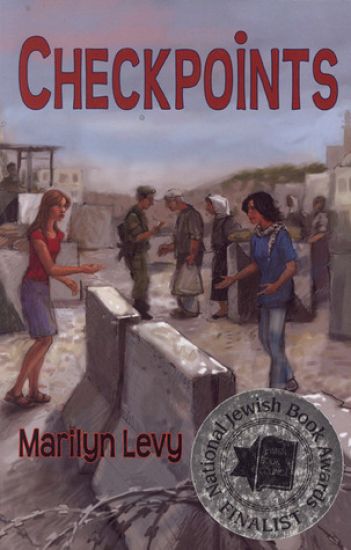
Checkpoints

Checkpoints

Marilyn Levy

Jewish Publication Society
2009
pokkari
An Israeli and a Palestinian girl struggle to maintain their friendship in the face of conflict; Noa, an Israeli Jew, and Maha, a Palestinian Muslim, are two very different teenage girls—who may not be so different after all. They've become good friends, but after a tragic incident that changes Noa and her family forever, Noa's beliefs about Palestinian and Israeli relations are put to the test. Shocking secrets are revealed that affect both Noa's and Maha's lives and test their blossoming relationship. Checkpoints brings to life the realities teenagers in the Middle East face today, as politics and prejudice threaten to tear lives and relationships apart. At the same time, it serves as a testament to the power of love and friendship in an often chaotic world.
Using Mds Quality Indicators to Improve Outcomes

Using Mds Quality Indicators to Improve Outcomes

Marilyn Rantz; Lori Popejoy

Aspen Publishers Inc.,U.S.
1998
pokkari
Using MDS Quality Indicators to Improve Outcomes is designed to be use d by your staff immediately upon purchase. All MDS QIs are covered in the 11 Monitoring plans, with corresponding Data Retrieval Worksheets. The worksheets get your staff immediately collecting data on the area s that the MDS QIs indicate need for improvement. Monitoring plans exa mine care delivery in areas such as nutrition, skin care, and medicati on use. Plus you'll get expert guidance on developing an ongoing quali ty improvement process. This book supports a team process to successfu lly improve care delivery systems.
Partial Connections

Partial Connections

Marilyn Strathern

Rowman Littlefield
1991
sidottu
This book challenges the routine ways in which anthropologists have thought about the complexity and quantity of their materials. Marilyn Strathern focuses on a problem normally regarded as commonplace: that of scale or proportion. She combines a wide-ranging interest in current theoretical issues with a minute attention to the cultural details of social life, attempting to conserve a sense of proportion between them. Strathern gives equal weight to two areas of contemporary debate. One concerns the writing of anthropology and the representation of societies where all lives seem complex, the other the future of cross-cultural comparison in a field where "too much" seems known. The ethnographic focus of this book, Melanesian anthropology, exemplifies the levels and contexts through which Melanesianists have managed the compexity of their own accounts while, at the same time, unfolding an indigenous commentary on proportion and the mixing of forms. She reveals unexpected replications in modes of thought and in the presentation of images that remain to be explained.
Women in Between

Women in Between

Marilyn Strathern

Rowman Littlefield
1995
sidottu
In 1971 Marilyn Strathern provided what has now become a classic ethnographic text, Women In Between. Significantly, this pioneering contribution to feminist anthropology focuses on gender relations rather than on women alone. Re-issued now, Women in Between examines the attitudes of the Hagen people and analyzes the power of women in their male-dominated system. Strathern cites case studies of marriage arrangements, divorce, and traditional settlement disputes to illustrate women's status in Hagen society.
Women in Between

Women in Between

Marilyn Strathern

Rowman Littlefield
1995
nidottu
In 1971 Marilyn Strathern provided what has now become a classic ethnographic text, Women In Between. Significantly, this pioneering contribution to feminist anthropology focuses on gender relations rather than on women alone. Re-issued now, Women in Between examines the attitudes of the Hagen people and analyzes the power of women in their male-dominated system. Strathern cites case studies of marriage arrangements, divorce, and traditional settlement disputes to illustrate women's status in Hagen society.
Political Correctness

Political Correctness

Marilyn Friedman; Jan Narveson

Rowman Littlefield
1995
sidottu
Two prominent philosophers here engage in a forthright debate over some of the centrally disputed topics in the political correctness controversy now taking place on college campuses across the nation, including feminism, campus speech codes, the western canon, and the nature of truth. Friedman and Narveson conclude the volume with direct replies to each other's positions.
Political Correctness

Political Correctness

Marilyn Friedman; Jan Narveson

Rowman Littlefield
1994
nidottu
Two prominent philosophers here engage in a forthright debate over some of the centrally disputed topics in the political correctness controversy now taking place on college campuses across the nation, including feminism, campus speech codes, the western canon, and the nature of truth. Friedman and Narveson conclude the volume with direct replies to each other's positions.
God at Your Wits' End

God at Your Wits' End

Marilyn Meberg

Thomas Nelson Publishers
2007
nidottu
The good news about being at our wits' end is that God meets us there.To be human is to spend some time at our wits' end?in confusion, desperation, pain, and fear. In that difficult place, we long for a tangible, visible sign that God hears our cries and is actively working for good in our lives. But all too often, faulty thinking erodes our faith and alters our beliefs, causing us to ask;If He loves me so much, why do I hurt so much?Am I being punished? I thought I was forgiven.Why is faith so hard? What if I don't have enough?Why does God allow suffering?In God at Your Wits' End, Marilyn Meberg helps us cut through the mental clutter and confusion that lead to faulty thinking and shaky faith. She tenderly acknowledges our trials by revealing her own wits'-end experiences; then she points the way to rescue and respite by sharing the scriptural truths of God's enduring love and sovereign power.
The Zippered Heart

The Zippered Heart

Marilyn Meberg

Thomas Nelson Publishers
2001
nidottu
"Why did I say that? Why did I do that? Where on earth did those mean thoughts and motivations come from? I'm so glad no one can read my mind." We all get whiplashed and sometimes broadsided by the "dark" side of our nature, which produces thoughts and behaviors that cause us to feel ashamed. many of us deny that part of ourselves, and kick it off somewhere in the shadowy recesses of the heart, where we hope it will stay put, not cause us any more trouble, and hopefully not be noticed.In The Zippered Heart, Marilyn does a gentle exploration of those secrets and issues which, if denied, can rob us of the abundant life we are promised in Christ. God means for us to be whole. This book is an encouragement in that process."This book will change lives, because it requires that we look precisely at both the dark and the light sides of ourselves. Then it brings an overflowing grace and forgiveness. As a psychologist with thirty-five years of clinical experience, I can say that this is one of the best books I have read." ?Neil Clark Warren, author of Finding the Love of Your Life"Step into liberty through the rapscallion brilliance of Marilyn Meberg." ?Patsy Clairmont, author of Mending Your Heart in a Broken World"For thirty years Marilyn's compassionate exploration of the human heart has amazed me. Now, with skill and tenderness she opens that heart for all of us to see how fearfully and wonderfully we are made." ?Luci Swindoll, author, speaker, Women of Faith"The Zippered Heart is a perceptive and sensitive examination of the 'war within' between our two natures." ?Archibald D. Hart, Ph.D., Professor of Psychology, Graduate School of Psychology, Fuller Theological Seminary
The Convent and the Community in Late Medieval England
Detailed study of female monasticism in the later middle ages, with particular emphasis on the nuns' importance to the local community. Convents were an important part of medieval monastic life, but only now, with the upsurge of interest in women's history, are they beginning to receive the attention they deserve. The prevailing view has been that female monasticism was bankrupt, spiritually and socially as well as financially, but Professor Oliva shows the reality to have been otherwise. In her study of the eleven female monasteries in the diocese of Norwich between 1350-1540, the convents emerge as integral parts of the local social and spiritual landscape, with nuns more active in the local community than their male counterparts, and markedly more popular with parish gentry and yeoman farmers (as their wills prove). The majority of nuns are shown to have been from these parish gentry families, not from the upper gentry or aristocracy as has been thought, and the records of their active lives, so rewardingly examined here, reveal mobilitywithin the nunnery too, the existence of a `career ladder' enabling nuns to progress to more important and prestigious household offices. Professor MARILYN OLIVAteaches in the Center for Medieval Studies at Fordham University.
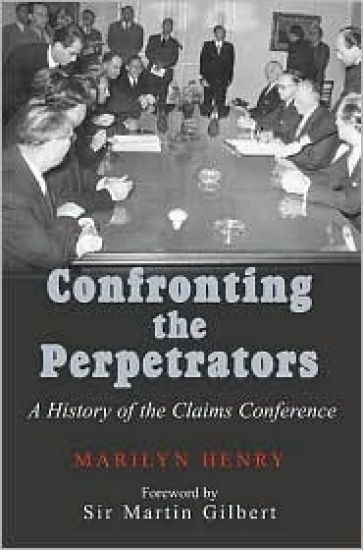
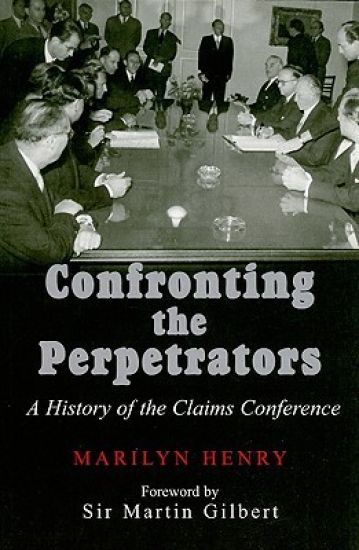
Confronting the Perpetrators

Confronting the Perpetrators

Marilyn Henry

Vallentine Mitchell Co Ltd
2007
sidottu
At the end of the twentieth century, the world seemed to rediscover Holocaust survivors. Ceremonies commemorating the 50th anniversary of World War II-era events offered occasions for reflection about the war, its heroes, and its victims. In the US, broad interest in the Holocaust was sparked by two cultural phenomena: the 1993 opening of the US Holocaust Memorial Museum and the film Schindler's List. The collapse of communism, the opening of archives in eastern Europe, and the approach of the millennium-and with it a desire to 'clean the slate'-also sparked a series of confrontations with the past. Among those confrontations was an extraordinary focus on the material losses and injuries suffered by Nazi victims. Class-action lawsuits filed in American courts against European governments and enterprises, improvised commissions, national historical reviews, and international conferences attempted, at century's end, to deal with the material, historical, legal, and moral issues stemming from the Holocaust. These initiatives built on groundwork laid in 1951, when Israel and an ad hoc consortium of voluntary Jewish organizations received an invitation to negotiate with West Germany for 'moral and material amends' for Nazi-era damages. The consortium became the Conference on Jewish Material Claims Against Germany (known as the Claims Conference).
Confronting the Perpetrators

Confronting the Perpetrators

Marilyn Henry

Vallentine Mitchell Co Ltd
2007
nidottu
At the end of the twentieth century, the world seemed to rediscover Holocaust survivors. Ceremonies commemorating the 50th anniversary of World War II-era events offered occasions for reflection about the war, its heroes, and its victims. In the US, broad interest in the Holocaust was sparked by two cultural phenomena: the 1993 opening of the US Holocaust Memorial Museum and the film Schindler's List. The collapse of communism, the opening of archives in eastern Europe, and the approach of the millennium-and with it a desire to 'clean the slate'-also sparked a series of confrontations with the past. Among those confrontations was an extraordinary focus on the material losses and injuries suffered by Nazi victims. Class-action lawsuits filed in American courts against European governments and enterprises, improvised commissions, national historical reviews, and international conferences attempted, at century's end, to deal with the material, historical, legal, and moral issues stemming from the Holocaust. These initiatives built on groundwork laid in 1951, when Israel and an ad hoc consortium of voluntary Jewish organizations received an invitation to negotiate with West Germany for 'moral and material amends' for Nazi-era damages. The consortium became the Conference on Jewish Material Claims Against Germany (known as the Claims Conference).
Long Hard Road Out Of Hell

Long Hard Road Out Of Hell

Marilyn Manson

Plexus Publishing Ltd
1998
pokkari
From the world's most controversial rock star comes his shocking, confessional, and revealing life story. Marilyn Manson will tour Europe in June and July 1998, and media attention surrounding the book is escalating, with serialisation rights in negotiation with a major music magazine.
Faraway Home

Faraway Home

Marilyn Taylor

O'Brien Press Ltd
1999
pokkari
Karl and Rosa's family watch in horror as Hitler's troops parade down the streets of their home city -- Vienna. It has become very dangerous to be a Jew in Austria, and after their uncle is sent to Dachau, Karl and Rosa's parents decide to send the children out of the country on a Kindertransport, one of the many ships carrying refugee children away from Nazi danger. Isolated and homesick, Karl ends up in Millisle, a run-down farm in Ards in Northern Ireland, which has become a Jewish refugee centre, while Rosa is fostered by a local family. Hard work on the farm keeps Karl occupied, although he still waits desperately for any news from home. Then he makes friends with locals Peewee and Wee Billy, and also with the girls from neutral Dublin who come to help on the farm, especially Judy. But Northern Ireland is in the war too, with rationing and air-raid warnings, and, in April 1941 the bombs of the Belfast Blitz bring the reality of war right to their doorstep. And for Karl and Rosa and the other refugees there is the constant fear that they may never see their parents again. Based on a true story -- there was a refugee farm at Millisle and among its occupants was a young boy called Karl.