Kirjojen hintavertailu. Mukana 11 342 296 kirjaa ja 12 kauppaa.

Kirjahaku

Etsi kirjoja tekijän nimen, kirjan nimen tai ISBN:n perusteella.

1000 tulosta hakusanalla Marko Novak

Corporate Security Management

Corporate Security Management

Marko Cabric

Butterworth-Heinemann Inc
2015
nidottu
Corporate Security Management provides practical advice on efficiently and effectively protecting an organization's processes, tangible and intangible assets, and people. The book merges business and security perspectives to help transform this often conflicted relationship into a successful and sustainable partnership. It combines security doctrine, business priorities, and best practices to uniquely answer the Who, What, Where, Why, When and How of corporate security. Corporate Security Management explores the diverse structures of security organizations in different industries. It shows the crucial corporate security competencies needed and demonstrates how they blend with the competencies of the entire organization. This book shows how to identify, understand, evaluate and anticipate the specific risks that threaten enterprises and how to design successful protection strategies against them. It guides readers in developing a systematic approach to assessing, analyzing, planning, quantifying, administrating, and measuring the security function.
From Corporate Security to Commercial Force

From Corporate Security to Commercial Force

Marko Cabric

Butterworth-Heinemann Inc
2017
nidottu
From Corporate Security to Commercial Force: A Business Leader’s Guide to Security Economics addresses important issues, such as understanding security related costs, the financial advantages of security, running an efficient security organization, and measuring the impact of incidents and losses. The book guides readers in identifying, understanding, quantifying, and measuring the direct and economic benefits of security for a business, its processes, products, and consequently, profits. It quantifies the security function and explains the never-before analyzed tangible advantages of security for core business processes. Topics go far beyond simply proving that security is an expense for a company by providing business leaders and sales and marketing professionals with actual tools that can be used for advertising products, improving core services, generating sales, and increasing profits.
Biomechatronics

Biomechatronics

Marko B. Popovic

Academic Press Inc
2019
sidottu
Biomechatronics is rapidly becoming one of the most influential and innovative research directions defining the 21st century. Biomechatronics provides a complete and up-to-date account of this advanced subject at the university textbook level. Each chapter is co-authored by top experts led by Professor Marko B. Popovic, researcher and educator at the forefront of advancements in this fascinating field. Beginning with an introduction to biomechatronics and its historical background, this book delves into the most groundbreaking recent developments in a wide variety of subjects, such as artificial organs and tissues, prosthetic limbs, neural interfaces, orthotic systems, wearable systems for physical augmentation, physical therapy and rehabilitation, robotic surgery, natural and synthetic actuators, sensors, and control systems. A number of practice problems and solutions are provided at the end of the book. Two years in the making, the book Biomechatronics is a result of dedicated work of a team of close to thirty contributors from all across the globe including top researchers and educators from the USA (Popovic, Lamkin-Kennard, Sinyukov, Troy, Goodworth, Johnson, Kaipa, Onal, Bowers, Djuric, Fischer, Ji, Jovanovic, Luo, Padir, Tetreault), Japan (Tashiro, Iramina, Ohta, Terasawa), Sweden (Boyraz), Turkey (Arslan, Karabulut, Ortes), Germany (Beckerle, Willwacher), New Zealand (Liarokapis), and Switzerland (Dobrev).
Thermomechanics of Solids and Structures

Thermomechanics of Solids and Structures

Marko Canadija

ELSEVIER SCIENCE PUBLISHING CO INC
2023
nidottu
Thermomechanics of Solids and Structures: Physical Mechanisms, Continuum Mechanics, and Applications covers kinematics, balance equations, the strict thermodynamic frameworks of thermoelasticity, thermoplasticity, creep covering constitutive equations, the physical mechanisms of deformation, along with computational aspects. The book concludes with coverage of the thermodynamics of solids and applications of the constitutive three-dimensional model to both one-dimensional homogeneous and composite beam structures. Practical applications of the theories and techniques covered are emphasized throughout the book, with analytical solutions provided for various problems.
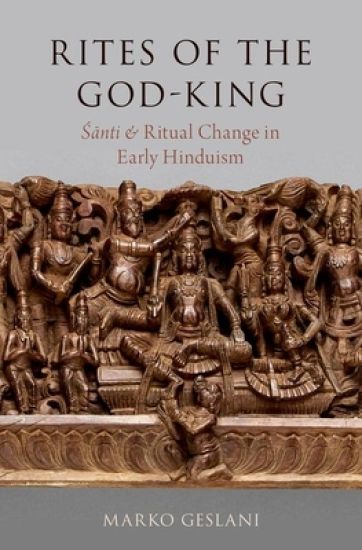
Rites of the God-King

Rites of the God-King

Marko Geslani

Oxford University Press Inc
2018
sidottu
Scholars of Vedic religion have long recognized the centrality of ritual categories to Indian thought. There have been few successful attempts, however, to bring the same systematic rigor of Vedic Scholarship to bear on later "Hindu" ritual. Excavating the deep history of a prominent ritual category in "classical" Hindu texts, Geslani traces the emergence of a class of rituals known as Santi, or appeasement. This ritual, intended to counteract ominous omens, developed from the intersection of the fourth Vedathe oft-neglected Atharvavedaand the emergent tradition of astral science (Jyotisastra) sometime in the early first millennium, CE. Its development would come to have far-reaching consequences on the ideal ritual life of the king in early-medieval Brahmanical society. The mantric transformations involved in the history of santi led to the emergence of a politicized ritual culture that could encompass both traditional Vedic and newer Hindu performers and practices. From astrological appeasement to gift-giving, coronation, and image worship, Rites of the God-King chronicles the multiple lives and afterlives of a single ritual mode, unveiling the always-inventive work of the priesthood to imagine and enrich royal power. Along the way, Geslani reveals the surprising role of astrologers in Hindu history, elaborates conceptions of sin and misfortune, and forges new connections between medieval texts and modern practices. In a work that details ritual forms that were dispersed widely across Asia, he concludes with a reflection on the nature of orthopraxy, ritual change, and the problem of presence in the Hindu tradition.
Genocide and Resistance in Hitler's Bosnia

Genocide and Resistance in Hitler's Bosnia

Marko Attila Hoare

Oxford University Press
2006
sidottu
This volume is a study of revolution, genocide and national identity in Bosnia-Hercegovina during World War II. It explains the civil war between two rival guerrilla movements - the Partisans and the Chetniks - both in terms of long-term socio-economic and cultural fissures in Bosnia-Hercegovina, and in terms of short-term differences in policy and ideology. A chronological narrative history of the Bosnian Partisan movement allows the reader to understand how it evolved, as it first provoked the emergence of its Chetnik rival, and was then forced to adapt under pressure from the latter. This volume will be essential reading for scholars and students of the former Yugoslavia, and for all those interested in Communism, nationalism, revolution, or genocide.
Serbia: A Modern History

Serbia: A Modern History

Marko Attila Hoare

Oxford University Press
2024
sidottu
This is the first in-depth, English-language history of modern Serbia in nearly half a century. It covers the period from the Serbian state's revolutionary rebirth in the early nineteenth century, under the rebel leaders Karadorde Petrovic and Milos Obrenovic; its turbulent history of wars, uprisings and dynastic rivalries; the triumph of Yugoslav unification in 1918; and the catastrophe of occupation by Nazi Germany in 1941. It shows how the birth of the modern nation-state involved the creation of a new elite-dynasty, army and bureaucracy-whose rule over the peasantry generated a popular resistance that would ultimately take form in Nikola Pasic's mighty People's Radical Party. The resulting struggle between elitist Westernisers and pro- Russian populists became entwined with the struggle for pan-Serb and Yugoslav liberation and unification. These causes came together with the Sarajevo assassination of 1914, which triggered the First World War. Existing histories of the Yugoslav kingdom that emerged from that war focus on the national conflict between Serbs, Croats, Bosnian Muslims and others, but Marko Attila Hoare challenges this narrative. He shows how the new kingdom's politics continued to be dominated by the ongoing internal Serbian power struggle, bringing renewed disaster to Yugoslavia and its peoples.
The Bosnian Muslims in the Second World War

The Bosnian Muslims in the Second World War

Marko Attila Hoare

Oxford University Press, USA
2014
sidottu
The story of the Bosnian Muslims in World War II is an epic frequently alluded to in discussions of the 1990s Balkan conflicts, but almost as frequently misunderstood or falsified. This first comprehensive study of the topic in any language sets the record straight. Based on extensive research in the archives of Bosnia- Herzegovina, Serbia and Croatia, it traces the history of Bosnia and its Muslims from the Nazi German and Fascist Italian occupation of Yugoslavia in 1941, through the years of the Yugoslav civil war, and up to the seizure of power by the Communists and their establishment of a new Yugoslav state. The book explores the reasons for Muslim opposition to the new order established by the Nazis and Fascists in Bosnia in 1941 and the different forms this opposition took. It de- scribes how the Yugoslav Communists were able to harness part of this Muslim opposition to support their own resistance movement and revolutionary bid for power. This Muslim element in the Communists' revolution shaped its form and outcome, but ultimately had itself to be curbed as the victorious Communists consolidated their dictatorship. In doing so, they set the scene for future struggles over Yugoslavia's Muslim question.
Extraterritorial Application of Human Rights Treaties

Extraterritorial Application of Human Rights Treaties

Marko Milanovic

Oxford University Press
2013
nidottu
Questions as to when a state owes obligations under a human rights treaty towards an individual located outside its territory are being brought more and more frequently before both international and domestic courts. Victims of aerial bombardment, inhabitants of territories under military occupation, deposed dictators, suspected terrorists detained in Guantanamo by the United States, and the family of a former KGB spy who was assassinated in London through the use of a radioactive toxin, allegedly at the orders or with the collusion of the Russian government - all of these people have claimed protection from human rights law against a state affecting their lives while acting outside its territory. These matters are extremely politically and legally sensitive, leading to much confusion, ambiguity, and compromise in the existing case law. This study attempts to clear up some of this confusion, and expose its real roots. It examines the notion of state jurisdiction in human rights treaties, and places it within the framework of international law. It is not limited to an inquiry into the semantic, ordinary meaning of the jurisdiction clauses in human rights treaties, nor even to their construction into workable legal concepts and rules. Rather, the interpretation of these treaties cannot be complete without examining their object and purpose, and the various policy considerations which influence states in their behaviour, and courts in their decision-making. The book thus exposes the tension between universality and effectiveness, which is itself the cause of methodological and conceptual inconsistency in the case law. Finally, the work elaborates on the several possible models of the treaties' extraterritorial application. It offers not only a critical analysis of the existing case law, but explains the various options that are before courts and states in addressing these issues, as well as their policy implications.
Extraterritorial Application of Human Rights Treaties

Extraterritorial Application of Human Rights Treaties

Marko Milanovic

Oxford University Press
2011
sidottu
Questions as to when a state owes obligations under a human rights treaty towards an individual located outside its territory are being brought more and more frequently before both international and domestic courts. Victims of aerial bombardment, inhabitants of territories under military occupation, deposed dictators, suspected terrorists detained in Guantanamo by the United States, and the family of a former KGB spy who was assassinated in London through the use of a radioactive toxin, allegedly at the orders or with the collusion of the Russian government - all of these people have claimed protection from human rights law against a state affecting their lives while acting outside its territory. These matters are extremely politically and legally sensitive, leading to much confusion, ambiguity and compromise in the existing case law. This study attempts to clear up some of this confusion, and expose its real roots. It examines the notion of state jurisdiction in human rights treaties, and places it within the framework of international law. It is not limited to an inquiry into the semantic, ordinary meaning of the jurisdiction clauses in human rights treaties, nor even to their construction into workable legal concepts and rules. Rather, the interpretation of these treaties cannot be complete without examining their object and purpose, and the various policy considerations which influence states in their behaviour, and courts in their decision-making. The book thus exposes the tension between universality and effectiveness, which is itself the cause of methodological and conceptual inconsistency in the case law. Finally, the work elaborates on the several possible models of the treaties' extraterritorial application. It offers not only a critical analysis of the existing case law, but explains the various options that are before courts and states in addressing these issues, as well as their policy implications.
Frontier Investor

Frontier Investor

Marko Dimitrijevic

Columbia University Press
2016
sidottu
Where are the next decade's greatest investment opportunities? Veteran investor Marko Dimitrijevic argues that they can be found in frontier markets, which account for seventy-one of the world's seventy-five fastest-growing economies and 19 percent of the world's GDP. Yet many investors ignore them. Fueled by new access to technology and information, frontier markets are emerging even faster than their predecessors, making them an essential component of a globally diversified portfolio. In Frontier Investor, Dimitrijevic shows through colorful case studies, compelling charts, and fascinating travel anecdotes that it is not only possible but prudent to invest in these unfamiliar and undervalued options. Dimitrijevic explains how frontier markets such as Nigeria, Panama, and Bangladesh are poised to follow the similar paths of Chinese, Indian, and Russian markets, which were considered exotic two decades ago. He details a strategy for how and where to invest, directly or indirectly, to profit from frontier growth. Dimitrijevic covers the risks, political and otherwise, of these markets, the megatrends that promise exciting investment opportunities in the coming years, and the prospects for countries beyond the frontier, including Myanmar, Cuba, and even Iran. Rich with experience and insight, Frontier Investor opens up a whole new world-and worldview-to investors.
Serbian Dreambook

Serbian Dreambook

Marko Živkovic

Indiana University Press
2011
pokkari
The central role that the regime of Slobodan Miloševic played in the bloody dissolution of Yugoslavia is well known, but Marko Živkovic explores another side of this time period: the stories people in Serbia were telling themselves (and others) about themselves. Živkovic traces the recurring themes, scripts, and narratives that permeated public discourse in Miloševic's Serbia, as Serbs described themselves as Gypsies or Jews, violent highlanders or peaceful lowlanders, and invoked their own mythologized defeat at the Battle of Kosovo. The author investigates national narratives, the use of tradition for political purposes, and local idioms, paying special attention to the often bizarre and outlandish tropes people employed to make sense of their social reality. He suggests that the enchantments of political life under Miloševic may be fruitfully seen as a dreambook of Serbian national imaginary.
Serbian Dreambook

Serbian Dreambook

Marko Živkovic

Indiana University Press
2011
sidottu
The central role that the regime of Slobodan Miloševic played in the bloody dissolution of Yugoslavia is well known, but Marko Živkovic explores another side of this time period: the stories people in Serbia were telling themselves (and others) about themselves. Živkovic traces the recurring themes, scripts, and narratives that permeated public discourse in Miloševic's Serbia, as Serbs described themselves as Gypsies or Jews, violent highlanders or peaceful lowlanders, and invoked their own mythologized defeat at the Battle of Kosovo. The author investigates national narratives, the use of tradition for political purposes, and local idioms, paying special attention to the often bizarre and outlandish tropes people employed to make sense of their social reality. He suggests that the enchantments of political life under Miloševic may be fruitfully seen as a dreambook of Serbian national imaginary.
A Slow Burning Fire

A Slow Burning Fire

Marko Ilic

MIT Press
2021
sidottu
Yugoslavia's diverse and interconnected art scenes from the 1960s to the 1980s, linked to the country's experience with socialist self-management.In Yugoslavia from the late 1960s to the late 1980s, state-supported Student Cultural Centers became incubators for new art. This era's conceptual and performance art--known as Yugoslavia's New Art Practice--emerged from a network of diverse and densely interconnected art scenes that nurtured the early work of Marina Abramovic, Sanja Ivekovic, Neue Slowenische Kunst (NSK), and others. In this book, Marko Ilic offers the first comprehensive examination of the New Art Practice, linking it to Yugoslavia's experience with socialist self-management and the political upheavals of the 1980s.
Democratization in Christian Orthodox Europe
For a long time, Orthodox Christianity was regarded as a religious tradition that was incompatible with democracy. This book challenges this incompatibility thesis, offering an innovative and fresh theoretical framework for dealing with the issue of Orthodoxy and democracy.This book focuses on the political behaviour of Orthodox Christian Churches in the democratization processes from a comparative perspective, and shows that different Orthodox Churches acted differently in the democratization processes in Greece, Serbia and Russia. The fundamental question that arises is – why? By focusing on institutions, rather than on political theology, this book answers this question from a comparative perspective. By studying the historical, cultural, and political roles of the Orthodox Christian Church in these three countries, the author examines whether it is logical to presume that the Church played a significant role in the democratization process.This book will be of great interest to academics and students globally who teach, study, and research in the emerging field of religion and democracy.
Overuse Injuries of the Musculoskeletal System

Overuse Injuries of the Musculoskeletal System

Marko M. Pecina; Ivan Bojanic

CRC Press
2019
nidottu
Overuse injuries of the musculoskeletal system are common occurrences. Yet most existing volumes on cumulative trauma disorders deal with the subject from an ergonomic and occupational therapy standpoint, and do not provide the all-encompassing synopsis that physicians demand.Overuse Injuries of the Musculoskeletal System, Second Edition, answers the need by presenting a complete overview of the methods for diagnosing and treating the overuse injuries that affect the musculoskeletal system as a whole. Each chapter includes the definition, origins, clinical picture and diagnostics, and treatment for the given injury. The book goes beyond diagnosis and treatment by identifying etiological factors and discussing ways to prevent overuse injuries.This new edition retains the successful systematic format that made the first edition a bestseller and an invaluable tool for orthopaedists, physical therapists, rheumatologists, radiologists and sports medicine practitioners. This version includes a new chapter on radiologic diagnosis, new chapter on overuse injuries in female athletes and supplements previously-existing chapters with new material.
A = B

A = B

Marko Petkovsek; Herbert S Wilf; Doron Zeilberger

CRC Press
2019
nidottu
This book is of interest to mathematicians and computer scientists working in finite mathematics and combinatorics. It presents a breakthrough method for analyzing complex summations. Beautifully written, the book contains practical applications as well as conceptual developments that will have applications in other areas of mathematics. From the table of contents: * Proof Machines * Tightening the Target * The Hypergeometric Database * The Five Basic Algorithms: Sister Celine's Method, Gosper&'s Algorithm, Zeilberger's Algorithm, The WZ Phenomenon, Algorithm Hyper * Epilogue: An Operator Algebra Viewpoint * The WWW Sites and the Software (Maple and Mathematica) Each chapter contains an introduction to the subject and ends with a set of exercises.
Democratization in Christian Orthodox Europe

Democratization in Christian Orthodox Europe

Marko Vekovic

TAYLOR FRANCIS LTD
2022
nidottu
For a long time, Orthodox Christianity was regarded as a religious tradition that was incompatible with democracy. This book challenges this incompatibility thesis, offering an innovative and fresh theoretical framework for dealing with the issue of Orthodoxy and democracy.This book focuses on the political behaviour of Orthodox Christian Churches in the democratization processes from a comparative perspective, and shows that different Orthodox Churches acted differently in the democratization processes in Greece, Serbia and Russia. The fundamental question that arises is – why? By focusing on institutions, rather than on political theology, this book answers this question from a comparative perspective. By studying the historical, cultural, and political roles of the Orthodox Christian Church in these three countries, the author examines whether it is logical to presume that the Church played a significant role in the democratization process.This book will be of great interest to academics and students globally who teach, study, and research in the emerging field of religion and democracy.