

Kirjahaku
Etsi kirjoja tekijän nimen, kirjan nimen tai ISBN:n perusteella.
1000 tulosta hakusanalla Devorah Shoshanna
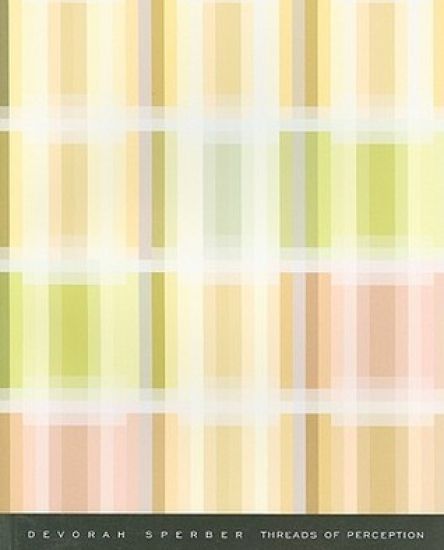
New York artist Devorah Sperber combines commonplace materials with simple optical devices to investigate the connections between art, perception and technology. Her works address the complex relationship between the way we think we see and the way that the brain actually processes images. Her most recent works examine famous paintings from art history. Sperber uses the computer to pixelate the images and then reproduces the pixels with thousands of spools of colored thread. She then inverts the spool-constructed pictures so that the image is viewed up side down and recognizable only when viewed through an acrylic sphere. To the naked eye the thread spool sculpture appears as patterns of color, but when viewed through the specially designed acrylic sphere, the images spring into focus. Sperber's works were recently presented at the John Michael Kohler Arts Center and the Brooklyn Museum and featured in articles in the New Yorker, the New York Times and Sculpture Magazine.
SeferTOMER DEVORAHThe Palm Tree of DeborahTomer Devorah was written in Hebrew in the middle of the 16th century by Rabbi Moses Cordovero, a Jewish kabbalist in Safed, Israel. This short text deals mostly with the Imitation of God through the acquisition of divine traits, especially those of the sephirot. The first edition was published in Venice in 1588 Tomer Devorah (Hebrew: תומר דבורה, English: The Palm Tree of Deborah) was written in Hebrew in the middle of the 16th century by Moses Cordovero, a Jewish kabbalist in Safed, Israel. This short text deals mostly with the Imitation of God through the acquisition of divine traits, especially those of the sephirot. The first edition was published in Venice in 1588. Although not widely read among Jews today, it is popular in the mussar tradition, which focuses on the individual cultivation of the middot, or qualities of God.Rabbi Moshe Cordovero Kabbalist Rabbi Moshe Cordovero, also referred to as Ra'MaK, was a leading kabbalist who lived and taught in Tsfat. His best-known work, Pardes Rimmonim, is a systematization of various school of kabbalistic thought. He authored many highly influential works, included a defense of kabbalah, a highly-regarded ethical work based on kabbalistic thought, and a comprehsive commentary on the Zohar. He had many disciples and was considered the premier kabbalistic authority until superceded by Rabbi Yitzchak Luria (AR"I Z"L) shortly after his death.Rabbi Moses ben Jacob Cordovero was a central figure in the historical development of Kabbalah, leader of a mystical school in 16th-century Safed, Ottoman Syria. He is known by the acronym the Rama"k.After the Medieval flourishing of Kabbalah, centered on the Zohar, attempts were made to give a complete intellectual system to its theology, such as by Meir ibn Gabbai. Influenced by the earlier success of Jewish philosophy in articulating a rational study of Jewish thought, Moshe Cordovero produced the first full integration of the previous differing schools in Kabbalistic interpretation. While he was a mystic inspired by the opaque imagery of the Zohar, Cordoverian Kabbalah utilised the conceptual framework of evolving cause and effect from the Infinite to the Finite in systemising Kabbalah, the method of philosophical style discourse he held most effective in describing a process that reflects sequential logic and coherence. His encyclopedic works became a central stage in the development of Kabbalah.Immediately after him in Safed, Isaac Luria articulated a subsequent system of Kabbalistic theology, with new supra-rational doctrines recasting previous Kabbalistic thought. While Lurianism displaced the Cordoverian scheme and became predominant in Judaism, its followers read Cordoverian works in harmony with their teachings. Where to them, Lurianism described the "World" of Rectification, Cordovero described the pre-Rectification World. 3] Both articulations of the 16th century mystical Renaissance in Safed gave Kabbalah an intellectual prominence to rival Medieval Rationalism, whose social influence on Judaism had waned after the Expulsion from Spain.
SeferTOMER DEVORAHThe Palm Tree of DeborahTomer Devorah was written in Hebrew in the middle of the 16th century by Rabbi Moses Cordovero, a Jewish kabbalist in Safed, Israel. This short text deals mostly with the Imitation of God through the acquisition of divine traits, especially those of the sephirot. The first edition was published in Venice in 1588 Tomer Devorah (Hebrew: תומר דבורה, English: The Palm Tree of Deborah) was written in Hebrew in the middle of the 16th century by Moses Cordovero, a Jewish kabbalist in Safed, Israel. This short text deals mostly with the Imitation of God through the acquisition of divine traits, especially those of the sephirot. The first edition was published in Venice in 1588. Although not widely read among Jews today, it is popular in the mussar tradition, which focuses on the individual cultivation of the middot, or qualities of God.Rabbi Moshe Cordovero Kabbalist Rabbi Moshe Cordovero, also referred to as Ra'MaK, was a leading kabbalist who lived and taught in Tsfat. His best-known work, Pardes Rimmonim, is a systematization of various school of kabbalistic thought. He authored many highly influential works, included a defense of kabbalah, a highly-regarded ethical work based on kabbalistic thought, and a comprehsive commentary on the Zohar. He had many disciples and was considered the premier kabbalistic authority until superceded by Rabbi Yitzchak Luria (AR"I Z"L) shortly after his death.Rabbi Moses ben Jacob Cordovero was a central figure in the historical development of Kabbalah, leader of a mystical school in 16th-century Safed, Ottoman Syria. He is known by the acronym the Rama"k.After the Medieval flourishing of Kabbalah, centered on the Zohar, attempts were made to give a complete intellectual system to its theology, such as by Meir ibn Gabbai. Influenced by the earlier success of Jewish philosophy in articulating a rational study of Jewish thought, Moshe Cordovero produced the first full integration of the previous differing schools in Kabbalistic interpretation. While he was a mystic inspired by the opaque imagery of the Zohar, Cordoverian Kabbalah utilised the conceptual framework of evolving cause and effect from the Infinite to the Finite in systemising Kabbalah, the method of philosophical style discourse he held most effective in describing a process that reflects sequential logic and coherence. His encyclopedic works became a central stage in the development of Kabbalah.Immediately after him in Safed, Isaac Luria articulated a subsequent system of Kabbalistic theology, with new supra-rational doctrines recasting previous Kabbalistic thought. While Lurianism displaced the Cordoverian scheme and became predominant in Judaism, its followers read Cordoverian works in harmony with their teachings. Where to them, Lurianism described the "World" of Rectification, Cordovero described the pre-Rectification World. 3] Both articulations of the 16th century mystical Renaissance in Safed gave Kabbalah an intellectual prominence to rival Medieval Rationalism, whose social influence on Judaism had waned after the Expulsion from Spain.
![TOMER DEVORAH - The Palm Tree of Deborah [Hebrew with English translation]](/covers/9781617046117.jpg)
TOMER DEVORAH - The Palm Tree of Deborah [Hebrew with English translation]
Kabbalist Rabbi Moshe Cordovero
Judaism
2023
pokkari
SeferTOMER DEVORAHThe Palm Tree of DeborahTomer Devorah was written in Hebrew in the middle of the 16th century by Rabbi Moses Cordovero, a Jewish kabbalist in Safed, Israel. This short text deals mostly with the Imitation of God through the acquisition of divine traits, especially those of the sephirot. The first edition was published in Venice in 1588 Tomer Devorah (Hebrew: תומר דבורה, English: The Palm Tree of Deborah) was written in Hebrew in the middle of the 16th century by Moses Cordovero, a Jewish kabbalist in Safed, Israel. This short text deals mostly with the Imitation of God through the acquisition of divine traits, especially those of the sephirot. The first edition was published in Venice in 1588. Although not widely read among Jews today, it is popular in the mussar tradition, which focuses on the individual cultivation of the middot, or qualities of God.Rabbi Moshe Cordovero Kabbalist Rabbi Moshe Cordovero, also referred to as Ra'MaK, was a leading kabbalist who lived and taught in Tsfat. His best-known work, Pardes Rimmonim, is a systematization of various school of kabbalistic thought. He authored many highly influential works, included a defense of kabbalah, a highly-regarded ethical work based on kabbalistic thought, and a comprehsive commentary on the Zohar. He had many disciples and was considered the premier kabbalistic authority until superceded by Rabbi Yitzchak Luria (AR"I Z"L) shortly after his death.Rabbi Moses ben Jacob Cordovero was a central figure in the historical development of Kabbalah, leader of a mystical school in 16th-century Safed, Ottoman Syria. He is known by the acronym the Rama"k.After the Medieval flourishing of Kabbalah, centered on the Zohar, attempts were made to give a complete intellectual system to its theology, such as by Meir ibn Gabbai. Influenced by the earlier success of Jewish philosophy in articulating a rational study of Jewish thought, Moshe Cordovero produced the first full integration of the previous differing schools in Kabbalistic interpretation. While he was a mystic inspired by the opaque imagery of the Zohar, Cordoverian Kabbalah utilised the conceptual framework of evolving cause and effect from the Infinite to the Finite in systemising Kabbalah, the method of philosophical style discourse he held most effective in describing a process that reflects sequential logic and coherence. His encyclopedic works became a central stage in the development of Kabbalah.Immediately after him in Safed, Isaac Luria articulated a subsequent system of Kabbalistic theology, with new supra-rational doctrines recasting previous Kabbalistic thought. While Lurianism displaced the Cordoverian scheme and became predominant in Judaism, its followers read Cordoverian works in harmony with their teachings. Where to them, Lurianism described the "World" of Rectification, Cordovero described the pre-Rectification World. 3] Both articulations of the 16th century mystical Renaissance in Safed gave Kabbalah an intellectual prominence to rival Medieval Rationalism, whose social influence on Judaism had waned after the Expulsion from Spain.תומר דבורהמנוקדסֵפֶר תּוֹמֶר דְּבוֹרָה הוּא סֵפֶר מוּסָר עַל פִּי תּוֹרַת הַקַּבָּלָה
Moshe ben Yaakov Cordovero hebr isch: משה קורדובירו Moshe Kordovero; 1522-1570] war eine zentrale Figur in der historischen Entwicklung der Kabbala und Leiter einer mystischen Schule in Safed im osmanischen Syrien im 16. Er ist unter dem Akronym "Ramak" hebr isch: רמ״ק] bekannt. Nach der mittelalterlichen Bl tezeit der Kabbala, in deren Mittelpunkt der Zohar stand, wurden Versuche unternommen, ihrer Theologie ein vollst ndiges intellektuelles System zu geben, wie etwa von Meir ibn Gabbai. Beeinflusst durch den fr heren Erfolg der j dischen Philosophie bei der Formulierung eines rationalen Studiums des j dischen Denkens, schuf Moshe Cordovero die erste vollst ndige Integration der fr heren unterschiedlichen Schulen in der kabbalistischen Interpretation. Obwohl er ein Mystiker war, der sich von der undurchsichtigen Bildersprache des Zohar inspirieren lie , nutzte die Cordoversche Kabbala bei der Systematisierung der Kabbala den konzeptionellen Rahmen der Entwicklung von Ursache und Wirkung vom Unendlichen zum Endlichen, die Methode des philosophischen Diskursstils, die er f r die Beschreibung eines Prozesses, der sequentielle Logik und Koh renz widerspiegelt, f r am effektivsten hielt. Seine enzyklop dischen Werke wurden zu einer zentralen Etappe in der Entwicklung der Kabbala. Unmittelbar nach ihm formulierte AR"I in Safed ein neues System der kabbalistischen Theologie mit neuen supra-rationalen Lehren, die das fr here kabbalistische Denken umgestalteten. W hrend der Lurianismus das kordoverianische Schema verdr ngte und im Judentum vorherrschend wurde, lasen seine Anh nger die kordoverianischen Werke in bereinstimmung mit ihren Lehren. W hrend der Lurianismus f r sie die Welt der Rektifikation beschrieb, beschrieb Cordovero die Welt vor der Rektifikation. Beide Auspr gungen der mystischen Renaissance des 16. Jahrhunderts in Safed verliehen der Kabbala eine intellektuelle Bedeutung, die mit dem mittelalterlichen Rationalismus konkurrierte, dessen gesellschaftlicher Einfluss auf das Judentum nach der Vertreibung aus Spanien nachgelassen hatte. Der Name Cordovero deutet darauf hin, dass seine Familie aus C rdoba, Spanien, stammt und vielleicht w hrend der Vertreibung durch die spanische Inquisition im Jahr 1492 von dort geflohen ist. Seine hebr ische Unterschrift Cordoeiro] deutet jedoch stark auf einen langj hrigen Aufenthalt in Portugal hin. Nach seiner eigenen Aussage in der Einleitung zu Pardes Rimonim h rte Ramak 1542, im Alter von zwanzig Jahren, eine "himmlische Stimme", die ihn aufforderte, bei seinem Schwager, Rabbi Shlomo Alkabetz, dem Komponisten des mystischen Liedes Lecha Dodi, Kabbala zu studieren. So wurde er in die Geheimnisse des Zohar eingeweiht. Der junge Ramak beherrschte nicht nur den Text, sondern beschloss, die kabbalistischen Themen seiner Zeit zu ordnen und in geordneter Form zu pr sentieren. Dies f hrte zur Abfassung seines ersten Buches, Pardes Rimonim "Granatapfelgarten"], das 1548 fertiggestellt wurde und Ramaks Ruf als brillanter Kabbalist und klarer Denker festigte. Der Pardes, wie er genannt wird, war eine Systematisierung des gesamten kabbalistischen Denkens bis zu dieser Zeit und stellte den Versuch des Autors dar, verschiedene fr he Schulen mit den konzeptionellen Lehren des Zohar zu vers hnen, um eine wesentliche Einheit und eine in sich konsistente philosophische Grundlage der Kabbala aufzuzeigen.
Moshe ben Yaakov Cordovero hebr isch: משה קורדובירו Moshe Kordovero; 1522-1570] war eine zentrale Figur in der historischen Entwicklung der Kabbala und Leiter einer mystischen Schule in Safed im osmanischen Syrien im 16. Er ist unter dem Akronym "Ramak" hebr isch: רמ״ק] bekannt. Nach der mittelalterlichen Bl tezeit der Kabbala, in deren Mittelpunkt der Zohar stand, wurden Versuche unternommen, ihrer Theologie ein vollst ndiges intellektuelles System zu geben, wie etwa von Meir ibn Gabbai. Beeinflusst durch den fr heren Erfolg der j dischen Philosophie bei der Formulierung eines rationalen Studiums des j dischen Denkens, schuf Moshe Cordovero die erste vollst ndige Integration der fr heren unterschiedlichen Schulen in der kabbalistischen Interpretation. Obwohl er ein Mystiker war, der sich von der undurchsichtigen Bildersprache des Zohar inspirieren lie , nutzte die Cordoversche Kabbala bei der Systematisierung der Kabbala den konzeptionellen Rahmen der Entwicklung von Ursache und Wirkung vom Unendlichen zum Endlichen, die Methode des philosophischen Diskursstils, die er f r die Beschreibung eines Prozesses, der sequentielle Logik und Koh renz widerspiegelt, f r am effektivsten hielt. Seine enzyklop dischen Werke wurden zu einer zentralen Etappe in der Entwicklung der Kabbala. Unmittelbar nach ihm formulierte AR"I in Safed ein neues System der kabbalistischen Theologie mit neuen supra-rationalen Lehren, die das fr here kabbalistische Denken umgestalteten. W hrend der Lurianismus das kordoverianische Schema verdr ngte und im Judentum vorherrschend wurde, lasen seine Anh nger die kordoverianischen Werke in bereinstimmung mit ihren Lehren. W hrend der Lurianismus f r sie die Welt der Rektifikation beschrieb, beschrieb Cordovero die Welt vor der Rektifikation. Beide Auspr gungen der mystischen Renaissance des 16. Jahrhunderts in Safed verliehen der Kabbala eine intellektuelle Bedeutung, die mit dem mittelalterlichen Rationalismus konkurrierte, dessen gesellschaftlicher Einfluss auf das Judentum nach der Vertreibung aus Spanien nachgelassen hatte. Der Name Cordovero deutet darauf hin, dass seine Familie aus C rdoba, Spanien, stammt und vielleicht w hrend der Vertreibung durch die spanische Inquisition im Jahr 1492 von dort geflohen ist. Seine hebr ische Unterschrift Cordoeiro] deutet jedoch stark auf einen langj hrigen Aufenthalt in Portugal hin. Nach seiner eigenen Aussage in der Einleitung zu Pardes Rimonim h rte Ramak 1542, im Alter von zwanzig Jahren, eine "himmlische Stimme", die ihn aufforderte, bei seinem Schwager, Rabbi Shlomo Alkabetz, dem Komponisten des mystischen Liedes Lecha Dodi, Kabbala zu studieren. So wurde er in die Geheimnisse des Zohar eingeweiht. Der junge Ramak beherrschte nicht nur den Text, sondern beschloss, die kabbalistischen Themen seiner Zeit zu ordnen und in geordneter Form zu pr sentieren. Dies f hrte zur Abfassung seines ersten Buches, Pardes Rimonim "Granatapfelgarten"], das 1548 fertiggestellt wurde und Ramaks Ruf als brillanter Kabbalist und klarer Denker festigte. Der Pardes, wie er genannt wird, war eine Systematisierung des gesamten kabbalistischen Denkens bis zu dieser Zeit und stellte den Versuch des Autors dar, verschiedene fr he Schulen mit den konzeptionellen Lehren des Zohar zu vers hnen, um eine wesentliche Einheit und eine in sich konsistente philosophische Grundlage der Kabbala aufzuzeigen.


When famous new media artist Eli Schmidt inherits a mysterious chest from his emotionally detached grandmother that he is instructed not to open, he can't curb his curiosity. Inside, he finds a lost and lonely doll named Devorah, who begins to heartbreakingly scream for the love of her life, Yonah. Wishing he had obeyed orders, Eli has no choice but to go on a journey to reunite the pair. To his great distress, this means he must give up his treasured peace and quiet and do what he loathes the most: interact with other people. While Eli desperately tries to break free from this burden, Devorah amplifies her control, embroiling him in a battle that will forever change the course of his life.

"May God grant me the serenity to accept the color pink, the courage to not let my house become a shrine to pink and princesses, and the wisdom to know that pink is just a color, not a decision to never attend college in the hopes of marrying wealthy." - from The Feminist's Guide to Raising a Little Princess Smart, funny, and thought-provoking, this book shows feminist parents how to navigate their daughters' princess-obsessed years by taking a non-judgmental and positive approach. Devorah Blachor, an ardent feminist, never expected to be the parent of a little girl who was totally obsessed with the color pink, princesses, and all things girly. When her three-year-old daughter fell down the Disney Princess rabbit hole, she wasn't sure how to reconcile the difference between her parental expectations and the reality of her daughter's passion. In this book inspired by her viral New York Times Motherlode piece "Turn Your Princess-Obsessed Toddler Into a Feminist in Eight Easy Steps," Blachor offers insight, advice, and plenty of humor and personal anecdotes for other mothers who cringe each morning when their daughter refuses to wear anything that isn't pink. Her story of how she surrendered control and opened up--to her Princess Toddler, to pink, and to life--is a universal tale of modern parenting. She addresses important issues such as how to raise a daughter in a society that pressures girls and women to bury their own needs, conform to a beauty standard and sacrifice their own passions.

BOOK OF THE YEAR 2023 ACCORDING TO THE NEW YORKER AND KIRKUS 'Devorah Baum is a visionary writer. Her intellectual depth, her emotional precision and her searing insight can only be gathered under an old fashioned word: wisdom' Zadie SmithA shining exploration of why we marry from writer and academic Devorah BaumFor better or worse, for richer for poorer, till death us do part – we’ve always done it and we’re still doing it. Of all our cultural institutions, marriage is the most ancient, but also the most puzzling.In this compelling and delightful book, Devorah Baum examines the many meanings we have given to marriage, interweaving the personal with insights from a host of writers, artists and thinkers.From Freud to Ferrante, and One Thousand and One Nights to Fleabag, she looks at marriage in all of its forms – from act of love to leap of faith, and asks: what are we really doing when we say ‘I do’?Both celebration and critique, On Marriage is a guide like no other to the landscape of marriage.'A hugely thought-provoking, witty, warm tour around every significant writer and thinker on love to have emerged since Adam and Eve' Alain de Botton

BOOK OF THE YEAR 2023 ACCORDING TO THE NEW YORKER AND KIRKUS 'Devorah Baum is a visionary writer. Her intellectual depth, her emotional precision and her searing insight can only be gathered under an old fashioned word: wisdom' Zadie SmithA shining exploration of why we marry from writer and academic Devorah BaumFor better or worse, for richer for poorer, till death us do part – we’ve always done it and we’re still doing it. Of all our cultural institutions, marriage is the most ancient, but also the most puzzling.In this compelling and delightful book, Devorah Baum examines the many meanings we have given to marriage, interweaving the personal with insights from a host of writers, artists and thinkers.From Freud to Ferrante, and One Thousand and One Nights to Fleabag, she looks at marriage in all of its forms – from act of love to leap of faith, and asks: what are we really doing when we say ‘I do’?Both celebration and critique, On Marriage is a guide like no other to the landscape of marriage.'A hugely thought-provoking, witty, warm tour around every significant writer and thinker on love to have emerged since Adam and Eve' Alain de Botton
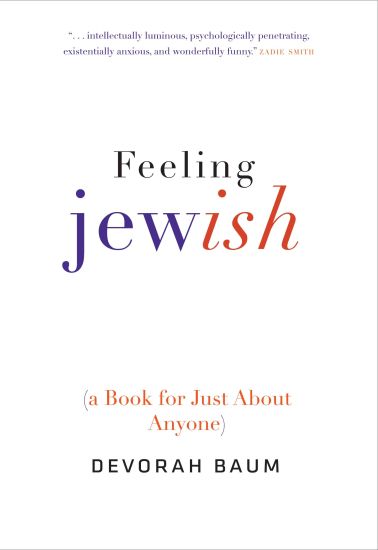
In this sparkling debut, a young critic offers an original, passionate, and erudite account of what it means to feel Jewish—even when you’re not. Self-hatred. Guilt. Resentment. Paranoia. Hysteria. Overbearing Mother-Love. In this witty, insightful, and poignant book, Devorah Baum delves into fiction, film, memoir, and psychoanalysis to present a dazzlingly original exploration of a series of feelings famously associated with modern Jews. Reflecting on why Jews have so often been depicted, both by others and by themselves, as prone to “negative” feelings, she queries how negative these feelings really are. And as the pace of globalization leaves countless people feeling more marginalized, uprooted, and existentially threatened, she argues that such “Jewish” feelings are becoming increasingly common to us all. Ranging from Franz Kafka to Philip Roth, Sarah Bernhardt to Woody Allen, Anne Frank to Nathan Englander, Feeling Jewish bridges the usual fault lines between left and right, insider and outsider, Jew and Gentile, and even Semite and anti-Semite, to offer an indispensable guide for our divisive times.

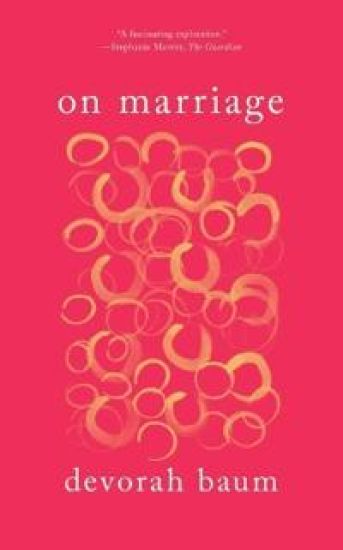
A compulsively readable, startling, and philosophically rich book about marriage, from an acclaimed critic and filmmaker A New Yorker Best Book of the Year - A Kirkus Reviews Best Nonfiction Book of the Year - A Seminary Coop Notable Book of 2023 "Baum is an erudite and entertaining guide through the landscape of marriage. . . . A fascinating exploration."--Stephanie Merritt, The Guardian "As far back as our history books go, we have no record of a time preceding marriage. Isn't that an extraordinary fact?" So writes Devorah Baum in this searching and revelatory book. Marriage, for better or for worse, is how humans have organized their world and told their story. Straight, queer, coupled, single: none live outside the remit of marriage. One might as well try to live beyond language. But when confronted with the question "What do intellectuals think of marriage?" Baum concludes that most philosophers have preferred to avoid the subject. Is marriage then an intellectual blind spot? To fill in the gaps, she draws on a wide range of cultural material, from the classical to the contemporary, while interweaving reflections on her own experiences of matrimony to both critique and celebrate marriage's many contradictions and its profound effects on us all. In doing so, she reveals how marriage has worked as a cover story for power and its abuses on the one hand, and for subversive and even utopian relational practices on the other. Entertaining, illuminating, consoling, and candid, On Marriage is an unprecedented investigation of what we are really talking about when we talk about marriage.

Join the claymates for a claydate-a madcap adventure about playing, not perfection-in this rollicking read-aloud by the duo behind Claymates! When two clay friends decide to sculpt a unicorn-dragon and a potato-knight and try to tell an epic story with them, nothing goes quite how they planned. Unicorn-dragon isn't fearsome at all, and potato-knight keeps getting squished! Can the claymates work together to save their story and remember that a playdate doesn't have to be perfect to be plenty of fun? Anything can happen in this laugh-out-loud adventure that celebrates friendship, storytelling, and endless creativity.

How is the process of globalization effecting changes in the structure of knowledge in sociology? This path-breaking volume looks at the human dimension of developments in the discipline by compiling a set of interviews that exemplify the life and work of a sociologist today. Their ideas and conceptualizations show to what extent a "paradigm shift" has taken root, answering questions such as whether sociology still remains a differentiated, relatively autonomous social science. The chosen interviewees are about equally divided according to gender and have been selected from among professional sociologists in different parts of the globe, with an emphasis on areas that are under-represented in English publications, such as East Asia, Latin America, and Africa. Analysis focuses on changes which are becoming clear from the on-going confrontation between "traditional" sociology which emerged as a project of modernity, and the sociology practiced by sociologists who are called upon to adapt the discipline to the upheavals of the twenty-first century.

The definitive book on helping kids navigate growing up in a world where nearly every moment of their lives can be shared and compared With social media and constant connection, the boundaries of privacy are stretched thin. Growing Up in Public shows parents how to help tweens and teens navigate boundaries, identity, privacy, and reputation in their digital world. We can track our kids' every move with apps, see their grades within minutes of being posted, and fixate on their digital footprint, anxious that a misstep could cause them to be "canceled" or even jeopardize their admission to college. And all of this adds pressure on kids who are coming of age immersed in social media platforms that emphasize "personal brand," "likes," and "gotcha" moments. How can they figure out who they really are with zero privacy and constant judgment? Devorah Heitner shows us that by focusing on character, not the threat of getting caught or exposed, we can support our kids to be authentically themselves. Drawing on her extensive work with parents and schools as well as hundreds of interviews with kids, parents, educators, clinicians, and scholars, Heitner offers strategies for parenting our kids in an always-connected world. With relatable stories and research-backed advice, Growing Up in Public empowers parents to cut through the overwhelm to connect with their kids, recognize how to support them, and help them figure out who they are when everyone is watching.

Boost Your Score: Underground Calculator Programs for the ACT Test
Devorah Goldblatt; Advantage Point
Advantage Point Test Prep
2011
nidottu
Students, do you have a TI-83 or 84? If so, you've stumbled on a tool that can help you easily boost your ACT math score.Are you afraid you'll forget the distance formula or the Pythagorean Theorem? Fed up with matrices and quadratic equations? Or do you just want to improve your accuracy and speed on the ACT math section? Believe it or not, there are no rules banning the use of calculator programs stored in your TI 83 or 84 on the ACT. With some simple programming instructions, you can have your calculator calculate complex equations for you. You'll save time, and you can shift that time over to other problems you may not be able to tackle otherwise. This packet is a collection of the TI calculator programs that are both extremely easy to program (even for the tech-phobic) and most helpful on the ACT. We'll give you step-by-step programming directions and show you how to use these programs on dozens of real ACT questions. This book includes: > Distance formula > Slope finder > Pythagorean Theorem > Quadratic equation solver > How to solve that scary-looking matrix problem ... and much more