Kirjojen hintavertailu. Mukana 11 244 527 kirjaa ja 12 kauppaa.

Kirjahaku

Etsi kirjoja tekijän nimen, kirjan nimen tai ISBN:n perusteella.

1000 tulosta hakusanalla Jennifer A. Jordan

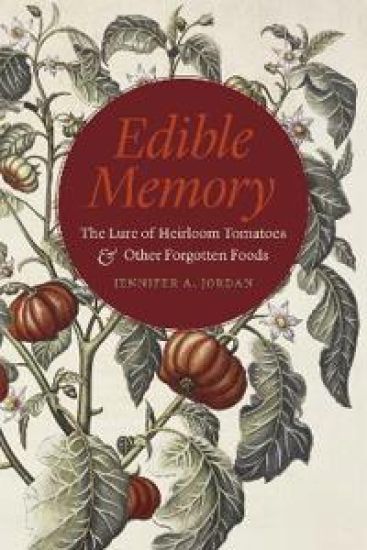
Edible Memory

Edible Memory

Jennifer A. Jordan

University of Chicago Press
2015
sidottu
Each week during the growing season, farmers' markets offer up such delicious treasures as brandywine tomatoes, cosmic purple carrots, and pink pearl apples - varieties that are prized by home chefs and carefully stewarded by farmers from year to year. These are the heirlooms and the antiques of the food world, endowed with their own rich histories. But how does an apple become an antique and a tomato an heirloom? In Edible Memory, Jennifer A. Jordan examines the ways that people around the world have sought to identify and preserve old - fashioned varieties of produce and the powerful emotional and physical connections they provide to a shared past. Jordan begins with the heirloom tomato, inquiring into its botanical origins in South America and its culinary beginnings in Aztec cooking to show how the homely and homegrown tomato has since grown to be an object of wealth and taste, as well as a popular symbol of the farm-to-table and heritage foods movements. In the chapters that follow, Jordan combines lush description and thorough research as she investigates the long history of antique apples; changing tastes in turnips and related foods like kale and parsnips; the movement of vegetables and fruits around the globe in the wake of Columbus; and the poignant, perishable world of stone fruits and tropical fruit, in order to reveal the connections - the edible memories - these heirlooms offer for farmers, gardeners, chefs, diners, and home cooks. This deep culinary connection to the past influences not only the foods we grow and consume, but the ways we shape and imagine our farms, gardens, and local landscapes. From the farmers' market to the seedbank to the neighborhood bistro, these foods offer essential keys not only to our past but also to the future of agriculture, the environment, and taste. By cultivating these edible memories, Jordan reveals, we can stay connected to a delicious heritage of historic flavors and to the pleasures and possibilities for generations of feasts to come.
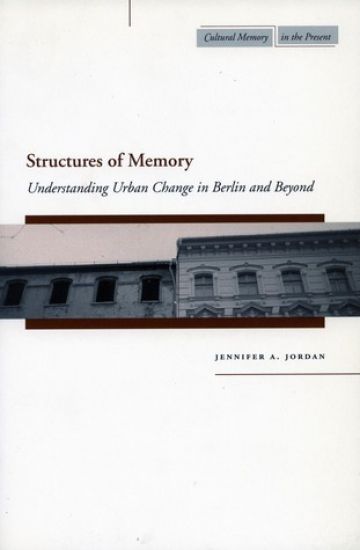
Structures of Memory

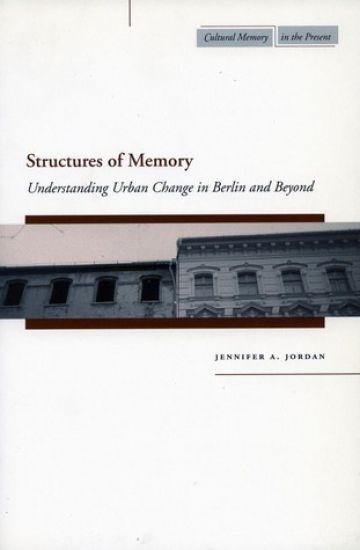
Structures of Memory

Jennifer A. Jordan

Stanford University Press
2006
sidottu
In many different parts of the world people cordon off sites of great suffering or great heroism from routine use and employ these sites exclusively for purposes of remembrance. The author of this book turns to the landscape of contemporary Berlin in order to understand how some places are forgotten by all but eyewitnesses, whereas others become the sites of public ceremonies, museums, or commemorative monuments. The places examined mark the city's Nazi past and are often rendered off limits to use for apartments, shops, or offices. However, only a portion of all "authentic" sites—places with direct connections to acts of resistance or persecution during the Nazi era—actually become designated as places of official collective memory. Others are simply reabsorbed into the quotidian landscape. Remembering leaves its marks on the skin of the city, and the goal of this book is to analyze and understand precisely how.
Structures of Memory

Structures of Memory

Jennifer A. Jordan

Stanford University Press
2006
pokkari
In many different parts of the world people cordon off sites of great suffering or great heroism from routine use and employ these sites exclusively for purposes of remembrance. The author of this book turns to the landscape of contemporary Berlin in order to understand how some places are forgotten by all but eyewitnesses, whereas others become the sites of public ceremonies, museums, or commemorative monuments. The places examined mark the city's Nazi past and are often rendered off limits to use for apartments, shops, or offices. However, only a portion of all "authentic" sites—places with direct connections to acts of resistance or persecution during the Nazi era—actually become designated as places of official collective memory. Others are simply reabsorbed into the quotidian landscape. Remembering leaves its marks on the skin of the city, and the goal of this book is to analyze and understand precisely how.
Wide Angle: Level 2: Multi-Pack A with Online Practice

Wide Angle: Level 2: Multi-Pack A with Online Practice

Jennifer Carlson; Nancy Jordan; Kate Adams

Oxford University Press
2019
muu
Wide Angle is the course that helps your adult learners to uncover and master the hidden rules of English, so when it comes to communicating in the real world, they know what to say and how to say it. Multi-Pack A combines units 1-6 from the Student Book with units 1-6 from the Workbook in one book - ideal for shorter courses. Online Practice provides students with extra practice of the skills, grammar and vocabulary taught in every lesson.
Wide Angle: Level 1: Multi-Pack A with Online Practice

Wide Angle: Level 1: Multi-Pack A with Online Practice

Jennifer Carlson; Nancy Jordan

Oxford University Press
2019
muu
Wide AngleA six-level international English course for Adult and Young adult learnersA real-world viewpointA course that empowers adult learners to join any conversation, and say the right thing at the right time.Wide Angle is the course that helps your students to uncover and master the hidden rules of English, so when it comes to communicating in the real world, they know what to say and how to say it.With lessons and interactive videos that guide students on how to respond appropriately in everyday situations, vibrant photos from around the world and video interviews with the photographers on the stories behind them, and authentic reading texts from Oxford Reference, Wide Angle provides real content that's underpinned by a comprehensive syllabus.
Clinical Interventions for Counseling Children and Adolescents: A Toolbox for School-Based Therapists & School Counselors
Counseling in a school-setting can be challenging for many therapists due to the wide array of presenting problems you may be met with on any given day. This book is designed to equip school-based therapists and school counselors with easy-to-implement interventions for common presenting problems in schools ranging from elementary to high school; a toolbox of sorts. Inside you'll also find a bibliotherapy section containing many books for use in counseling with students of all ages, and some additional resources for issues such as substance addictions, suicidality, trauma counseling, music therapy, and youth in poverty. This work was designed by counselors, for counselors.
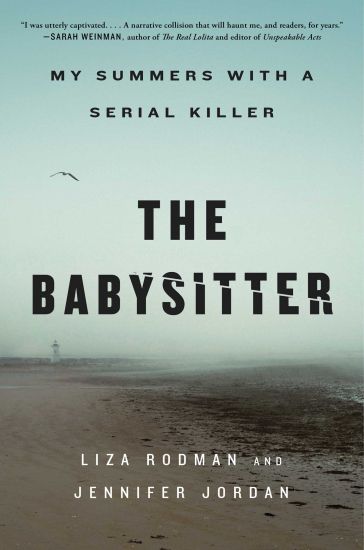
The Babysitter: My Summers with a Serial Killer

The Babysitter: My Summers with a Serial Killer

Liza Rodman; Jennifer Jordan

Atria Books
2021
sidottu
This chilling true story and "harrowing account of the evil that can lurk around the edges of girlhood" (Carolyn Murnick, author of The Hot One)--reminiscent of Ann Rule's classic The Stranger Beside Me--follows a little girl longing for love who finds friendship with her charismatic babysitter, unaware that he is a vicious serial killer. Growing up on Cape Cod in the 1960s, Liza Rodman was a lonely little girl. During the summers, while her mother worked days in a local motel and danced most nights in the Provincetown bars, her babysitter--the kind, handsome handyman at the motel where her mother worked--took her and her sister on adventures in his truck. He bought them popsicles and together, they visited his "secret garden" in the Truro woods. To Liza, he was one of the few kind, understanding, and safe adults in her life. But there was one thing she didn't know; their babysitter was a serial killer. Though Tony Costa's gruesome case made screaming headlines in 1969 and beyond, Liza never made the connection between her friendly babysitter and the infamous killer of numerous women, including four in Massachusetts, until decades later. Haunted by nightmares and horrified by what she learned, Liza became obsessed with the case. Now, she and cowriter Jennifer Jordan reveal "a suspenseful portrayal of murderous madness in tandem with a child's growing loneliness, neglect, and despair, a narrative collision that will haunt" (Sarah Weinman, author of The Real Lolita) you long after you finish it.
The Babysitter: My Summers with a Serial Killer

The Babysitter: My Summers with a Serial Killer

Liza Rodman; Jennifer Jordan

Atria Books
2022
nidottu
This chilling true story and "harrowing account of the evil that can lurk around the edges of girlhood" (Carolyn Murnick, author of The Hot One)--reminiscent of Ann Rule's classic The Stranger Beside Me--follows a little girl longing for love who finds friendship with her charismatic babysitter, unaware that he is a vicious serial killer. Growing up on Cape Cod in the 1960s, Liza Rodman was a lonely little girl. During the summers, while her mother worked days in a local motel and danced most nights in the Provincetown bars, her babysitter--the kind, handsome handyman at the motel where her mother worked--took her and her sister on adventures in his truck. He bought them popsicles and together, they visited his "secret garden" in the Truro woods. To Liza, he was one of the few kind, understanding, and safe adults in her life. But there was one thing she didn't know; their babysitter was a serial killer. Though Tony Costa's gruesome case made screaming headlines in 1969 and beyond, Liza never made the connection between her friendly babysitter and the infamous killer of numerous women, including four in Massachusetts, until decades later. Haunted by nightmares and horrified by what she learned, Liza became obsessed with the case. Now, she and cowriter Jennifer Jordan reveal "a suspenseful portrayal of murderous madness in tandem with a child's growing loneliness, neglect, and despair, a narrative collision that will haunt" (Sarah Weinman, author of The Real Lolita) you long after you finish it.
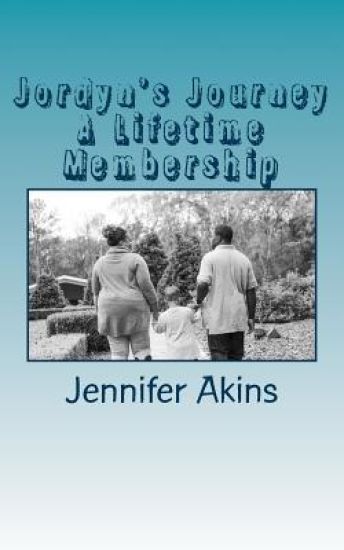
Jordyn's Journey: A Lifetime Membership

Jordyn's Journey: A Lifetime Membership

Jennifer Akins

Createspace Independent Publishing Platform
2018
nidottu
Jordyn's Journey is a non-fiction book about my son's life with Autism. Jordyn was diagnosed with Autism at age three and has had many challenges throughout his seven years of life. As a mother of a child with a disability, I have learned that through every obstacle, God will strengthen your faith. We don't look at Jordyn differently, we continue to love him and provide him with the assistance he needs in order to be successful. This is not a temporary journey, this is a lifetime commitment.
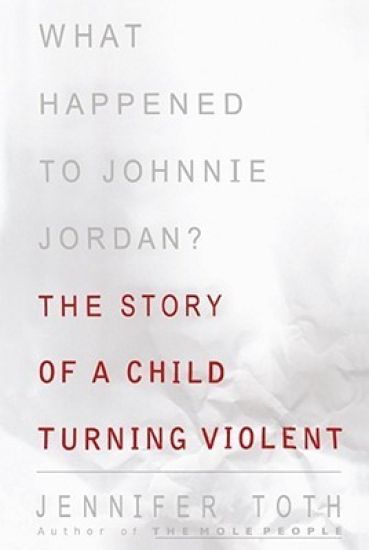
What Happened to Johnnie Jordan?

What Happened to Johnnie Jordan?

Jennifer Toth

The Free Press
2007
pokkari
On an icy night five years ago, Johnnie Jordan -- just fourteen years old -- brutally murdered his elderly foster care mother, leaving the state of Ohio shocked and outraged. He could not tell police why he did it or even how it made him feel; all he knew was that something inside him made him kill. At the time, few people predicted the swift emergence of a class of young so-called "super-predators" -- criminals like Johnnie who injure and kill without conscience, personified to the nation by the Littleton, Colorado, tragedy in 1999.In What Happened to Johnnie Jordan? acclaimed journalist Jennifer Toth, author of The Mole People and Orphans of the Living, once again takes a look at the people in our society whom we so often discard and altogether ignore. As Toth investigates Johnnie's crime and life, she unravels the mysteries of a child murderer unable to identify his emotions even after they converge in acts of fury and rage. In the course of her research, Johnnie grows dangerously into a young man who "will probably kill again," he says, "though I don't want to." Yet he also demonstrates great kindness and caring when treated as more than just a case number, when treated as a human. Through Johnnie's harrowing story, Toth examines how some children manage to overcome tragic beginnings, while others turn their pain, anger, and loss on innocents.More than a beautifully written narrative of youth gone wrong, this is the story of a child welfare system so corrupted by bureaucracy and overwhelmed with cases that many children entrusted to its care receive none at all. It is also the story of a Midwestern town struggling with blame and anger, unable to reconcile the damage done by so young an offender. From Johnnie's early years on the streets to his controversial trial and ultimate conviction, What Happened to Johnnie Jordan? is a seminal work on youth violence and how we as a society can work to curtail it. Ultimately, Toth ponders one of the most difficult and important questions on youth violence: If we can't control the way children are raised, how can we prevent them from destroying other lives as well?
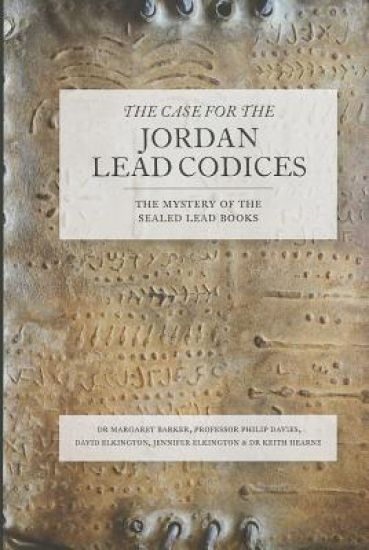
The Case for the Jordan Lead Codices

The Case for the Jordan Lead Codices

David Elkington; Jennifer Elkington

Watkins Publishing
2014
sidottu
The Case For the Jordan Lead Codices presents a series of essays by eminent scholars underlining the case for proper analysis and restoration of the codices back to Jordan. For the first time, a very thorough analysis of the metal and its origins is argued by a senior analyst in the private sector. David Elkington provides a brief account of the discovery. Added to this is a groundbreaking article by Dr Margaret Barker placing the codices in their proper historical and theological context, arguing for their authenticity and the need for further research. Her case is underscored by Prof Philip Davies, the man who was prominent in breaking the embargo on the Dead Sea Scrolls in the early 1990s. An essay by Dr Keith Hearne, one of the world's foremost psychologists, explores the effect of unscrupulous blogging on the delivery of fact and context in history. He discusses the case for religious 'shock' in the light of the implications of the discovery. Jennifer Elkington discusses the effect of the Thoneman affair in the context of proper academic behaviour whilst revealing the fact that very few individuals have had, or asked for access to, proper samples and analysis of the codices.
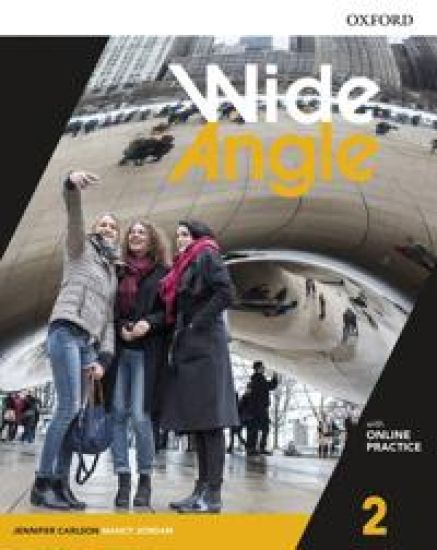
Wide Angle: Level 2: Student Book with Online Practice

Wide Angle: Level 2: Student Book with Online Practice

Jennifer Carlson; Nancy Jordan

Oxford University Press
2018
muu
Wide Angle is the course that helps your adult learners to uncover and master the hidden rules of English, so when it comes to communicating in the real world, they know what to say and how to say it. The Student Book with Online Practice presents content from the real world to motivate learning, and offers students plenty of opportunities to practice responding appropriately to everyday situations.
Wide Angle: Level 1: Multi-Pack B with Online Practice

Wide Angle: Level 1: Multi-Pack B with Online Practice

Jennifer Carlson; Nancy Jordan

Oxford University Press
2019
muu
Wide Angle is the course that helps your adult learners to uncover and master the hidden rules of English, so when it comes to communicating in the real world, they know what to say and how to say it. Multi-Pack B combines units 7-12 from the Student Book with units 7-12 from the Workbook in one book - ideal for shorter courses. Online Practice provides students with extra practice of the skills, grammar and vocabulary taught in every lesson.
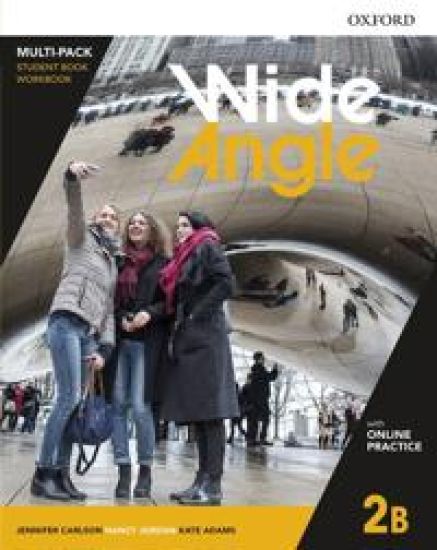
Wide Angle: Level 2: Multi-Pack B with Online Practice

Wide Angle: Level 2: Multi-Pack B with Online Practice

Jennifer Carlson; Nancy Jordan; Kate Adams

Oxford University Press
2019
muu
Wide Angle is the course that helps your adult learners to uncover and master the hidden rules of English, so when it comes to communicating in the real world, they know what to say and how to say it. Multi-Pack B combines units 7-12 from the Student Book with units 7-12 from the Workbook in one book - ideal for shorter courses. Online Practice provides students with extra practice of the skills, grammar and vocabulary taught in every lesson.
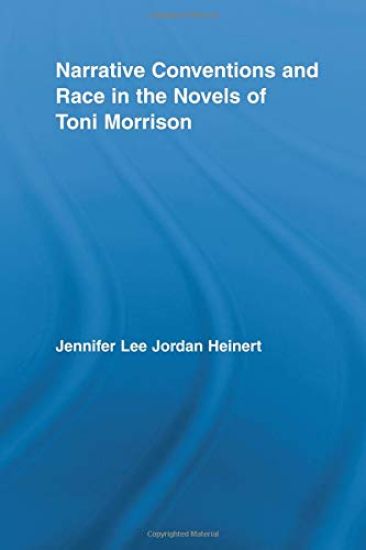
Narrative Conventions and Race in the Novels of Toni Morrison
This study analyzes the relationship between race and genre in four of Toni Morrison’s novels: The Bluest Eye, Tar Baby, Jazz, and Beloved. Heinert argues how Morrison’s novels revise conventional generic forms such as bildungsroman, folktales, slave narratives, and the formal realism of the novel itself. This study goes beyond formalist analyses to show how these revisions expose the relationship between race, conventional generic forms, and the dominant culture. Morrison’s revisions critique the conventional roles of African Americans as subjects of and in the genre of the novel, and (re)write roles which instead privilege their subjectivity. This study provides readers with new ways of understanding Morrison’s novels. Whereas critics often fault Morrison for breaking with traditional forms and resisting resolution in her novels, this analysis show how Morrison’s revisions shift the narrative truth of the novel from its representation in conventional forms to its interpretation by the readers, who are responsible for constructing their own resolution or version of narrative truth. These revisions expose how the dominant culture has privileged specific forms of narration; in turn, these forms privilege the values of the dominant culture. Morrison’s novels attempt to undermine this privilege and rewrite the canon of American literature.
Narrative Conventions and Race in the Novels of Toni Morrison
This study analyzes the relationship between race and genre in four of Toni Morrison’s novels: The Bluest Eye, Tar Baby, Jazz, and Beloved. Heinert argues how Morrison’s novels revise conventional generic forms such as bildungsroman, folktales, slave narratives, and the formal realism of the novel itself. This study goes beyond formalist analyses to show how these revisions expose the relationship between race, conventional generic forms, and the dominant culture. Morrison’s revisions critique the conventional roles of African Americans as subjects of and in the genre of the novel, and (re)write roles which instead privilege their subjectivity. This study provides readers with new ways of understanding Morrison’s novels. Whereas critics often fault Morrison for breaking with traditional forms and resisting resolution in her novels, this analysis show how Morrison’s revisions shift the narrative truth of the novel from its representation in conventional forms to its interpretation by the readers, who are responsible for constructing their own resolution or version of narrative truth. These revisions expose how the dominant culture has privileged specific forms of narration; in turn, these forms privilege the values of the dominant culture. Morrison’s novels attempt to undermine this privilege and rewrite the canon of American literature.