Elrica Jane Davis is embarking on a daunting solitary journey from Caddo Gap through the mountains that make up the wilderness that is western Arkansas in 1858. This will be a dangerous trip for a young woman with just her dog and mule for protection. The premature death of her mother and the matrimonial intentions of the bootlegging outlaw Oscar James leave Jane little choice. Unknown to Jane, Sebastian County Deputy Sheriff Richard Drake has been sent by Jane's uncle to escort her to Fort Smith. Unfortunately, he is shot and wounded by the outlaw gang who believe he is the one who destroyed their moonshine still. Richard is bleeding profusely, but manages to elude the bumbling outlaw gang before sliding from his horse.Jane's spiritual upbringing will not allow her to abandon Richard when she finds him lying unconscious on the trail. Together, they learn respect for each other and the skills each brings to the adventures, challenges and dangers they encounter on their unexpected journey.
Caves to Cathedrals: Visual Arts in Ancient and Medieval Texts is a compilation of primary sources that help clarify or contextualize artistic production in the pre-modern Western world. A wide array of ancient and medieval visual culture is explored, including fashion, stage scenery, and other types of display such as triumphal and funerary processions, a lavish dinner party, and gladiatorial games. The diverse readings include an eyewitness account of the eruption of Mount Vesuvius, a thorough description of the process of mummification, and instructions on how to make a stained glass window. In the fully revised second edition there are dozens of new readings that explore such topics as royal tents, calligraphy, the role of women in the arts, and the Bayeux tapestry. With the addition of an introduction to the manuscript tradition, this edition also features several contemporary authors, such as John Keats, Friedrich Nietzsche, and D.H. Lawrence, who found inspiration in the ancient world. Engaging and carefully chosen, the readings in this book bring the past to life. Caves to Cathedrals is an ideal textbook companion for the first half of Western art history survey, and the new readings make it suitable for Roman, ancient Greek, and medieval art courses.Lee Ann Turner is a professor in the Art Department at Boise State University, where she has taught survey of Western art since 1996. There, she initiated the first history of art degree in the state of Idaho. She received her Ph.D. in classical archaeology from the University of Pennsylvania, where she also studied Latin and ancient Greek. She was a fellow of the American School of Classical Studies in Athens and has participated in either archaeological programs or field projects in Cyprus, Greece, Rome, and Crete.
This volume is the second in the series of final reports on the work of the Kavousi Project and the first volume on the cleaning (1982-1984) and excavations (1987-1992) at the mountain sites located above the modern village of Kavousi in eastern Crete. These sites, Vronda and the Kastro, shed light on the Early Iron Age, the transitional period in Cretan history known popularly as the Dark Ages, thereby elucidating the way of life of the people who lived in the area of Kavousi during that period and how their culture changed over time. Kavousi IIA is devoted to the excavation of material from the Late Minoan IIIC settlement at Vronda, particulary the houses on the summit of the Vronda ridge (Buildings A-B, C-D, J-K, and Q), along with earlier (Building P) and later (Building R) structures around them.
Observera att förlaget som ger ut denna produkt baserar innehållet i sina produkter på fria källor som Wikipedia. Boken är med stor sannolikhet endast ett utdrag ur dessa informationskällor, alltså inte en vanlig bok i den bemärkelsen.
Observera att förlaget som ger ut denna produkt baserar innehållet i sina produkter på fria källor som Wikipedia. Boken är med stor sannolikhet endast ett utdrag ur dessa informationskällor, alltså inte en vanlig bok i den bemärkelsen.
Lee Ann is curious about life and wants to experience everything she can, so she does and tries to help. However, her efforts made her sad, until one day, her mother and dad makes her happy once again.
Moving beyond books that address a single type of crisis (e.g. death of a child; diagnosis of a serious illness; sexual assault). Its focus is on helping the general reader and non-specialists recognize common signs of crisis across a range of life challenges. It shows how unexpected events, e.g. death of a loved one or diagnosis of a serious illness often intersect with life cycle transition points (i.e., adolescence, mid-life, old age) and can leave people more vulnerable to slipping into crisis-especially when lacking one's usual social supports. Through extensive use of stories, the book aims to help people identify and respond appropriately to the typical feelings and behaviors when facing traumatic events and life-threatening crisis. For example, some people in acute crisis express a fear of "going crazy " or have thoughts of suicide or violence toward others. Readers will learn that the high anxiety typical of crisis is normal, not usually a sign of mental illness. Whether or not critical life events result in crisis depends on the type, timing, and interpretation of the event, the person's life cycle development phase, history of healthy coping, and available timely support. In sum, the book's central theme is crisis as both danger and opportunity.
Wait a minute Was that a dinosaur? As soon as she heard the roar, Sam's mom knew that it wasn't going to be an ordinary day in the garden. Come along with Sam on his fun-filled adventures and experience the magic along the way. Let your imagination run wild as you explore the garden with Sam as your guide. Don't be surprised if you're craving pizza by the end of this story
Wait a minute Was that a dinosaur? As soon as she heard the roar, Sam's mom knew that it wasn't going to be an ordinary day in the garden. Come along with Sam on his fun-filled adventures and experience the magic along the way. Let your imagination run wild as you explore the garden with Sam as your guide. Don't be surprised if you're craving pizza by the end of this story
A user-friendly primer to the essential techniques of quantitative field ecology, or paleoecology, integrating the intuitive approach of the field researcher with the rational analytical tools of the statistician. Designed as a comprehensive introduction and handy methodological reference for students and professionals alike, this book is filled with lucid explanations, real-world examples, practice problem sets, more than one hundred illustrations and tables, and many applications to research issues of current concern.
Surveying Natural Populations is a user-friendly primer to the essential methodologies of quantitative field ecology or paleoecology. Combining the intuitive methods of the field researcher with the mathematical precision of the statistician, the volume determines, through real biodiversity and ecological examples, the necessary measures for a complete community assessment while clarifying the confusions between biological and statistical terminology. Focusing on underlying mathematical concepts, it describes how to complete incrementally a quantitative sampling of any recent or fossil population. The first half of Surveying Natural Populations explains the fundamentals of ecological assessment. Employing a single data set throughout, initial chapters navigate such topics as estimating densities, relative abundance, occurrences, the determination of adequate sample sizes and field sampling schemes. The second half covers the newest advances in biodiversity measurement. Through the use of information mathematics and decomposition, the authors mathematically examine the relationship among a number of proposed diversity indices and discard inappropriate measures. What remains is a simple, all-encompassing system called SHE analysis, in which species density, richness, information, and evenness are all shown to be related explicitly. This biodiversity data is then integrated into a simple graphic, a plot called a biodiversitygram, which provides the researcher with a cohesive descriptive and inferential tool to assess any community's biodiversity.
Providing the ocular anatomy and physiology content needed for a thorough comprehension of this complex field, Clinical Anatomy and Physiology of the Visual System, 4th Edition, offers a solid foundation for recognizing and understanding specific clinical situations and how they relate to anatomic structure. This concise, well-referenced resource covers the clinical anatomy of the eye, its adnexa and visual pathways, and histologic information-the information you need for success in coursework, certification exams, and clinical practice. Features vivid, full-color illustrations that help you visualize the clinical anatomy of the eye along with the cellular physiology behind diseases and disorders of the visual system. Emphasizes clinical application throughout, helping you better understand the processes that occur in disease and dysfunction. Clinical Comment sections offer a unique focus on clinical situations, conditions, diseases, and treatments. Contains new OCT, OCTA, MRI, and CT images that demonstrate clinical views of ocular anatomy. OCT technology is incorporated to describe the retinal layers, newly described anatomical components of the vitreous, corneal and anterior chamber angle anatomy, and the choroidal and retinal vasculature. Covers current topics such as genes essential in eye development, scleral and choroidal changes occurring with myopia progression, limbal stem cells, age-related macular degeneration and VEGF therapies, and microinvasive glaucoma surgical procedures. Includes updated concepts and terminology: Edinger Westfall preganglionic cells, sensory innervation to the cornea, knees of Wilbrand, intrinsically photosensitive retinal ganglion cells, and more. Provides expert coverage by a practicing optometrist, giving you a practical framework for recognizing and understanding clinical situations, problems, and treatments. Enhanced eBook version included with purchase. Your enhanced eBook allows you to access all of the text, figures, and references from the book on a variety of devices.
The portfolio is an essential part of the summative assessment within qualifying social work programmes. All students are required to complete a practice portfolio to provide evidence of their learning in practice. This essential book demonstrates how students can use the portfolio to demonstrate their learning in terms of developing core knowledge, values and skills.Topics covered include:What a portfolio is, and how to make best use of it in your learning journeyHow to evidence your capability using the Professional Capabilities Framework for Social WorkersHow to reflect on your own learning needs and learning styleHow to work with your practice educator in terms of practice learning and portfolio developmentHow to evidence the use of theory in your portfolioHow to evidence meaningful service user and carer involvement within your placement and portfolioHow to use your portfolio as a basis for future CPD learning, including the need to develop Personal Development Plans and the role of AYSEWritten by a team of experts from Bournemouth University, each chapter uses a range of reflective activities, practice educator comments, and student testimony to illustrate the discussion.
After centuries of being considered a private matter in most societies, violence and its profound effect on the physical health, mental health, and social well-being of victims and their families, as well as on the assailants themselves, has started to take centre stage as a public issue of worldwide concern.Health and social service providers are in pivotal positions to provide preventive and restorative services to those affected by violent and abusive behaviour. This comprehensive textbook presents theoretical background and practical strategies for doing so, providing a solid knowledge base for good practice in this area. It emphasizes the interdisciplinary aspects of violence and victim/survivor care and addresses violence over the lifespan, covering:child sexual and physical abusesexual assault of adultsbattering and emotional abuse of intimate partnerselder abuseperpetrators of violence and abuseviolence in learning and work environmentsvicarious trauma and self-careinterconnections between various forms of violence, including socially approved violence in the media and in war.This text is an essential resource for qualified practitioners wanting to learn more about this area and for students starting out in health and social care. Each chapter includes case studies and thinking points, and suggestions for application in practice settings. A companion website provides materials for students and educators, enabling the inclusion of violence issues in an already busy curriculum.Lee Ann Hoff is a nurse-anthropologist and crisis specialist. She has published widely and is the author of the award-winning textbook People in Crisis. She has extensive experience as an educator, consultant, clinician, and crisis service manager.
After centuries of being considered a private matter in most societies, violence and its profound effect on the physical health, mental health, and social well-being of victims and their families, as well as on the assailants themselves, has started to take centre stage as a public issue of worldwide concern.Health and social service providers are in pivotal positions to provide preventive and restorative services to those affected by violent and abusive behaviour. This comprehensive textbook presents theoretical background and practical strategies for doing so, providing a solid knowledge base for good practice in this area. It emphasizes the interdisciplinary aspects of violence and victim/survivor care and addresses violence over the lifespan, covering:child sexual and physical abusesexual assault of adultsbattering and emotional abuse of intimate partnerselder abuseperpetrators of violence and abuseviolence in learning and work environmentsvicarious trauma and self-careinterconnections between various forms of violence, including socially approved violence in the media and in war.This text is an essential resource for qualified practitioners wanting to learn more about this area and for students starting out in health and social care. Each chapter includes case studies and thinking points, and suggestions for application in practice settings. A companion website provides materials for students and educators, enabling the inclusion of violence issues in an already busy curriculum.Lee Ann Hoff is a nurse-anthropologist and crisis specialist. She has published widely and is the author of the award-winning textbook People in Crisis. She has extensive experience as an educator, consultant, clinician, and crisis service manager.
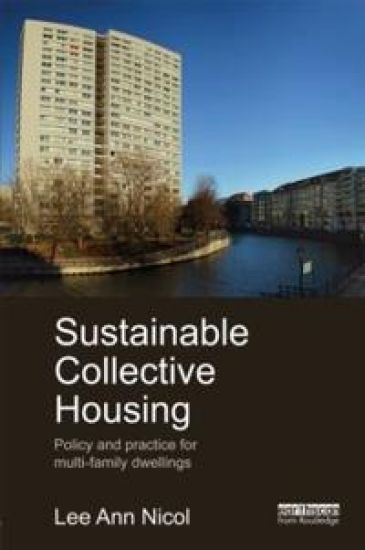
Housing stocks provide much more than just shelter. Energy suppliers, pension fund managers and public transit providers are but a few of the many stakeholders that have a regulated interest in the non-shelter goods and services offered by housing. Such stakeholders and their activities are traditionally addressed on a sectoral basis, yet regulations that are designed to apply to one often have unintended effects on another, effects that may produce negative pressure on the housing stock – and the wider built environment – in terms of sustainability.Sustainable Collective Housing presents a new and comprehensive approach to the study of the regulations pertaining to housing: the institutional regimes framework. By considering the housing stock as a resource, this framework enables the ensemble of public policies, property rights and contracts that govern all shelter and non-shelter uses of housing to be identified, analyzed and evaluated. Using examples from Switzerland, Germany and Spain, this book describes the regulatory conditions that must be in place before housing sustainability issues can be effectively tackled. The book will provide policy-makers, housing stock owners and other stakeholders with the knowledge and tools to make rational and legitimate decisions regarding housing sustainability.