Kirjojen hintavertailu. Mukana 12 016 292 kirjaa ja 12 kauppaa.

Kirjahaku

Etsi kirjoja tekijän nimen, kirjan nimen tai ISBN:n perusteella.

146 tulosta hakusanalla Madanmohan Rao

Knowledge Management Tools and Techniques

Knowledge Management Tools and Techniques

Madanmohan Rao

Butterworth-Heinemann Ltd
2004
nidottu
Knowledge management (KM) - or the practice of using information and collaboration technologies and processes to capture organizational learning and thereby improve business performance - is becoming one of the key disciplines in management, especially in large companies. Many books, magazines, conferences, vendors, consultancies, Web sites, online communities and email lists have been formed around this concept. This practical book focuses on the vast offerings of KM solutions—technology, content, and services. The focus is not on technology details, but on how KM and IT practitioners actually use KM tools and techniques. Over twenty case studies describe the real story of choosing and implementing various KM tools and techniques, and experts analyse the trends in the evolution of these technologies and tools, along with opportunities and challenges facing companies harnessing them. Lessons from successes and failures are drawn, along with roadmaps for companies beginning or expanding their KM practice. The introductory chapter presents a taxonomy of KM tools, identifies IT implications of KM practices, highlights lessons learned, and provides tips and recommendations for companies using these tools. Relevant literature on KM practices and key findings of market research groups and industry consortia such as IDC, Gartner and APQC, are presented. The majority of the book is devoted to case studies, featuring clients and vendors along the entire spectrum of solutions: hardware (e.g. handheld/wearable devices), software (e.g. analytics, collaboration, document management) and content (e.g. newsfeeds, market research). Each chapter is structured along the "8Cs" framework developed by the author: connectivity, content, community, commerce, community, capacity, culture, cooperation and capital. In other words, each chapter addresses how appropriate KM tools and technologies help a company on specific fronts such as fostering adequate employee access to knowledge bodies, user-friendly work-oriented content, communities of practice, a culture of knowledge, learning capacity, a spirit of cooperation, commercial and other incentives, and carefully measured capital investments and returns. Vendor history, product/service offerings, implementation details, client testimonials, ROI reports, and future trends are highlighted. Experts in the field then provide third-party analysis on trends in KM tools and technique areas, and recommendations for KM practitioners.

Knowledge Management Tools and Techniques
Knowledge management (KM) - or the practice of using information and collaboration technologies and processes to capture organizational learning and thereby improve business performance - is becoming one of the key disciplines in management, especially in large companies. Many books, magazines, conferences, vendors, consultancies, Web sites, online communities and email lists have been formed around this concept. This practical book focuses on the vast offerings of KM solutions—technology, content, and services. The focus is not on technology details, but on how KM and IT practitioners actually use KM tools and techniques. Over twenty case studies describe the real story of choosing and implementing various KM tools and techniques, and experts analyse the trends in the evolution of these technologies and tools, along with opportunities and challenges facing companies harnessing them. Lessons from successes and failures are drawn, along with roadmaps for companies beginning or expanding their KM practice. The introductory chapter presents a taxonomy of KM tools, identifies IT implications of KM practices, highlights lessons learned, and provides tips and recommendations for companies using these tools. Relevant literature on KM practices and key findings of market research groups and industry consortia such as IDC, Gartner and APQC, are presented. The majority of the book is devoted to case studies, featuring clients and vendors along the entire spectrum of solutions: hardware (e.g. handheld/wearable devices), software (e.g. analytics, collaboration, document management) and content (e.g. newsfeeds, market research). Each chapter is structured along the "8Cs" framework developed by the author: connectivity, content, community, commerce, community, capacity, culture, cooperation and capital. In other words, each chapter addresses how appropriate KM tools and technologies help a company on specific fronts such as fostering adequate employee access to knowledge bodies, user-friendly work-oriented content, communities of practice, a culture of knowledge, learning capacity, a spirit of cooperation, commercial and other incentives, and carefully measured capital investments and returns. Vendor history, product/service offerings, implementation details, client testimonials, ROI reports, and future trends are highlighted. Experts in the field then provide third-party analysis on trends in KM tools and technique areas, and recommendations for KM practitioners.
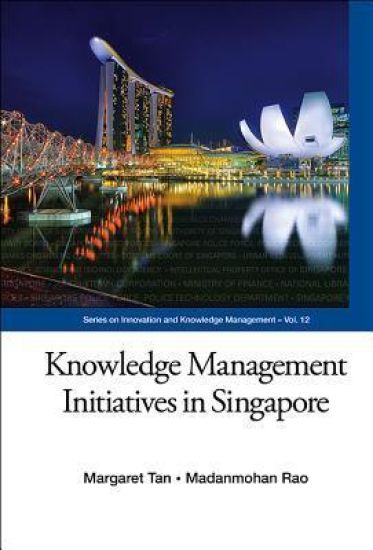
Knowledge Management Initiatives In Singapore

Knowledge Management Initiatives In Singapore

Margaret Joo Yian Tan; Madanmohan Rao

World Scientific Publishing Co Pte Ltd
2013
sidottu
Knowledge Management Initiatives in Singapore is the first book that provides descriptive analyses of the award-winning knowledge management projects undertaken by the public sector organisations in Singapore. It features 12 organisations honoured for their outstanding efforts to understand and implement knowledge management, not only to enhance tactical efficiency and effectiveness but also to plan for strategic opportunities in the dynamic environment. Based on these successful case studies, the book provides a comprehensive overview and approach for organisations to understand how to plan and execute their knowledge management journeys. This includes analysing the rationale, thereby calibrating specific knowledge management plans and roles; identifying resources for knowledge management implementation (such as people, process and technology); and evaluating the outcomes and future paths. This book will be invaluable to managers, knowledge management practitioners and graduate students in the field, offering deep actionable insights on the implementation of knowledge management projects and providing a balanced perspective of organisational knowledge management encompassing both theory and pragmatism.
Madan Mohan: An Enchanting Saga

Madan Mohan: An Enchanting Saga

Sushant Bharti; Ferdinando Sardella

INSIGHT EDITIONS
2024
sidottu
The establishment of Gaudiya Vaishnavas in the Braj region catalysed a novel movement centered around the devotion to Radha and Krishna. This movement, in turn, spurred construction of the Madan Mohan, one of the most significant and prominent temples in the area during the Mughal reign. In the late 16th and early 17th centuries, each temple emerged as a distinct exemple of Mughal artistry, showcasing a seamless integration of diverse architectural components and novel experimentation. The Madan Mohan temple stands as a remarkable testament to the confluence of social, economic, and political forces that transcended regional boundaries during the zenith of Mughal dominance.
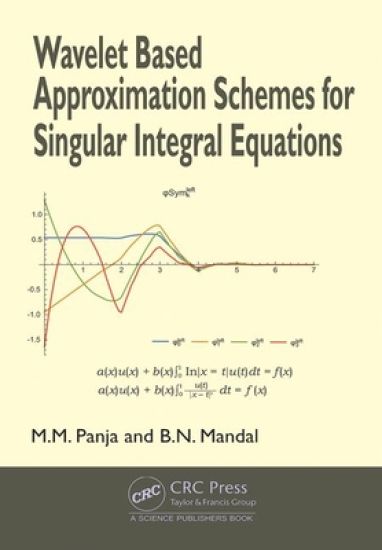
Wavelet Based Approximation Schemes for Singular Integral Equations

Wavelet Based Approximation Schemes for Singular Integral Equations

Madan Mohan Panja; Birendra Nath Mandal

CRC Press
2020
sidottu
Many mathematical problems in science and engineering are defined by ordinary or partial differential equations with appropriate initial-boundary conditions. Among the various methods, boundary integral equation method (BIEM) is probably the most effective. It’s main advantage is that it changes a problem from its formulation in terms of unbounded differential operator to one for an integral/integro-differential operator, which makes the problem tractable from the analytical or numerical point of view. Basically, the review/study of the problem is shifted to a boundary (a relatively smaller domain), where it gives rise to integral equations defined over a suitable function space. Integral equations with singular kernels areamong the most important classes in the fields of elasticity, fluid mechanics, electromagnetics and other domains in applied science and engineering. With the advancesin computer technology, numerical simulations have become important tools in science and engineering. Several methods have been developed in numerical analysis for equations in mathematical models of applied sciences. Widely used methods include: Finite Difference Method (FDM), Finite Element Method (FEM), Finite Volume Method (FVM) and Galerkin Method (GM). Unfortunately, none of these are versatile. Each has merits and limitations. For example, the widely used FDM and FEM suffers from difficulties in problem solving when rapid changes appear in singularities. Even with the modern computing machines, analysis of shock-wave or crack propagations in three dimensional solids by the existing classical numerical schemes is challenging (computational time/memory requirements). Therefore, with the availability of faster computing machines, research into the development of new efficient schemes for approximate solutions/numerical simulations is an ongoing parallel activity. Numerical methods based on wavelet basis (multiresolution analysis) may be regarded as a confluence of widely used numerical schemes based on Finite Difference Method, Finite Element Method, Galerkin Method, etc. The objective of this monograph is to deal with numerical techniques to obtain (multiscale) approximate solutions in wavelet basis of different types of integral equations with kernels involving varieties of singularities appearing in the field of elasticity, fluid mechanics, electromagnetics and many other domains in applied science and engineering.
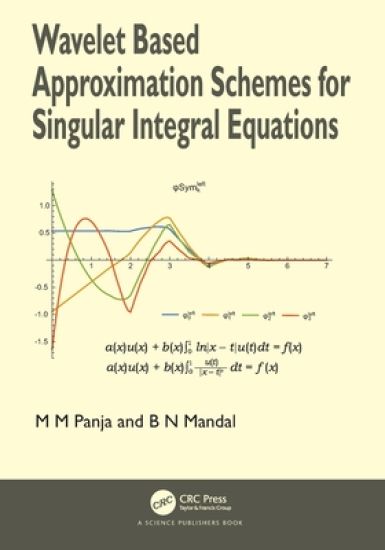
Wavelet Based Approximation Schemes for Singular Integral Equations

Wavelet Based Approximation Schemes for Singular Integral Equations

Madan Mohan Panja; Birendra Nath Mandal

CRC Press
2022
nidottu
Many mathematical problems in science and engineering are defined by ordinary or partial differential equations with appropriate initial-boundary conditions. Among the various methods, boundary integral equation method (BIEM) is probably the most effective. It’s main advantage is that it changes a problem from its formulation in terms of unbounded differential operator to one for an integral/integro-differential operator, which makes the problem tractable from the analytical or numerical point of view. Basically, the review/study of the problem is shifted to a boundary (a relatively smaller domain), where it gives rise to integral equations defined over a suitable function space. Integral equations with singular kernels areamong the most important classes in the fields of elasticity, fluid mechanics, electromagnetics and other domains in applied science and engineering. With the advancesin computer technology, numerical simulations have become important tools in science and engineering. Several methods have been developed in numerical analysis for equations in mathematical models of applied sciences. Widely used methods include: Finite Difference Method (FDM), Finite Element Method (FEM), Finite Volume Method (FVM) and Galerkin Method (GM). Unfortunately, none of these are versatile. Each has merits and limitations. For example, the widely used FDM and FEM suffers from difficulties in problem solving when rapid changes appear in singularities. Even with the modern computing machines, analysis of shock-wave or crack propagations in three dimensional solids by the existing classical numerical schemes is challenging (computational time/memory requirements). Therefore, with the availability of faster computing machines, research into the development of new efficient schemes for approximate solutions/numerical simulations is an ongoing parallel activity. Numerical methods based on wavelet basis (multiresolution analysis) may be regarded as a confluence of widely used numerical schemes based on Finite Difference Method, Finite Element Method, Galerkin Method, etc. The objective of this monograph is to deal with numerical techniques to obtain (multiscale) approximate solutions in wavelet basis of different types of integral equations with kernels involving varieties of singularities appearing in the field of elasticity, fluid mechanics, electromagnetics and many other domains in applied science and engineering.
Pandit M. M. Malaviya's Letter to the Viceroy and Governor General of India on the Indian Situation
Pandit M. M. Malaviya's Letter To The Viceroy And Governor General Of India On The Indian Situation is a book written by Madan Mohan Malaviya. In this book, Malaviya writes a letter to the Viceroy and Governor General of India, expressing his concerns and opinions on the situation in India during the early 20th century. Malaviya was a prominent Indian nationalist and politician who played a significant role in India's struggle for independence. He was also a social reformer, educationist, and journalist. In this letter, Malaviya discusses various issues such as the political situation, economic conditions, and social problems in India. He also talks about the need for reforms and the role of the British government in bringing about change. The book provides valuable insights into the Indian freedom struggle and the thoughts and ideas of one of its most prominent leaders. It is a must-read for anyone interested in Indian history and politics.This scarce antiquarian book is a facsimile reprint of the old original and may contain some imperfections such as library marks and notations. Because we believe this work is culturally important, we have made it available as part of our commitment for protecting, preserving, and promoting the world's literature in affordable, high quality, modern editions, that are true to their original work.
The Arch of Fire

The Arch of Fire

Madan Mohan Mishra

Black Eagle Books
2021
pokkari
'The Arch of Fire' is based on the Naxalite' tactic against the Indian State. Seizing land from oppressors and redistributing it amongst the peasants has been the aim of the Naxalites since its creation. In 1967, oppressed peasants inspired by the communist movement raised their bows and arrows against the feudal landowners in Naxalbari. Naxalites, raised their upgraded, more sophisticated weapons against mining corporations and development projects which threatened to expel indigenous tribes or Adivasis from their ancestral lands in order to exploit the mineral-rich soil. The Naxalite movement as we know it today, its emergence is a result of the various fragmentations of communist ideologies in India over time. Hence, in order to comprehend the nature of Naxalism, one must first delve into its own tumultuous history. This novel received Odisha Sahitya Academy award in 1989.
In The Land of Water Lilies

In The Land of Water Lilies

Madan Mohan Sarkar

Notion Press
2019
pokkari
The saying goes, "When two hearts come closer, discrimination and discretion disappear." Sara, the Indo-Surinamese girl settled in The Netherlands was drawn closer to the Indian boy, Rahul, while on a tour of Europe. A sad and heartbroken Sara sees Rahul off at Rome Airport after the tour. Would they be fortunate enough, like Sudip and Rita, to unite in a bond of marriage with the happy consent of all? Or would they be defeated by the barriers of distance, protocols, injustice, social and cultural differences and family tragedies? Or be blessed with the power of the almighty, who proclaimed in Srimad Bhagbad Gita, "I and only I, the omnipotent, omnipresent and omniscient, decide the fate of all living beings and their actions in the mundane Earth?"