Kirjojen hintavertailu. Mukana 11 244 527 kirjaa ja 12 kauppaa.

Kirjahaku

Etsi kirjoja tekijän nimen, kirjan nimen tai ISBN:n perusteella.

1000 tulosta hakusanalla Todd Richards

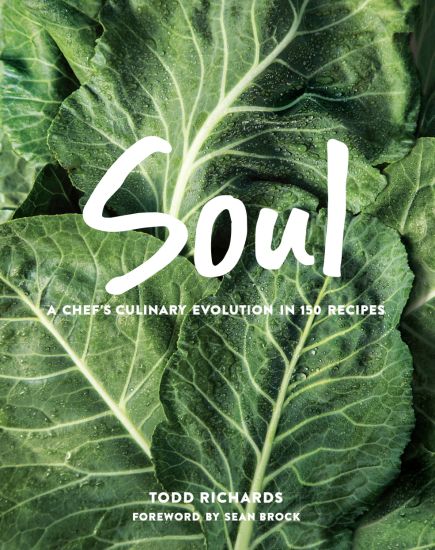
SOUL

SOUL

Todd Richards

Oxmoor House, Incorporated
2018
sidottu
Amazon's Best Cookbooks of 2018 Publishers Weekly Best Books of 2018 Food52 Favorite Cookbooks of 2018The Atlantic Best Cookbooks of 2018 Grub Street (New York Magazine) Best Cookbooks of 2018 James Beard Award-nominated Chef Todd Richards shares his personal culinary exploration of soul food. Black American chefs and cooks are often typecast as the experts of only one cuisine—soul food, but Todd Richards’ food is anything but stereotypical. Taste his Hot-Chicken-Style Country-Fried Lamb Steak or Blueberry-Sweet Tea-Brined Chicken Thighs as evidence. While his dishes are rooted in family and the American cuisine known as soul food, he doesn’t let his heritage restrain him. The message of Soul is that cooks can honor tradition yet be liberated to explore. Todd Richards celebrates the restorative wonders of a classic pot of Collard Greens with Ham Hocks, yet doesn’t shy away from building upon that foundational recipe with his Collard Green Ramen, a reinterpretation that incorporates far-flung flavors of cultural influences and exemplifies culinary evolution. Page after page, in more than 150 recipes and stunning photos, Todd shares his creativity and passion to highlight what soul food can be for a new generation of cooks. Whether you’re new to Southern and soul food or call the South your home, Soul will encourage you to not only step outside of the box, but to boldly walk away from it. The chapters in Soul are organized by featured ingredients: Collards, Onions, Berries, Lamb, Seafood, Corn, Tomatoes, Melons, Stone Fruit, Eggs and Poultry, Pork and Beef, Beans and Rice, and Roots. Each one begins with a traditional recipe and progresses alongside Richards’ exploration of flavor combinations and techniques.

Roots, Heart, Soul

Roots, Heart, Soul

Todd Richards; Amy Paige Condon

HARPERCOLLINS PUBLISHERS INC
2024
sidottu
Chef Todd Richards, the James Beard Award–winning author of Soul, is your guide to exploring West African diaspora cooking in the Americas, spanning history from the slave trade through the Great Migration, with over 100 mouthwatering recipes and illuminating narratives.Across centuries and continents, the influence of West African food and culture draws a delicious family tree whose branches stretch into the Caribbean, Mexico, and the United States from coast to coast—from the deep South to the Wild West and all the roads in between. In this sprawling and evocative cookbook, acclaimed chef Todd Richards traces these shared roots and the journeys that connect them. Researched and informative, this book takes you beyond the recipes, exploring the history behind these traditional dishes—and the people who created them—and how peoples of the West African diaspora shaped and changed American history as we know it today.Including vibrant documentary photography, features throughout highlight interviews with chefs and luminaries, additional notes on ingredients and historical context, and expert chef’s tips. At the heart of the book are Chef Todd’s inspired recipes, including:Peanut and Mustard Greens Soup with Ginger and TomatoHaitian Oxtail with Beef Broth and PiklizGrilled Shrimp Mojo with Black Bean Puree and Toasted RiceGrilled Quail Tacos with Mole PoblanoScallion and Smoked Cheddar Cornbread Fritters with Red Pepper HoneyPeach Cobbler with Butter Pecan Ice CreamBuffalo Style Frog Legs or Chicken Wings with French Onion Ranch Dressing7-Up CakeChicago-Style Beach SpaghettiBBQ Shrimp with Garlicy French Bread and Parsley ButterBeignets with Espresso Powdered SugarFrom page to glorious page, Todd’s deep knowledge and vivid storytelling remind us that cooking and sharing food is a joyous way to connect with history, culture, and each other.
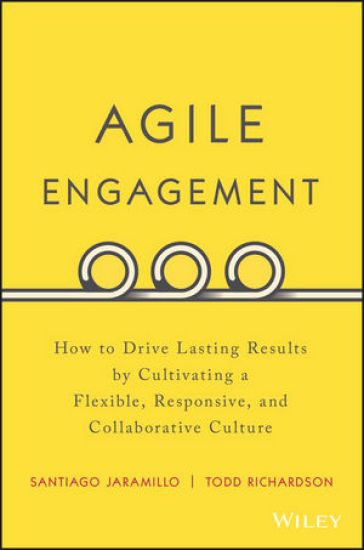
Agile Engagement

Agile Engagement

Santiago Jaramillo; Todd Richardson

John Wiley Sons Inc
2017
sidottu
Achieve unprecedented business value by fostering true employee engagement Many organizations fail to realize and harness the power of their most valuable asset—their employees. Though they can be developed into a true competitive advantage, engagement isn't attainable if the employee isn't invested in the company's overall success. Agile Engagement offers business leaders a concrete strategy for building, maintaining, and utilizing employee engagement to achieve the highest level of business success. The key? Employees must feel like they are a part of their company's culture instead of having it handed down to them. Stories of failed employee engagement initiatives abound, and they all have one thing in common: they begin from the premise of "initiative" rather than "employee." True engagement occurs when an employee's heart and mind are activated in a way that leads to their motivation and commitment to positively impact the company's goals and vision. This book shows you how to create an environment that stresses a culture of unity at all levels by showing you how to: Create a clear, compelling vision and corresponding engagement strategy through the Engagement CanvasCommunicate your unique culture strategy throughout all levels of your companyFoster grassroots, employee-led engagement initiativesImprove engagement continuously with the Emplify Score tool Agile Engagement provides a deeper look into real engagement, helping you foster a work environment that's rewarded with unsurpassed productivity, innovation, and competitive advantage, as well as employees who feel valued, respected, and heard.
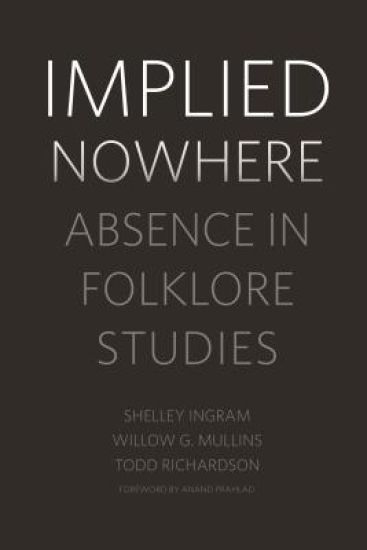
Implied Nowhere

Implied Nowhere

Shelley Ingram; Willow G. Mullins; Todd Richardson; Sw. Anand Prahlad

University Press of Mississippi
2019
sidottu
In Implied Nowhere: Absence in Folklore Studies, authors Shelley Ingram, Willow G. Mullins, and Todd Richardson talk about things folklorists don't usually talk about. They ponder the tacit aspects of folklore and folklore studies, looking into the unarticulated expectations placed upon people whenever they talk about folklore and how those expectations necessarily affect the folklore they are talking about. The book's chapters are wide-ranging in subject and style, yet they all orbit the idea that much of folklore, both as a phenomenon and as a field, hinges upon unspoken or absent assumptions about who people are and what people do. The authors articulate theories and methodologies for making sense of these unexpressed absences, and, in the process, they offer critical new insights into discussions of race, authenticity, community, literature, popular culture, and scholarly authority. Taken as a whole, the book represents a new and challenging way of looking again at the ways groups come together to make meaning. In addition to the main chapters, the book also includes eight “interstitials,” shorter studies that consider underappreciated aspects of folklore. These discussions, which range from a consideration of knitting in public to the ways that invisibility shapes an internet meme, are presented as questions rather than answers, encouraging readers to think about what more folklore and folklore studies might discover if only practitioners chose to look at their subjects from angles more cognizant of these unspoken gaps.
Implied Nowhere

Implied Nowhere

Shelley Ingram; Willow G. Mullins; Todd Richardson; Sw. Anand Prahlad

University Press of Mississippi
2019
nidottu
In Implied Nowhere: Absence in Folklore Studies, authors Shelley Ingram, Willow G. Mullins, and Todd Richardson talk about things folklorists don't usually talk about. They ponder the tacit aspects of folklore and folklore studies, looking into the unarticulated expectations placed upon people whenever they talk about folklore and how those expectations necessarily affect the folklore they are talking about. The book's chapters are wide-ranging in subject and style, yet they all orbit the idea that much of folklore, both as a phenomenon and as a field, hinges upon unspoken or absent assumptions about who people are and what people do. The authors articulate theories and methodologies for making sense of these unexpressed absences, and, in the process, they offer critical new insights into discussions of race, authenticity, community, literature, popular culture, and scholarly authority. Taken as a whole, the book represents a new and challenging way of looking again at the ways groups come together to make meaning. In addition to the main chapters, the book also includes eight “interstitials,” shorter studies that consider underappreciated aspects of folklore. These discussions, which range from a consideration of knitting in public to the ways that invisibility shapes an internet meme, are presented as questions rather than answers, encouraging readers to think about what more folklore and folklore studies might discover if only practitioners chose to look at their subjects from angles more cognizant of these unspoken gaps.
Top

Top

Todd Lincoln Richards

Createspace Independent Publishing Platform
2018
nidottu
Questions abound when a young man discovers a locked box tied up under a bridge. What's in it? Who put it there? Why? On the back of the lock is a clue, a riddle to help him. Solving it leads to the box's owner, a crusty, retired Marine who lives a few miles away. An unlikely friendship develops. Through the course of their interactions, an intense week of discovery not only changes the young man's life, but helps the Veteran come to terms with his past.
Pieter Bruegel the Elder

Pieter Bruegel the Elder

Todd M. Richardson

Ashgate Publishing Limited
2011
sidottu
Pieter Bruegel the Elder: Art Discourse in the Sixteenth-Century Netherlands examines the later images by Bruegel in the context of two contemporary discourses - art theoretical and convivial. The first concerns the purely visual interactions between artists and artistic practices that unfold in pictures, which often transgress the categorical boundaries modern scholars place on their work, such as sacred and profane, antique and modern, and Italian and Northern. In this context, the images themselves - those of Bruegel, his contemporaries and predecessors - make up the primary source material from which the author argues. The second deals with the dialogue that occurred between viewers in front of pictures and the way in which pictorial strategies facilitated their visual experience and challenged their analytical capabilities. In this regard, the author expands his base of primary sources to include convivial texts, dialogues and correspondences, and texts by rhetoricians and Northern humanists addressing art theoretical issues. Challenging the conventional wisdom that the artist eschewed Italianate influences, this study demonstrates how Bruegel's later peasant paintings reveal a complicated artistic dialogue in which visual concepts and pictorial motifs from Italian and classical ideas are employed for a subject that was increasingly recognized in the sixteenth century as a specifically Northern phenomenon. Similar to the Dutch rhetorician societies and French Pléiade poets who cultivated the vernacular language using classical Latin, the function of this interpictorial discourse, the author argues, was not simply to imitate international trends, a common practice during the period, but to use it to cultivate his own visual vernacular language. Although the focus is primarily on Bruegel's later work, the author's conclusions are applied to sketch a broader understanding of both the artist himself and the vibrant artistic dialogue occurring in the Netherl
Pieter Bruegel the Elder

Pieter Bruegel the Elder

Todd M. Richardson

Routledge
2016
nidottu
Pieter Bruegel the Elder: Art Discourse in the Sixteenth-Century Netherlands examines the later images by Bruegel in the context of two contemporary discourses - art theoretical and convivial. The first concerns the purely visual interactions between artists and artistic practices that unfold in pictures, which often transgress the categorical boundaries modern scholars place on their work, such as sacred and profane, antique and modern, and Italian and Northern. In this context, the images themselves - those of Bruegel, his contemporaries and predecessors - make up the primary source material from which the author argues. The second deals with the dialogue that occurred between viewers in front of pictures and the way in which pictorial strategies facilitated their visual experience and challenged their analytical capabilities. In this regard, the author expands his base of primary sources to include convivial texts, dialogues and correspondences, and texts by rhetoricians and Northern humanists addressing art theoretical issues. Challenging the conventional wisdom that the artist eschewed Italianate influences, this study demonstrates how Bruegel's later peasant paintings reveal a complicated artistic dialogue in which visual concepts and pictorial motifs from Italian and classical ideas are employed for a subject that was increasingly recognized in the sixteenth century as a specifically Northern phenomenon. Similar to the Dutch rhetorician societies and French Pléiade poets who cultivated the vernacular language using classical Latin, the function of this interpictorial discourse, the author argues, was not simply to imitate international trends, a common practice during the period, but to use it to cultivate his own visual vernacular language. Although the focus is primarily on Bruegel's later work, the author's conclusions are applied to sketch a broader understanding of both the artist himself and the vibrant artistic dialogue occurring in the Netherl
Brain Literacy for Educators and Psychologists

Brain Literacy for Educators and Psychologists

Virginia W. Berninger; Todd L. Richards

Academic Press Inc
2002
sidottu
Although educators are expected to bring about functional changes in the brain--the organ of human learning--they are given no formal training in the structure, function or development of the brain in formal or atypically developing children as part of their education. This book is organized around three conceptual themes: First, the interplay between nature (genetics) and nurture (experience and environment) is emphasized. Second, the functional systems of the brain are explained in terms of how they lead to reading, writing and mathematics and the design of instruction. Thirdly, research is presented, not as a finished product, but as a step forward within the field of educational neuropsychology. The book differs from neuropsychology and neuroscience books in that it is aimed at practitioners, focuses on high incidence neuropsychological conditions seen in the classroom, and is the only book that integrates both brain research with the practice of effective literacy, and mathematics instruction of the general and special education school-aged populations.
Fathering the Fatherless

Fathering the Fatherless

Todd Richard Johnson

Todd Johnson
2017
nidottu
Fathering The Fatherless: deals with Fatherlessness and how fathers are to beAuthored by Todd Richard JohnsonList Price: $7.996" x 9" (15.24 x 22.86 cm) Black and white Fathering the Fatherless deals with Fatherlessness and what it does to children and The choices they make in there life. What you can do as a dad to fix it.And do better for your Children to come to know they have a father that loves them and wont leave them, You & God Library of Congress Control Number: 2017903138
Iris Murdoch

Iris Murdoch

Richard Todd

Routledge
2019
sidottu
Originally published in 1984, Iris Murdoch, widely regarded as one of the major British novelists of her generation at the time, was undoubtedly one of the most popular and prolific, having published twenty-one novels since 1954 (she went on to write many more). But the course of her fiction-writing career was regarded with unease by some of her readers in that it seemed marked by an increasing conservatism of approach which could not have been foreseen in her earliest published fiction. She was acknowledged as one of Britain’s leading moral philosophers and although this study is careful to respect the distinctive integrity of her fiction-writing and her philosophy, it none the less assumes her active presence in contemporary debate as one of the most powerful and original theorists of fiction writing at the time. In this study, Richard Todd systematically, but discriminatingly, surveys all her fiction to date, and attempts to show how her fundamental theme, the interplay between the roles of artist and saint, is developed and expressed in her fiction.