Kirja.info on kirjojen hintavertailu.
Kenellä on paras halvin hinta? Etsimme halvimman hinnan 12 eri kirjakaupasta, jotta voit keskittyä lukemiseen.
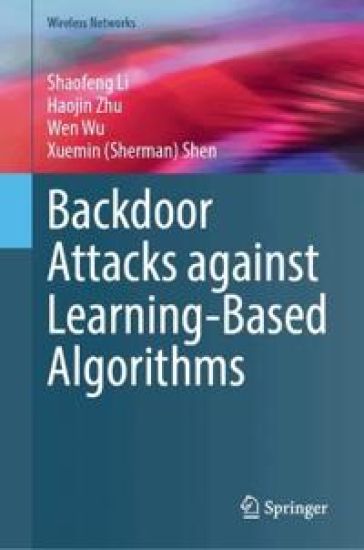
This book introduces a new type of data poisoning attack, dubbed, backdoor attack. In backdoor attacks, an attacker can train the model with poisoned data to obtain a model that performs well on a… This book introduces a new type of data poisoning attack, dubbed, backdoor attack. In backdoor attacks, an attacker can train the model with poisoned data to obtain a model that performs well on a normal input but behaves wrongly with crafted triggers. Backdoor attacks can occur in many scenarios where the training process is not entirely controlled, such as using third-party datasets, third-party platforms for training, or directly calling models provided by third parties. Due to the enormous threat that backdoor attacks pose to model supply chain security, they have received widespread attention from academia and industry. This book focuses on exploiting backdoor attacks in the three types of DNN applications, which are image classification, natural language processing, and federated learning. Based on the observation that DNN models are vulnerable to small perturbations, this book demonstrates that steganography and regularization can be adopted to enhance the invisibility of backdoor triggers. Based on image similarity measurement, this book presents two metrics to quantitatively measure the invisibility of backdoor triggers. The invisible trigger design scheme introduced in this book achieves a balance between the invisibility and the effectiveness of backdoor attacks. In the natural language processing domain, it is difficult to design and insert a general backdoor in a manner imperceptible to humans. Any corruption to the textual data (e. g. , misspelled words or randomly inserted trigger words/sentences) must retain context-awareness and readability to human inspectors. This book introduces two novel hidden backdoor attacks, targeting three major natural language processing tasks, including toxic comment detection, neural machine translation, and question answering, depending on whether the targeted NLP platform accepts raw Unicode characters. The emerged distributed training framework, i. e. , federated learning, has advantages in preserving users' privacy. It has been widely used in electronic medical applications, however, it also faced threats derived from backdoor attacks. This book presents a novel backdoor detection framework in FL-based e-Health systems. We hope this book can provide insightful lights on understanding the backdoor attacks in different types of learning-based algorithms, including computer vision, natural language processing, and federated learning. The systematic principle in this book also offers valuable guidance on the defense of backdoor attacks against future learning-based algorithms.
ISBN9783031573880
KustantajaSpringer International Publishing AG
Vuosi2024
Formaattisidottu
Sivuja153
Kielienglanti
Paino446g
Emme päivittäneet kirjan hintoja automaattisesti, koska verkkoliikenteesi tulee Suomen ulkopuolelta tai vaikuttaa epätavalliselta.
Tällä hetkellä 0 kirjakauppaa myy teosta Backdoor Attacks against Learning-Based Algorithms. Edullisin hinta toimitettuna on —, mikä on — halvempi kuin kallein tarjous.
Hintoja ei ole vielä päivitetty.
Hälytys tallennettu!
Ilmoitamme, kun hinta laskee.
Saat sähköpostin, kun hinta on sama tai alittaa asettamasi hinnan.
Kirjan Backdoor Attacks against Learning-Based Algorithms hintahistoria
Seuraamme kirjan Backdoor Attacks against Learning-Based Algorithms hintakehitystä kirjakaupoissa. Taulukosta näet viime kuukausien alimmat hinnat.
Alin hinta kauppoittain
Kauppojen halvin hinta viimeisen 90 päivän aikana.
Hintahistoriaa ei ole vielä kerätty tälle kirjalle.