
Kirjailija
Ajay Kumar
Kirjat ja teokset yhdessä paikassa: 111 kirjaa, julkaisuja vuosilta 2009-2026, suosituimpien joukossa Fütterung von Brotabfällen bei wachsenden Ferkeln. Vertaile teosten hintoja ja tarkista saatavuus suomalaisista kirjakaupoista.
111 kirjaa
Kirjojen julkaisuhaarukka 2009-2026.
The book "Research Methodology" provides a comprehensive exploration of research principles, methodologies, and their significance across various disciplines. It traces the evolution of research from ancient civilizations to modern scientific advancements. The book highlights the importance of empirical evidence, logical reasoning, and systematic inquiry in knowledge generation. Key topics include qualitative and quantitative research, data collection techniques, sampling methods, and report writing. It emphasizes the role of research in decision-making, problem-solving, technological innovation, and societal progress. The book also discusses India's research contributions, from ancient mathematical innovations to modern scientific institutions like ISRO. By fostering critical thinking, ethical research practices, and methodological rigor, this work serves as a valuable resource for students, scholars, and professionals engaged in academic and applied research.
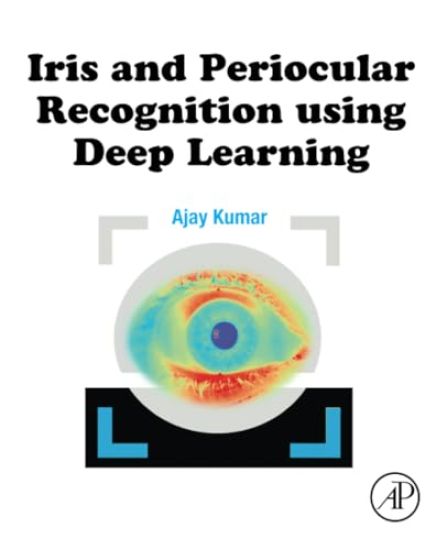
Iris and Periocular Recognition using Deep Learning
Ajay Kumar
ELSEVIER SCIENCE PUBLISHING CO INC
2024
nidottu
Iris and Periocular Recognition using Deep Learning systematically explains the fundamental and most advanced techniques for ocular imprint-based human identification, with many applications in sectors such as healthcare, online education, e-business, metaverse, and entertainment. This is the first-ever book devoted to iris recognition that details cutting-edge techniques using deep neural networks. This book systematically introduces such algorithmic details with attractive illustrations, examples, experimental comparisons, and security analysis. It answers many fundamental questions about the most effective iris and periocular recognition techniques.
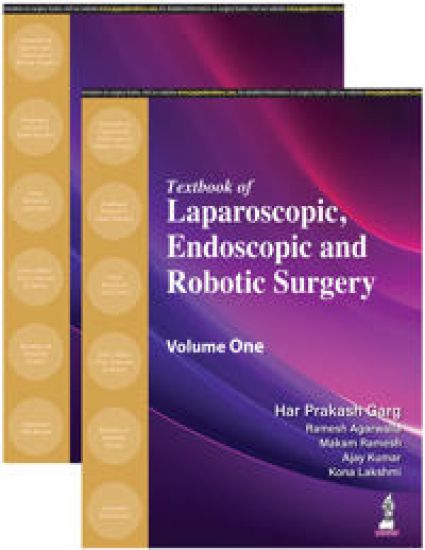
Textbook of Laparoscopic, Endoscopic and Robotic Surgery
Har Prakash Garg; Ramesh Agarwalla; Makam Ramesh; Ajay Kumar; Kona Lakshmi
JAYPEE BROTHERS MEDICAL PUBLISHERS
2023
sidottu
Minimally invasive surgery (MIS) is an approach to surgery that minimises cutting through the skin and tissues. Surgeons use MIS techniques and technology to cause as little trauma as possible during a procedure. Smaller cuts reduce the potential for pain, complications and recovery time. Laparoscopic, endoscopic and robotic procedures are all types of minimally invasive surgery. Comprising more than 1500 pages, this two-volume set is a complete guide to laparoscopic, endoscopic and robotic surgical procedures. Divided into six sections, the book begins with an introduction to the types, basic principles and equipment for minimally invasive surgery. Each of the remaining sections covers operative procedures for different sections of the gastrointestinal system – oesophagus, stomach and small intestine; colon, rectum and anal canal; liver, biliary tract, pancreas, and spleen; bariatrics and metabolic surgery; and abdominal wall hernia. Each chapter provides step by step detail on a different procedure, assisted by illustrative figures and useful tables. Access to demonstrative videos illustrating surgical procedures is included with the book.

Cheminformatics and Bioinformatics at the Interface with Systems Biology
Aman Chandra Kaushik; Aamir Mehmood; Dongqing Wei; Sadia Nawab; Shakti Sahi; Ajay Kumar
ROYAL SOCIETY OF CHEMISTRY
2023
sidottu
The cost of drug development is increasing, and investment returns are decreasing. The number of drugs approved by FDA is in decline in terms of the number of new molecular entities (NMEs). Amongst the reasons noted for this are the adverse side effects and reduced efficiency of many of the potential compounds. This is a problem both for the pharmaceutical industry and for those suffering from diseases for which there are no or few available treatments. Advances in computational chemistry, computer science, structural biology and molecular biology have all contributed to improved drug design strategies and reduced the time taken for drug discovery. By interfacing cheminformatics and bioinformatics with systems biology we can create a powerful tool for understanding the mechanisms of patho-physiological systems and identifying lead molecules for various diseases. This integration of drug design approaches can also play a crucial role in the prediction and rationalization of drug effects and side effects, improving safety and efficacy and leading to better approval rates. Addressing the lack of knowledge on the fundamental aspects of the various computational tools for drug discovery, this book is a compilation of recent bioinformatics and cheminformatics approaches, and their integration with systems biology. Written primarily for researchers and academics in chem- and bioinformatics, it may also be a useful resource for advanced-level students.
Il Capitolo 1 e il Capitolo 2 del libro descrivono la definizione proposta, i benefici dei rifiuti zero e la gerarchia dei rifiuti. Il Capitolo 3 e il Capitolo 4 trattano le 3R di rifiuti zero, le campagne di mercato e il riciclaggio. Il capitolo 4 descrive i comuni materiali riciclabili come Aggregati e calcestruzzo, Batterie, Rifiuti biodegradabili, Abbigliamento, Disassemblaggio e recupero dell'elettronica, Metalli ferrosi, Metalli non ferrosi, Riciclaggio dell'alluminio, Vetro, Vernici, Carta, Plastica, Tessili, Legname. Il capitolo 5 del libro spiega il compostaggio e il vermi-compostaggio. Nei capitoli da 6 a 12 viene descritto il riciclaggio di tessuti, plastica, vetro, carta, alluminio, computer e acciaio.
Os cap tulos 1 e 2 do livro descrevem a defini o proposta, os benef cios do res duo zero e a hierarquia de res duos. Os cap tulos 3 e 4 tratam de 3R de res duos zero, campanhas baseadas no mercado e reciclagem. O Cap tulo 4 descreve materiais recicl veis comuns tais como agregados e bet o, Pilhas, Res duos biodegrad veis, Vestu rio, Desmontagem e recupera o de electr nica, Metais ferrosos, Metais n o ferrosos, Reciclagem de alum nio, Vidro, Tintas, Papel, Pl stico, T xteis, Madeira, Compostagem e vermi-compostagem explicado no Cap tulo 5 do livro. Nos cap tulos 6 a 12 descrita a reciclagem de T xteis, Pl sticos, Vidro, Papel, Alum nio, Computador e A o.
Les chapitres 1 et 2 du livre d crivent la d finition propos e, les avantages du z ro d chet et la hi rarchie des d chets. Les chapitres 3 et 4 traitent des 3R du z ro d chet, des campagnes bas es sur le march et du recyclage. Le chapitre 4 d crit les mati res recyclables courantes telles que les agr gats et le b ton, les batteries, les d chets biod gradables, les v tements, le d sassemblage et la r cup ration de l' lectronique, les m taux ferreux, les m taux non ferreux, le recyclage de l'aluminium, le verre, la peinture, le papier, le plastique, les textiles et le bois. Les chapitres 6 12 d crivent le recyclage du textile, du plastique, du verre, du papier, de l'aluminium, des ordinateurs et de l'acier.
Kapitel 1 und Kapitel 2 des Buches beschreiben die vorgeschlagene Definition, die Vorteile von Null-Abfall und die Abfallhierarchie. Kapitel 3 und Kapitel 4 befassen sich mit den 3R von Zero Waste, marktbasierten Kampagnen und Recycling. Kapitel 4 beschreibt g ngige Wertstoffe wie Zuschlagstoffe und Beton, Batterien, biologisch abbaubare Abf lle, Kleidung, Demontage und Wiederverwertung von Elektronik, Eisenmetalle, Nichteisenmetalle, Aluminiumrecycling, Glas, Farben, Papier, Kunststoffe, Textilien und Holz; Kompostierung und Vermi-Kompostierung werden in Kapitel 5 des Buches erl utert. In den Kapiteln 6 bis 12 wird das Recycling von Textilien, Kunststoff, Glas, Papier, Aluminium, Computer und Stahl beschrieben.
Síntese de Nano Partículas de Prata, Propriedades e Produtos
Ajay Kumar
Edicoes Nosso Conhecimento
2023
pokkari
O Cap tulo 1 deste livro descreve v rios m todos de s ntese de nanopart culas de prata, tais como m todos qu micos, m todos f sicos, m todos biol gicos e sintetiza o assistida por micro tecidos. O cap tulo 2 trata das propriedades das nanopart culas de prata, tais como propriedades f sicas, propriedades pticas e Prata e propriedades biol gicas. Juntamente com propriedades que medem a concentra o de nanopart culas de prata, resson ncias plasm ticas de nanopart culas met licas, absor o e dispers o por nanopart culas de prata, extin o de nanopart culas de prata, dispers o, e sec es transversais de absor o & extens o do campo local a partir da superf cie de nanopart culas de prata s o tamb m descritas. O cap tulo -3 descreve produtos com nanopart culas de prata, tais como: Algicidas e desinfectantes de prata, filtros de gua impregnados de prata, dispositivos m dicos revestidos de prata, pensos de prata, tecidos t xteis revestidos de prata, tintas antimicrobianas com nanopart culas de prata, funcionaliza o da superf cie antimicrobiana de cateteres pl sticos, formula o de gel antimicrobiano para uso t pico, papel de embalagem antimicrobiano para conserva o de alimentos, tecidos impregnados de prata, etc.
Synthèse, propriétés et produits des nanoparticules d'argent
Ajay Kumar
Editions Notre Savoir
2023
pokkari
Le chapitre 1 de ce livre d crit les diff rentes m thodes de synth se des nanoparticules d'argent telles que les m thodes chimiques, les m thodes physiques, les m thodes biologiques et la synth se assist e par micro-ondes. Le chapitre 2 traite des propri t s des nanoparticules d'argent telles que les propri t s physiques, les propri t s optiques et les propri t s biologiques de l'argent. Outre les propri t s mesurant la concentration des nanoparticules d'argent, les r sonances plasmoniques des nanoparticules m talliques, l'absorption et la diffusion par les nanoparticules d'argent, les sections transversales d'extinction, de diffusion et d'absorption des nanoparticules d'argent et l'extension du champ local partir de la surface des nanoparticules d'argent sont galement d crites. Le chapitre -3 d crit les produits base de nanoparticules d'argent tels que: Les algicides et d sinfectants base d'argent, les filtres eau impr gn s d'argent, les dispositifs m dicaux enduits d'argent, les pansements en argent, les tissus textiles enduits d'argent, les peintures antimicrobiennes incorporant des nanoparticules d'argent, la fonctionnalisation antimicrobienne de surface des cath ters en plastique, la formulation de gel antimicrobien usage topique, le papier d'emballage antimicrobien pour la conservation des aliments, les tissus impr gn s d'argent, etc.
Síntesis, propiedades y productos de las nanopartículas de plata
Ajay Kumar
Ediciones Nuestro Conocimiento
2023
nidottu
Sintesi, proprietà e prodotti delle nanoparticelle d'argento
Ajay Kumar
Edizioni Sapienza
2023
pokkari
Il capitolo 1 di questo libro descrive i vari metodi di sintesi delle nanoparticelle d'argento, come i metodi chimici, i metodi fisici, i metodi biologici e la sintesi assistita da microonde. Il capitolo 2 tratta le propriet delle nanoparticelle d'argento, come le propriet fisiche, le propriet ottiche e le propriet biologiche e dell'argento. Oltre alle propriet che misurano la concentrazione delle nanoparticelle d'argento, vengono descritte le risonanze plasmoniche delle nanoparticelle metalliche, l'assorbimento e la dispersione da parte delle nanoparticelle d'argento, l'estinzione, la dispersione e le sezioni d'urto dell'assorbimento delle nanoparticelle d'argento e l'estensione del campo locale dalla superficie delle nanoparticelle d'argento. Il capitolo -3 descrive i prodotti a base di nanoparticelle d'argento, quali: Alghicidi e disinfettanti all'argento, filtri per l'acqua impregnati d'argento, dispositivi medici rivestiti d'argento, medicazioni all'argento, tessuti rivestiti d'argento, vernici antimicrobiche con inclusione di nanoparticelle d'argento, funzionalizzazione superficiale antimicrobica di cateteri di plastica, formulazione di gel antimicrobici per uso topico, carta da imballaggio antimicrobica per la conservazione degli alimenti, tessuti impregnati d'argento, ecc.
Silber-Nanopartikel Synthese, Eigenschaften und Produkte
Ajay Kumar
Verlag Unser Wissen
2023
pokkari
In Kapitel 1 dieses Buches werden verschiedene Methoden zur Synthese von Silbernanopartikeln beschrieben, wie z. B. chemische Methoden, physikalische Methoden, biologische Methoden und mikroofenunterst tzte Synthese. Kapitel 2 befasst sich mit den Eigenschaften von Silber-Nanopartikeln, wie z.B. physikalische Eigenschaften, optische Eigenschaften und biologische Eigenschaften von Silber. Neben den Eigenschaften werden auch die Messung der Konzentration von Silbernanopartikeln, die Plasmonenresonanzen von Metallnanopartikeln, die Absorption und Streuung durch Silbernanopartikel, die Extinktion, Streuung und Absorptionsquerschnitte von Silbernanopartikeln sowie die Ausdehnung des lokalen Feldes von der Oberfl che der Silbernanopartikel beschrieben. Kapitel -3 beschreibt Silbernanopartikel Produkte wie: Silberalgizide und -desinfektionsmittel, mit Silber impr gnierte Wasserfilter, mit Silber beschichtete medizinische Ger te, Silberverb nde, mit Silber beschichtete Textilien, in Silbernanopartikel eingebettete antimikrobielle Farben, antimikrobielle Oberfl chenfunktionalisierung von Kunststoffkathetern, antimikrobielle Gelformulierung f r die topische Anwendung, antimikrobielles Verpackungspapier f r die Lebensmittelkonservierung, mit Silber impr gnierte Stoffe usw.
Early Clinical Exposure: A Case Based Approach in Clinical Anatomy
Ajay Kumar; Anu Sharma
JAYPEE BROTHERS MEDICAL PUBLISHERS
2023
nidottu

Chapter 1 and Chapter 2 of the book describe proposed definition, benefits of the zero waste and Waste hierarchy . Chapter 3 and Chapter 4 deals with 3R of zero waste, Market-based campaigns & recycling. Chapter 4 describes common recyclables such as Aggregates and concrete, Batteries, Biodegradable waste, Clothing, Electronics disassembly and reclamation, Ferrous metals, Non-ferrous metals, Aluminium recycling, Glass, Paint, Paper, Plastic, Textiles, Timber .Composting and vermi-composting is explained in chapter 5 of the book. In chapters 6 to 12 the recycling of Textile, Plastic, Glass, Paper, Aluminium, Computer and Steel is described.