Kirjojen hintavertailu. Mukana 12 112 009 kirjaa ja 12 kauppaa.

Kirjailija

Alain Badiou

Kirjat ja teokset yhdessä paikassa: 154 kirjaa, julkaisuja vuosilta 1999-2025, suosituimpien joukossa Ahmed the Philosopher. Vertaile teosten hintoja ja tarkista saatavuus suomalaisista kirjakaupoista.

154 kirjaa

Kirjojen julkaisuhaarukka 1999-2025.

Jacques Lacan, Past and Present

Jacques Lacan, Past and Present

Alain Badiou; Elisabeth Roudinesco

Columbia University Press
2014
sidottu
In this dialogue, Alain Badiou shares the clearest, most detailed account to date of his profound indebtedness to Lacanian psychoanalysis. He explains in depth the tools Lacan gave him to navigate the extremes of his other two philosophical "masters," Jean-Paul Sartre and Louis Althusser. Elisabeth Roudinesco supplements Badiou's experience with her own perspective on the troubled landscape of the French analytic world since Lacan's death-critiquing, for example, the link (or lack thereof) between politics and psychoanalysis in Lacan's work. Their exchange reinvigorates how the the work of a pivotal twentieth-century thinker is perceived.
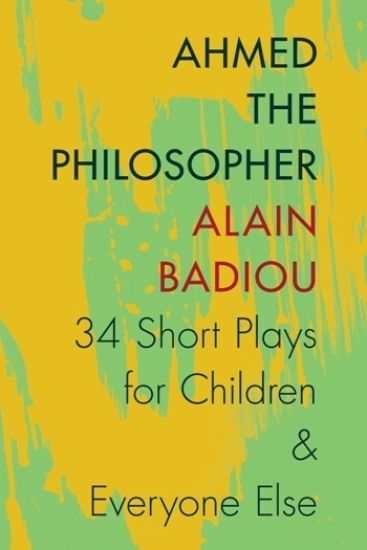
Ahmed the Philosopher

Ahmed the Philosopher

Alain Badiou

Columbia University Press
2014
pokkari
English-speaking readers might be surprised to learn that Alain Badiou writes fiction and plays along with his philosophical works and that they are just as important to understanding his larger intellectual project. In Ahmed the Philosopher, Badiou's most entertaining and accessible play, translated into English here for the first time, readers are introduced to Badiou's philosophy through a theatrical tour de force that has met with much success in France. Ahmed the Philosopher presents its comic hero, the "treacherous servant" Ahmed, as a seductively trenchant philosopher even as it casts philosophy itself as a comic performance. The comedy unfolds as a series of lessons, with each "short play" or sketch illuminating a different Badiousian concept. Yet Ahmed does more than illustrate philosophical abstractions; he embodies and vivifies the theatrical and performative aspects of philosophy, mobilizing a comic energy that exposes the emptiness and pomp of the world. Through his example, the audience is moved to a living engagement with philosophy, discovering in it the power to break through the limits of everyday life.
Ahmed the Philosopher

Ahmed the Philosopher

Alain Badiou

Columbia University Press
2014
sidottu
English-speaking readers might be surprised to learn that Alain Badiou writes fiction and plays along with his philosophical works and that they are just as important to understanding his larger intellectual project. In Ahmed the Philosopher, Badiou's most entertaining and accessible play, translated into English here for the first time, readers are introduced to Badiou's philosophy through a theatrical tour de force that has met with much success in France. Ahmed the Philosopher presents its comic hero, the "treacherous servant" Ahmed, as a seductively trenchant philosopher even as it casts philosophy itself as a comic performance. The comedy unfolds as a series of lessons, with each "short play" or sketch illuminating a different Badiousian concept. Yet Ahmed does more than illustrate philosophical abstractions; he embodies and vivifies the theatrical and performative aspects of philosophy, mobilizing a comic energy that exposes the emptiness and pomp of the world. Through his example, the audience is moved to a living engagement with philosophy, discovering in it the power to break through the limits of everyday life.
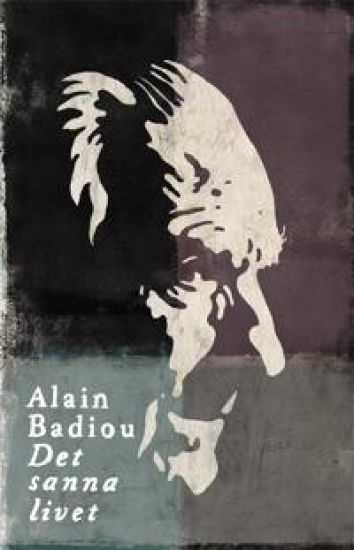
Det sanna livet

Det sanna livet

Alain Badiou

Tankekraft Förlag
2016
nidottu
Låt oss börja med det det uppenbara: jag är sjuttionio år gammal. Varför i hela fridens namn ska jag tala om ungdomen? År 399 f.Kr. ställdes Sokrates inför rätta och dömdes till döden, anklagad för att ha ”korrumperat ungdomen”. Genom sin kritiska metod sades den gamle filosofen ha undergrävt samhällets institutioner genom att fostra unga athenare i en alltför respektlös och ifrågasättande hållning. Det är med en blinkning till denna filosofiska urscen som Alain Badiou närmar sig frågan om ungas situation idag. I en värld där de traditionella hållpunkter som tidigare stakade ut ungdomens väg in i vuxenlivet försvagas, och där samtidigt den ekonomiska och sociala otryggheten fördjupas i en alarmerande takt, känns det mer angeläget än någonsin att ta sig an filosofins själva grundfråga: Vad är det sanna livet?
Jacques Lacan, Past and Present

Jacques Lacan, Past and Present

Alain Badiou; Elisabeth Roudinesco

Columbia University Press
2014
pokkari
In this dialogue, Alain Badiou shares the clearest, most detailed account to date of his profound indebtedness to Lacanian psychoanalysis. He explains in depth the tools Lacan gave him to navigate the extremes of his other two philosophical "masters," Jean-Paul Sartre and Louis Althusser. Elisabeth Roudinesco supplements Badiou's experience with her own perspective on the troubled landscape of the French analytic world since Lacan's death-critiquing, for example, the link (or lack thereof) between politics and psychoanalysis in Lacan's work. Their exchange reinvigorates how the the work of a pivotal twentieth-century thinker is perceived.
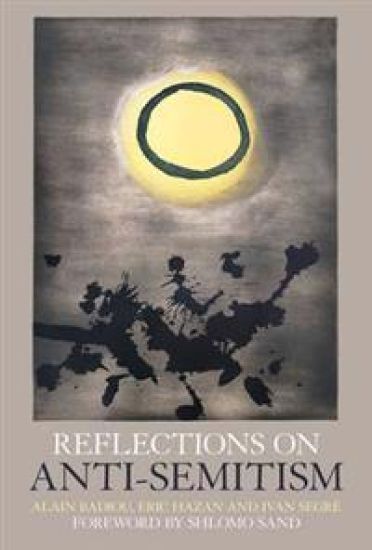
Reflections on Anti-Semitism

Reflections on Anti-Semitism

Alain Badiou; Eric Hazan; Ivan Segré; Shlomo Sand

Verso Books
2013
nidottu
Since the inception of the "War on Terror," Israel has become increasingly important to Western imperial strategy and ever more aggressive in its policies towards the Palestinians. A key ideological weapon in this development is the cynical and unjustified accusation of "anti-Semitism" to silence protest and dissent.For historical reasons, this tactic has been deployed most forcefully in France, and in the first of the two essays in this book French writers Alain Badiou and Eric Hazan demolish the "anti-Semitism is everywhere" claim used to bludgeon critics of the Israeli state and those who stand in solidarity with the banlieue youth.In "The Philo-Semitic Reaction," Ivan Segré undertakes a meticulous deconstruction of a rampant reactionary trend that identifies Jewish interests with the "democratic" West. Segré's aim is to uphold a universalist position and to defend Jewish tradition from Zionist ideological distortion.
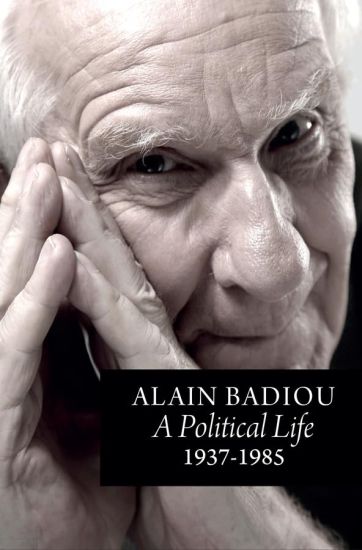
A Political Life: 1937 - 1985

A Political Life: 1937 - 1985

Alain Badiou

JOHN WILEY AND SONS LTD
2025
sidottu
In this book, the renowned philosopher and polymath Alain Badiou tells the story of the first five decades of his life, from 1937 to 1985, setting it within the political history of the twentieth century. Born in Morocco on the eve of catastrophic conflict, Badiou’s childhood and youth were marked by the Second World War and the Algerian War, experiences that would shape his political consciousness. Badiou honed his political convictions as an activist and organiser among students and workers and in solidarity with the Algerian independence movement, but his life was upended and transformed by May ’68 in ways that were profoundly consequential for his philosophical thought. By weaving his philosophical ideas into the narrative of his life, we see how the concepts for which Badiou is well-known – such as subject, being, event and truth – operate in the domain of experience and history. Written in an engaging and often playful style, this book illuminates both the unique trajectory of a major philosopher and the turbulent history of the twentieth century, showing how the latter shaped the thinking of a man who has come to embody the very idea of political commitment and radical political thought.
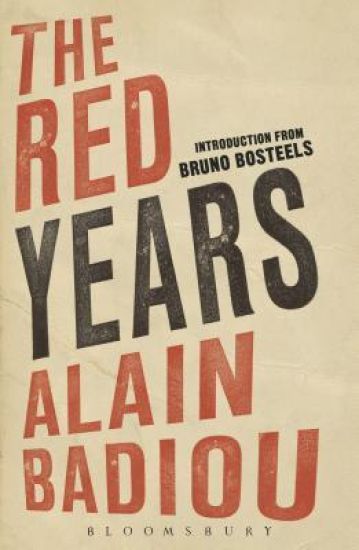
The Red Years

The Red Years

Alain Badiou

Bloomsbury Academic
2025
sidottu
The Red Years (Les Années Rouges) features three key texts by renowned and controversial contemporary French philosopher, Alain Badiou: Theory of Contradiction, Of Ideology, and The Rational Kernel of the Hegelian Dialectic. Hitherto unavailable in English, these three texts elucidate the formative role of Badiou’s Maoist ‘phase’ – an essential moment in his political and philosophical trajectory. Furthermore, these texts are vital to any understanding of radical French thought and politics in the 1970s, and in the wake of the Cultural Revolution. The Red Years also features original essays from leading commentators Tzuchien Tho, and a concluding essay by Bruno Bosteels, which argues for the presence of Maoism in Badiou’s mature thought. Badiou has also written a wholly new preface for this edition.
The Red Years

The Red Years

Alain Badiou

Bloomsbury Academic
2025
nidottu
The Red Years (Les Années Rouges) features three key texts by renowned and controversial contemporary French philosopher, Alain Badiou: Theory of Contradiction, Of Ideology, and The Rational Kernel of the Hegelian Dialectic. Hitherto unavailable in English, these three texts elucidate the formative role of Badiou’s Maoist ‘phase’ – an essential moment in his political and philosophical trajectory. Furthermore, these texts are vital to any understanding of radical French thought and politics in the 1970s, and in the wake of the Cultural Revolution. The book also features a new preface by Badiou, as well as an essay from Tzuchien Tho and a conclusion from Bruno Bosteels, which argues fro the presence of Maoism in Badiou's mature thought.
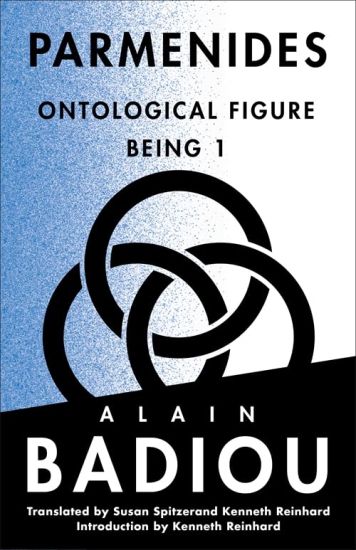
Parmenides

Parmenides

Alain Badiou

Columbia University Press
2025
sidottu
Alain Badiou’s 1985 seminar on Parmenides initiated his ongoing dialogue with the pre-Socratic philosopher and set out some of the foundational ideas of his own major philosophical works, including Being and Event. The seminar provides both a new understanding of the importance of Parmenides in establishing the fundamental terms of philosophy and a vital account of the intimate relationship between philosophy and mathematics.For Badiou, Parmenides inaugurates the history of philosophy by linking being, thinking, and nonbeing in a “Borromean knot”—a linkage in which the relationship between any two terms requires the mediation of a third. Badiou traces the permutations of this connection among fundamental concepts as it was transmitted to later thinkers, including Plato, Aristotle, Descartes, Hegel, and Heidegger. He also argues that Parmenides’s account of philosophy establishes a new kind of formal reasoning that, like mathematics, breaks with the Greek mythic and poetic traditions and their assumption that truth derives from sensory experience. This seminar demonstrates Badiou’s unparalleled ability to recast the fundamental questions of philosophy.
In Praise of Philosophy

In Praise of Philosophy

Alain Badiou

JOHN WILEY AND SONS LTD
2025
nidottu
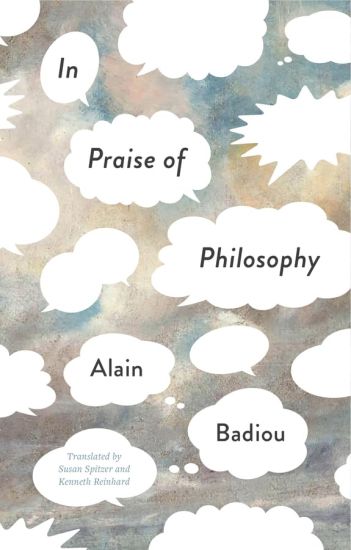
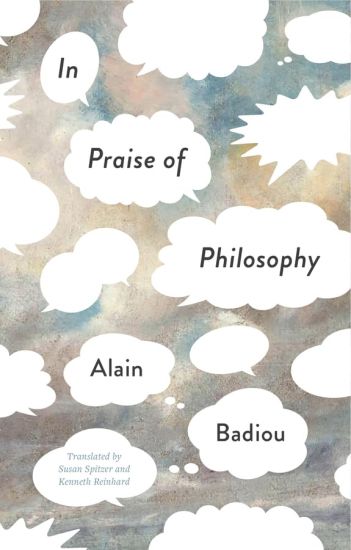
What kind of philosophy do we need for the 21st century? To answer to this question, Alain Badiou imagines a dialogue between Tocéras, an earnest and engaging professor, and various interlocutors from different countries and philosophical cultures – John After from Britain, Amantha from Greece, B’adj Akil from Senegal, Xi La Pong from China and several others. Their conversation takes readers on a playful journey through the history of philosophy framed by the five great questions that have preoccupied Alain Badiou: democracy, freedom, universality, language and being. At the same time, philosophy is presented not as a system or doctrine but as movement and dialogue. The philosopher is not a solitary figure; he is inseparable from his pupils, his disciples and his adversaries. It is only at the end of the journey that he arrives at the written, stable forms of his work. So we are dealing more with a play than a treatise, more with dialogues than monologues, more with a course than a book. The obvious model is Plato's Socrates, who, in founding philosophy as a discipline, ensured that it could be established anywhere in the world. In praise, yes, of philosophy as the public creation of a thought that, inventing itself and transporting itself anywhere, speaking to anyone about anything, invents the theatricalization of being.
In Praise of Philosophy

In Praise of Philosophy

Alain Badiou

JOHN WILEY AND SONS LTD
2025
sidottu
What kind of philosophy do we need for the 21st century? To answer to this question, Alain Badiou imagines a dialogue between Tocéras, an earnest and engaging professor, and various interlocutors from different countries and philosophical cultures – John After from Britain, Amantha from Greece, B’adj Akil from Senegal, Xi La Pong from China and several others. Their conversation takes readers on a playful journey through the history of philosophy framed by the five great questions that have preoccupied Alain Badiou: democracy, freedom, universality, language and being. At the same time, philosophy is presented not as a system or doctrine but as movement and dialogue. The philosopher is not a solitary figure; he is inseparable from his pupils, his disciples and his adversaries. It is only at the end of the journey that he arrives at the written, stable forms of his work. So we are dealing more with a play than a treatise, more with dialogues than monologues, more with a course than a book. The obvious model is Plato's Socrates, who, in founding philosophy as a discipline, ensured that it could be established anywhere in the world. In praise, yes, of philosophy as the public creation of a thought that, inventing itself and transporting itself anywhere, speaking to anyone about anything, invents the theatricalization of being.
The One

The One

Alain Badiou

Columbia University Press
2025
pokkari
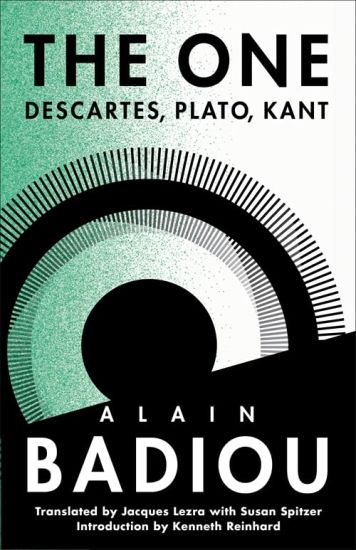
Alain Badiou’s 1983–1984 lecture series on “the One” is the earliest of his seminars that he has chosen to publish. It focuses on the philosophical concept of oneness in the works of Descartes, Plato, and Kant—a crucial foil for his signature metaphysical concept, the multiple. Badiou declares that there is no “One”: there is no fundamental unit of being; being is inherently multiple.What is novel in Badiou’s view of multiplicity is his reliance on mathematics, and set theory in particular. A set is a collection of things—yet, as he observes, it often is taken to “count as one” operationally for the purposes of mathematical transformations. In this seminar, distinguishing between “the One” and “counting as one” emerges as essential to Badiou’s ontological project. His analysis of reflections on oneness in Descartes, Plato, and Kant prefigures core arguments of his defining work, Being and Event.Showcasing the seeds of Badiou’s key ideas and later thought, The One features singular readings, breathtaking theorizations, and frequently astonishing offhand remarks.
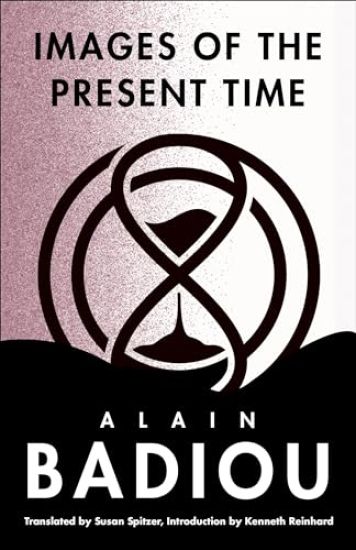
Images of the Present Time

Images of the Present Time

Alain Badiou

Columbia University Press
2024
pokkari
Finalist, 2024 Translation Prize - Nonfiction, French-American FoundationAlain Badiou began the twenty-first century by considering the relationship between philosophy and notions of “the present.” In this period of his ongoing annual lecture series, the acclaimed philosopher took up the existential problem of how to be contemporary with one’s own time—that is, how to not simply inhabit a passing moment but bring a real present into existence.Images of the Present Time presents nearly three years of Badiou’s seminars, held from 2001 to 2004, partly against the backdrop of the war in Iraq. Given while Badiou was writing Logics of Worlds, the second of the three volumes of Being and Event, these lectures address some of the same questions of existence in a particular world in a more personal and conversational tone, with reference to literature, philosophy, and contemporary politics and culture. He proposes a new concept of living in a real present as the twisting together of something from the past and something of the future.Featuring some of the philosopher’s most inspiring and approachable work, Images of the Present Time is an important book for all readers interested in the practical as well as conceptual possibilities of Badiou’s thought.
Indifference and Repetition; or, Modern Freedom and Its Discontents

Indifference and Repetition; or, Modern Freedom and Its Discontents

Frank Ruda; Alain Badiou

FORDHAM UNIVERSITY PRESS
2023
pokkari
In capitalism human beings act as if they are mere animals. So we hear repeatedly in the history of modern philosophy. Indifference and Repetition examines how modern philosophy, largely coextensive with a particular boost in capitalism's development, registers the reductive and regressive tendencies produced by capitalism's effect on individuals and society. Ruda examines a problem that has invisibly been shaping the history of modern, especially rationalist philosophical thought, a problem of misunderstanding freedom. Thinkers like Descartes, Kant, Hegel, and Marx claim that there are conceptions and interpretations of freedom that lead the subjects of these interpretations to no longer act and think freely. They are often unwillingly led into unfreedom. It is thus possible that even "freedom" enslaves. Modern philosophical rationalism, whose conceptual genealogy the books traces and unfolds, assigns a name to this peculiar form of domination by means of freedom: indifference. Indifference is a name for the assumption that freedom is something that human beings have: a given, a natural possession. When we think freedom is natural or a possession we lose freedom. Modern philosophy, Ruda shows, takes its shape through repeated attacks on freedom as indifference; it is the owl that begins its flight, so that the days of unfreedom will turn to dusk.
Indifference and Repetition; or, Modern Freedom and Its Discontents

Indifference and Repetition; or, Modern Freedom and Its Discontents

Frank Ruda; Alain Badiou

FORDHAM UNIVERSITY PRESS
2023
sidottu
In capitalism human beings act as if they are mere animals. So we hear repeatedly in the history of modern philosophy. Indifference and Repetition examines how modern philosophy, largely coextensive with a particular boost in capitalism's development, registers the reductive and regressive tendencies produced by capitalism's effect on individuals and society. Ruda examines a problem that has invisibly been shaping the history of modern, especially rationalist philosophical thought, a problem of misunderstanding freedom. Thinkers like Descartes, Kant, Hegel, and Marx claim that there are conceptions and interpretations of freedom that lead the subjects of these interpretations to no longer act and think freely. They are often unwillingly led into unfreedom. It is thus possible that even "freedom" enslaves. Modern philosophical rationalism, whose conceptual genealogy the books traces and unfolds, assigns a name to this peculiar form of domination by means of freedom: indifference. Indifference is a name for the assumption that freedom is something that human beings have: a given, a natural possession. When we think freedom is natural or a possession we lose freedom. Modern philosophy, Ruda shows, takes its shape through repeated attacks on freedom as indifference; it is the owl that begins its flight, so that the days of unfreedom will turn to dusk.
The One

The One

Alain Badiou

Columbia University Press
2023
sidottu
Alain Badiou’s 1983–1984 lecture series on “the One” is the earliest of his seminars that he has chosen to publish. It focuses on the philosophical concept of oneness in the works of Descartes, Plato, and Kant—a crucial foil for his signature metaphysical concept, the multiple. Badiou declares that there is no “One”: there is no fundamental unit of being; being is inherently multiple.What is novel in Badiou’s view of multiplicity is his reliance on mathematics, and set theory in particular. A set is a collection of things—yet, as he observes, it often is taken to “count as one” operationally for the purposes of mathematical transformations. In this seminar, distinguishing between “the One” and “counting as one” emerges as essential to Badiou’s ontological project. His analysis of reflections on oneness in Descartes, Plato, and Kant prefigures core arguments of his defining work, Being and Event.Showcasing the seeds of Badiou’s key ideas and later thought, The One features singular readings, breathtaking theorizations, and frequently astonishing offhand remarks.