Kirjojen hintavertailu. Mukana 12 595 353 kirjaa ja 12 kauppaa.

Kirjailija

Albert Einstein

Kirjat ja teokset yhdessä paikassa: 241 kirjaa, julkaisuja vuosilta 1916-2026, suosituimpien joukossa New Evidence of the Militarization of America. Vertaile teosten hintoja ja tarkista saatavuus suomalaisista kirjakaupoista.

241 kirjaa

Kirjojen julkaisuhaarukka 1916-2026.

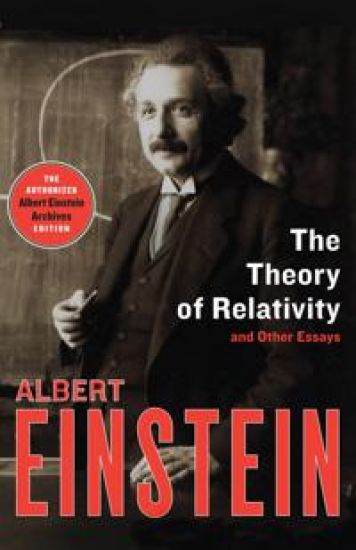
The Theory of Relativity

The Theory of Relativity

Albert Einstein

Philosophical Library/Open Road
2015
pokkari
E=mc2 is the world’s most famous equation. Discover the thought process and physics behind general relativity and Einstein’s contribution to science, in this authorized edition. In this collection of his seven most important essays on physics, Einstein guides his reader step-by-step through the many layers of scientific theory that formed a starting point for his discoveries. By both supporting and refuting the theories and scientific efforts of his predecessors, Einstein reveals in a clear voice the origins and meaning of such significant topics as physics and reality, the fundamentals of theoretical physics, the common language of science, the laws of science and of ethics, and an elementary derivation of the equivalence of mass and energy. This remarkable collection allows the general reader to understand not only the significance of Einstein’s masterpiece, but also the brilliant mind behind it. This authorized book features a new introduction by Neil Berger and an illustrated biography of Albert Einstein, which includes rare photos and never-before-seen documents from the Albert Einstein Archives at the Hebrew University of Jerusalem.
Essays in Science

Essays in Science

Albert Einstein

Philosophical Library/Open Road
2015
pokkari
The Authorized Albert Einstein Archives Edition: An homage to the men and women of science, and an exposition of Einstein’s place in scientific history. In this fascinating collection of articles and speeches, Albert Einstein reflects not only on the scientific method at work in his own theoretical discoveries, but also eloquently expresses a great appreciation for his scientific contemporaries and forefathers, including Johannes Kepler, Isaac Newton, James Clerk Maxwell, Max Planck, and Niels Bohr. While Einstein is renowned as one of the foremost innovators of modern science, his discoveries uniquely his own, through his own words it becomes clear that he viewed himself as only the most recent in a long line of scientists driven to create new ways of understanding the world and to prove their scientific theories. Einstein’s thoughtful examinations explain the “how” of scientific innovations both in his own theoretical work and in the scientific method established by those who came before him.This authorized book features a new introduction by Neil Berger, PhD, and an illustrated biography of Albert Einstein, which includes rare photos and never-before-seen documents from the Albert Einstein Archives at the Hebrew University of Jerusalem.
Essays in Humanism

Essays in Humanism

Albert Einstein

Philosophical Library/Open Road
2015
pokkari
The great thinker reflects on such topics as nuclear weapons, world poverty, and international affairs in this Wall Street Journal bestseller. Nuclear proliferation, Zionism, and the global economy are just a few of the insightful and surprisingly prescient topics scientist Albert Einstein discusses in this volume of collected essays from between 1931 and 1950. Written with a clear voice and a thoughtful perspective on the effects of science, economics, and politics in daily life, Einstein’s essays provide an intriguing view inside the mind of a genius addressing the philosophical challenges presented during the turbulence of the Great Depression, the Second World War, and the dawn of the Cold War.This authorized book features rare photos and never-before-seen documents from the Albert Einstein Archives at the Hebrew University of Jerusalem.
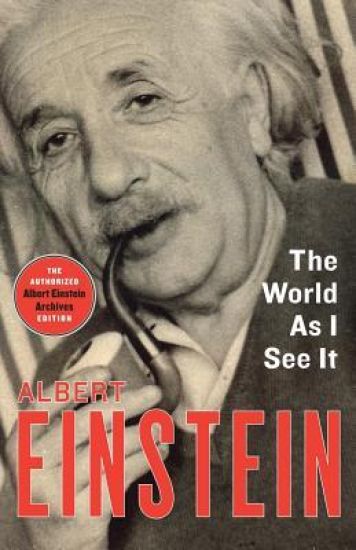
The World As I See It

The World As I See It

Albert Einstein

Philosophical Library/Open Road
2015
pokkari
A fascinating collection of Einstein’s observations about life, religion, nationalism, and a host of personal topics that engaged the genius’s intellectIn the aftermath of the First World War, Einstein writes about his hopes for the League of Nations, his feelings as a German citizen about the growing anti-Semitism and nationalism of his country, and his myriad opinions about the current affairs of his day. In addition to these political perspectives, The World As I See It reveals the idealistic, spiritual, and witty side of this great intellectual as he approaches topics including “Good and Evil,” “Religion and Science,” “Active Pacifism,” “Christianity and Judaism,” and “Minorities.”Including letters, speeches, articles, and essays written before 1935, this collection offers a complete portrait of Einstein as a humanitarian and as a human being trying to make sense of the changing world around him.This authorized Philosophical Library book features a new introduction by Neil Berger, PhD, and an illustrated biography of Albert Einstein, which includes rare photos and never-before-seen documents from the Albert Einstein Archives at the Hebrew University of Jerusalem.
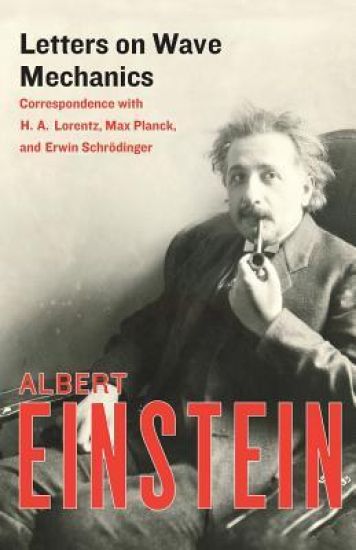
Letters on Wave Mechanics

Letters on Wave Mechanics

Albert Einstein; K. Przibram

Philosophical Library/Open Road
2015
pokkari
A lively collection of Einstein’s groundbreaking scientific correspondence on modern physics Imagine getting four of the greatest minds of modern physics in a room together to explain and debate the theories and innovations of their day. This is the fascinating experience of reading Letters on Wave Mechanics, the correspondence between H. A. Lorentz, Max Planck, Erwin Schrödinger, and Albert Einstein. These remarkable letters illuminate not only the basis of Schrödinger’s work in wave mechanics, but also how great scientific minds debated and challenged the ever-changing theories of the day and ultimately embraced an elegant solution to the riddles of quantum theory. Their collected correspondence offers insight into both the personalities and professional aspirations that played a part in this theoretical breakthrough. This authorized book features rare photos and never-before-seen documents from the Albert Einstein Archives at the Hebrew University of Jerusalem.
Letters to Solovine, 1906–1955

Letters to Solovine, 1906–1955

Albert Einstein

Philosophical Library/Open Road
2015
pokkari
A provocative collection of letters to his longtime friend and translator that spans Einstein’s career and reveals the inner thoughts and daily life of a transformative genius From their early days as tutor and scholar discussing philosophy over Spartan dinners to their work together to publish Einstein’s books in Europe, in Maurice Solovine, Albert Einstein found both an engaged mind and a loyal friend. While Einstein frequently shared his observations on science, politics, philosophy, and religion in his correspondence with Solovine, he was just as likely to express his feelings about everyday life—his health and the effects of aging and his experiences in the various places where he settled and visited in his long career. The letters are both funny and frank, and taken together, reflect the changes—large and small—that took place over a half century and in the remarkable life of the world’s foremost scientist. Published in English alongside the German text and accompanied by facsimile copies of the original letters, the collected Letters to Solovine offers scholar and interested reader alike unprecedented access to the personal life of Albert Einstein. This authorized book features a new introduction by Neil Berger, PhD, and an illustrated biography of Albert Einstein, which includes rare photos and never-before-seen documents from the Albert Einstein Archives at the Hebrew University of Jerusalem.
The Meaning of Relativity

The Meaning of Relativity

Albert Einstein

Routledge
2015
sidottu
The world would be a very different place if it were not for Albert Einstein. Like Newton and Galileo before him, this remarkable scientist changed forever mankind's understanding of the universe. In 1921, five years after proclaiming his general theory of relativity, Einstein was awarded the Nobel Prize for Physics in recognition of his remarkable achievements. In the same year he travelled to the United States to give four lectures that consolidated his theory and sought to explain its meaning to a new audience. These lectures were published the following year as The Meaning of Relativity, which he revised with each new edition until his death. It remains a key work for anyone wishing to discover at first hand the workings of one of the most inspiring minds of the twentieth century.
Relativity: The Special and the General Theory

Relativity: The Special and the General Theory

Albert Einstein

Createspace Independent Publishing Platform
2015
nidottu
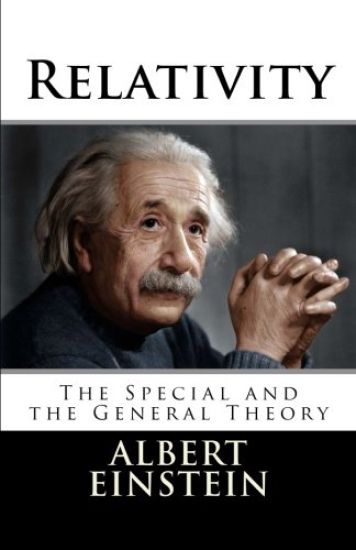
Relativity: The Special and General Theory Albert EINSTEIN (1879 - 1955), Translated by Robert W. Lawson (1890 - 1960) This is an introduction to Einstein's space-bending, time-stretching theory of Relativity, written by the master himself. Special and General relativity explain the structure of space time and provide a theory of gravitation, respectively. Einstein's theories shocked the world with their counterintuitive results, including the dissolution of absolute time. In this book he brings a simplified form of his profound understanding of the subject to the layperson. In the words of Einstein: "The present book is intended, as far as possible, to give an exact insight into the theory of Relativity to those readers who, from a general scientific and philosophical point of view, are interested in the theory, but who are not conversant with the mathematical apparatus of theoretical physics." The book is challenging at times but, when approached patiently, proves itself one of the most lucid explanations of Relativity to be found anywhere.
Relativity

Relativity

Albert Einstein

PRINCETON UNIVERSITY PRESS
2015
sidottu
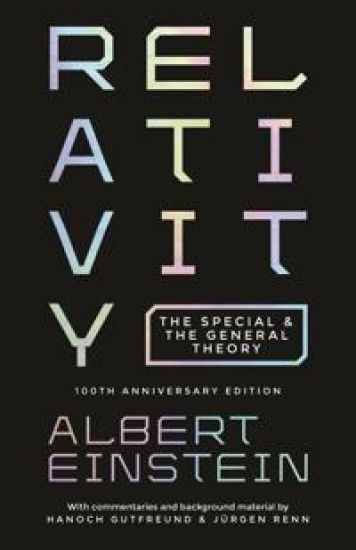
After completing the final version of his general theory of relativity in November 1915, Albert Einstein wrote a book about relativity for a popular audience. His intention was "to give an exact insight into the theory of relativity to those readers who, from a general scientific and philosophical point of view, are interested in the theory, but who are not conversant with the mathematical apparatus of theoretical physics." The book remains one of the most lucid explanations of the special and general theories ever written. In the early 1920s alone, it was translated into ten languages, and fifteen editions in the original German appeared over the course of Einstein's lifetime. This new edition of Einstein's celebrated book features an authoritative English translation of the text along with an introduction and a reading companion by Hanoch Gutfreund and Jurgen Renn that examines the evolution of Einstein's thinking and casts his ideas in a broader present-day context. A special chapter explores the history of and the stories behind the early foreign-language editions in light of the reception of relativity in different countries. This edition also includes a survey of the introductions from those editions, covers from selected early editions, a letter from Walther Rathenau to Einstein discussing the book, and a revealing sample from Einstein's handwritten manuscript. Published on the hundredth anniversary of general relativity, this handsome edition of Einstein's famous book places the work in historical and intellectual context while providing invaluable insight into one of the greatest scientific minds of all time.
Briefe

Briefe

Albert Einstein

DIOGENES VERLAG AG
2015
pokkari
Albert Einstein war nicht nur der größte Wissenschaftler seiner Zeit, sondern auch der berühmteste. Mehr noch: er beantwortete Briefe. Und diese Kombination macht das vorliegende Buch möglich. Es ist keine Biografie und erklärt nicht Einsteins Ideen. Es hat keine Kapitel, keine Inhaltsübersicht, kein Register und, auf den ersten Blick, keinen zugrundeliegenden Plan und keine Gliederung. Es besteht zum größten Teil aus Zitaten aus bisher unveröffentlichten Briefen und Zeugnissen, die Einstein ohne Gedanken an eine Publikation schrieb. Dennoch sind sie wunderbar lesbar, unterhaltsam und eindrücklich und zeigen Einstein neben dem Wissenschaftler und Menschen als grandiosen Briefeschreiber, der selbstironisch meinte: "Wenn alle Leute so lebten wie ich, wahrlich, die Romanschriftstellerei wäre dann niemals auf die Welt gekommen."
The Collected Papers of Albert Einstein, Volume 14

The Collected Papers of Albert Einstein, Volume 14

Albert Einstein

Princeton University Press
2015
sidottu
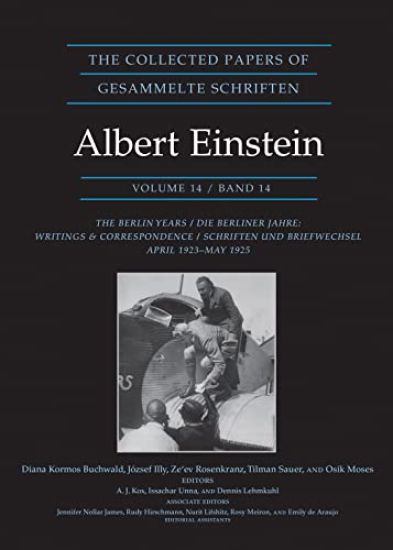
The more than one thousand letters and several dozen writings included in this volume cover the years immediately before the final formulation of new quantum mechanics. The discovery of the Compton effect in 1923 vindicates Einstein's light quantum hypothesis. Niels Bohr still criticizes Einstein's conception of light quanta and advances an alternative theory, but Walther Bothe and Hans Geiger perform a difficult experiment that decides in favor of Einstein's theory. At the same time, Satyendranath Bose sends a new quantum theoretical derivation of Planck's law to Einstein and he discovers what is now known as Bose-Einstein condensation. Einstein attempts to reformulate a unified theory of the gravitational and electromagnetic fields. In early November 1923, Einstein flees overnight to the Netherlands in the wake of threats on his life and anti-Semitic rioting in Berlin. He rejoins the International Committee on Intellectual Cooperation in June 1924, and supports the idea of a European union. He joins the board of governors of Hebrew University, which opens in April 1925, and celebrates the event in Buenos Aires while on a seven-week lecture tour of Argentina, Uruguay, and Brazil. During this period, he delivers lectures, meets with heads of state, visits major institutions, and attends receptions hosted by the local Jewish and German communities. He has a serious, but short-lived, falling out with his son Hans Albert and his first wife Mileva Maric-Einstein over how to invest part of the Nobel Prize money and he rescues his sister Maja and her husband from debt on their house. Einstein has a fourteen-month romantic relationship with his secretary, Betty Neumann, which he ends in October 1924.
The Collected Papers of Albert Einstein, Volume 14 (English)

The Collected Papers of Albert Einstein, Volume 14 (English)

Albert Einstein

Princeton University Press
2015
pokkari
In the almost one hundred writings and more than one thousand letters included in this volume, Einstein is revealed yet again as the consummate puzzler of myriad scientific problems as well as the invested participant in social and political engagements. He continues to explore the light quantum, whose reality is confirmed by new experiments, and to attempt to formulate a unified theory of gravitation and electromagnetism. He travels to South America, where he lectures widely on relativity, rejoins the International Committee on Intellectual Cooperation, and supports the idea of a European union. Einstein has a fourteen-month romantic relationship with his secretary, Betty Neumann, which ends in October 1924.
The Meaning of Relativity: Including the Relativistic Theory of the Non-Symmetric Field - Fifth Edition
In 1921, five years after the appearance of his comprehensive paper on general relativity and twelve years before he left Europe permanently to join the Institute for Advanced Study, Albert Einstein visited Princeton University, where he delivered the Stafford Little Lectures for that year. These four lectures constituted an overview of his then-controversial theory of relativity. Princeton University Press made the lectures available under the title The Meaning of Relativity, the first book by Einstein to be produced by an American publisher. As subsequent editions were brought out by the Press, Einstein included new material amplifying the theory. A revised version of the appendix "Relativistic Theory of the Non-Symmetric Field," added to the posthumous edition of 1956, was Einstein's last scientific paper.
Relativity: The Special and General Theory

Relativity: The Special and General Theory

Albert Einstein

Createspace Independent Publishing Platform
2014
nidottu
The theory of relativity, or simply relativity in physics, usually encompasses two theories by Albert Einstein: special relativity and general relativity. (The word relativity can also be used in the context of an older theory, that of Galilean invariance.) Concepts introduced by the theories of relativity include: Measurements of various quantities are relative to the velocities of observers. In particular, space contracts and time dilates. Spacetime: space and time should be considered together and in relation to each other. The speed of light is nonetheless invariant, the same for all observers. The term "theory of relativity" was based on the expression "relative theory" (German: Relativtheorie) used in 1906 by Max Planck, who emphasized how the theory uses the principle of relativity. In the discussion section of the same paper Alfred Bucherer used for the first time the expression "theory of relativity" (German: Relativit tstheorie)
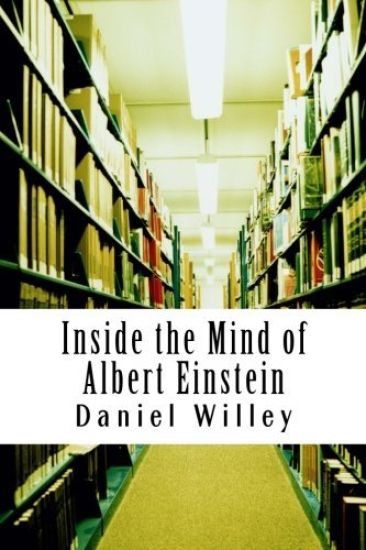
Inside the Mind of Albert Einstein

Inside the Mind of Albert Einstein

Albert Einstein; Daniel Willey

Createspace Independent Publishing Platform
2014
nidottu
Albert Einstein has been hailed as one of the greatest minds to ever exist on our planet. He was a German-born theoretical physicist. He developed the general theory of relativity, one of the two pillars of modern physics. He received the 1921 Nobel Prize in Physics for "his services to theoretical physics, and especially for his discovery of the law of the photoelectric effect. Einstein was visiting the United States when Adolf Hitler came to power and did not go back to Germany, where he had been a professor. This book contains a collection of his thoughts, teachings, & quotes.