Kirjojen hintavertailu. Mukana 12 390 323 kirjaa ja 12 kauppaa.

Kirjailija

Amartya Sen

Kirjat ja teokset yhdessä paikassa: 70 kirjaa, julkaisuja vuosilta 1973-2023, suosituimpien joukossa Rationale Dummköpfe. Eine Kritik der Verhaltensgrundlagen der Ökonomischen Theorie. Vertaile teosten hintoja ja tarkista saatavuus suomalaisista kirjakaupoista.

70 kirjaa

Kirjojen julkaisuhaarukka 1973-2023.

The Tacit Dimension

The Tacit Dimension

Michael Polanyi; Amartya Sen

University of Chicago Press
2009
nidottu
'I shall reconsider human knowledge by starting from the fact that we can know more than we can tell', writes Michael Polanyi, whose work paved the way for the likes of Thomas Kuhn and Karl Popper. "The Tacit Dimension", originally published in 1967, argues that such tacit knowledge - tradition, inherited practices, implied values, and prejudgments - is a crucial part of scientific knowledge. Back in print for a new generation of students and scholars, this volume challenges the assumption that skepticism, rather than established belief, lies at the heart of scientific discovery.
The Measure of America

The Measure of America

Sarah Burd-Sharps; Kristen Lewis; Eduardo Martins; Amartya Sen; William Draper III

Columbia University Press
2008
pokkari
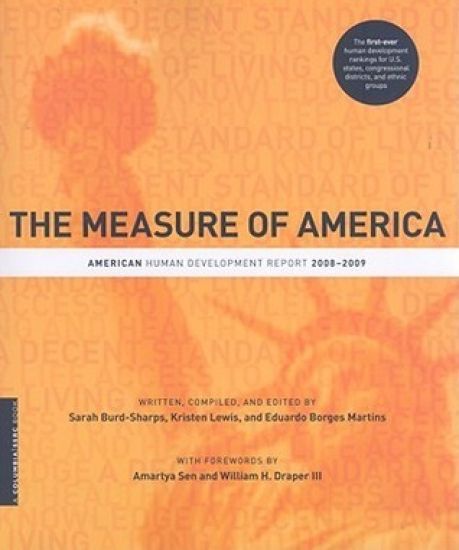
The Measure of America is the first-ever human development report for a wealthy, developed nation. It introduces the American Human Development Index, which provides a single measure of well-being for all Americans, disaggregated by state and congressional district, as well as by gender, race, and ethnicity. The Index rankings of the 50 states and 436 congressional districts reveal huge disparities in the health, education, and living standards of different groups. Clear, precise, objective, and authoritative, this report will become the basis for all serious discussions concerning the realization of a fair, just, and globally competitive American society.
Identity and Violence

Identity and Violence

Amartya Sen

Penguin Books Ltd
2007
pokkari
Profound and humane, Amartya Sen's Identity and Violence: The Illusion of Destiny examines some of the most explosive problems of our time and shows how we can move towards peace as firmly as we have spiralled towards war. In this penetrating book, Nobel Laureate Amartya Sen argues that we are becoming increasingly divided along lines of religion and culture, ignoring the many other ways in which people see themselves, from class and profession to morals and politics. When we are put into narrow categories the importance of human life becomes lost. Through his lucid exploration of such subjects as multiculturalism, fundamentalism, terrorism and globalization, he brings out the need for a clear-headed understanding of human freedom and a constructive public voice in Global civil society. The hope of harmony in today's world lies in a clearer understanding of our sheer diversity. 'Identity and Violence is a moving, powerful essay about the mischief of bad ideas' The Economist 'Impassioned, eloquent and often moving, Identity and Violence is a sustained attack on the "solitarist" theory which says that human identities are formed by membership of a single social group' John Gray, Guardian 'Rich in ideas ... I would love to send it to Osama bin Laden and have his reply' Spectator 'Sen's moving and most personal book yet' The Times Literary Supplement 'Stimulating ... simple and persuasive' Financial Times 'An accessible and exceptional humanitarian' Jon Snow, New Statesman Heroes of Our Time Amartya Sen is Lamont University Professor at Harvard. He won the Nobel Prize in Economics in 1998. His other books published by Penguin include The Argumentative Indian and The Idea of Justice.
Famine in North Korea

Famine in North Korea

Stephan Haggard; Marcus Noland; Amartya Sen

Columbia University Press
2007
sidottu
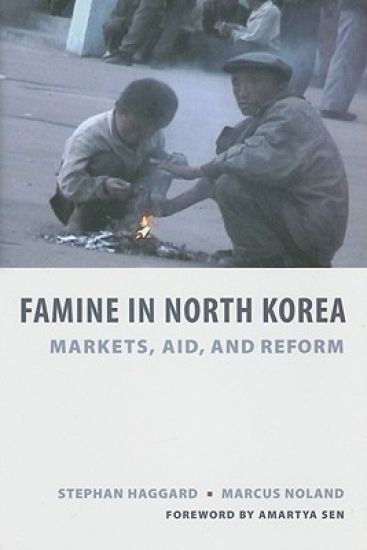
In the mid-1990s, as many as one million North Koreans died in one of the worst famines of the twentieth century. The socialist food distribution system collapsed primarily because of a misguided push for self-reliance, but was compounded by the regime's failure to formulate a quick response-including the blocking of desperately needed humanitarian relief. As households, enterprises, local party organs, and military units tried to cope with the economic collapse, a grassroots process of marketization took root. However, rather than embracing these changes, the North Korean regime opted for tentative economic reforms with ambiguous benefits and a self-destructive foreign policy. As a result, a chronic food shortage continues to plague North Korea today. In their carefully researched book, Stephan Haggard and Marcus Noland present the most comprehensive and penetrating account of the famine to date, examining not only the origins and aftermath of the crisis but also the regime's response to outside aid and the effect of its current policies on the country's economic future. Their study begins by considering the root causes of the famine, weighing the effects of the decline in the availability of food against its poor distribution. Then it takes a close look at the aid effort, addressing the difficulty of monitoring assistance within the country, and concludes with an analysis of current economic reforms and strategies of engagement. North Korea's famine exemplified the depredations that can arise from tyrannical rule and the dilemmas such regimes pose for the humanitarian community, as well as the obstacles inherent in achieving economic and political reform. To reveal the state's culpability in this tragic event is a vital project of historical recovery, one that is especially critical in light of our current engagement with the "North Korean question."
The Argumentative Indian

The Argumentative Indian

Amartya Sen

Penguin Books Ltd
2006
pokkari
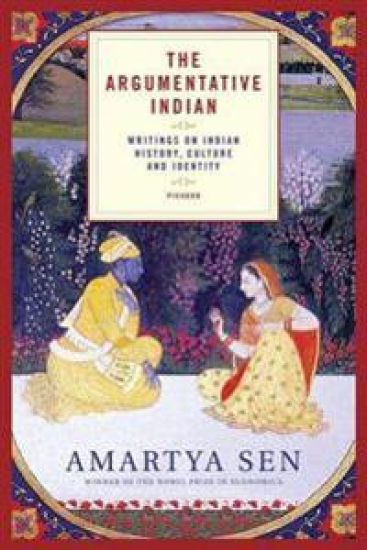
From Nobel prize-winning economist Amartya Sen, The Argumentative Indian: Writings on Indian Culture, History and Identity brings together an illuminating selection of writings on contemporary India. India is an immensely diverse country with many distinct pursuits, vastly different convictions, widely divergent customs and a veritable feast of viewpoints. Out of these conflicting views spring a rich tradition of skeptical argument and cultural achievement which is critically important, argues Amartya Sen, for the success of India's democracy, the defence of its secular politics, the removal of inequalities related to class, caste, gender and community, and the pursuit of sub-continental peace. 'Profound and stimulating ... the product of a great mind at the peak of its power' William Dalrymple, Sunday Times 'One of the most influential public thinkers of our times...This is a book that needed to have been written...It would be no surprise if it were to become as defining and as influential as work as Edward Said's Orientalism' Soumya Bhattacharya, Observer 'The winner of the 1998 Nobel prize in economics is a star in India ... he deserves the recognition ... shows that the argumentative gene is not just a part of India's make-up that can easily be wished away' The Economist Amartya Sen is Lamont University Professor at Harvard. He won the Nobel Prize in Economics in 1998 and was Master of Trinity College, Cambridge 1998-2004. His most recent books are The Idea of Justice, Identity and Violence and Development as Freedom. His books have been translated into thirty languages.
Ramayana Book One

Ramayana Book One

Valmiki; Amartya Sen

New York University Press
2005
sidottu
One of the great national epics of India that blends poetry and adventure to tell the origin story of the hero Rama Rama, the crown prince of the City of Ayodhya, is a model son and warrior. He is sent by his father the king to rescue a sage from persecution by demons, but must first kill a fearsome ogress. That done, he drives out the demons, restores peace, and attends a tournament in the neighboring city of Mithila; here he bends the bow that no other warrior can handle, winning the prize and the hand of Sita, the princess of Mithila. Valmíki's Ramáyana is one of the two great national epics of India, the source revered throughout South Asia as the original account of the career of Rama, ideal man and incarnation of the great god Vishnu. The first book, "Boyhood," introduces the young hero Rama and sets the scene for the adventures ahead. It begins with a fascinating excursus on the origins and function of poetry itself. Co-published by New York University Press and the JJC Foundation For more on this title and other titles in the Clay Sanskrit series, please visit http://www.claysanskritlibrary.org
Public Health, Ethics, and Equity

Public Health, Ethics, and Equity

Sudhir Anand; Fabienne Peter; Amartya Sen

Oxford University Press
2004
sidottu
In the last fifty years, average overall health status has increased more or less in parallel with a much celebrated decline in mortality, attributed mostly to poverty reduction, sanitation, nutrition, housing, immunization, and improved medical care. It is becoming increasingly clear, however, that these achievements were not equally distributed. In most countries, while some social groups have benefited significantly, the situation of others has stagnated or may even have worsened. If health is a prerequisite to a person functioning as an agent, inequalities in health constitute inequalities in people's capability to function -- a denial of equality of opportunity. So why should a concern with health equity be singled out from the pursuit of social justice more generally? Can existing theories of justice provide an adequate account of health equity? And what ethical problems arise in evaluating health inequalities? These are some of the important questions that this book addresses in building an interdisciplinary understanding of health equity. With contributions from distinguished philosophers, anthropologists, economists, and public-health specialists, it centres on five major themes: what is health equity?; health equity and social justice; responsibilities for health; ethical issues in health evaluation; and anthropological perspectives.
Pathologies of Power

Pathologies of Power

Paul Farmer; Amartya Sen

University of California Press
2004
pokkari
Pathologies of Power uses harrowing stories of life--and death--in extreme situations to interrogate our understanding of human rights. Paul Farmer, a physician and anthropologist with twenty years of experience working in Haiti, Peru, and Russia, argues that promoting the social and economic rights of the world's poor is the most important human rights struggle of our times. With passionate eyewitness accounts from the prisons of Russia and the beleaguered villages of Haiti and Chiapas, this book links the lived experiences of individual victims to a broader analysis of structural violence. Farmer challenges conventional thinking within human rights circles and exposes the relationships between political and economic injustice, on one hand, and the suffering and illness of the powerless, on the other. Farmer shows that the same social forces that give rise to epidemic diseases such as HIV and tuberculosis also sculpt risk for human rights violations. He illustrates the ways that racism and gender inequality in the United States are embodied as disease and death. Yet this book is far from a hopeless inventory of abuse. Farmer's disturbing examples are linked to a guarded optimism that new medical and social technologies will develop in tandem with a more informed sense of social justice. Otherwise, he concludes, we will be guilty of managing social inequality rather than addressing structural violence. Farmer's urgent plea to think about human rights in the context of global public health and to consider critical issues of quality and access for the world's poor should be of fundamental concern to a world characterized by the bizarre proximity of surfeit and suffering.
Rationality and Freedom

Rationality and Freedom

Amartya Sen

The Belknap Press
2004
nidottu
Rationality and freedom are among the most profound and contentious concepts in philosophy and the social sciences. In two volumes on rationality, freedom, and justice, the distinguished economist and philosopher Amartya Sen brings clarity and insight to these difficult issues. This volume--the first of the two--is principally concerned with rationality and freedom.Sen scrutinizes and departs from the standard criteria of rationality, and shows how it can be seen in terms of subjecting one's values as well as choices to the demands of reason and critical scrutiny. This capacious approach is utilized to illuminate the demands of rationality in individual choice (including decisions under uncertainty) as well as social choice (including cost benefit analysis and environmental assessment).Identifying a reciprocity in the relationship between rationality and freedom, Sen argues that freedom cannot be assessed independently of a person's reasoned preferences and valuations, just as rationality, in turn, requires freedom of thought. Sen uses the discipline of social choice theory (a subject he has helped to develop) to illuminate the demands of reason and the assessment of freedom. The latter is the subject matter of Sen's previously unpublished Arrow Lectures included here.The essays in these volumes contribute to Sen's ongoing transformation of economic theory and social philosophy, and to our understanding of the connections among rationality, freedom, and social justice.
India

India

Jean Drèze; Amartya Sen

Oxford University Press
2002
nidottu
This book explores the role of public action in eliminating deprivation and expanding human freedoms in India. The analysis is based on a broad and integrated view of development, which focuses on well-being and freedom rather than the standard indicators of economic growth.
A Survey of Sustainable Development

A Survey of Sustainable Development

Amartya Sen

Island Press
2001
nidottu
This work is the expressly-environmental bookend to the "Frontier Issues in Economic Thought" series. The purpose of this volume is to synthesise and synopsise the key work from the many different disciplines that can contribute to socially and environmentally responsible/sustainable development.
Development as Freedom

Development as Freedom

Amartya Sen

Oxford University Press
2001
nidottu
In Development as Freedom Amartya Sen explains how in a world of unprecedented increase in overall opulence millions of people living in the Third World are still unfree. Even if they are not technically slaves, they are denied elementary freedoms and remain imprisoned in one way or another by economic poverty, social deprivation, political tyranny or cultural authoritarianism. The main purpose of development is to spread freedom and its 'thousand charms' to the unfree citizens. Freedom, Sen persuasively argues, is at once the ultimate goal of social and economic arrangements and the most efficient means of realizing general welfare. Social institutions like markets, political parties, legislatures, the judiciary, and the media contribute to development by enhancing individual freedom and are in turn sustained by social values. Values, institutions, development, and freedom are all closely interrelated, and Sen links them together in an elegant analytical framework. By asking 'What is the relation between our collective economic wealth and our individual ability to live as we would like?' and by incorporating individual freedom as a social commitment into his analysis Sen allows economics once again, as it did in the time of Adam Smith, to address the social basis of individual well-being and freedom.
Development as Freedom

Development as Freedom

Amartya Sen

ANCHOR BOOKS
2000
nidottu
By the winner of the 1988 Nobel Prize in Economics, an essential and paradigm-altering framework for understanding economic development--for both rich and poor--in the twenty-first century. Freedom, Sen argues, is both the end and most efficient means of sustaining economic life and the key to securing the general welfare of the world's entire population. Releasing the idea of individual freedom from association with any particular historical, intellectual, political, or religious tradition, Sen clearly demonstrates its current applicability and possibilities. In the new global economy, where, despite unprecedented increases in overall opulence, the contemporary world denies elementary freedoms to vast numbers--perhaps even the majority of people--he concludes, it is still possible to practically and optimistically restain a sense of social accountability. Development as Freedom is essential reading.
Commodities and Capabilities

Commodities and Capabilities

Amartya Sen

OUP India
1999
nidottu
Commodities and Capabilities presents a set of inter-related theses concerning the foundations of welfare economics, and in particular about the assessment of personal well-being and advantage. The argument presented focuses on the capability to function, i.e. what a person can do or can be, questioning in the process the more standard emphasis on opulence or on utility. In fact, a person's motivation behind choice is treated here as a parametric variable which may or may not coincide with the pursuit of self-interest. Given the large number of practical problems arising from the roles and limitations of different concepts of interest and the judgement of advantage and well-being, this scholarly investigation is both of theoretical interest and practical import.
Development as Freedom

Development as Freedom

Amartya Sen

Oxford University Press
1999
sidottu
In Development as Freedom Amartya Sen quotes the eighteenth century poet William Cowper on freedom: Freedom has a thousand charms to show, That slaves howe'er contented, never know. Sen explains how in a world of unprecedented increase in overall opulence, millions of people living in rich and poor countries are still unfree. Even if they are not technically slaves, they are denied elementary freedom and remain imprisoned in one way or another by economic poverty, social deprivation, political tyranny or cultural authoritarianism. The main purpose of development is to spread freedom and its 'thousand charms' to the unfree citizens. Freedom, Sen persuasively argues, is at once the ultimate goal of social and economic arrangements and the most efficient means of realizing general welfare. Social institutions like markets, political parties, legislatures, the judiciary, and the media contribute to development by enhancing individual freedom and are in turn sustained by social values. Values, institutions, development, and freedom are all closely interrelated, and Sen links them together in an elegant analytical framework. By asking "What is the relation between our collective economic wealth and our individual ability to live as we would like?" and by incorporating individual freedom as a social commitment into his analysis, Sen allows economics once again, as it did in the time of Adam Smith, to address the social basis of individual well-being and freedom.
Labour Markets, Poverty, and Development

Labour Markets, Poverty, and Development

Frank Hahn; Amartya Sen

Clarendon Press
1999
sidottu
As we reach the turn of the millennium, the disparity between developed and developing world is of increasing concern. Labour, Poverty, and Development brings together a worldwide mix of contributors from both the academic and practitioner sides of the current debate, combining rigorous economic analysis and broader-based theorizing to provide a detailed picture of the causes, effects, and implications of the current situation in the developing world. All the contributions stress the vertical relationship between macro trends and micro functionings of markets. Part I deals with the interaction between employment and growth and trade policy, investigating the positive relationship betwen growth and emplyment, and the connection between trade liberalization and better working conditions. Part II looks at the situation in urban areas: the crucial and often hidden role that the informal sector plays in the urban employment market and its connection to the formal labour sector, and the collective decision-making involved in gender differentials in education. Finally, Part III investigates the other side of the ruralurban divide, with a detailed micro-study of labour supply in rural communes in China, and an analysis of a common developing-world poverty trap: the spiralling relationship between destitution and low productivity.
India

India

Jean Drèze; Amartya Sen

Clarendon Press
1999
nidottu
This book presents analysis of endemic deprivation in India and the role of public action in addressing the problem. The analysis is based on a broad view of economic development, focusing on human well-being and 'social opportunity' rather than the standard indicators of economic growth. India's success in reducing deprivation since Independence has been limited. Recent diagnoses of this failure of policy have concentrated on the counterproductive role of government regulation, and on the need for economic incentives to accelerate the economy. Professors Drèze and Sen argue that an assessment of India's failure to eliminate basic deprivations has to go beyond this limited focus, and to take note of the role played in that failure by inadequate public involvement in the provision of basic education, health care, social security, and related fields. Even the fostering of fast and participatory economic growth requires some basic social change, which is not addressed by liberalization and economic incentives. The authors also discuss the historical antecedents of these political and social neglects, including the distortion of policy priorities arising from inequalities of political power. Following on from this, the book considers the scope for public action to address these earlier biases and achieve a transformation of policy priorities. ` ... a fine account of India's achievements and failures ... written throughout in a fine style ... it will be a starting-point of subsequent discussions on social life in India.' Partha Dasgupta, Times Higher Education Supplement
Resources, Values, and Development

Resources, Values, and Development

Amartya Sen

Harvard University Press
1997
nidottu
Resources, Values and Development contains many of Amartya Sen's path-breaking contributions to development economics, including papers on resource allocation in nonwage systems, investment planning, shadow pricing, employment policy, and welfare economics.