Kirjojen hintavertailu. Mukana 12 390 323 kirjaa ja 12 kauppaa.
Kirjailija
Amit Chaudhuri
Kirjat ja teokset yhdessä paikassa: 45 kirjaa, julkaisuja vuosilta 2003-2026, suosituimpien joukossa Freedom Song. Vertaile teosten hintoja ja tarkista saatavuus suomalaisista kirjakaupoista.
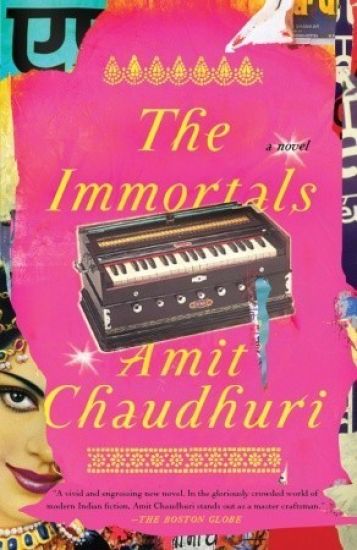
In 1980s Bombay, a highly regarded voice teacher and his affluent sixteen-year-old student enter into a relationship that will have unexpected and lasting consequences in their lives, and the lives of their families. With exquisitely sensuous detail, quiet humor, and unsentimental poignancy, Amit Chaudhuri paints a luminous portrait of the spiritual and emotional force behind a revered Indian tradition; of two fundamentally different but intricately intertwined families; and of a society choosing between the old and the new.
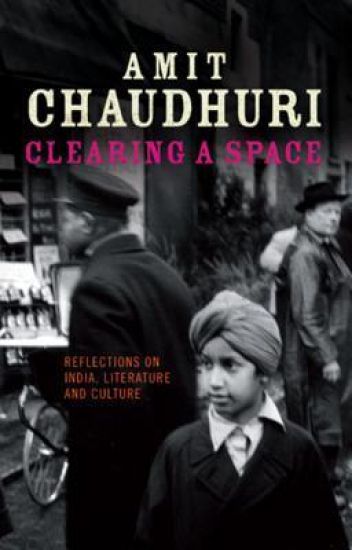
The essays assembled in "Clearing a Space", written over the last fifteen years, cover an astonishing range of subjects. The writer treats himself as a specimen for an exploration of what it means to be a modern Indian in relation to the West. Personal memoir gives readers a glance into a nation's history; his relationship to the West provides insight into India's national relationship to the West; and, his struggle to define 'Indianness' for himself becomes a paradigm of searching for Indian identity.With the same elegance and intelligence for which the author has become known, Chaudhuri writes anecdotally in these essays about Indian popular culture and high culture, travel and location in Paris, Bombay, Dublin, Calcutta and Berlin, empire and nationalism, Indian and Western cinema, music, art and literature, politics, race, cosmopolitanism, urban landscapes, Hollywood and Bollywood, Anglophone India, internationalism, globalisation, the Indian English tradition that pre-dates Rushdie, post-colonialism and much more.
The essays assembled in "Clearing a Space", written over the last fifteen years, cover an astonishing range of subjects. The writer treats himself as a specimen for an exploration of what it means to be a modern Indian in relation to the West. Personal memoir gives readers a glance into a nation's history; his relationship to the West provides insight into India's national relationship to the West; and, his struggle to define 'Indianness' for himself becomes a paradigm of searching for Indian identity.With the same elegance and intelligence for which the author has become known, Chaudhuri writes anecdotally in these essays about Indian popular culture and high culture, travel and location in Paris, Bombay, Dublin, Calcutta and Berlin, empire and nationalism, Indian and Western cinema, music, art and literature, politics, race, cosmopolitanism, urban landscapes, Hollywood and Bollywood, Anglophone India, internationalism, globalisation, the Indian English tradition that pre-dates Rushdie, post-colonialism and much more.
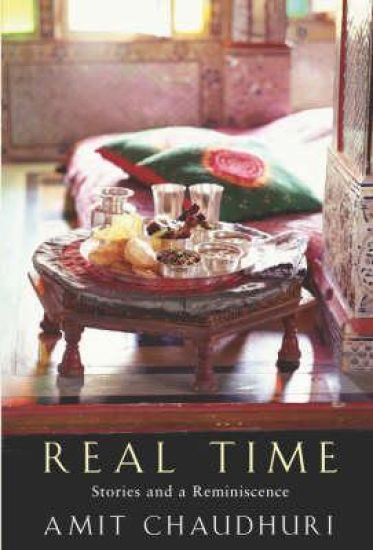
Amit Chaudhuri’s stories range across the astonishing face of the modern Indian subcontinent. From a divorcé about to enter into an arranged marriage to a teenaged poet who develops a relationship with a lonely widower, from singing teachers to housewives to white-collar businessmen, Chaudhuri deftly explores the juxtaposition of the old and new worlds in his native India. Here are stories as sweet and humane as they are incisive and revealing. ‘Brilliant . . . Here, as with Chekhov or Hemingway, the reader not only accepts but relishes the economy, because he or she has already been won over by other deft and graceful aspects of the author’s style . . . Against these vivid backgrounds are placed an astonishingly varied galaxy of characters . . . A civilised, not to mention an immensely pleasurable read’ Ranjit Bolt, Guardian ‘Few write as delicately as Chaudhuri, whose characters intertwine their antennae and talk in elliptical low tones, displaying all the while their peculiarly Indian humanity’ Philip Glazebrook, Spectator ‘Mr Chaudhuri limns the trajectory of an entire life in a handful of pages . . . The stories in this volume combine the folk-art charm and easygoing improvisations of R. K. Narayan with the compassion and evocative atmosphere of Chekhov’ Michiko Kakutani, New York Times
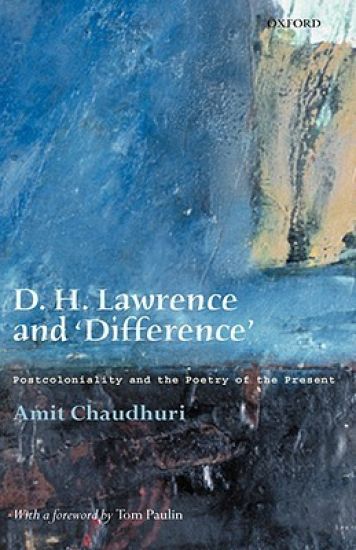
This important study from the prizewinning novelist and critic Amit Chaudhuri explores D. H. Lawrence's position as a 'foreigner' in the English canon. Focusing on the poetry, Chaudhuri examines how Lawrence's works, and Lawrence himself, have been read, and misread, in terms of their 'difference.' In contrast to the Leavisite project of placing Lawrence in the English 'great tradition,' this study demonstrates how Lawrence's writing brings into question the notion of 'Englishness' itself. It also shows how Lawrence's aesthetic sets him apart radically from both his Modernist contemporaries and his Romantic forbears. The starting-point of this enquiry into Lawrentian 'difference' is, for the purposes of this study, the poetry, its stylistic features, the ways in which it has been read, and, importantly, involves a search for a critical language by which it, and its 'difference', might be addressed. In doing so, it takes recourse to Jacques Derrida's notions of 'grammatalogy' and 'ecriture', and Michel Foucault's notion of 'discourse'. Referring to Lawrence's travel writings about Mexico and Italy, his essays on European and Etruscan art, on Mexican marketplaces and rituals, and American literature, and especially to his poetic manifesto, 'The Poetry of the Present,' this book shows how Lawrence was working towards both a theory and a practice that critique the post-Enlightenment unitary European self. Chaudhuri also, radically, allows his own post-colonial identity to inform his reading of the poetry, and to let the poems enter into a conversation with that identity. This is the first time that Lawrence's poetry has been discussed in this way, in the light of post-colonial and post-structuralist theory; it is also the first time a leading post-colonial writer of his generation has taken as his subject a major canonical English writer, and, through him, remapped the English canon as a site of 'difference.'