Kirjojen hintavertailu. Mukana 12 390 323 kirjaa ja 12 kauppaa.

Kirjailija

Anaïs Nin

Kirjat ja teokset yhdessä paikassa: 58 kirjaa, julkaisuja vuosilta 1959-2023, suosituimpien joukossa A Literate Passion: Letters of Anaïs Nin & Henry Miller, 1932-1953. Vertaile teosten hintoja ja tarkista saatavuus suomalaisista kirjakaupoista.

Mukana myös kirjoitusasut: Anais Nin

58 kirjaa

Kirjojen julkaisuhaarukka 1959-2023.

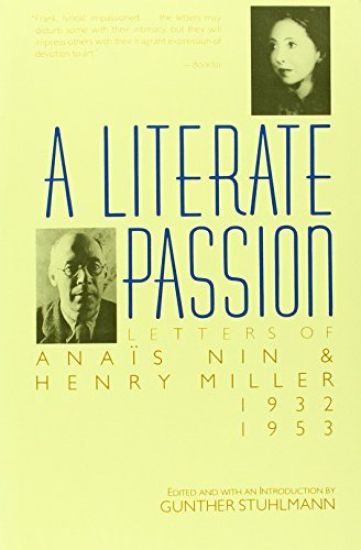
A Literate Passion: Letters of Anaïs Nin & Henry Miller, 1932-1953

A Literate Passion: Letters of Anaïs Nin & Henry Miller, 1932-1953

Anaïs Nin; Henry Miller

Mariner Books Classics
1989
nidottu
A "lyrical, impassioned" document of the intimate relationship between the two authors that was first disclosed in Henry and June (Booklist).This exchange of letters between the two controversial writers -- Ana s Nin, renowned for her candid and personal diaries, and Henry Miller, author of Tropic of Cancer -- paints a portrait of more than two decades in their complex relationship as it moves through periods of passion, friendship, estrangement, and reconciliation."The letters may disturb some with their intimacy, but they will impress others with their fragrant expression of devotion to art." -- Booklist"A portrait of Miller and Nin more rounded than any previously provided by critics, friends, and biographers." -- Chicago TribuneEdited and with an Introduction by Gunther Stuhlmann
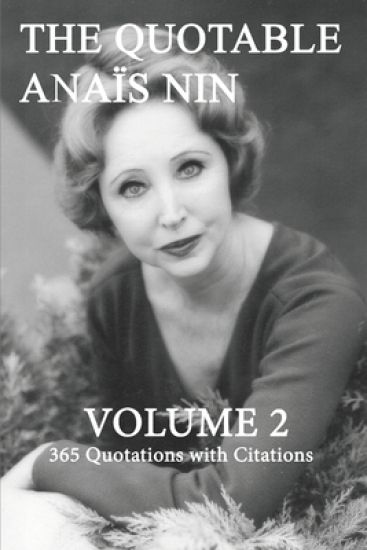
The Quotable Anais Nin Volume 2: 365 Quotations with Citations
Volume 2 of The Quotable Anais Nin contains 365 quotations (one for each day of the year) with confirmed citations. The contents are divided into categories of Lust for Life; Love and Sensuality; Consciousness; Women and Men; and Writing and Art. The quotations come from a wide spectrum of Anais Nin's work, some of it as yet unpublished, including her famous diaries, fiction, erotica, critical work, lectures, and interviews. Collected, edited and introduced by Paul Herron.
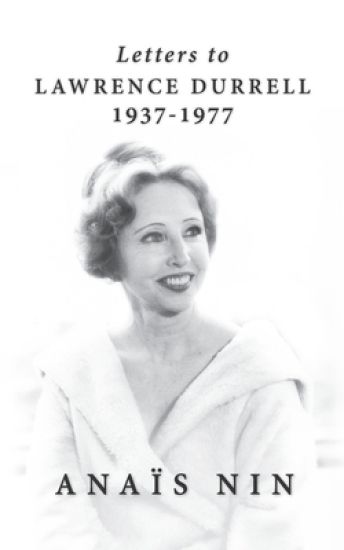
Letters to Lawrence Durrell 1937-1977
Anais Nin and Lawrence Durrell, along with their mutual friend Henry Miller, formed a triumvirate they called the "three musketeers" in Paris during the 1930s. Not only did they support each other's work before becoming individually famous, (Nin for her Diary, Durrell for his "Alexandria Quartet," Miller for his Tropic novels), they formed life-long friendships that endure in their correspondence. For the first time, Nin's letters to Durrell and several of his responses are in print, revealing the origins, depth, longevity and pitfalls of their complex relationship. As Durrell writes to Nin in 1967, "Sometimes one quite inadvertently hurts friends and loses them without meaning to, without wanting to, and spends the rest of their life in puzzled me-fulness, chewing the cud and wondering. Not me. Toujours, here I am, your old friend."Spanning forty years, these letters follow the lives of two important writers from the time they were seeking their authentic voices until each had achieved what they had long sought: literary and personal fame.
Reunited

Reunited

Anaïs Nin; Joaquín Nin

Swallow Press
2020
pokkari
The incestuous affair between the writer Anaïs Nin and her father, the pianist-composer Joaquín Nin, is well documented in the volume of her unexpurgated diary published under the title Incest. What has been missing from that account is Joaquín’s point of view. Reunited: The Correspondence of Anaïs and Joaquín Nin, 1933–1940 presents more than one hundred intimate communications between these two artistic geniuses, revealing not only the dynamics of their complex relationship but also why Anaïs spent her life in a never-ending battle to feel loved, appreciated, and understood. Reunited collects the correspondence between Anaïs and Joaquín just before, during, and after the affair, which commenced in 1933, twenty years after he had abandoned his ten-year-old daughter and the rest of his family. These letters were long believed to have been destroyed and lost to history. In 2006, however, a folder containing Joaquín’s original letters to his daughter was discovered in Anaïs’s Los Angeles home, along with a second folder of her letters to him. Together, these letters tell the story of an absent father’s attempt to reconnect with his adult daughter and how that rapprochement quickly turned into an illicit sexual relationship.
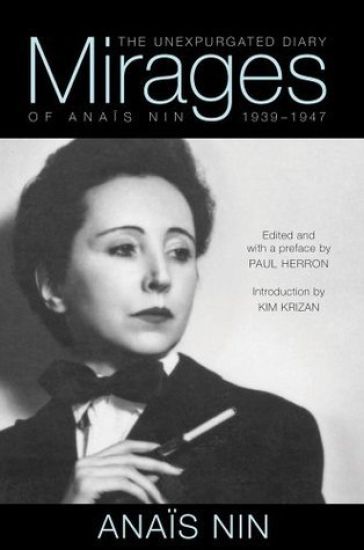
Mirages

Mirages

Anaïs Nin

Swallow Press
2013
sidottu
Mirages opens at the dawn of World War II, when Anaïs Nin fled Paris, where she lived for fifteen years with her husband, banker Hugh Guiler, and ends in 1947 when she meets the man who would be “the One,” the lover who would satisfy her insatiable hunger for connection. In the middle looms a period Nin describes as “hell,” during which she experiences a kind of erotic madness, a delirium that fuels her search for love. As a child suffering abandonment by her father, Anaïs wrote, “Close your eyes to the ugly things,” and, against a horrifying backdrop of war and death, Nin combats the world’s darkness with her own search for light. Mirages collects, for the first time, the story that was cut from all of Nin’s other published diaries, particularly volumes 3 and 4 of The Diary of Anaïs Nin, which cover the same time period. It is the long-awaited successor to the previous unexpurgated diaries Henry and June, Incest, Fire, and Nearer the Moon. Mirages answers the questions Nin readers have been asking for decades: What led to the demise of Nin’s love affair with Henry Miller? Just how troubled was her marriage to Hugh Guiler? What is the story behind Nin’s “children,” the effeminate young men she seemed to collect at will? Mirages is a deeply personal story of heartbreak, despair, desperation, carnage, and deep mourning, but it is also one of courage, persistence, evolution, and redemption that reaches beyond the personal to the universal.
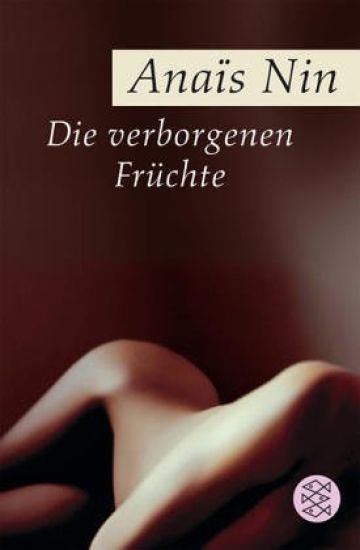
Die verborgenen Früchte

Die verborgenen Früchte

Anaïs Nin

S. Fischer Verlag
2005
pokkari
Ein Maler, der seine Frau nur in seinen Werken begehren kann, zwei Fremde am Strand, die im Meer zueinander finden - sensibel und unverhüllt beschreiben die Geschichten der Ana?s Nin die ganze Welt der Erotik und der Liebe. Bei aller Direktheit und Offenheit hat sie dabei vor allem ein Ziel: zu zeigen, dass Sex erst durch Gefühle zu wirklicher Erotik wird.
Incest: From "A Journal of Love" -The Unexpurgated Diary of Anaïs Nin (1932-1934)
The continuation of the story begun in Henry and June, exposing the shattering psychological drama that drove Nin to seek absolution from her psychoanalysts for the ultimate transgression. "It is Nin's] posthumously published uncensored diaries that will make her immortal" (Booklist). Introduction by Rupert Pole; Index; photographs.
The Diary of Anais Nin Volume 6 1955-1966: Vol. 6 (1955-1966)
Nin continues her debate on the use of drugs versus the artist's imagination, portrays many famous people in the arts, and recounts her visits to Sweden, the Brussels World's Fair, Paris, and Venice. " Nin] looks at life, love, and art with a blend of gentility and acuity that is rare in contemporary writing" (John Barkham Reviews). Edited and with a Preface by Gunther Stuhlmann; Index.
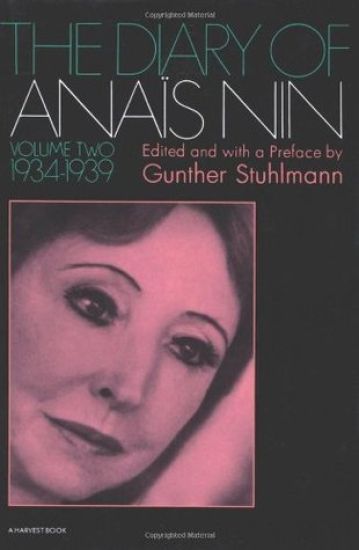
1931-1934

1931-1934

Anaïs Nin

Mariner Books Classics
1969
nidottu
The Diary of Anais Nin, Vol. 1: 1931-1934 is the first in a nine volume series in the influential artist and thinker's own words, covering the time when Nin is about to publish her first book and ends when she leaves Paris for New York. "One of the most remarkable diaries in the history of letters."--Los Angeles Times"As unique a literary memoir as has been published...lyrical, and singularly potent."--Village VoiceEdited and with a Preface by Gunther Stuhlmann.
Children of the Albatross

Children of the Albatross

Anaïs Nin

Swallow Press
1959
pokkari
Children of the Albatross is divided into two sections: “The Sealed Room” focuses on the dancer Djuna and a set of characters, chiefly male, who surround her; “The Café” brings together a cast of characters already familiar to Nin’s readers, but it is their meeting place that is the focal point of the story. As always, in Children of the Albatross, Nin’s writing is inseparable from her life. From Djuna’s story, told in “The Sealed Room” through hints and allusions, hazy in their details and chronology, the most important event to emerge is her father’s desertion (like Nin’s) when she was sixteen. By rejecting realistic writing for the experience and intuitions she drew from her diary, Nin was able to forge a novelistic style emphasizing free association, spontaneity, and improvisation, a technique that finds its parallel in the jazz music performed at the café where Nin’s characters meet.
The Four-Chambered Heart

The Four-Chambered Heart

Anaïs Nin

Ohio University Press
1959
pokkari
The Four-Chambered Heart, Anaïs Nin's 1950 novel, recounts the real-life affair she conducted with café guitarist Gonzalo Moré in 1936. Nin and Moré rented a house-boat on the Seine, and under the pervading influence of the boat's watchman and Moré's wife Helba, developed a relationship. Moré; named the boat Nanankepichu, meaning "not really a home." In the novel, which Nin drew from her experiences on the boat, the characters are clearly based. Djuna is an embodiment of Nin herself. A young dancer in search of fulfillment, she encapsulates all that the author was striving for at that time. The character of Djuna features in other novels, perhaps weaving a directly autobiographical thread into Nin's fiction. The gypsy musician, Rango, is therefore Moré, and his invalid wife is Zora. The old watchman is present as a force which, along with Zora, works against the lovers in their quest for happiness. Nin's main concern is the "outside," and how it affects the "interior." Water is a cleverly used theme. “I have no great fear of depths,” says Djuna, “and a great fear of shallow living.” Rango and Djuna's relationship is, in effect, their effort to remain afloat. Often, Nin employs a stream of consciousness, especially in her flowing analyses of love, life and music, which continues the water image. Anaïs Nin's writing is typically exquisite in its detail and texture. She describes Paris: its "black lacquered cobblestones" and "silver filigree trees." The "humid scarfs of fog" on the river, and "the sharp incense of roasted chestnuts" reveal their source through their reality: Nin's personal experience.
The Four-Chambered Heart

The Four-Chambered Heart

Anaïs Nin

OHIO UNIVERSITY PRESS
2023
pokkari
The Four-Chambered Heart, Anaïs Nin's 1950 novel, recounts the real-life affair she conducted with café guitarist Gonzalo Moré in 1936. Nin and Moré rented a house-boat on the Seine, and under the pervading influence of the boat's watchman and Moré's wife Helba, developed a relationship. Moré; named the boat Nanankepichu, meaning "not really a home." In the novel, which Nin drew from her experiences on the boat, the characters' sources are clear. Djuna is an embodiment of Nin herself. A young dancer in search of fulfillment, she encapsulates all that the author was striving for at that time. The character of Djuna features in other novels, perhaps weaving a directly autobiographical thread into Nin's fiction. The gypsy musician, Rango, is therefore Moré, and his invalid wife is Zora. The old watchman is present as a force that, along with Zora, works against the lovers in their quest for happiness. Nin's main concern throughout the novel is the "exterior," and how it affects the "interior." Water is a cleverly used theme. “I have no great fear of depths,” says Djuna, “and a great fear of shallow living.” Rango and Djuna's relationship is, in effect, their effort to remain afloat. Often, Nin employs a stream of consciousness, especially in her flowing analyses of love, life and music, which continues the water image. Anaïs Nin's writing is typically exquisite in its detail and texture. She describes Paris: its "black lacquered cobblestones" and "silver filigree trees." The "humid scarfs of fog" on the river, and "the sharp incense of roasted chestnuts" reveal their source through their reality: Nin's personal experience.
Children of the Albatross

Children of the Albatross

Anaïs Nin

OHIO UNIVERSITY PRESS
2023
pokkari
The second novel in Anaïs Nin's Cities of the Interior series, Children of the Albatross is divided into two sections: "The Sealed Room" focuses on the dancer Djuna and a set of characters, chiefly male, who surround her; "The Café" brings together a cast of characters already familiar to Nin's readers, but it is their meeting place that is the focal point of the story. As always, in Children of the Albatross, Nin's writing is inseparable from her life. From Djuna's story, told in "The Sealed Room" through hints and allusions, hazy in their details and chronology, the most important event to emerge is her father's desertion (as Nin's father did) when she was sixteen. By rejecting realistic writing for the experience and intuitions she drew from her diary, Nin was able to forge a novelistic style emphasizing free association, spontaneity, and improvisation, a technique that finds its parallel in the jazz music performed at the café where Nin's characters meet.
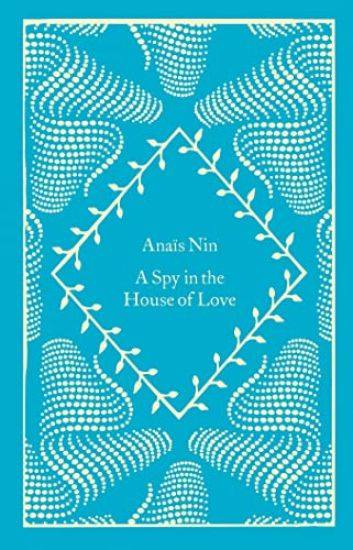
A Spy In The House Of Love

A Spy In The House Of Love

Anaïs Nin

PENGUIN BOOKS LTD
2023
sidottu
Introducing Little Clothbound Classics: irresistible, mini editions of short stories, novellas and essays from the world's greatest writers, designed by the award-winning Coralie Bickford-Smith.Celebrating the range and diversity of Penguin Classics, they take us from snowy Japan to springtime Vienna, from haunted New England to a sun-drenched Mediterranean island, and from a game of chess on the ocean to a love story on the moon. Beautifully designed and printed, these collectible editions are bound in colourful, tactile cloth and stamped with foil.Beautiful, bored and bourgeoise, Sabina leads a double life inspired by her relentless desire for fleeting romance. But when the secrecy of her affairs becomes too much to bear, Sabina makes a late night phone-call to a stranger from a bar, and begins a confession that captivates the unknown man and soon inspires him to seek her out...
La Intemporalidad Perdida Y Otros Relatos / Waste of Timelessness, and Other Early Stories
NIN IN DITALa mejor introducci n a la obra de una autora admirada por lectores y escritores de ayer y de hoy: diecis is relatos apasionantes «Antes de Lena Dunham, estuvo Ana s Nin. Sady Doyle, The Guardian «Mujer loca y sabia. ...] Esa literatura marginal que cada d a me parece m s bella. Julio Cort zar Estoy cansada de buscar una filosof a que concuerde conmigo y con mi mundo, quiero buscar un mundo que concuerde conmigo y con mi filosof a.Escritos cuando ten a unos veinticinco a os y viv a en Francia con su marido, el poeta y banquero norteamericano Hugh Parker Guiler, estos diecis is relatos in ditos en castellano sorprenden por su madurez y frescura, a la vez que muestran ya los dos elementos que luego se afianzar an en su obra --la iron a y el feminismo-- y tambi n sus obsesiones --el deseo femenino, la sexualidad, el adulterio, la belleza y el retrato de una masculinidad tan deslumbradora como t xica--. Algunas de estas historias est n protagonizadas por claros alter ego de Nin; otras, por apasionadas bailarinas de flamenco, misteriosos extranjeros, m sicos... Poco despu s de escribir estos cuentos, Nin conocer a Henry Miller, que dir a de ella: «Cuando trato de imaginar de qui n es deudor tu estilo, me siento frustrado, no recuerdo a nadie con el que tengas el m s ligero parecido. Me recuerdas nicamente a ti misma . Melanc licos y punzantes, revelan ya a una gran autora que hizo saltar por los aires las convenciones literarias y sociales de su poca. ENGLISH DESCRIPTION (Never Before Published Ana s Nin)The best introduction to the work of an author admired by readers and writers of yesteryear and today: sixteen exciting and passionate stories. "Crazy and wise woman. ...] That marginal type of literature that every day seems more beautiful to me." --Julio Cortazar "I'm tired of looking for a philosophy of life that agrees with me and with my world, I want to find a world that agrees with me and with my philosophy of life." Written when she was about twenty-five years old and living in France with her husband, American poet and banker Hugh Parker Guiler, these sixteen stories, never before published in Spanish, amaze by their maturity and freshness, while at the same time starting to display the two elements that would later take hold of her work --irony and feminism-- and also her obsessions: female desire, sexuality, adultery, beauty, and the portrayal of a masculinity as dazzling as it is toxic. Some of these stories clearly have as protagonists some of Nin's alter egos; while others have passionate flamenco dancers, mysterious foreigners, musicians ... Shortly after writing these stories, Nin would meet Henry Miller, who said this about her: "When I try to imagine who you owe credit to for your unique style, I get frustrated, I can't think of anyone with whom you have the slightest resemblance. You only remind me of yourself." Melancholic and intense, these stories reveal a great author who blew up the literary and social standards of her time. "Before Lena Dunham, there was Ana s Nin." --Sady Doyle, The Guardian
Reunited

Reunited

Anaïs Nin; Joaquín Nin

Swallow Press
2020
sidottu
The incestuous affair between the writer Anaïs Nin and her father, the pianist-composer Joaquín Nin, is well documented in the volume of her unexpurgated diary published under the title Incest. What has been missing from that account is Joaquín’s point of view. Reunited: The Correspondence of Anaïs and Joaquín Nin, 1933–1940 presents more than one hundred intimate communications between these two artistic geniuses, revealing not only the dynamics of their complex relationship but also why Anaïs spent her life in a never-ending battle to feel loved, appreciated, and understood. Reunited collects the correspondence between Anaïs and Joaquín just before, during, and after the affair, which commenced in 1933, twenty years after he had abandoned his ten-year-old daughter and the rest of his family. These letters were long believed to have been destroyed and lost to history. In 2006, however, a folder containing Joaquín’s original letters to his daughter was discovered in Anaïs’s Los Angeles home, along with a second folder of her letters to him. Together, these letters tell the story of an absent father’s attempt to reconnect with his adult daughter and how that rapprochement quickly turned into an illicit sexual relationship.
House of Incest

House of Incest

Anaïs Nin

SWALLOW PRESS
2020
nidottu
With an introduction by Allison Pease, this new edition of House of Incest is a lyrical journey into the subconscious mind of one of the most celebrated feminist writers of the twentieth-century.Originally published in 1936, House of Incest is Ana s Nin's first work of fiction. Based on Nin's dreams, the novel is a surrealistic look within the narrator's subconscious as she attempts to distance herself from a series of all-consuming and often taboo desires she cannot bear to let go. The incest Nin depicts is a metaphor--a selfish love wherein a woman can appreciate only qualities in a lover that are similar to her own. Through a descriptive exploration of romances and attractions between women, between a sister and her beloved brother, and with a Christ-like man, Nin's narrator discovers what she thinks is truth: that a woman's most perfect love is of herself. At first, this self-love seems ideal because it is attainable without fear and risk of heartbreak. But in time, the narrator's chosen isolation and self-possessed anguish give way to a visceral nightmare from which she is unable to wake.
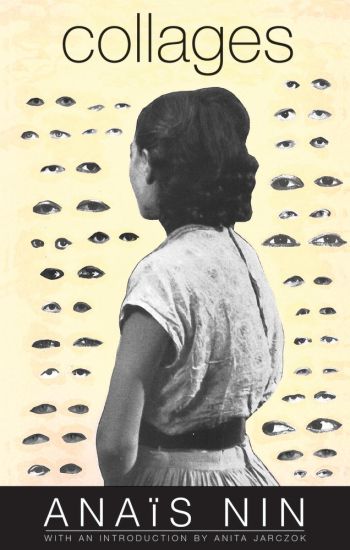
Collages

Collages

Anaïs Nin

OHIO UNIVERSITY PRESS
2019
pokkari
A transplant from Vienna to Malibu who is driven by her urge to observe and depict those around her, Renate is, as one of her friends describes her, "the freest woman I know." Living in Malibu, working at the Paradise Inn restaurant, she encounters a series of people whose stories make up a larger collage: Henri the chef; Count Laundromat; Varda the artist and his teenage daughter, Nobuko the actress; the French Consul in the Hollywood Hills; an aged lifeguard with a spiritual longing for the sea; and Bruce, the intimate with an unnerving secret. First published in 1964 and now reissued with a new introduction by Anita Jarczok, Collages showcases Anaïs Nin's dreamlike and introspective style and psychological acuity. Seen by some as linked vignettes and by others as a novel, the book is a mood piece that resists categorization. Based on a close friend of Nin's, Renate is the glue that holds the pieces, by turn fragmentary and full, together. One character absorbs a lesson from the Koran: "Nothing is ever finished." With each of Renate's successive encounters, we take that message to be true.