Kirjojen hintavertailu. Mukana 12 390 323 kirjaa ja 12 kauppaa.

Kirjailija

Andi Diehn

Kirjat ja teokset yhdessä paikassa: 36 kirjaa, julkaisuja vuosilta 2015-2025, suosituimpien joukossa Human Computer: Mary Jackson, Engineer. Vertaile teosten hintoja ja tarkista saatavuus suomalaisista kirjakaupoista.

36 kirjaa

Kirjojen julkaisuhaarukka 2015-2025.

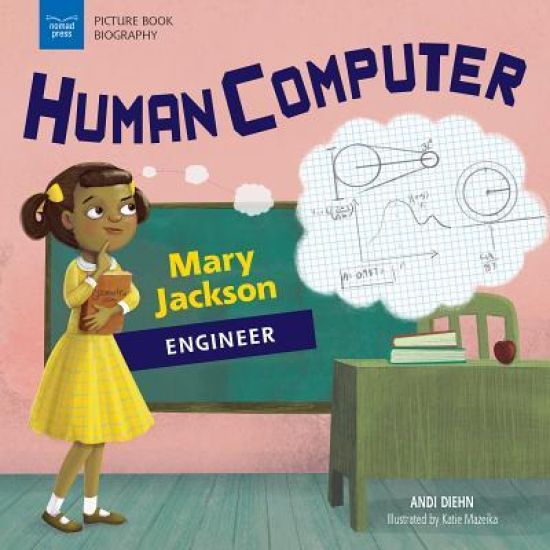
Human Computer: Mary Jackson, Engineer

Human Computer: Mary Jackson, Engineer

Andi Diehn

Nomad Press (VT)
2019
sidottu
A full-color picture book biography about Mary Jackson, who became the first female African American engineer at NASA--includes several STEM activities for some real-world learning connections When Mary Jackson was growing up, she thought being an engineer was impossible for her. Why? After all, she was fantastic at math and science. She worked really hard to learn all she could in school. Why did this smart little girl think she couldn't be an engineer? In Human Computer: Mary Jackson, Engineer, readers ages 5 to 8 explore the life of Mary Jackson, who overcame the challenges of segregation and sexism to become the first female African American engineer at NASA - In the Picture Book Biography series, children encounter real-life characters who are thrilled to learn and experiment, eager to make a difference, and excited about collaborating with crew members. - Age-appropriate vocabulary, detailed illustrations, a timeline, simple STEM projects, such as designing paper airplanes, and a glossary all support foundational learning for kids ages 5 to 8. - Perfect for beginner readers or as a read aloud nonfiction picture book About Picture Book Biography books and Nomad Press Human Computer is part of a set of four books in the Picture Book Biography series that introduces pioneers of science to young children and makes career connections in different STEM fields. The other titles in this series include Fossil Huntress: Mary Leakey, Paleontologist; Space Adventurer: Bonnie Dunbar, Astronaut; and Computer Decoder: Dorothy Vaughan, Computer Scientist. Nomad Press books in the Picture Book Biography series bring real-world figures to life through fun, engaging narratives paired with dynamic, brightly colored illustrations and quick activities that reinforce foundational learning. Elementary-aged children are encouraged to expand their perceptions of the roles of scientist, artist, explorer, and innovator by meeting women, people of color, and other minorities in the profession. Nomad's unique approach simultaneously grounds kids in factual knowledge while allowing them the space to be curious, creative, and critical thinkers. All books are leveled for Guided Reading level and Lexile and align with Common Core State Standards and National Curriculum Standards for Social Studies. All titles are available in paperback, hardcover, and ebook formats.
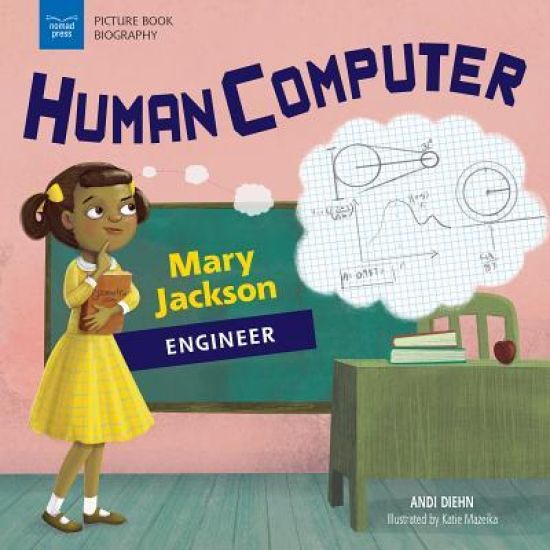
Human Computer: Mary Jackson, Engineer

Human Computer: Mary Jackson, Engineer

Andi Diehn

Nomad Press (VT)
2019
nidottu
A full-color picture book biography about Mary Jackson, who became the first female African American engineer at NASA--includes several STEM activities for some real-world learning connections When Mary Jackson was growing up, she thought being an engineer was impossible for her. Why? After all, she was fantastic at math and science. She worked really hard to learn all she could in school. Why did this smart little girl think she couldn't be an engineer? In Human Computer: Mary Jackson, Engineer, readers ages 5 to 8 explore the life of Mary Jackson, who overcame the challenges of segregation and sexism to become the first female African American engineer at NASA - In the Picture Book Biography series, children encounter real-life characters who are thrilled to learn and experiment, eager to make a difference, and excited about collaborating with crew members. - Age-appropriate vocabulary, detailed illustrations, a timeline, simple STEM projects, such as designing paper airplanes, and a glossary all support foundational learning for kids ages 5 to 8. - Perfect for beginner readers or as a read aloud nonfiction picture book About Picture Book Biography books and Nomad Press Human Computer is part of a set of four books in the Picture Book Biography series that introduces pioneers of science to young children and makes career connections in different STEM fields. The other titles in this series include Fossil Huntress: Mary Leakey, Paleontologist; Space Adventurer: Bonnie Dunbar, Astronaut; and Computer Decoder: Dorothy Vaughan, Computer Scientist. Nomad Press books in the Picture Book Biography series bring real-world figures to life through fun, engaging narratives paired with dynamic, brightly colored illustrations and quick activities that reinforce foundational learning. Elementary-aged children are encouraged to expand their perceptions of the roles of scientist, artist, explorer, and innovator by meeting women, people of color, and other minorities in the profession. Nomad's unique approach simultaneously grounds kids in factual knowledge while allowing them the space to be curious, creative, and critical thinkers. All books are leveled for Guided Reading level and Lexile and align with Common Core State Standards and National Curriculum Standards for Social Studies. All titles are available in paperback, hardcover, and ebook formats.
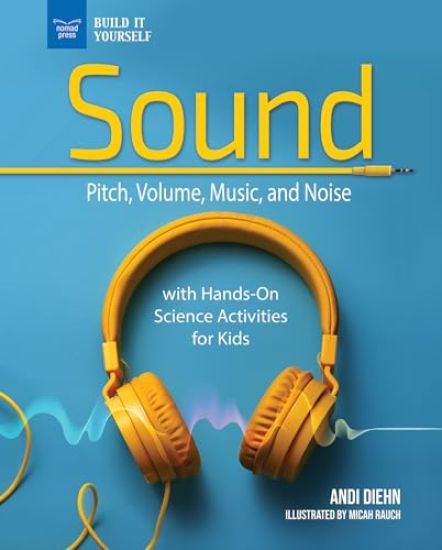
The Science of Sound: Pitch, Volume, Music, and Noise with Hands-On Science Activities for Kids
Booklist Starred ReviewAn in-depth look at all the science of sound and all the ways we use sound in the world What role does sound play in your world? The Science of Sound: Pitch, Volume, Music, and Noise with Hands-On Science Activities for Kids is a symphony of learning as readers ages 8 to 11 discover how to identify the sounds around them and pinpoint how they're formed and where they travel from. From splashy puddles to crunchy leaves to barking dogs to a strummed guitar, sound is all around us. For most people, sound plays a major role in their experience of the world. Discover how scientists use sound to map the ocean floor and investigate climate change. Learn how sound exists inside the human body. Examine how sound travels, what a sound wave is, and how the human ear works In this book, kids have fun learning about sound as a sensation and as a tool of communication--and not just for humans. Hands-on STEM activities, entertaining illustrations, essential questions, text-to-world connections, fascinating sidebars, and links to online resources and videos all make some noise for learning Additional materials include a glossary, a list of media for further learning, a selected bibliography, and index. Aligns with Common Core state standards and Next Generation Science Standards. All books are leveled for Guided Reading level and Lexile and align with Common Core State Standards and themes identified by the National Council for Social Studies. All titles are available in paperback, hardcover, and ebook formats.
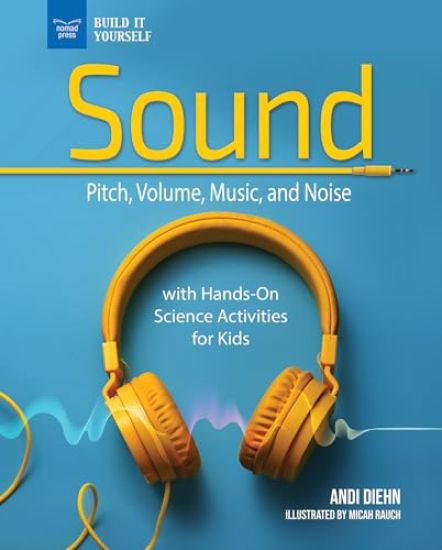
The Science of Sound: Pitch, Volume, Music, and Noise with Hands-On Science Activities for Kids
Booklist Starred Review An in-depth look at all the science of sound and all the ways we use sound in the world What role does sound play in your world? The Science of Sound: Pitch, Volume, Music, and Noise with Hands-On Science Activities for Kids is a symphony of learning as readers ages 8 to 11 discover how to identify the sounds around them and pinpoint how they're formed and where they travel from. From splashy puddles to crunchy leaves to barking dogs to a strummed guitar, sound is all around us. For most people, sound plays a major role in their experience of the world. Discover how scientists use sound to map the ocean floor and investigate climate change. Learn how sound exists inside the human body. Examine how sound travels, what a sound wave is, and how the human ear works In this book, kids have fun learning about sound as a sensation and as a tool of communication--and not just for humans. Hands-on STEM activities, entertaining illustrations, essential questions, text-to-world connections, fascinating sidebars, and links to online resources and videos all make some noise for learning Additional materials include a glossary, a list of media for further learning, a selected bibliography, and index. Aligns with Common Core state standards and Next Generation Science Standards. All books are leveled for Guided Reading level and Lexile and align with Common Core State Standards and themes identified by the National Council for Social Studies. All titles are available in paperback, hardcover, and ebook formats.
Wheels Make the World Go Round: Simple Machines for Kids
*Selected as a "recommended title" by the Kansas National Education Association's Reading Circle Commission Learn how simple machines make work easier in these colorful nonfiction picture books all about science and engineering If you were designing a wheelbarrow, how would you make it move easily when you pushed it? Skis? Stilts? Springs? How about wheels? The wheel is a simple machine that has been used for centuries to make work easier for humans. Look at all the cars, trucks, trains, buses, and bikes around you. They all have wheels and axles In Wheels Make the World Go Round: Simple Machines for Kids, readers ages 5 to 8 learn how wheels work along with axles and how they use mechanical advantage to make it easier to move heavy objects from one place to another. Plus, learn how wheels are used for more than transportation-ever seen a potter's wheel spinning around? This was the first type of wheel to be invented Scientific concepts including forces and mechanical advantage come clear with engaging illustrations and lots of real-life examples that kids can spot in their home, schools, and neighborhoods. An introductory poem offers language arts connections while a hands-on activity at the end reinforces concepts in the book. A glossary and photographs offer even more supplemental learning opportunities. Wheels Make the World Go Round is part of a six-book set of Picture Book Science books designed to introduce young engineers to physical science concepts. Other titles are Wedges Make a Point, Inclined Planes Ramp It Up, Pulleys Pull Their Weight, Screws Keep Things Secure, and Levers Lessen the Load. All books are leveled for Guided Reading level and Lexile and align with Common Core state standards and Next Generation Science Standards. All titles are available in paperback, hardcover, and ebook formats.
Wedges Make a Point: Simple Machines for Kids
*Selected as a "recommended title" by the Kansas National Education Association's Reading Circle Commission Learn how simple machines make work easier in these colorful nonfiction picture books all about science and engineering How do you keep a truck from rolling? A door from closing? And how do you cut through banana bread? All of these questions have the same answer-a wedge Wedges are one of the simple machines that help make work easier by using mechanical advantage. In Wedges Make a Point: Simple Machines for Kids, readers ages 5 to 8 learn how a wedge's shape makes it perfect at stopping something heavy from moving, and separating material to split something-like banana bread-apart. Scientific concepts including forces and mechanical advantage come clear with engaging illustrations and lots of real-life examples that kids can spot in their home, schools, and neighborhoods. An introductory poem offers language arts connections while a hands-on activity at the end reinforces concepts in the book. A glossary and photographs offer even more supplemental learning opportunities. Wedges Make a Point is part of a six-book set of Picture Book Science books designed to introduce young engineers to physical science concepts. Other titles are Screws Keep Things Secure, Inclined Planes Ramp It Up, Pulleys Pull Their Weight, Wheels Make the World Go Round, and Levers Lessen the Load. All books are leveled for Guided Reading level and Lexile and align with Common Core state standards and Next Generation Science Standards. All titles are available in paperback, hardcover, and ebook formats.

Wedges Make a Point: Simple Machines for Kids
*Selected as a "recommended title" by the Kansas National Education Association's Reading Circle Commission Learn how simple machines make work easier in these colorful nonfiction picture books all about science and engineering How do you keep a truck from rolling? A door from closing? And how do you cut through banana bread? All of these questions have the same answer-a wedge Wedges are one of the simple machines that help make work easier by using mechanical advantage. In Wedges Make a Point: Simple Machines for Kids, readers ages 5 to 8 learn how a wedge's shape makes it perfect at stopping something heavy from moving, and separating material to split something-like banana bread-apart. Scientific concepts including forces and mechanical advantage come clear with engaging illustrations and lots of real-life examples that kids can spot in their home, schools, and neighborhoods. An introductory poem offers language arts connections while a hands-on activity at the end reinforces concepts in the book. A glossary and photographs offer even more supplemental learning opportunities. Wedges Make a Point is part of a six-book set of Picture Book Science books designed to introduce young engineers to physical science concepts. Other titles are Screws Keep Things Secure, Inclined Planes Ramp It Up, Pulleys Pull Their Weight, Wheels Make the World Go Round, and Levers Lessen the Load. All books are leveled for Guided Reading level and Lexile and align with Common Core state standards and Next Generation Science Standards. All titles are available in paperback, hardcover, and ebook formats.

Levers Lessen the Load: Simple Machines for Kids
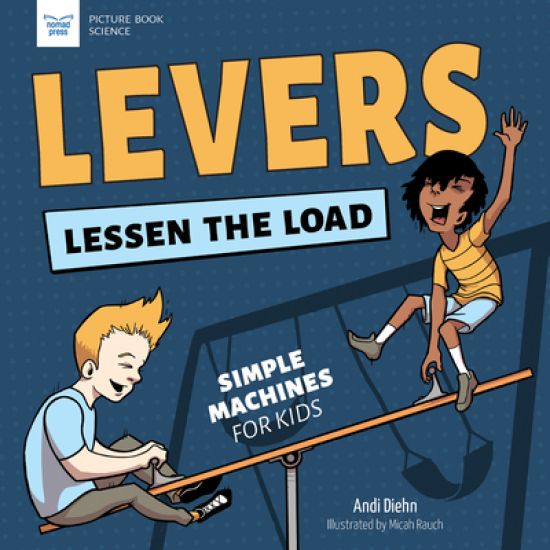
*Selected as a "recommended title" by the Kansas National Education Association's Reading Circle Commission Learn how simple machines make work easier in these colorful nonfiction picture books all about science and engineering Have you ever played on a seesaw? You were using a lever A lever is one of six simple machines that are designed to make different kinds of work easier. Lifting, pulling, pushing--all these tasks are more efficient when you use a simple machine. In Levers Lessen the Load: Simple Machines for Kids, readers ages 5 to 8 learn how levers and fulcrums can help us move far more weight than we can on our own. Need to lift a heavy rock? Use a lever Need to push a log out of the way? Use a lever Know where else you can find levers? In your own body--when you lift an object and carry it in your hand, you are using your arm as a lever. Concepts including forces, mechanical advantage, and different classes of levers come clear with engaging illustrations and lots of real-life examples that kids can spot in their home, schools, and neighborhoods. An introductory poem offers language arts connections while a hands-on activity at the end reinforces concepts in the book. A glossary and photographs offer even more supplemental learning opportunities. Levers Lessen the Load is part of a six-book set of Picture Book Science books designed to introduce young engineers to physical science concepts. Other titles are Wedges Make a Point, Screws Keep Things Secure, Pulleys Pull Their Weight, Wheels Make the World Go Round, and Inclined Planes Ramp It Up. All books are leveled for Guided Reading level and Lexile and align with Common Core state standards and Next Generation Science Standards. All titles are available in paperback, hardcover, and ebook formats.

Wheels Make the World Go Round: Simple Machines for Kids
*Selected as a "recommended title" by the Kansas National Education Association's Reading Circle Commission Learn how simple machines make work easier in these colorful nonfiction picture books all about science and engineering If you were designing a wheelbarrow, how would you make it move easily when you pushed it? Skis? Stilts? Springs? How about wheels? The wheel is a simple machine that has been used for centuries to make work easier for humans. Look at all the cars, trucks, trains, buses, and bikes around you. They all have wheels and axles In Wheels Make the World Go Round: Simple Machines for Kids, readers ages 5 to 8 learn how wheels work along with axles and how they use mechanical advantage to make it easier to move heavy objects from one place to another. Plus, learn how wheels are used for more than transportation-ever seen a potter's wheel spinning around? This was the first type of wheel to be invented Scientific concepts including forces and mechanical advantage come clear with engaging illustrations and lots of real-life examples that kids can spot in their home, schools, and neighborhoods. An introductory poem offers language arts connections while a hands-on activity at the end reinforces concepts in the book. A glossary and photographs offer even more supplemental learning opportunities. Wheels Make the World Go Round is part of a six-book set of Picture Book Science books designed to introduce young engineers to physical science concepts. Other titles are Wedges Make a Point, Inclined Planes Ramp It Up, Pulleys Pull Their Weight, Screws Keep Things Secure, and Levers Lessen the Load. All books are leveled for Guided Reading level and Lexile and align with Common Core state standards and Next Generation Science Standards. All titles are available in paperback, hardcover, and ebook formats.

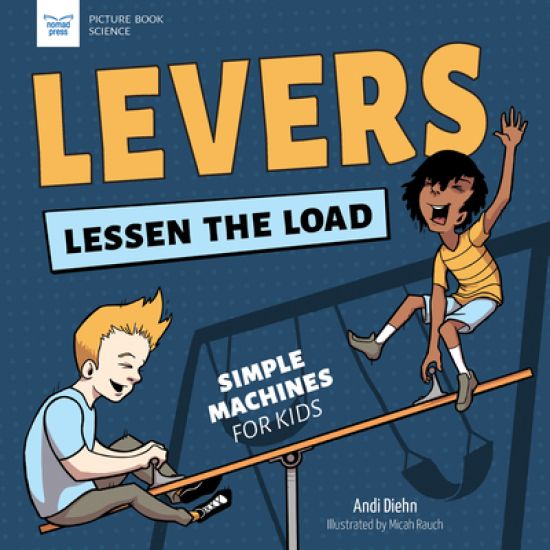
Levers Lessen the Load: Simple Machines for Kids
*Selected as a "recommended title" by the Kansas National Education Association's Reading Circle Commission Learn how simple machines make work easier in these colorful nonfiction picture books all about science and engineering Have you ever played on a seesaw? You were using a lever A lever is one of six simple machines that are designed to make different kinds of work easier. Lifting, pulling, pushing--all these tasks are more efficient when you use a simple machine. In Levers Lessen the Load: Simple Machines for Kids, readers ages 5 to 8 learn how levers and fulcrums can help us move far more weight than we can on our own. Need to lift a heavy rock? Use a lever Need to push a log out of the way? Use a lever Know where else you can find levers? In your own body--when you lift an object and carry it in your hand, you are using your arm as a lever. Concepts including forces, mechanical advantage, and different classes of levers come clear with engaging illustrations and lots of real-life examples that kids can spot in their home, schools, and neighborhoods. An introductory poem offers language arts connections while a hands-on activity at the end reinforces concepts in the book. A glossary and photographs offer even more supplemental learning opportunities. Levers Lessen the Load is part of a six-book set of Picture Book Science books designed to introduce young engineers to physical science concepts. Other titles are Wedges Make a Point, Screws Keep Things Secure, Pulleys Pull Their Weight, Wheels Make the World Go Round, and Inclined Planes Ramp It Up. All books are leveled for Guided Reading level and Lexile and align with Common Core state standards and Next Generation Science Standards. All titles are available in paperback, hardcover, and ebook formats.

Inclined Planes Ramp It Up: Simple Machines for Kids
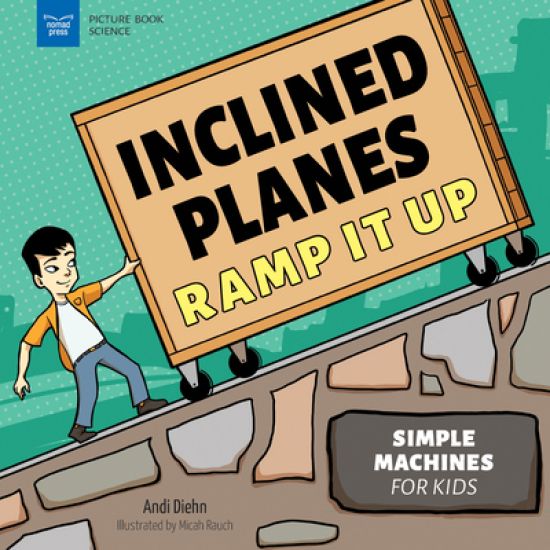
*Selected as a "recommended title" by the Kansas National Education Association's Reading Circle Commission Learn how simple machines make work easier in this colorful nonfiction picture book all about science and engineering How does a dump truck dump all the dirt out of its truck bed? It turns that bed into a ramp A ramp is another word for an inclined plane, and an inclined plane is one of six simple machines that are designed to make work easier. Lifting, pulling, pushing-all these tasks are more efficient when you use a simple machine. In Inclined Planes Ramp It Up: Simple Machines for Kids, readers ages 5 to 8 learn how inclined planes are sloping surfaces that make it easier to move heavy things from lower ground to higher ground - and vice versa - instead of lifting them. Scientific concepts including friction and mechanical advantage become clear with engaging illustrations and lots of real-life examples that kids can spot in their home, schools, and neighborhoods. An introductory poem offers language arts connections while a hands-on activity at the end reinforces concepts in the book. A glossary and photographs offer even more supplemental learning opportunities. Inclined Planes Ramp It Up is part of a six-book set of Picture Book Science books designed to introduce young engineers to physical science concepts. Other titles are Wedges Make a Point, Screws Keep Things Secure, Pulleys Pull Their Weight, Wheels Make the World Go Round, and Levers Lessen the Load. All books are leveled for Guided Reading level and Lexile and align with Common Core state standards and Next Generation Science Standards.
Inclined Planes Ramp It Up: Simple Machines for Kids
*Selected as a "recommended title" by the Kansas National Education Association's Reading Circle Commission Learn how simple machines make work easier in this colorful nonfiction picture book all about science and engineering How does a dump truck dump all the dirt out of its truck bed? It turns that flat bed into a ramp A ramp is another word for an inclined plane, and an inclined plane is one of six simple machines that are designed to make work easier. Lifting, pulling, pushing-all these tasks are more efficient when you use a simple machine. In Inclined Planes Ramp It Up: Simple Machines for Kids, readers ages 5 to 8 learn how inclined planes are sloping surfaces that make it easier to move heavy things from lower ground to higher ground - and vice versa - instead of lifting them. Scientific concepts including friction and mechanical advantage become clear with engaging illustrations and lots of real-life examples that kids can spot in their home, schools, and neighborhoods. An introductory poem offers language arts connections while a hands-on activity at the end reinforces concepts in the book. A glossary and photographs offer even more supplemental learning opportunities. Inclined Planes Ramp It Up is part of a six-book set of Picture Book Science books designed to introduce young engineers to physical science concepts. Other titles are Wedges Make a Point, Screws Keep Things Secure, Pulleys Pull Their Weight, Wheels Make the World Go Round, and Levers Lessen the Load. All books are leveled for Guided Reading level and Lexile and align with Common Core state standards and Next Generation Science Standards.
Screws Keep Things Secure: Simple Machines for Kids
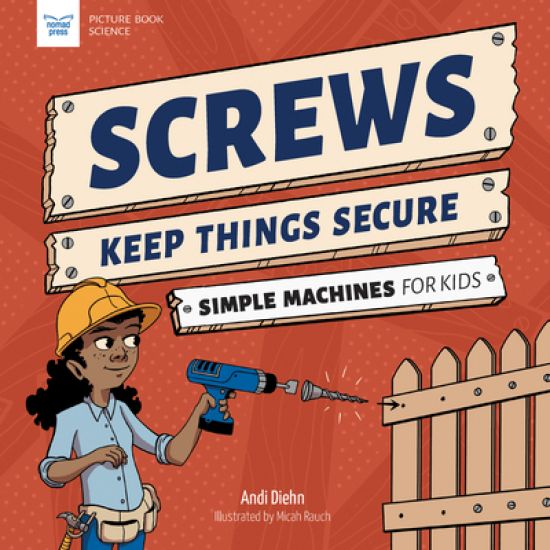
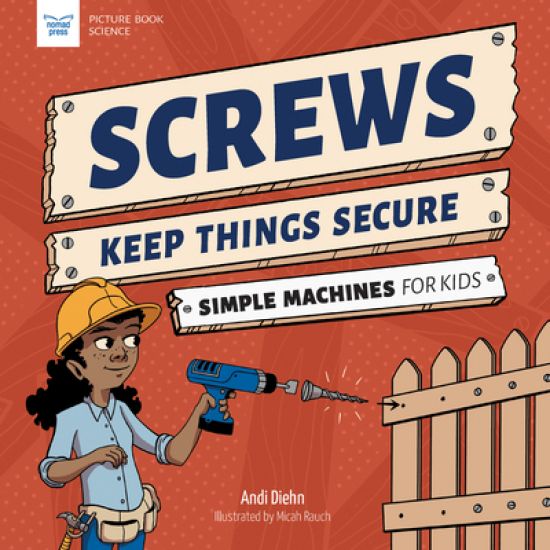
*Selected as a "recommended title" by the Kansas National Education Association's Reading Circle Commission Learn how simple machines make work easier in these colorful nonfiction picture books all about science and engineering If you were building a tree house, what could you use to keep the boards together? You could use nails, but you might also use screws. Screws are one of the simple machines that are designed to make different kinds of work easier Lifting, pulling, pushing, and fastening things together-all these tasks are more efficient when you use a simple machine. In Screws Keep Things Secure: Simple Machines for Kids, readers ages 5 to 8 learn how a screw's shape can pull things together or push things apart or even move heavy objects from one place to another Scientific concepts including forces and mechanical advantage come clear with engaging illustrations and lots of real-life examples that kids can spot in their home, schools, and neighborhoods. An introductory poem offers language arts connections while a hands-on activity at the end reinforces concepts in the book. A glossary and photographs offer even more supplemental learning opportunities. Screws Keep Things Secure is part of a six-book set of Picture Book Science books designed to introduce young engineers to physical science concepts. Other titles are Wedges Make a Point, Inclined Planes Ramp It Up, Pulleys Pull Their Weight, Wheels Make the World Go Round, and Levers Lessen the Load. All books are leveled for Guided Reading level and Lexile and align with Common Core state standards and Next Generation Science Standards. All titles are available in paperback, hardcover, and ebook formats.

Screws Keep Things Secure: Simple Machines for Kids
*Selected as a "recommended title" by the Kansas National Education Association's Reading Circle Commission Learn how simple machines make work easier in these colorful nonfiction picture books all about science and engineering If you were building a tree house, what could you use to keep the boards together? You could use nails, but you might also use screws. Screws are one of the simple machines that are designed to make different kinds of work easier Lifting, pulling, pushing, and fastening things together-all these tasks are more efficient when you use a simple machine. In Screws Keep Things Secure: Simple Machines for Kids, readers ages 5 to 8 learn how a screw's shape can pull things together or push things apart or even move heavy objects from one place to another Scientific concepts including forces and mechanical advantage come clear with engaging illustrations and lots of real-life examples that kids can spot in their home, schools, and neighborhoods. An introductory poem offers language arts connections while a hands-on activity at the end reinforces concepts in the book. A glossary and photographs offer even more supplemental learning opportunities. Screws Keep Things Secure is part of a six-book set of Picture Book Science books designed to introduce young engineers to physical science concepts. Other titles are Wedges Make a Point, Inclined Planes Ramp It Up, Pulleys Pull Their Weight, Wheels Make the World Go Round, and Levers Lessen the Load. All books are leveled for Guided Reading level and Lexile and align with Common Core state standards and Next Generation Science Standards. All titles are available in paperback, hardcover, and ebook formats.
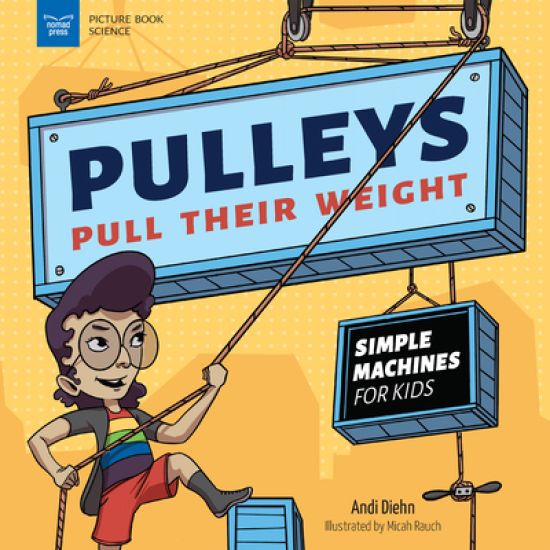
Pulleys Pull Their Weight: Simple Machines for Kids
*Selected as a "recommended title" by the Kansas National Education Association's Reading Circle Commission Learn how simple machines make work easier in these colorful nonfiction picture books all about science and engineering What if an elephant sat on your book and refused to move. How could you lift it? Very carefully You might want to use a pulley. A pulley is one of six simple machines that are designed to make different kinds of work such as lifting, pulling, pushing easier. In Pulleys Pull Their Weight: Simple Machines for Kids, readers solve the problem of a heavy elephant by learning about forces and how we can increase the amount we can lift simply by using a pulley. Concepts including mechanical advantage, moveable pulleys, and compound pulleys make sense with engaging illustrations and lots of real-life examples that kids can spot in their home, schools, and neighborhoods. An introductory poem offers language arts connections while a hands-on activity at the end reinforces concepts in the book. A glossary and photographs offer even more supplemental learning opportunities. Pulleys Pull Their Weight is part of a six-book set of Picture Book Science books designed to introduce young engineers to physical science concepts. Other titles are Wedges Make a Point, Screws Keep Things Secure, Levers Lessen the Load, Wheels Make the World Go Round, and Inclined Planes Ramp It Up. All books are leveled for Guided Reading level and Lexile and align with Common Core state standards and Next Generation Science Standards. All titles are available in paperback, hardcover, and ebook formats.