Kirjojen hintavertailu. Mukana 12 595 353 kirjaa ja 12 kauppaa.

Kirjailija

Andrew Cunningham

Kirjat ja teokset yhdessä paikassa: 156 kirjaa, julkaisuja vuosilta 1990-2026, suosituimpien joukossa Rascal Does Not Dream of Logical Witch (light novel). Vertaile teosten hintoja ja tarkista saatavuus suomalaisista kirjakaupoista.

156 kirjaa

Kirjojen julkaisuhaarukka 1990-2026.

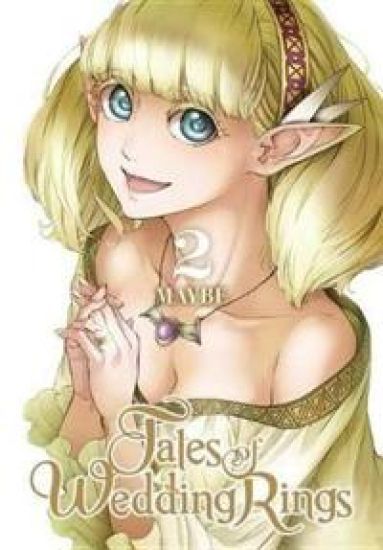
Tales of Wedding Rings, Vol. 8

Tales of Wedding Rings, Vol. 8

Andrew Cunningham; Phil Christie

Yen Press
2020
pokkari
Locked in the elves' library, Satou has hadhis fill of marital activities with hisfivebrides, and things get even morecomplicated when abyss monsters show up tocrashthe party! But they're only thefirst of many obstacles that await Satou andHime,whose bond will be put to thetest!
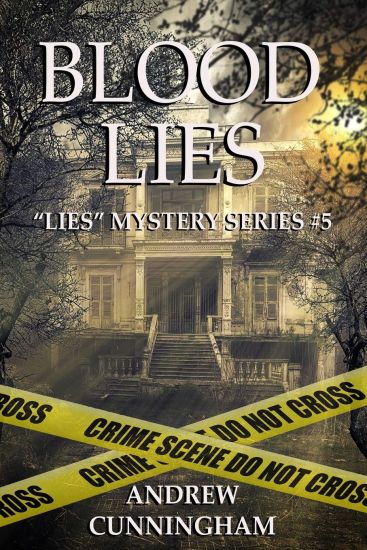
Blood Lies

Blood Lies

Andrew Cunningham

Independently Published
2020
pokkari
Gunned down on a busy Boston street, bestselling mystery author Sabrina Spencer is left clinging to life. Media speculation suggests a deranged fan as the shooter. But was Sabrina really the intended target? For Del Honeycutt, a chilling link emerges between Sabrina's shooting and that of his father's murder three years earlier. Discovering that his father was leading a secret life, he digs deeper, and the clues lead Del down a dangerous and deadly path.
Overlord: The Undead King Oh!, Vol. 2

Overlord: The Undead King Oh!, Vol. 2

Andrew Cunningham; Juami Juami; Kugane Maruyama; So-Bin So-Bin

Yen Press
2020
pokkari
Hilarious hijinks are in store in this four-panelOverlord spin-off! Between playing dress-up, looking for a partner forHamusuke the hamster, and discussing what they should do for the ending theme ofthe Overlord anime's second season, there's never a dull moment for Ainz,Albedo, and the gang!
Overlord: The Undead King Oh!, Vol. 1

Overlord: The Undead King Oh!, Vol. 1

Andrew Cunningham; Juami Juami; Kugane Maruyama; So-Bin So-Bin

Yen Press
2019
pokkari
Overlord is back with ahumorous four-panel twist that'll have you rolling on the floor! Featuring theGreat Tomb of Nazarick and your favorite characters, Overlord guru andextraordinaire Juuami is here with a new spin-off of the super-popularseries!
Tales of Wedding Rings, Vol. 6

Tales of Wedding Rings, Vol. 6

Andrew Cunningham; Phil Christie

Yen Press
2019
pokkari
Now that Satou has met theEarth Princess and decided to go back to Arnulus, he'll need to get evenstronger if he hopes to face the Abyss King! What awaits him upon his return?Find out in Volume 6 of Tales of Wedding Rings!
Secrets & Lies

Secrets & Lies

Andrew Cunningham

Independently Published
2018
pokkari
On the afternoon of May 11, 1996, ValuJet 592 plunged into the Florida Everglades. There were no survivors. But something came through the crash unscathed: a small box with huge implications for humankind. And the one man unlucky enough to discover its whereabouts disappeared without a trace. Now, 20 years later, the mystery of Flight 592 hits close to home for Del Honeycutt and bestselling mystery author Sabrina Spencer. A shocking revelation launches them into the middle of a dark conspiracy, and locating the box becomes a matter of life or death. They are not alone in the hunt for the mysterious parcel and very quickly learn that others will stop at nothing to find it and will eliminate anyone who stands in their way. With killers hot on their trail, Del and Sabrina must navigate dangers lurking both above and below the swamp waters of the Everglades in order to find the box ... or die.
Tales of Wedding Rings, Vol. 1

Tales of Wedding Rings, Vol. 1

Andrew Cunningham; Phil Christie

Yen Press
2018
pokkari
When Satou's best friend,Hime, tells him that she's moving, he decides to follow. After crashing herwedding in another world, he ends up as the groom when she suddenly kisses him!Prophecy states that her husband is destined to be the Ring King-a hero ofimmense power who will save the world from the Abyssal King! Is Satou up for thechallenge, or is his new marriage going to end before it evenbegins?
Vegas Lies

Vegas Lies

Andrew Cunningham

Createspace Independent Publishing Platform
2017
pokkari
Five teenage girls from a small town in Oregon disappear without a trace. Were they kidnapped, or have the five friends perpetrated a massive hoax? Nine hundred miles away in Las Vegas, a woman with a dark secret vanishes on her way to meet friends for dinner. Those friends are Del Honeycutt and bestselling mystery author Sabrina Spencer, in Las Vegas for a book convention. As Del and Sabrina investigate their friend's disappearance, they are convinced that she has been abducted, and they begin to uncover the secrets that might have triggered her abduction, secrets that now put Del and Sabrina's lives in jeopardy. When clues indicate that the five missing girls might also be in Las Vegas, the situation takes a new turn, directly into the unthinkable. Once again, Del and Sabrina find themselves head over heels in trouble and marked for death, and they only have a few hours to solve the case or their friend and the five young girls will be gone forever.
The Identity of the History of Science and Medicine
In these essays, Andrew Cunningham is concerned with issues of identity - what was the identity of topics, disciplines, arguments, diseases in the past, and whether they are identical with (more usually, how they are not identical with) topics, disciplines, arguments or diseases in the present. Historians usually tend to assume such continuous identities of present attitudes and activities with past ones, and rarely question them; the contention here is that this gives us a false image of the very things in the past that we went to look for.
Health Care and Poor Relief in 18th and 19th Century Northern Europe
Throughout history governments have had to confront the problem of how to deal with the poorer parts of their population. During the medieval and early modern period this responsibility was largely borne by religious institutions, civic institutions and individual charity. By the eighteenth century, however, the rapid social and economic changes brought about by industrialisation put these systems under intolerable strain, forcing radical new solutions to be sought to address both old and new problems of health care and poor relief. This volume looks at how northern European governments of the eighteenth and nineteenth centuries coped with the needs of the poor, whilst balancing any new measures against the perceived negative effects of relief upon the moral wellbeing of the poor and issues of social stability. Taken together, the essays in this volume chart the varying responses of states, social classes and political theorists towards the great social and economic issue of the age, industrialisation. Its demands and effects undermined the capacity of the old poor relief arrangements to look after those people that the fits and starts of the industrialisation cycle itself turned into paupers. The result was a response that replaced the traditional principle of 'outdoor' relief, with a generally repressive system of 'indoor' relief that lasted until the rise of organised labour forced a more benign approach to the problems of poverty. Although complete in itself, this volume also forms the third of a four-volume survey of health care and poor relief provision between 1500 and 1900, edited by Ole Peter Grell and Andrew Cunningham.
Medicine and Religion in Enlightenment Europe
The Enlightenment period, here understood as covering the years 1650 to 1789, is usually considered to be a period when religion was obliged to give way to rationality. With respect to medicine this means that the religious elements in the treatment and interpretation of diseases to all intents and purposes disappeared. However, there are growing indications in recent scholarship that this may well be an overstatement. Indeed it appears that religion retained many of its customary relations with medicine. This volume explores how far, and the ways in which, this was still the case. It looks at this multi-faceted relationship with respect to among others: medical care and death in hospitals, religious vocation and nursing, chemical medicine and religion, the clergy and medicine, the continued significance of popular medicine, faith healing, dissection and religion, and religious dissent and medical innovation. Within these significant areas the volume provides a European perspective which will make it possible to draw comparisons and determine differences.
Centres of Medical Excellence?

Centres of Medical Excellence?

Andrew Cunningham

Routledge
2016
nidottu
Students notoriously vote with their feet, seeking out the best and most innovative teachers of their subject. The most ambitious students have been travelling long distances for their education since universities were first founded in the 13th century, making their own educational pilgrimage or peregrinatio. This volume deals with the peregrinatio medica from the viewpoint of the travelling students: who went where; how did they travel; what did they find when they arrived; what did they take back with them from their studies. Even a single individual could transform medical studies or practice back home on the periphery by trying to reform teaching and practice the way they had seen it at the best universities. Other contributions look at the universities themselves and how they were actively developed to attract students, and at some of the most successful teachers, such as Boerhaave at Leiden or the Monros at Edinburgh. The essays show how increasing levels of wealth allowed more and more students to make their pilgrimages, travelling for weeks at a time to sit at the feet of a particular master. In medicine this meant that, over the period c.1500 to 1789, a succession of universities became the medical school of choice for ambitious students: Padua and Bologna in the 1500s, Paris, Leiden and Montpellier in the 1600s, and Leiden, Göttingen and Edinburgh in the 1700s. The arrival of foreign students brought wealth to the university towns and this significant economic benefit meant that the governors of these universities tried to ensure the defence of freedom of religion and freedom of speech, thus providing the best conditions for the promotion of new views and innovation in medicine. The collection presents a new take on the history of medical education, as well as universities, travel and education more widely in ancien régime Europe.
Fatal Lies

Fatal Lies

Andrew Cunningham

Createspace Independent Publishing Platform
2016
pokkari
She was murdered ... twice Daisy Leduc was forgotten and alone. That was just how she wanted it. But when she is discovered stabbed to death in a dusty little Texas town, it plunges Del Honeycutt and bestselling mystery author Sabrina Spencer into a 30-year-old mystery involving murder, hidden identities, dangerous family secrets, political intrigue, and a long-forgotten serial killer. When they discover that Daisy, under a different name, supposedly died 30 years earlier, they find themselves squarely in the crosshairs of killers whose deadly secrets lie in Daisy's mysterious past.
The Anatomist Anatomis'd

The Anatomist Anatomis'd

Andrew Cunningham

Routledge
2016
nidottu
The eighteenth-century practitioners of anatomy saw their own period as 'the perfection of anatomy'. This book looks at the investigation of anatomy in the 'long' eighteenth century in disciplinary terms. This means looking in a novel way not only at the practical aspects of anatomizing but also at questions of how one became an anatomist, where and how the discipline was practised, what the point was of its practice, what counted as sub-disciplines of anatomy, and the nature of arguments over anatomical facts and priority of discovery. In particular pathology, generation and birth, and comparative anatomy are shown to have been linked together as sub-disciplines of anatomy. At first sight anatomy seems the most long-lived and stable of medical disciplines, from Galen and Vesalius to the present. But Cunningham argues that anatomy was, like so many other areas of knowledge, changed irrevocably around the end of the eighteenth century, with the creation of new disciplines, new forms of knowledge and new ways of investigation. The 'long' eighteenth century, therefore, was not only the highpoint of anatomy but also the endpoint of old anatomy.