

Kirjailija
Andrew Cunningham
Kirjat ja teokset yhdessä paikassa: 156 kirjaa, julkaisuja vuosilta 1990-2026, suosituimpien joukossa Rascal Does Not Dream of Logical Witch (light novel). Vertaile teosten hintoja ja tarkista saatavuus suomalaisista kirjakaupoista.
156 kirjaa
Kirjojen julkaisuhaarukka 1990-2026.
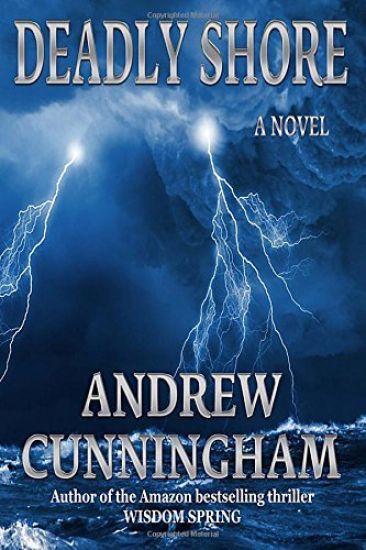
When It's Terrorist vs. Hurricane ... Everybody Loses It's July 5th, and the Cape Cod roadways are clogged with tourists heading home from the holiday weekend and trying to outrun an approaching potentially catastrophic hurricane. But in the blink of an eye, their lives are thrown into chaos when terrorists bring down all of the bridges to the Cape. Instantly, a half million terrified people have no way to escape. And when the terrorists threaten to release anthrax on the captive population if their demands aren't met, fear turns to all-out panic.With time running out, Marcus Baldwin, a private investigator and former CIA operative, and Sara Cross, a disgraced ex-homicide detective, are brought together by a sole clue to the identity of the terrorists. They quickly realize that they may be the only ones with even a chance of stopping the plot before it's too late.With Category 4 Hurricane Chad barreling up the coast on a path for a direct hit on Cape Cod, it becomes frighteningly clear to everyone trapped on what has now become an island-one way or another they are probably all going to die.

"Don't miss this one. You'll find mystery, suspense, adventure, and even romance." -- Mystery Suspense Reviews A seemingly innocent date gone tragically wrong plunges Del Honeycutt into a web of murder, lies, greed, and a hidden fortune dating back to a crime committed 85 years earlier by his great-grandfather. Accompanied by Sabrina, the sister of Del's brutally murdered date, a violent journey of discovery and fear begins. Pursued by vicious killers intent on eliminating anyone with knowledge of the 85-year-old crime, their only hope of survival is to find the reason behind the original crime and why, decades later, someone is still willing to kill to keep it hidden. But Sabrina is concealing a monstrous lie of her own. Is she who she says she is?


"The novel grabs from the first sentence." - Cape Cod Times Jessica Norton is a woman on the run, a sensational lead item on the nightly news. Jon Harper is a grieving father whose life has crumbled over the death of his young daughter. When Jon picks up Jess hitchhiking on a deserted Texas highway one rainy night, it pitches them both into the middle of a massive conspiracy. Wisdom Spring takes readers on a fast-paced, suspenseful ride along the highways of the U.S. and Canada, and into the far reaches of the Alaskan wilderness. Pursued by a group of relentless killers, the two unlikely heroes must transition from helpless prey to proficient hunters, leading to a shocking discovery--one that threatens the very future of the United States.
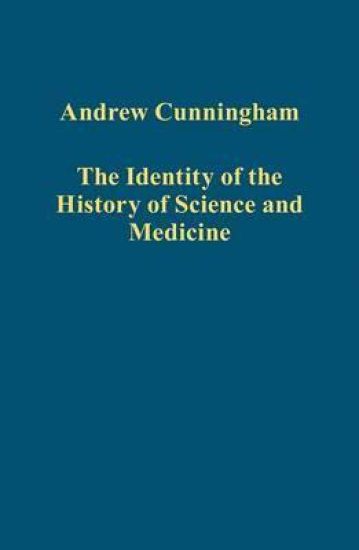
The Identity of the History of Science and Medicine
Andrew Cunningham
Ashgate Publishing Limited
2012
sidottu
In these essays, Andrew Cunningham is concerned with issues of identity - what was the identity of topics, disciplines, arguments, diseases in the past, and whether they are identical with (more usually, how they are not identical with) topics, disciplines, arguments or diseases in the present. Historians usually tend to assume such continuous identities of present attitudes and activities with past ones, and rarely question them; the contention here is that this gives us a false image of the very things in the past that we went to look for.

The eighteenth-century practitioners of anatomy saw their own period as 'the perfection of anatomy'. This book looks at the investigation of anatomy in the 'long' eighteenth century in disciplinary terms. This means looking in a novel way not only at the practical aspects of anatomizing but also at questions of how one became an anatomist, where and how the discipline was practised, what the point was of its practice, what counted as sub-disciplines of anatomy, and the nature of arguments over anatomical facts and priority of discovery. In particular pathology, generation and birth, and comparative anatomy are shown to have been linked together as sub-disciplines of anatomy. At first sight anatomy seems the most long-lived and stable of medical disciplines, from Galen and Vesalius to the present. But Cunningham argues that anatomy was, like so many other areas of knowledge, changed irrevocably around the end of the eighteenth century, with the creation of new disciplines, new forms of knowledge and new ways of investigation. The 'long' eighteenth century, therefore, was not only the highpoint of anatomy but also the endpoint of old anatomy.

Students notoriously vote with their feet, seeking out the best and most innovative teachers of their subject. The most ambitious students have been travelling long distances for their education since universities were first founded in the 13th century, making their own educational pilgrimage or peregrinatio. This volume deals with the peregrinatio medica from the viewpoint of the travelling students: who went where; how did they travel; what did they find when they arrived; what did they take back with them from their studies. Even a single individual could transform medical studies or practice back home on the periphery by trying to reform teaching and practice the way they had seen it at the best universities. Other contributions look at the universities themselves and how they were actively developed to attract students, and at some of the most successful teachers, such as Boerhaave at Leiden or the Monros at Edinburgh. The essays show how increasing levels of wealth allowed more and more students to make their pilgrimages, travelling for weeks at a time to sit at the feet of a particular master. In medicine this meant that, over the period c.1500 to 1789, a succession of universities became the medical school of choice for ambitious students: Padua and Bologna in the 1500s, Paris, Leiden and Montpellier in the 1600s, and Leiden, Göttingen and Edinburgh in the 1700s. The arrival of foreign students brought wealth to the university towns and this significant economic benefit meant that the governors of these universities tried to ensure the defence of freedom of religion and freedom of speech, thus providing the best conditions for the promotion of new views and innovation in medicine. The collection presents a new take on the history of medical education, as well as universities, travel and education more widely in ancien régime Europe.
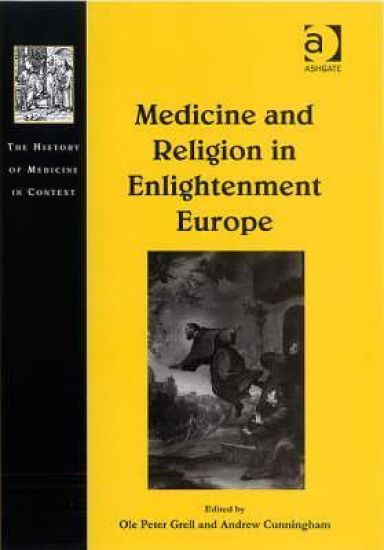
Medicine and Religion in Enlightenment Europe
Andrew Cunningham
Ashgate Publishing Limited
2007
sidottu
The Enlightenment period, here understood as covering the years 1650 to 1789, is usually considered to be a period when religion was obliged to give way to rationality. With respect to medicine this means that the religious elements in the treatment and interpretation of diseases to all intents and purposes disappeared. However, there are growing indications in recent scholarship that this may well be an overstatement. Indeed it appears that religion retained many of its customary relations with medicine. This volume explores how far, and the ways in which, this was still the case. It looks at this multi-faceted relationship with respect to among others: medical care and death in hospitals, religious vocation and nursing, chemical medicine and religion, the clergy and medicine, the continued significance of popular medicine, faith healing, dissection and religion, and religious dissent and medical innovation. Within these significant areas the volume provides a European perspective which will make it possible to draw comparisons and determine differences.
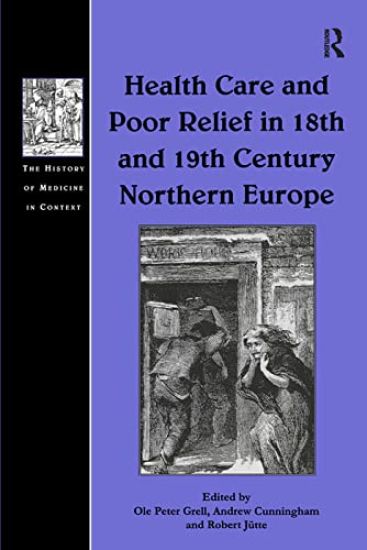
Health Care and Poor Relief in 18th and 19th Century Northern Europe
Ole Peter Grell; Andrew Cunningham
Ashgate Publishing Limited
2002
sidottu
Throughout history governments have had to confront the problem of how to deal with the poorer parts of their population. During the medieval and early modern period this responsibility was largely borne by religious institutions, civic institutions and individual charity. By the eighteenth century, however, the rapid social and economic changes brought about by industrialisation put these systems under intolerable strain, forcing radical new solutions to be sought to address both old and new problems of health care and poor relief. This volume looks at how northern European governments of the eighteenth and nineteenth centuries coped with the needs of the poor, whilst balancing any new measures against the perceived negative effects of relief upon the moral wellbeing of the poor and issues of social stability. Taken together, the essays in this volume chart the varying responses of states, social classes and political theorists towards the great social and economic issue of the age, industrialisation. Its demands and effects undermined the capacity of the old poor relief arrangements to look after those people that the fits and starts of the industrialisation cycle itself turned into paupers. The result was a response that replaced the traditional principle of 'outdoor' relief, with a generally repressive system of 'indoor' relief that lasted until the rise of organised labour forced a more benign approach to the problems of poverty. Although complete in itself, this volume also forms the third of a four-volume survey of health care and poor relief provision between 1500 and 1900, edited by Ole Peter Grell and Andrew Cunningham.

The Four Horsemen of the Apocalypse
Andrew Cunningham; Ole Peter Grell
Cambridge University Press
2001
pokkari
This book offers a new and exciting interpretation of early modern European history (1490–1648). Cunningham and Grell’s point of departure, and a prism through which events of the period are interpreted, is Dürer’s famous woodcut of The Four Horsemen of the Apocalypse. This image came to characterise the outlook and expectations of most early modern Europeans, who experienced a dramatic rise in population, leading to repeated episodes of war, epidemics and famine. These were seen as indicating the imminent end of the world. The book is lavishly illustrated with fascinating contemporary images which, like many texts of the period, are preoccupied with Apocalypticism and eschatological expectations. Lucidly written and carefully organised, it brings together religious, social, military and medical history in one survey, giving a unique insight into why the early modern world linked all the crises of the age to the Day of Judgement.
The central proposition of this book is that the great anatomists of the Renaissance, from Vesalius to Fabricius and Harvey - the forebears of modern scientific biology and medicine - consciously resurrected not merely the methods but also the research projects of Aristotle and other Ancients. The Moderns' choice of topics and subjects, their aims, and their evaluation of their investigations were all made in a spirit of emulation, not rejection, of their distant predecessors. First published in 1997, Andrew Cunningham’s masterly analysis of the history of the ’scientific renaissance' - a history not of things found, but of projects of enquiry - provoked a reappraisal of the intellectual roots of the Renaissance as well as illuminating debates on the history of the body and its images.

The opposition of science and religion is a recent phenomenon; in the middle ages, and indeed until the middle of the nineteenth century, there was almost no conflict. In the Middle Ages the objective study of nature - the activity we now call science - was largely the province of religious men. This book looks at the origins of western science and the central role played by the Dominican and Franciscan friars. It explains why these two groups devoted so much intellectual effort to the study of physical and biological phenomena, and distinguishes 'Natural Philosophy' from 'science' as presently understood. Though the friars were recognisably 'scientific' in their approach their motives were religious - they wished to understand the mind of God and the beauty of God's nature. Even so, as this study makes clear, the roots of western science lie in the monasteries and refuges of the medieval friars - the direct forebears of the anti-scientific Popes of the age of Copernicus and Galileo.

Laboratory Revolution Medicine
Andrew Cunningham; Cunningham
CAMBRIDGE UNIVERSITY PRESS_
1992
sidottu

Romanticism and the Sciences
Andrew Cunningham; Nicholas Jardine
Cambridge University Press
1990
pokkari
This book presents a series of essays, each specially written by an expert in the area, which focus on the role of Romantic philosophy and ideology in the sciences, and on the role of the sciences in Romantic literature. The contributions are designed to give a systematic coverage of the whole field. They are written at a popular level; they are well illustrated; and are accompanied by suggestions for further reading suitable for undergraduates and others. Divided into four sections under the titles 'Romanticism', 'Sciences of the Organic', 'Sciences of the Inorganic', and 'Literature and the Sciences', the book discusses various themes, movements and theories, as well as individual scientists and writers (including Schelling, von Humboldt, Goethe, Ritter, Davy, Oersted, Kleist, Coleridge, and Buchner). There is an editorial introduction prefiguring some of the concerns of the books. This original collection, designed to provide a balance of literary and scientific interests for students in both humanistic and scientific disciplines and occupies an important place in a previously under-explored field.