Kirjailija
Anthony Grafton
Kirjat ja teokset yhdessä paikassa: 37 kirjaa, julkaisuja vuosilta 1983-2025, suosituimpien joukossa Magus. Vertaile teosten hintoja ja tarkista saatavuus suomalaisista kirjakaupoista.
37 kirjaa
Kirjojen julkaisuhaarukka 1983-2025.
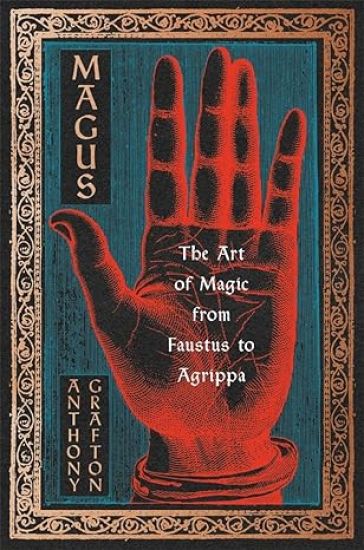
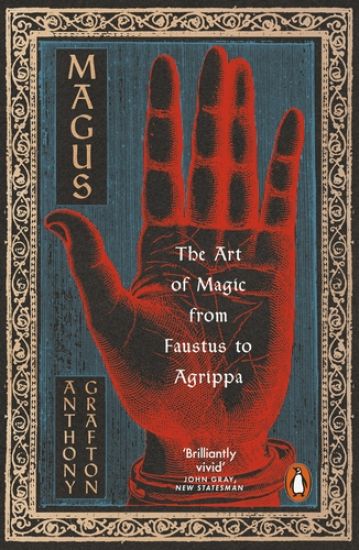
A revelatory account of the magus - the learned magician - and his place in the world of Renaissance EuropeAt the heart of the extraordinary ferment of the High Renaissance stood a distinctive, strange and beguiling figure: the magus. An unstable mix of scientist, bibliophile, engineer, fabulist and fraud, the magus ushered in modern physics and chemistry while also working on everything from secret codes to siege engines to magic tricks.Anthony Grafton's wonderfully original book discusses the careers of men who somehow managed to be both figures of startling genius and - by some measures - credulous or worse. The historical Faust, Marsilio Ficino, Pico della Mirandola, Johannes Trithemius and Heinrich Cornelius Agrippa are all fascinating characters, closely linked to monarchs, artists and soldiers and sitting at the heart of any definition of why the Renaissance was a time of such restless innovation. The study of the stars, architecture, warfare, even medicine: all of these and more were revolutionized in some way by the experiments and tricks of these extraordinary individuals.No book does a better job of allowing us to understand the ways that magic, religion and science were once so intertwined and often so hard to tell apart.
The many meanings of obelisks across nearly forty centuries, from Ancient Egypt (which invented them) to twentieth-century America (which put them in Hollywood epics).Nearly every empire worthy of the name-from ancient Rome to the United States-has sought an Egyptian obelisk to place in the center of a ceremonial space. Obelisks-giant standing stones, invented in Ancient Egypt as sacred objects-serve no practical purpose. For much of their history their inscriptions, in Egyptian hieroglyphics, were completely inscrutable. Yet over the centuries dozens of obelisks have made the voyage from Egypt to Rome, Constantinople, and Florence; to Paris, London, and New York. New obelisks and even obelisk-shaped buildings rose as well-the Washington Monument being a noted example. Obelisks, everyone seems to sense, connote some very special sort of power. This beautifully illustrated book traces the fate and many meanings of obelisks across nearly forty centuries-what they meant to the Egyptians, and how other cultures have borrowed, interpreted, understood, and misunderstood them through the years. In each culture obelisks have taken on new meanings and associations. To the Egyptians, the obelisk was the symbol of a pharaoh's right to rule and connection to the divine. In ancient Rome, obelisks were the embodiment of Rome's coming of age as an empire. To nineteenth-century New Yorkers, the obelisk in Central Park stood for their country's rejection of the trappings of empire just as it was itself beginning to acquire imperial power. And to a twentieth-century reader of Freud, the obelisk had anatomical and psychological connotations. The history of obelisks is a story of technical achievement, imperial conquest, Christian piety and triumphalism, egotism, scholarly brilliance, political hubris, bigoted nationalism, democratic self-assurance, Modernist austerity, and Hollywood kitsch-in short, the story of Western civilization.
A Seminary Co-op Notable Book PROSE Award in European History " M]arvellously readable . . . Not for nothing is Grafton renowned as today's leading historian of Renaissance intellectual culture . . . as erudite as it is enchanting." --Literary Review "A brilliantly vivid exercise in intellectual history, as told through the biographies of the early modern magi, which will stir the thoughts of everyone who reads it. --New Statesman "Magus offers a rich set of observations on an oft-neglected intellectual tradition during a turning point in Western thought . . . Magic is once again beginning to merit serious study in the academy. --Chronicle of Higher Education In literary legend, Faustus is the quintessential occult personality. The historical Faustus, however, was something quite different: a magus--a learned magician fully embedded in the scholarly currents and public life of his time. And he was hardly the only one. Anthony Grafton recovers this distinctive Renaissance intellectual type, indebted to medieval counterparts as well as contemporaries like the engineer, artist, Christian humanist, and religious reformer. Alongside these better-known figures, the magus had a transformative impact on his society. Magus details the arts and experiences of learned magicians including Marsilio Ficino, Pico della Mirandola, Johannes Trithemius, and Heinrich Cornelius Agrippa. These erudite men were at the center of ethical debates concerning licit and illicit magic, the divine and the diabolical. Over time, they turned magic into a complex art, which drew on contemporary mechanics as well as classical astrology, probed the limits of what was acceptable in a changing society, and promised new ways to explore the self and the cosmos. Resituating the magus in the cultural and intellectual order of Renaissance Europe, Grafton sheds new light on both the recesses of the learned magician's mind and the world he helped to build.
Johann Buxtorf, Impresario of Hebrew and Jewish Books
Anthony Grafton; Joanna Weinberg
Pontifical Institute of Mediaeval Studies,Canada
2025
sidottu
Johann Buxtorf (1564-1629) pursued the study of Hebrew and Aramaic and the writings and rituals of Jewish tradition through a long and productive life as a professor at the University of Basel and an impresario of Jewish texts. The focus of this work is on Buxtorf's scholarly practices -- for example, the ways in which he read and made excerpts from a wide variety of Jewish texts, recycled them in his polemical Juden schul (1603), a treatise on the customs and ceremonies of Ashkenazic Jews, and surveyed them in pioneering if incomplete bibliographies. Using a wide variety of unpublished sources, including letters to Buxtorf from Jewish print professionals, this study follows him into the Basel printing houses that produced books in Hebrew, Aramaic, and Yiddish, and reconstructs how he worked there as both an editor and a censor -- even rewriting certain Jewish prayers to eliminate anti-Christian sentiments. Buxtorf took a special interest in the textual history of the Hebrew Bible: he argued that the vowel points and accents had entered its text at a very early stage. This study shows that Buxtorf developed his views in dialogue -- and debate -- with both Jewish and Christian scholars. He often expressed contempt for both the Jews whose texts he read and those whom he occasionally met in Basel, Frankfurt, or elsewhere, yet his passion for Jewish literature of every kind never faltered.
The Art of Discovery
Maren Elisabeth Schwab; Anthony Grafton
PRINCETON UNIVERSITY PRESS
2025
pokkari
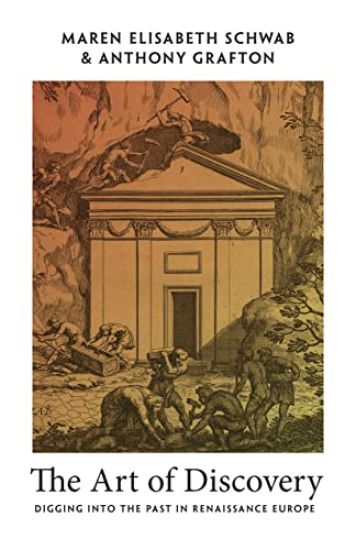
A panoramic history of the antiquarians whose discoveries transformed Renaissance culture and gave rise to new forms of art and knowledgeIn the early fifteenth century, a casket containing the remains of the Roman historian Livy was unearthed at a Benedictine abbey in Padua. The find was greeted with the same enthusiasm as the bones of a Christian saint, and established a pattern that antiquarians would follow for centuries to come. The Art of Discovery tells the stories of the Renaissance antiquarians who turned material remains of the ancient world into sources for scholars and artists, inspirations for palaces and churches, and objects of pilgrimage and devotion.Maren Elisabeth Schwab and Anthony Grafton bring to life some of the most spectacular finds of the age, such as Nero’s Golden House and the wooden placard that was supposedly nailed to the True Cross. They take readers into basements, caves, and cisterns, explaining how digs were undertaken and shedding light on the methods antiquarians—and the alchemists and craftspeople they consulted—used to interpret them. What emerges is not an origin story for modern archaeology or art history but rather an account of how early modern artisanal skills and technical expertise were used to create new knowledge about the past and inspire new forms of art, scholarship, and devotion in the present.The Art of Discovery challenges the notion that Renaissance antiquarianism was strictly a secular enterprise, revealing how the rediscovery of Christian relics and the bones of martyrs helped give rise to highly interdisciplinary ways of examining and authenticating objects of all kinds.
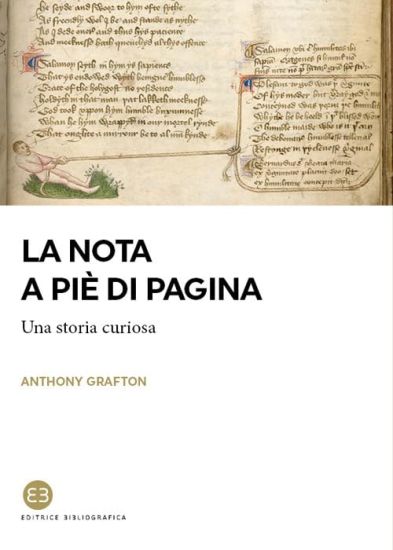
In questo saggio colto, vivace e originale, Anthony Grafton offre una panoramica ampia e curiosa del modo in cui la storia e l'uso apparentemente neutro delle note a pi di pagina costituisca in realt una raffinata risorsa per le ambizioni individuali, le diverse rivalit o le divergenze di impostazione culturale. Alcuni storici le considerano l'occasione per esibire credenziali. Per altri, esse offrono l'opportunit di pugnalare i colleghi. In un viaggio storico che parte dall'origine di questa "specie" ricostruendo i fasti della nota a pi di pagina nel suo secolo d'oro, il Settecento, per arrivare alla precisione cartesiana della nota moderna, l'autore ci offre una serie di episodi divertenti, come "l'aggressione" di Alexander Pope alla filologia classica di Bentley: Pope "utilizz ampiamente la nota a pi di pagina non diversamente da come in un horror americano il mostro usa la sega elettrica: per fare a pezzi i suoi nemici". Insomma, la nota stata tra le altre cose un espediente per lo sfogo degli umori, oltrech , evidentemente, per l'uso dell'erudizione e dell'acume critico, arrivando a essere un vero genere letterario ausiliario e autonomo, con i suoi geni e i suoi braccianti.
A revelatory new account of the magus--the learned magician--and his place in the intellectual, social, and cultural world of Renaissance Europe. In literary legend, Faustus is the quintessential occult personality of early modern Europe. The historical Faustus, however, was something quite different: a magus--a learned magician fully embedded in the scholarly currents and public life of the Renaissance. And he was hardly the only one. Anthony Grafton argues that the magus in sixteenth-century Europe was a distinctive intellectual type, both different from and indebted to medieval counterparts as well as contemporaries like the engineer, the artist, the Christian humanist, and the religious reformer. Alongside these better-known figures, the magus had a transformative impact on his social world. Magus details the arts and experiences of learned magicians including Marsilio Ficino, Pico della Mirandola, Johannes Trithemius, and Heinrich Cornelius Agrippa. Grafton explores their methods, the knowledge they produced, the services they provided, and the overlapping political and social milieus to which they aspired--often, the circles of kings and princes. During the late fifteenth and early sixteenth centuries, these erudite men anchored debates about licit and illicit magic, the divine and the diabolical, and the nature of "good" and "bad" magicians. Over time, they turned magic into a complex art, which drew on contemporary engineering as well as classical astrology, probed the limits of what was acceptable in a changing society, and promised new ways to explore the self and exploit the cosmos. Resituating the magus in the social, cultural, and intellectual order of Renaissance Europe, Grafton sheds new light on both the recesses of the learned magician's mind and the many worlds he inhabited.
The Art of Discovery
Maren Elisabeth Schwab; Anthony Grafton
PRINCETON UNIVERSITY PRESS
2022
sidottu
A panoramic history of the antiquarians whose discoveries transformed Renaissance culture and gave rise to new forms of art and knowledgeIn the early fifteenth century, a casket containing the remains of the Roman historian Livy was unearthed at a Benedictine abbey in Padua. The find was greeted with the same enthusiasm as the bones of a Christian saint, and established a pattern that antiquarians would follow for centuries to come. The Art of Discovery tells the stories of the Renaissance antiquarians who turned material remains of the ancient world into sources for scholars and artists, inspirations for palaces and churches, and objects of pilgrimage and devotion.Maren Elisabeth Schwab and Anthony Grafton bring to life some of the most spectacular finds of the age, such as Nero’s Golden House and the wooden placard that was supposedly nailed to the True Cross. They take readers into basements, caves, and cisterns, explaining how digs were undertaken and shedding light on the methods antiquarians—and the alchemists and craftspeople they consulted—used to interpret them. What emerges is not an origin story for modern archaeology or art history but rather an account of how early modern artisanal skills and technical expertise were used to create new knowledge about the past and inspire new forms of art, scholarship, and devotion in the present.The Art of Discovery challenges the notion that Renaissance antiquarianism was strictly a secular enterprise, revealing how the rediscovery of Christian relics and the bones of martyrs helped give rise to highly interdisciplinary ways of examining and authenticating objects of all kinds.
An Open Letters Review Best Book of the Year“Grafton presents largely unfamiliar material…in a clear, even breezy style…Erudite.”—Michael Dirda, Washington PostIn this celebration of bookmaking in all its messy and intricate detail, Anthony Grafton captures both the physical and mental labors that went into the golden age of the book—compiling notebooks, copying and correcting proofs, preparing copy—and shows us how scribes and scholars shaped influential treatises and forgeries.Inky Fingers ranges widely, from the theological polemics of the early days of printing to the pathbreaking works of Jean Mabillon and Baruch Spinoza. Grafton draws new connections between humanistic traditions and intellectual innovations, textual learning and the delicate, arduous, error-riddled craft of making books. Through it all, he reminds us that the life of the mind depends on the work of the hands, and the nitty gritty labor of printmakers has had a profound impact on the history of ideas.“Describes magnificent achievements, storms of controversy, and sometimes the pure devilment of scholars and printers…Captivating and often amusing.”—Wall Street Journal“Ideas, in this vivid telling, emerge not just from minds but from hands, not to mention the biceps that crank a press or heft a ream of paper.”—New York Review of Books“Grafton upends idealized understandings of early modern scholarship and blurs distinctions between the physical and mental labor that made the remarkable works of this period possible.”—Christine Jacobson, Book Post“Scholarship is a kind of heroism in Grafton’s account, his nine protagonists’ aching backs and tired eyes evidence of their valiant dedication to the pursuit of knowledge.”—London Review of Books
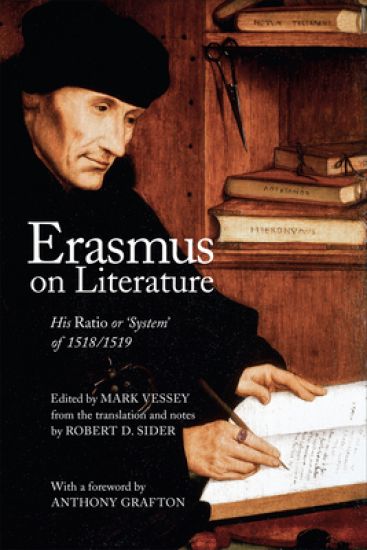
None of the works included among Erasmus’ ‘Literary and Educational Writings’ in the Collected Works of Erasmus captures his most adventurous thinking about how texts signify in – and thereby make or remake – worlds of thought, feeling, and action. The one that comes closest to doing so, the Ratio verae theologiae (‘A System of True Theology’), was first published separately in 1518 and 1519, then appeared in the preliminaries to the New Testament in Erasmus’ (revised) 1519 edition. This handy Ratio or compendious ‘System’ gave advice on how to interpret complex texts and develop persuasive arguments based upon them. Its lessons were applied to the canonical Scriptures as source, and to everyday Christian theology as target discourse. They unfold in response to the special difficulties and incitements of the biblical text in Latin and Greek, within a framework provided by classical grammar and rhetoric, adjusted to the examples of the Church Fathers as exemplary interpreters of the Bible. At every turn, the Ratio reveals the instincts and intuitions of an exceptional theorist and practitioner of the cognitive, social, and political arts of written language. This student edition, the first of its kind in any language, is based on the translation and notes by Robert D. Sider in the Collected Works of Erasmus Volume 41. It is designed to make it easier to estimate the long-term value of this particular work and of Erasmus’ works more generally, and to allow for a multidisciplinary understanding of the lives of human beings as symbol-using creatures in worlds constructed partly by texts.
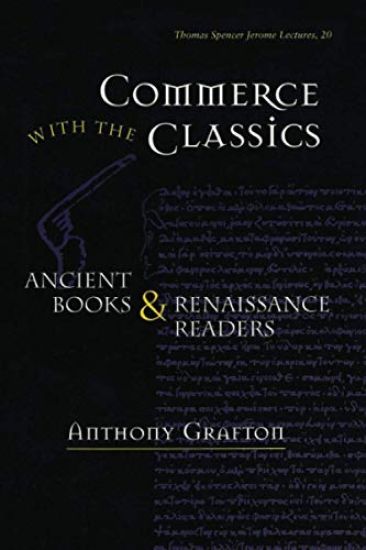
The style of reading in Renaissance Europe, as seen in the margins of books and in the texts of Renaissance intellectuals themselves, is deftly charted in this welcome volume from Anthony Grafton. Growing out of the Thomas Spencer Jerome Lectures that Anthony Grafton gave at the University of Michigan in 1992, this book describes the interaction between books and readers in the Renaissance, as seen in four major case studies. Humanists Alberti, Pico, Budé, and Kepler, all major figures of their time and now major figures in intellectual history, are examined in the light of their distinctive ways of reading. Investigating a period of two centuries, Grafton vividly portrays the ways in which book/scholar interactions--and the established traditions that were reflected in these interactions--were part of and helped shape the subjects' Humanistic philosophy. The book also indicates how these traditions have implications for the modern literary scene. Commerce with the Classics: Ancient Books and Renaissance Readers illustrates the immense variety of the humanist readers of the Renaissance. Grafton describes life in the Renaissance library, how the act of reading was shaped by the physical environment, and various styles of reading during the time. A strong sense of what skilled reading was like in the past is built up through anecdotes, philological analysis, and documents from a wide variety of sources, many of them unpublished. This volume will be of special interest to Renaissance and intellectual historians, students of Renaissance literature, and classicists who concern themselves with the afterlife of their texts. Anthony Grafton is Henry Putnam University Professor of History, Princeton University.
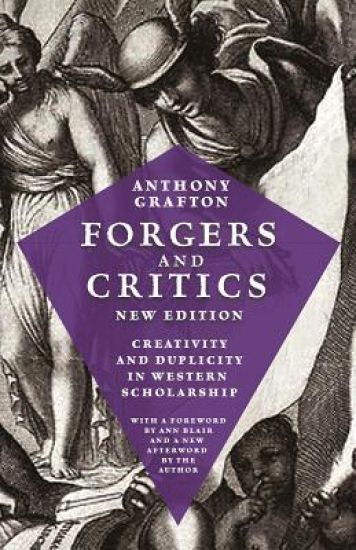
The close links between forgery and criticism throughout historyIn Forgers and Critics, Anthony Grafton provides a wide-ranging exploration of the links between forgery and scholarship. Labeling forgery the “criminal sibling” of criticism, Grafton describes a panorama of remarkable individuals—forgers from classical Greece through the recent past—who produced a variety of splendid triumphs of learning and style, as well as the scholarly detectives who honed the tools of scholarship in attempts to unmask these skillful fakers. In the process, Grafton discloses the extent, the coherence, and the historical interest of two significant and tightly intertwined strands in the Western intellectual tradition.
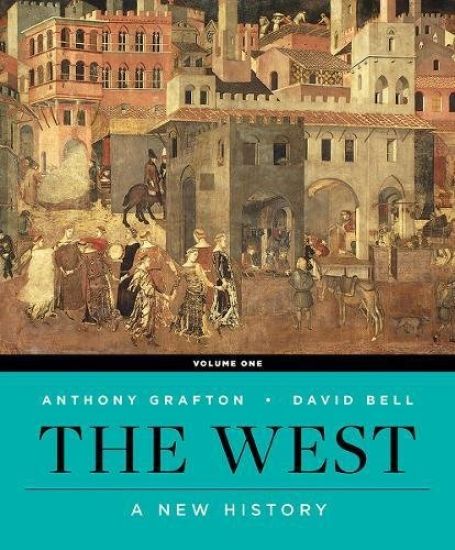
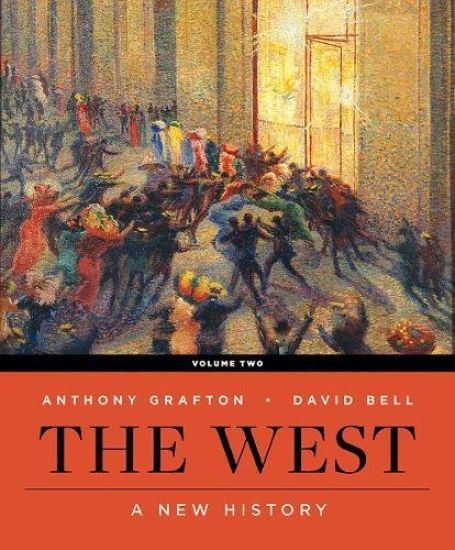
This beautifully written history recentres the West and rekindles the past in a vivid narrative crafted for beginning students. Grafton and Bell tell the epic story of a West engaged in a continuing search for order across politics, society and culture, driven by internal tensions and global influences. They deliver the past not as a path to the present but as it was lived at the time, grounded in a balanced, comprehensive, chronological narrative. Combined with rich digital resources to instill practical history skills, The West establishes a dynamic NEW foundation for teaching the Western Civilizations course.
History of Western Civilization Vol1
History of Western Civilization Vol2
History of Western Civilization 1 vol
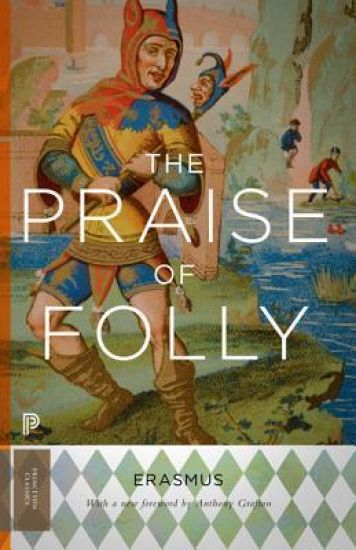
Desiderius Erasmus (1466-1536) was a Dutch humanist, scholar, and social critic, and one of the most important figures of the Renaissance. The Praise of Folly is perhaps his best-known work. Originally written to amuse his friend Sir Thomas More, this satiric celebration of pleasure, youth, and intoxication irreverently pokes fun at the pieties of theologians and the foibles that make us all human, while ultimately reaffirming the value of Christian ideals. No other book displays quite so completely the transition from the medieval to the modern world, and Erasmus's wit, wisdom, and critical spirit have lost none of their timeliness today. This Princeton Classics edition of The Praise of Folly features a new foreword by Anthony Grafton that provides an essential introduction to this iridescent and enduring masterpiece.