Kirjojen hintavertailu. Mukana 12 459 402 kirjaa ja 12 kauppaa.

Kirjailija

Aristotle

Kirjat ja teokset yhdessä paikassa: 593 kirjaa, julkaisuja vuosilta 1799-2026, suosituimpien joukossa Aristotle: Physics, Book VIII. Vertaile teosten hintoja ja tarkista saatavuus suomalaisista kirjakaupoista.

593 kirjaa

Kirjojen julkaisuhaarukka 1799-2026.

The Art of Rhetoric

The Art of Rhetoric

Aristotle

Penguin Classics
1991
pokkari
With the emergence of democracy in the city-state of Athens in the years around 460 BC, public speaking became an essential skill for politicians in the Assemblies and Councils - and even for ordinary citizens in the courts of law. In response, the technique of rhetoric rapidly developed, bringing virtuoso performances and a host of practical manuals for the layman. While many of these were little more than collections of debaters' tricks, the Art of Rhetoric held a far deeper purpose. Here Aristotle (384-322 BC) establishes the methods of informal reasoning, provides the first aesthetic evaluation of prose style and offers detailed observations on character and the emotions. Hugely influential upon later Western culture, the Art of Rhetoric is a fascinating consideration of the force of persuasion and sophistry, and a compelling guide to the principles behind oratorical skill.
History of Animals, Volume III
Inductive zoology.In History of Animals Aristotle analyzes “differences”—in parts, activities, modes of life, and character—across the animal kingdom, in preparation for establishing their causes, which are the concern of his other zoological works. Over 500 species of animals are considered: shellfish, insects, birds, fish, reptiles, amphibians, and mammals—including human beings.In Books I–IV, Aristotle gives a comparative survey of internal and external body parts, including tissues and fluids, and of sense faculties and voice. Books V–VI study reproductive methods, breeding habits, and embryogenesis as well as some secondary sex differences. In Books VII–IX, Aristotle examines differences among animals in feeding; in habitat, hibernation, migration; in enmities and sociability; in disposition (including differences related to gender) and intelligence. Here too he describes the human reproductive system, conception, pregnancy, and obstetrics. Book X establishes the female’s contribution to generation.The Loeb Classical Library edition of History of Animals is in three volumes. A full index to all ten books is included in Volume Three.Related Volumes:Aristotle’s biological corpus includes not only History of Animals, but also Parts of Animals, Movement of Animals, Progression of Animals, Generation of Animals, and significant parts of On the Soul and Parva Naturalia. Aristotle’s general methodology—“first we must grasp the differences, then try to discover the causes” (HA 1.6)—is applied to the study of plants by his younger co-worker and heir to his school, Theophrastus: Enquiry into Plants studies differences across the plant kingdom, while De Causis Plantarum studies their causes. In the later ancient world, both Pliny’s Natural History and Aelian’s On the Characteristics of Animals draw significantly on Aristotle’s biological work. The only work by a classical author at all comparable to Aristotle’s treatises on animals is Xenophon’s On Horses (included in Volume VII of the Loeb edition of Xenophon).
Aristotle, Prior Analytics

Aristotle, Prior Analytics

Robin (EDT) Smith; Aristotle

Hackett Pub Co Inc
1989
pokkari
'This volume is an impressive tour de force. It is state-of-the-art Aristotle: it employs the most recent philological, philosophical, and logical advances which since the 1970's at least have rendered previous translations and commentaries obsolete. The translation is the first to take account of the recent epistemically orientated natural-deduction approach, which restores Aristotle's reputation as a consummate logician and reveals much more of Aristotle's method than previous approaches. Every page of Robin Smith's commentary shows extensive learning, taste, imagination, and skill...An important and lasting contribution, not only to Aristotle scholarship and to the history of logic, but also to the history of philosophy itself' - John Corcoran, SUNY Buffalo.
Physikvorlesung

Physikvorlesung

Aristotle

Wiley-VCH Verlag GmbH
1989
sidottu
Die "Physikvorlesung" ist ein Standardwerk der Aristoteles-Forschung. Das in acht Bucher eingeteilte Werk bildet die Zusammenfassung mehrerer Einzelabhandlungen uber Prinzipien und Begriffe der Natur sowie die Grunde des Seins, insofern es mit Veranderungen und Bewegungen zu tun hat. Buch I enthalt eine Auseinandersetzungen mit den Meinungen fruherer Philosophen uber Anzahl und Charakter der Prinzipien in der Natur. In Buch II erfolgt die aristotelische Wesensbestimmung des Naturbegriffs und der Prinzipien des Naturgeschehens. Zur Erklarung dieses Naturgeschehens bezeichnet und analysiert Aristoteles die Begriffe Bewegung (Buch III und V), Raum und Zeit (Buch IV) sowie Kontinuum und Teilbarkeit (Buch VI). In den Buchern VII und VIII schliesst sich noch einmal eine Analyse des Bewegungsbegriffs in Abgrenzung zu anderen Formen der Veranderung und in der Diskussion der Frage nach der Ewigkeit oder Anfang und Urasche der Bewegung an.
Poetics I With the Tractatus Coislinianus

Poetics I With the Tractatus Coislinianus

Aristotle

Hackett Pub Co Inc
1988
sidottu
Richard Janko's acclaimed translation of Aristotle's "Poetics" is accompanied by the most comprehensive commentary available in English that does not presume knowledge of the original Greek. Two other unique features are Janko's translations with notes of both the "Tractatus Coislinianus", which is argued to be a summary of the lost second book of the "Poetics", and fragments of Aristotle's "Dialogue On Poets", including recently discovered texts about catharsis, which appear in English for the first time.
Poetics (Janko Edition)

Poetics (Janko Edition)

Aristotle

Hackett Publishing Co, Inc
1987
pokkari
A translation of Aristotle's "Poetics". It features notes of both the "Tractatus Coislinianus", which is argued to be a summary of the lost second book of the "Poetics", and fragments of Aristotle's "Dialogue On Poets", including the texts about catharsis.
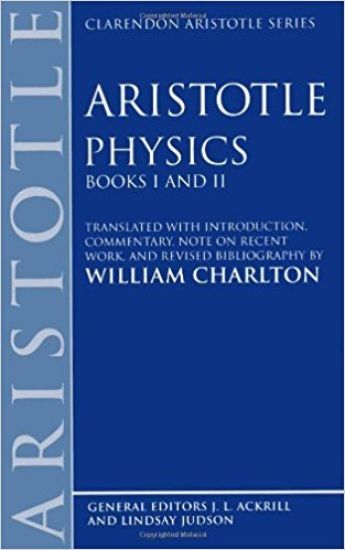
Physics Books I and II

Physics Books I and II

Aristotle

Clarendon Press
1983
nidottu
In the first two books of the Physics Aristotle discusses philosophical issues involved in the investigation of the physical universe. He introduces his distinction between form and matter and his fourfold classification of causes or explanatory factors, and defends teleological explanation. These books therefore form a natural entry into Aristotle's system as a whole, and also occupy an important place in the history of scientific thought. The present volume provides a close literal translation, which can be used by serious students without Greek. The introduction and commentary deal with the interpretation and assessment, from a philosophical standpoint, of what Aristotle says. This translation was first published in 1970.
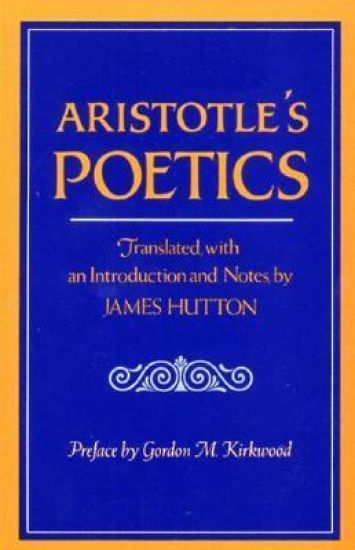
Aristotle's Poetics

Aristotle's Poetics

Aristotle

WW Norton Co
1983
nidottu
Aristotle's doctrines are basic to every critical discussion of Greek tragedy and of other literary forms. Although the Poetics has often been denounced or rejected, such rejection is usually the result of a misunderstanding of what Aristotle says. And that is where Hutton's work is uniquely important. Commentators have long recognized the need to view the Poetics in the context of its creation and it re-emergence in the Renaissance. Few, if any, however, have had the necessary combination of talents that James Hutton possessed as an accomplished Hellenist with a particularly strong background in Greek philosophy, a graceful stylist in English, and a leading authority on the Renaissance humanists. To supplement his translation, Hutton has provided full explanatory and glossarial notes. In his introduction he discusses the work in terms of Aristotelian thought and its Platonic roots, thereby correcting the dogmatism that often attends study of the Poetics. The introduction also fully outlines the work's historical influence.
Poetics

Poetics

Aristotle

University Press of Florida
1982
sidottu
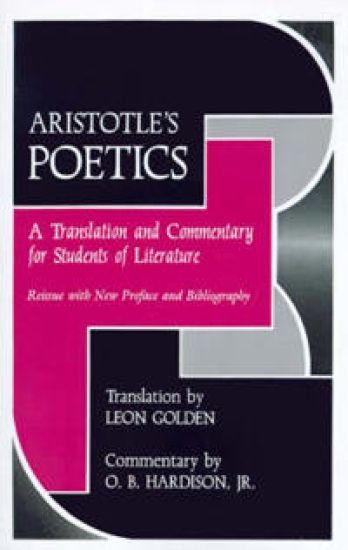
"The reprint edition will be most welcome to classicists, comparatists, and students of literary theory. No existing translation of the Poetics even approaches the quality and accuracy of Leon Golden's, and O.B. Hardison's accompanying commentary makes the book eminently useful as a text for literary criticism and literature-in-translation courses."--Roy Arthur Swanson, Professor of Classics and Comparative Literature, University of Wisconsin-Milwaukee"The Golden-Hardison translation and commentary offer some of the clearest and most persuasive explanations of Aristotle's key terms. I am happy to learn that this text will again be available."--Donald Keesey, Professor of English, San Jose State UniversityThis volume combines Leon Golden's highly regarded translation of Aristotle's Poetics and O. B. Hardison's detailed commentary provide a comprehensive account of the principles of the Poetics and of the critical debates they have engendered. Clearly written, highly readable, the volume was designed to meet the needs of students of literature and criticism who are not proficient in Greek, but it has become a standard reference for scholars as well as students.
The Politics

The Politics

Aristotle

Penguin Classics
1981
isokokoinen pokkari
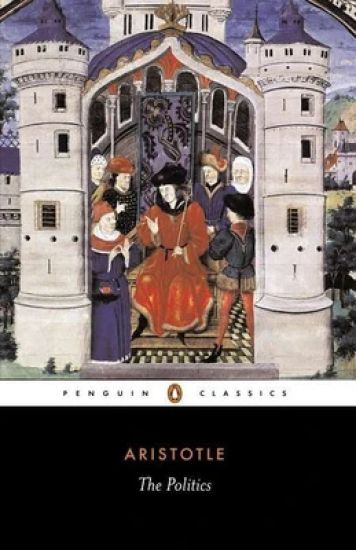
Raising questions that are as relevant to modern society as they were to the ancient world, Aristotle's The Politics remains central to the study of political science millennia after its compilation. This Penguin Classics edition is translated from the Greek by T.A. Sinclair, revised and re-presented by Trevor J. Saunders.In The Politics Aristotle addresses the questions that lie at the heart of political science. How should society be ordered to ensure the happiness of the individual? Which forms of government are best and how should they be maintained? By analysing a range of city constitutions - oligarchies, democracies and tyrannies - he seeks to establish the strengths and weaknesses of each system, and to decide which are the most effective, in theory and in practice. Like his predecessor Plato, Aristotle believed that the ideal constitution should be good in itself and in accordance with nature, and that it is needed by man - 'a political animal' - to fulfil his potential. A hugely significant work, which has influenced thinkers as diverse as Thomas Aquinas and Machiavelli, The Politics remains an outstanding commentary on fundamental political issues and concerns, and provides fascinating insights into the workings and attitudes of the Greek city-state.The introductions by T.A. Sinclair and Trevor J. Saunders discuss the influence of The Politics on philosophers, its modern relevance and Aristotle's political beliefs. This edition contains Greek and English glossaries, and a bibliography for further reading.Aristotle (384-322BC) was born at Stagira, in the dominion of the kings of Macedonia. For twenty years he studied at Athens in the Academy of Plato. Some time later, became the tutor of young Alexander the Great. His writings, including De Anima, The Nicomachean Ethics, Poetics, and The Politics, profoundly affected the whole course of ancient and medieval philosophy.If you enjoyed The Politics, you might like Plato's Republic, also available in Penguin Classics.