Kirjojen hintavertailu. Mukana 12 595 353 kirjaa ja 12 kauppaa.

Kirjailija

Aristotle

Kirjat ja teokset yhdessä paikassa: 593 kirjaa, julkaisuja vuosilta 1799-2026, suosituimpien joukossa Aristotle: Physics, Book VIII. Vertaile teosten hintoja ja tarkista saatavuus suomalaisista kirjakaupoista.

593 kirjaa

Kirjojen julkaisuhaarukka 1799-2026.

The Nicomachean Ethics

The Nicomachean Ethics

Aristotle

Les Prairies Numeriques
2019
pokkari
The theme of the Nicomachean Ethics is a Socratic question previously explored in the works of Plato, Aristotle's friend and teacher, of how men should best live. In his Metaphysics, Aristotle described how Socrates, the friend and teacher of Plato, had turned philosophy to human questions, whereas Pre-Socratic philosophy had only been theoretical
Poetics (Pocket Classics)

Poetics (Pocket Classics)

Aristotle

Fingerprint! Publishing
2019
nidottu
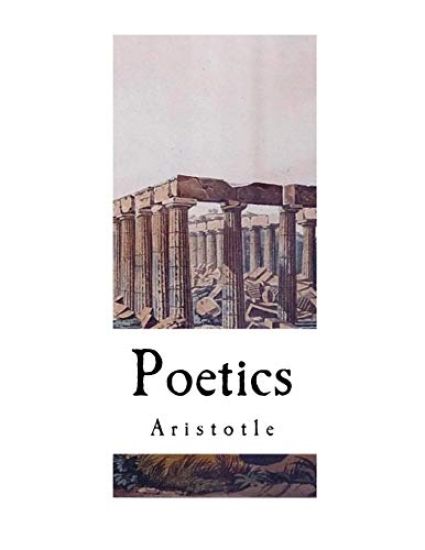
Poetics is a literary gem that explores the essence and principles of Greek tragedy. Aristotle's timeless treatise delves into the art of storytelling, examining key elements like plot, character, and catharsis. This pocket-sized edition is perfect for literary enthusiasts and aspiring writers, offering profound insights into the craft of dramatic composition. Aristotle's influential work on the theory of drama and literary analysis. Valuable lessons on the structure and impact of storytelling. In-depth exploration of the tragic genre and its emotional resonance. Compact and portable format for easy reference and on-the-go reading. A must-have for students of literature, theater, and anyone passionate about the art of storytelling.
De Anima

De Anima

Aristotle; David Bolotin

Mercer University Press
2018
nidottu
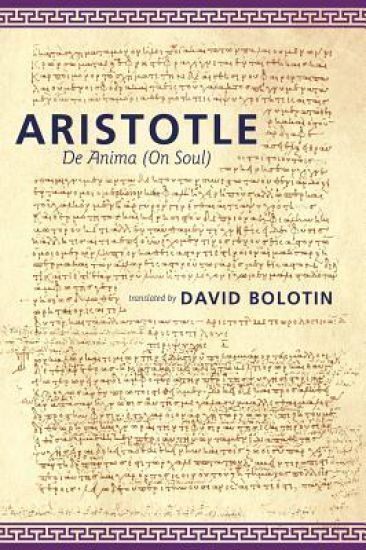
David Bolotin's translation of Aristotle's De Anima, or On Soul, aims above all at fidelity to the Greek. It treats Aristotle as a teacher regarding what soul really is, and hence it tries to convey the meaning--to the extent possible in English-of his every word. The translation itself is supplemented with footnotes, some of which, when taken together, sketch the outline of an overall interpretation of the work. Since Bolotin considers Aristotle to be a teacher, one who knows far more than we do about the matters he discusses, he has made a scrupulous effort to examine the manuscript tradition. And he has relied only on readings that are well-attested in the oldest manuscripts, rather than accepting conjectural emendations of modern editors, who all too often substitute a Greek text that is easy to understand for any of those that have come down to us from the ancient copyists. Bolotin's translation, though it aims at the greatest possible clarity in English, subordinates felicity of English expression to the demand for fidelity to the Greek. For readers-including those who may already know some Greek-who wish to study De Anima with care, it offers access that has hitherto been unavailable in English to the precise meaning of Aristotle's text.
The Politics of Aristotle

The Politics of Aristotle

Aristotle

Indoeuropeanpublishing.com
2018
sidottu
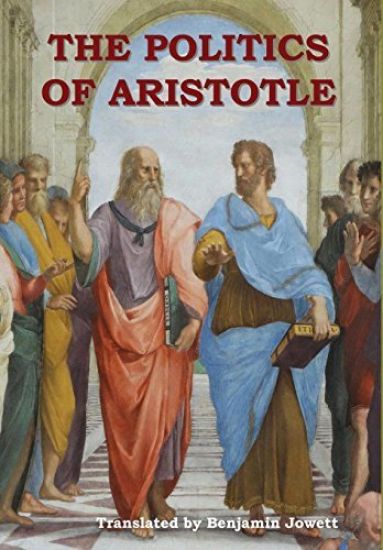
Aristotle's life was primarily that of a scholar. However, like the other ancient philosophers, it was not the stereotypical ivory tower existence. His father was court physician to Amyntas III of Macedon, so Aristotle grew up in a royal household. Aristotle also knew Philip of Macedon (son of Amyntas III) and there is a tradition that says Aristotle tutored Philip's son Alexander, who would later be called "the Great" after expanding the Macedonian Empire all the way to what is now India. Clearly, Aristotle had significant firsthand experience with politics, though scholars disagree about how much influence, if any, this experience had on Aristotle's thought. There is certainly no evidence that Alexander's subsequent career was much influenced by Aristotle's teaching, which is uniformly critical of war and conquest as goals for human beings and which praises the intellectual, contemplative lifestyle. It is noteworthy that although Aristotle praises the politically active life, he spent most of his own life in Athens, where he was not a citizen and would not have been allowed to participate directly in politics.Aristotle studied under Plato at Plato's Academy in Athens, and eventually opened a school of his own (the Lyceum) there. As a scholar, Aristotle had a wide range of interests. He wrote about meteorology, biology, physics, poetry, logic, rhetoric, and politics and ethics, among other subjects. His writings on many of these interests remained definitive for almost two millennia. They remained, and remain, so valuable in part because of the comprehensiveness of his efforts. For example, in order to understand political phenomena, he had his students collect information on the political organization and history of 158 different cities. The Politics makes frequent reference to political events and institutions from many of these cities, drawing on his students' research. Aristotle's theories about the best ethical and political life are drawn from substantial amounts of empirical research. (The Internet Encyclopedia of Philosophy)
The Politics of Aristotle

The Politics of Aristotle

Aristotle

Indoeuropeanpublishing.com
2018
pokkari
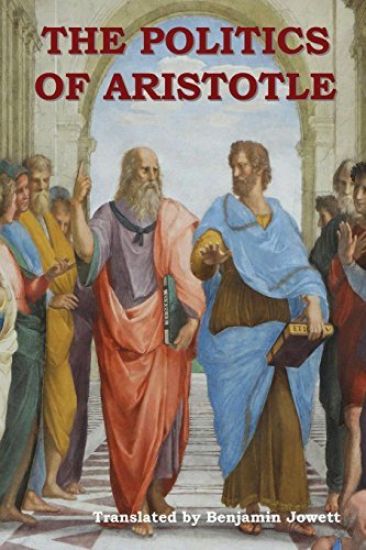
Aristotle's life was primarily that of a scholar. However, like the other ancient philosophers, it was not the stereotypical ivory tower existence. His father was court physician to Amyntas III of Macedon, so Aristotle grew up in a royal household. Aristotle also knew Philip of Macedon (son of Amyntas III) and there is a tradition that says Aristotle tutored Philip's son Alexander, who would later be called "the Great" after expanding the Macedonian Empire all the way to what is now India. Clearly, Aristotle had significant firsthand experience with politics, though scholars disagree about how much influence, if any, this experience had on Aristotle's thought. There is certainly no evidence that Alexander's subsequent career was much influenced by Aristotle's teaching, which is uniformly critical of war and conquest as goals for human beings and which praises the intellectual, contemplative lifestyle. It is noteworthy that although Aristotle praises the politically active life, he spent most of his own life in Athens, where he was not a citizen and would not have been allowed to participate directly in politics.Aristotle studied under Plato at Plato's Academy in Athens, and eventually opened a school of his own (the Lyceum) there. As a scholar, Aristotle had a wide range of interests. He wrote about meteorology, biology, physics, poetry, logic, rhetoric, and politics and ethics, among other subjects. His writings on many of these interests remained definitive for almost two millennia. They remained, and remain, so valuable in part because of the comprehensiveness of his efforts. For example, in order to understand political phenomena, he had his students collect information on the political organization and history of 158 different cities. The Politics makes frequent reference to political events and institutions from many of these cities, drawing on his students' research. Aristotle's theories about the best ethical and political life are drawn from substantial amounts of empirical research. (Source: The Internet Encyclopedia of Philosophy)
The Athenian Constitution

The Athenian Constitution

Aristotle

Createspace Independent Publishing Platform
2018
nidottu
The Athenian Constitution by Aristotle and translated by Sir Frederic G. Kenyon. The Constitution of the Athenians, also called the Athenian Constitution, is a work by Aristotle or one of his students. It was preserved on two leaves of a papyrus codex discovered at Oxyrhynchus, Egypt in 1879. The Constitution of the Athenians describes the political system of ancient Athens. The treatise was composed between 330 and 322 BC. Some ancient authors, such as Diogenes Laertius, state that Aristotle assigned his pupils to prepare a monograph of 158 constitutions of Greek cities, including a constitution of Athens. The work consists of two parts. The first part, from Chapter 1 to Chapter 41, deals with the different forms of the constitution, from the trial of the Alcmaeonidae until 403 BC. The second part describes the city's institutions, including the terms of access to citizenship, magistrates, and the courts.
Categories

Categories

Aristotle

Createspace Independent Publishing Platform
2018
nidottu
Categories by Aristotle and translated by E. M. Edghill. The Categories is a text from Aristotle's Organon that enumerates all the possible kinds of things that can be the subject or the predicate of a proposition. They are "perhaps the single most heavily discussed of all Aristotelian notions". The work is brief enough to be divided, not into books as is usual with Aristotle's works, but into fifteen chapters. The Categories places every object of human apprehension under one of ten categories. Aristotle intended them to enumerate everything that can be expressed without composition or structure, thus anything that can be either the subject or the predicate of a proposition.
The Poetics of Aristotle: Aristotle's Poetics

The Poetics of Aristotle: Aristotle's Poetics

Aristotle

Createspace Independent Publishing Platform
2018
nidottu
The Poetics of Aristotle. A Translation by S. H. Butcher. Aristotle's Poetics is the earliest surviving work of dramatic theory and first extant philosophical treatise to focus on literary theory in the West. This has been the traditional view for centuries. However, recent work is now challenging whether Aristotle focuses on literary theory per se (given that not one poem exists in the treatise) or whether he focuses instead on dramatic musical theory that only has language as one of the elements. The work was lost to the Western world for a long time. It was available in the Middle Ages and early Renaissance only through a Latin translation of an Arabic version written by Averroes.
Politics: The Complete 8 Books

Politics: The Complete 8 Books

Aristotle

Createspace Independent Publishing Platform
2018
nidottu
Politics by Aristotle and translated by Benjamin Jowett. The Complete 8 Books. Politics is a work of political philosophy by Aristotle, a 4th-century BC Greek philosopher. The end of the Nicomachean Ethics declared that the inquiry into ethics necessarily follows into politics, and the two works are frequently considered to be parts of a larger treatise, or perhaps connected lectures, dealing with the "philosophy of human affairs". The title of the Politics literally means "the things concerning the polis". Aristotle's Politics is divided into eight books which are each further divided into chapters. Citations of this work, as with the rest of the works of Aristotle, are often made by referring to the Bekker section numbers. Politics spans the Bekker sections 1252a to 1342b.