Kirjojen hintavertailu. Mukana 12 595 353 kirjaa ja 12 kauppaa.

Kirjailija

Aristotle

Kirjat ja teokset yhdessä paikassa: 593 kirjaa, julkaisuja vuosilta 1799-2026, suosituimpien joukossa Aristotle: Physics, Book VIII. Vertaile teosten hintoja ja tarkista saatavuus suomalaisista kirjakaupoista.

593 kirjaa

Kirjojen julkaisuhaarukka 1799-2026.

Aristotelous peri kosmou, pros Alexandron. = Aristotelis de mundo liber, ad Alexandrum. Cum versione Latina Gulielmi Budaei.
The 18th century was a wealth of knowledge, exploration and rapidly growing technology and expanding record-keeping made possible by advances in the printing press. In its determination to preserve the century of revolution, Gale initiated a revolution of its own: digitization of epic proportions to preserve these invaluable works in the largest archive of its kind. Now for the first time these high-quality digital copies of original 18th century manuscripts are available in print, making them highly accessible to libraries, undergraduate students, and independent scholars.The Age of Enlightenment profoundly enriched religious and philosophical understanding and continues to influence present-day thinking. Works collected here include masterpieces by David Hume, Immanuel Kant, and Jean-Jacques Rousseau, as well as religious sermons and moral debates on the issues of the day, such as the slave trade. The Age of Reason saw conflict between Protestantism and Catholicism transformed into one between faith and logic -- a debate that continues in the twenty-first century.++++The below data was compiled from various identification fields in the bibliographic record of this title. This data is provided as an additional tool in helping to insure edition identification: ++++British LibraryT149817The attribution to Aristotle is doubtful. With a final advertisement leaf. The first five words of the title are transliterated from the Greek. Also imposed in an 8 format.Glasguae: in aedibus academicis excudebat R. Foulis, 1745. 2],76, 6]p.; 12
Hobbes's Translation of Aristotle's Art of Rhetorick. A new Edition. With Alterations, and a new Preface by a Gentleman
The 18th century was a wealth of knowledge, exploration and rapidly growing technology and expanding record-keeping made possible by advances in the printing press. In its determination to preserve the century of revolution, Gale initiated a revolution of its own: digitization of epic proportions to preserve these invaluable works in the largest archive of its kind. Now for the first time these high-quality digital copies of original 18th century manuscripts are available in print, making them highly accessible to libraries, undergraduate students, and independent scholars.The Age of Enlightenment profoundly enriched religious and philosophical understanding and continues to influence present-day thinking. Works collected here include masterpieces by David Hume, Immanuel Kant, and Jean-Jacques Rousseau, as well as religious sermons and moral debates on the issues of the day, such as the slave trade. The Age of Reason saw conflict between Protestantism and Catholicism transformed into one between faith and logic -- a debate that continues in the twenty-first century.++++The below data was compiled from various identification fields in the bibliographic record of this title. This data is provided as an additional tool in helping to insure edition identification: ++++Bodleian Library (Oxford)N017549London: printed for M. Thrush, 1759. viii,119, 1]p.; 8
Aristotle of Morals to Nicomachus. Book the First. Translated by Edmd. Pargiter Esq;
The 18th century was a wealth of knowledge, exploration and rapidly growing technology and expanding record-keeping made possible by advances in the printing press. In its determination to preserve the century of revolution, Gale initiated a revolution of its own: digitization of epic proportions to preserve these invaluable works in the largest archive of its kind. Now for the first time these high-quality digital copies of original 18th century manuscripts are available in print, making them highly accessible to libraries, undergraduate students, and independent scholars.Western literary study flows out of eighteenth-century works by Alexander Pope, Daniel Defoe, Henry Fielding, Frances Burney, Denis Diderot, Johann Gottfried Herder, Johann Wolfgang von Goethe, and others. Experience the birth of the modern novel, or compare the development of language using dictionaries and grammar discourses. ++++The below data was compiled from various identification fields in the bibliographic record of this title. This data is provided as an additional tool in helping to insure edition identification: ++++British LibraryT022401London: printed for the translator, 1745. vi, 2],40p.; 4
Aristotelis de poetica liber, textu Gulstoniano; cum prælectione, versione, et notis editoris, Gulielmi Cooke, ... Accedit Elegia Grayiana græce.
The 18th century was a wealth of knowledge, exploration and rapidly growing technology and expanding record-keeping made possible by advances in the printing press. In its determination to preserve the century of revolution, Gale initiated a revolution of its own: digitization of epic proportions to preserve these invaluable works in the largest archive of its kind. Now for the first time these high-quality digital copies of original 18th century manuscripts are available in print, making them highly accessible to libraries, undergraduate students, and independent scholars.Western literary study flows out of eighteenth-century works by Alexander Pope, Daniel Defoe, Henry Fielding, Frances Burney, Denis Diderot, Johann Gottfried Herder, Johann Wolfgang von Goethe, and others. Experience the birth of the modern novel, or compare the development of language using dictionaries and grammar discourses. ++++The below data was compiled from various identification fields in the bibliographic record of this title. This data is provided as an additional tool in helping to insure edition identification: ++++British LibraryT134081Cantabrigi typis academicis excudebat J. Archdeacon. Prostant venales apud J. & J. Merrill, Cantabrigi ; T. Cadell, B. White, P. Elmsly, et G. & T. Wilkie, Londini; J. & J. Fletcher, et D. Prince & J. Cooke, Oxoni , 1785. 6], xl, 2],176p.; 8
A Treatise on Government. Translated from the Greek of Aristotle. by William Ellis, A.M
The 18th century was a wealth of knowledge, exploration and rapidly growing technology and expanding record-keeping made possible by advances in the printing press. In its determination to preserve the century of revolution, Gale initiated a revolution of its own: digitization of epic proportions to preserve these invaluable works in the largest archive of its kind. Now for the first time these high-quality digital copies of original 18th century manuscripts are available in print, making them highly accessible to libraries, undergraduate students, and independent scholars.Delve into what it was like to live during the eighteenth century by reading the first-hand accounts of everyday people, including city dwellers and farmers, businessmen and bankers, artisans and merchants, artists and their patrons, politicians and their constituents. Original texts make the American, French, and Industrial revolutions vividly contemporary.++++The below data was compiled from various identification fields in the bibliographic record of this title. This data is provided as an additional tool in helping to insure edition identification: ++++British LibraryT134076A reissue of the 1776 edition, with a new titlepage.London: printed for T. Payne; B. White; and T. Cadell, 1778. 2], xviii,428, 14]p.; 4
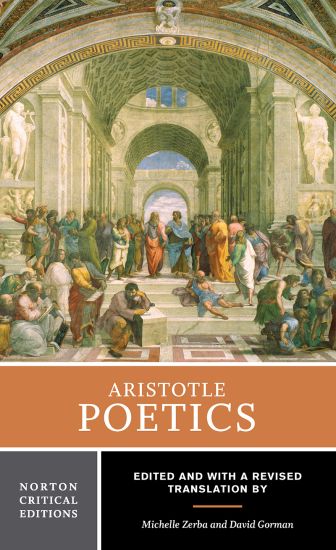
Poetics

Poetics

Aristotle

WW Norton Co
2018
nidottu
This edition includes a preface, introduction and appendix. “Ancient Sources” gives readers the opportunity to consider the epic, dramatic, philosophical and rhetorical texts that influenced the Poetics. Modern interpretations speak to the enduring relevance of this ancient creation.
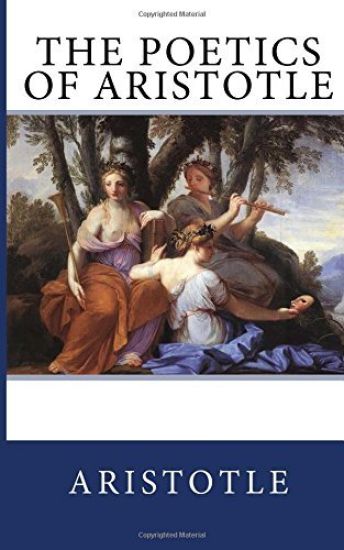
The Poetics of Aristotle

The Poetics of Aristotle

Aristotle

Createspace Independent Publishing Platform
2018
nidottu
Aristotle's Poetics seeks to address the different kinds of poetry, the structure of a good poem, and the division of a poem into its component parts. He defines poetry as a 'medium of imitation' that seeks to represent or duplicate life through character, emotion, or action. Aristotle defines poetry very broadly, including epic poetry, tragedy, comedy, dithyrambic poetry, and even some kinds of music. According to Aristotle, tragedy came from the efforts of poets to present men as 'nobler, ' or 'better' than they are in real life. Comedy, on the other hand, shows a 'lower type' of person, and reveals humans to be worse than they are in average. Epic poetry, on the other hand, imitates 'noble' men like tragedy, but only has one type of meter - unlike tragedy, which can have several - and is narrative in form.
Politics (Translated by Benjamin Jowett)
Greek philosopher and scientist, Aristotle, lived in the 4th century B.C. and is thought of as one of the most important figures from classical antiquity. Aristotle was probably the most famous member of Plato's Academy in Athens, whose writings would ultimately form the first comprehensive system of Western philosophy. His writings were not constrained to simply one field of inquiry but covered such various subjects as physics, biology, metaphysics, logic, ethics, aesthetics, rhetoric, linguistics, politics and government. Contained in this volume is Aristotle's "Politics," a treatise dealing with political philosophy. The word politics comes from the Greek word "polis" or city and literally means things concerning the city. Given the smaller populations of ancient times the city was viewed as the highest level of community and thus the most relevant in discussing political concerns. Aristotle's "Politics" is composed of eight books in which he discusses the politics of the household, different forms of political regimes, the classification and role of citizens, the types of constitutions, the distribution of political power, the ideal state, and education within it. Heavily influenced by Plato's "Republic" and "Laws," Aristotle's "Politics" is one of the most important works on government from classical antiquity. This edition is printed on premium acid-free paper and follows the translation of Benjamin Jowett.
Poetics (Translated by Ingram Bywater with a Preface by Gilbert Murray)
Greek philosopher and scientist, Aristotle, lived in the 4th century B.C. and is thought of as one of the most important figures from classical antiquity. Aristotle was probably the most famous member of Plato's Academy in Athens, whose writings would ultimately form the first comprehensive system of Western philosophy. His writings were not constrained to simply one field of inquiry but covered such various subjects as physics, biology, metaphysics, logic, ethics, aesthetics, rhetoric, linguistics, politics and government. Contained in this volume is Aristotle's "Poetics" which is regarded as the world's first comprehensive treatise on literature. It is a detailed analysis of drama and poetry with its greatest emphasis on tragedy. Aristotle outlines the elements of good drama drawing upon specific examples from the literature of ancient Greece. Lost for a time to the Western world, "Poetics" was rediscovered in the late medieval and early renaissance period from Arabic sources. An essential read for any student of classical literature, Aristotle's "Poetics" provides great insight into the study of drama from the classical period. This edition is printed on premium acid-free paper, is translated by Ingram Bywater, and includes a preface by Gilbert Murray.
The Categories: A Text from Aristotle's Organon

The Categories: A Text from Aristotle's Organon

Aristotle

Createspace Independent Publishing Platform
2017
nidottu
The CategoriesBy AristotleTranslated by E. M. EdghillThe Categories is a text from Aristotle's Organon that enumerates all the possible kinds of things that can be the subject or the predicate of a proposition. They are "perhaps the single most heavily discussed of all Aristotelian notions." The work is brief enough to be divided, not into books as is usual with Aristotle's works, but into fifteen chapters.The Categories places every object of human apprehension under one of ten categories (known to medieval writers as the Latin term praedicamenta). Aristotle intended them to enumerate everything that can be expressed without composition or structure, thus anything that can be either the subject or the predicate of a proposition.
Poetics: Aristotle

Poetics: Aristotle

Aristotle

Createspace Independent Publishing Platform
2017
nidottu
Poetics by Aristotle. A Translation by S. H. Butcher. Aristotle's Poetics, c. 335 BCE, is the earliest surviving work of dramatic theory and first extant philosophical treatise to focus on literary theory in the West. This has been the traditional view for centuries. However, recent work is now challenging whether Aristotle focuses on literary theory per se (given that not one poem exists in the treatise) or whether he focuses instead on dramatic musical theory that only has language as one of the elements. In it, Aristotle offers an account of what he calls "poetry" (a term which in Greek literally means "making" and in this context includes drama
Nicomachean Ethics

Nicomachean Ethics

Aristotle

12th Media Services
2017
sidottu
A student of Plato and a teacher of Alexander the Great, Aristotle is one of the towering figures in Western thought. A brilliant thinker with wide-ranging interests, he wrote important works in physics, biology, poetry, politics, morality, metaphysics, and ethics. In the Nicomachean Ethics, which he is said to have dedicated to his son Nicomachus, Aristotle's guiding question is what is the best thing for a human being? His answer is happiness. "Happiness," he wrote, "is the best, noblest, and most pleasant thing in the world." But he means not something we feel, not an emotion, but rather an especially good kind of life. Happiness is made up of activities in which we use the best human capacities, both ones that contribute to our flourishing as members of a community, and ones that allow us to engage in god-like contemplation. Contemporary ethical writings on the role and importance of the moral virtues such as courage and justice have drawn inspiration from this work, which also contains important discussions on responsibility, practical reasoning, and on the role of friendship in creating the best life. This new edition combines David Ross's classic translation, lightly revised by Lesley Brown, with a new and invaluable introduction and explanatory notes. A glossary of key terms and comprehensive index, as well as a fully updated bibliography, add further value to this exceptional new edition.
Nicomachean Ethics

Nicomachean Ethics

Aristotle

12th Media Services
2017
pokkari
The Nicomachean Ethics is the name normally given to Aristotle's best-known work on ethics. The work, which plays a pre-eminent role in defining Aristotelian ethics, consists of ten books, originally separate scrolls, and is understood to be based on notes from his lectures at the Lyceum. The title is often assumed to refer to his son Nicomachus, to whom the work was dedicated or who may have edited it (although his young age makes this less likely). Alternatively, the work may have been dedicated to his father, who was also called Nicomachus. Source: Wikipedia
Ethics & Politics

Ethics & Politics

Aristotle

Devoted Publishing
2017
pokkari
Aristotle's Ethics and Politics are the main sources of philosophy that he was known for. In Ethics he argued for the view that virtues are what make up the ethical behaviour of any person. In order to be a "good person" ethics must be present in the form of virtues. Meanwhile in Politics, he argues that the city or state must come before family which comes before the individual. The idea that the need s of the many outweighs the needs of the few had its roots in Aristotle's philosophy of politics.