Kirjojen hintavertailu. Mukana 12 390 323 kirjaa ja 12 kauppaa.

Kirjailija

Arthur C. Danto

Kirjat ja teokset yhdessä paikassa: 27 kirjaa, julkaisuja vuosilta 1983-2022, suosituimpien joukossa Andy Warhol. Vertaile teosten hintoja ja tarkista saatavuus suomalaisista kirjakaupoista.

27 kirjaa

Kirjojen julkaisuhaarukka 1983-2022.

Andy Warhol

Andy Warhol

Arthur C. Danto

Yale University Press
2010
pokkari
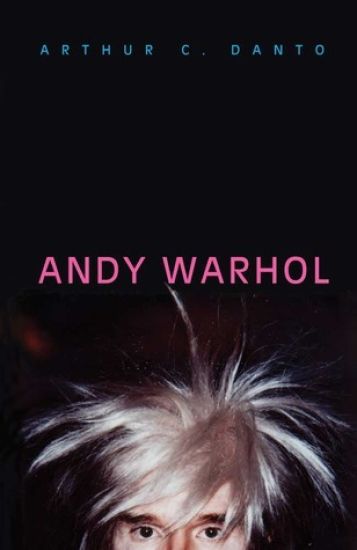
An elegant, masterful portrait of Andy Warhol’s life, character, and lasting influence by an eminent art critic."Danto . . . sums up the Pop master's evolution as both artist and persona. . . . It is, in essence, everything you need to dive deeper into Brillo boxes and Empire."—Rachel Wolff, The Daily Beast(Best Art and Photography Books of 2009) In a work of great wisdom and insight, art critic and philosopher Arthur Danto delivers a compact, masterful tour of Andy Warhol’s personal, artistic, and philosophical transformations. Danto traces the evolution of the pop artist, including his early reception, relationships with artists such as Jasper Johns and Robert Rauschenberg, and the Factory phenomenon. He offers close readings of individual Warhol works, including their social context and philosophical dimensions, key differences with predecessors such as Marcel Duchamp, and parallels with successors like Jeff Koons. Danto brings to bear encyclopedic knowledge of Warhol’s time and shows us Warhol as an endlessly multidimensional figure—artist, political activist, filmmaker, writer, philosopher—who retains permanent residence in our national imagination.Danto suggests that "what makes him an American icon is that his subject matter is always something that the ordinary American understands: everything, or nearly everything he made art out of came straight out of the daily lives of very ordinary Americans. . . . The tastes and values of ordinary persons all at once were inseparable from advanced art."
Sarah Sze

Sarah Sze

Linda Norden; Arthur C. Danto

Abrams
2007
sidottu
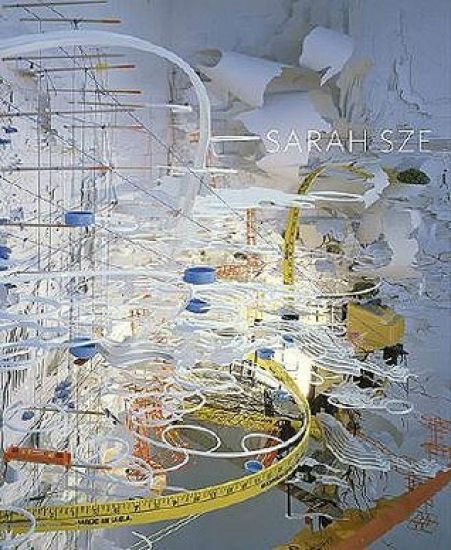
With her uncanny ability to monumentalize the miniscule and to give permanence to the ephemeral, Sarah Sze has become one of the most original and ambitious artists working today, with solo exhibitions at major art musuems. As the first monograph to span the course of her career including sculptures, site-specific installations, and drawings, Sarah Sze reveals the artist’s working process and gives insight into the thoughtful precision and care that goes into each and every one of her creations.Elaborately transforming everyday materials into elegant sculptures and installations, Sze eloquently finesses the line between sculpture and architecture. In her essay, writer and curator Linda Norden explores the question of how matter takes on value, both temporally and spatially. With its stunning photography, Sarah Sze makes it clear that the exhilarating and challenging aspect of this artist’s work lies in all of its minute details.
Wake of Art

Wake of Art

Arthur C. Danto; Gregg Horowitz; Tom Huhn; Saul Ostrow

Routledge
1998
nidottu
Since the mid-1980s, Arthur C. Danto has been increasingly concerned with the implications of the demise of modernism. Out of the wake of modernist art, Danto discerns the emergence of a radically pluralistic art world. His essays illuminate this novel art world as well as the fate of criticism within it. As a result, Danto has crafted the most compelling philosophy of art criticism since Clement Greenberg. Gregg Horowitz and Tom Huhn analyze the constellation of philosophical and critical elements in Danto's new- Hegelian art theory. In a provocative encounter, they employ themes from Kantian aesthetics to elucidate the continuing persistence of taste in shaping even this most sophisticated philosophy of art.
Art and Posthistory

Art and Posthistory

Arthur C. Danto; Demetrio Paparoni; Barry Schwabsky

Columbia University Press
2022
pokkari
From the 1990s until just before his death, the legendary art critic and philosopher Arthur C. Danto carried out extended conversations about contemporary art with the prominent Italian critic Demetrio Paparoni. Their discussions ranged widely over a vast range of topics, from American pop art and minimalism to abstraction and appropriationism. Yet they continually returned to the concepts at the core of Danto’s thinking—posthistory and the end of aesthetics—provocative notions that to this day shape questions about the meaning and future of contemporary art.Art and Posthistory presents these rich dialogues and correspondence, testifying to the ongoing importance of Danto’s ideas. It offers readers the opportunity to experience the intellectual excitement of Danto in person, speculating in a freewheeling yet erudite style. Danto and Paparoni discuss figures such as Andy Warhol, Marcel Duchamp, Franz Kline, Sean Scully, Clement Greenberg, Cindy Sherman, and Wang Guangyi, offering both insightful comments on individual works and sweeping observations about wider issues. On occasion, the artist Mimmo Paladino and the philosopher Mario Perniola join the conversation, enlivening the discussion and adding their own perspectives.The book also features an introductory essay by Paparoni that provides lucid analysis of Danto’s thinking, emphasizing where the two disagree as well as what they learned from each other.
Art and Posthistory

Art and Posthistory

Arthur C. Danto; Demetrio Paparoni; Barry Schwabsky

Columbia University Press
2022
sidottu
From the 1990s until just before his death, the legendary art critic and philosopher Arthur C. Danto carried out extended conversations about contemporary art with the prominent Italian critic Demetrio Paparoni. Their discussions ranged widely over a vast range of topics, from American pop art and minimalism to abstraction and appropriationism. Yet they continually returned to the concepts at the core of Danto’s thinking—posthistory and the end of aesthetics—provocative notions that to this day shape questions about the meaning and future of contemporary art.Art and Posthistory presents these rich dialogues and correspondence, testifying to the ongoing importance of Danto’s ideas. It offers readers the opportunity to experience the intellectual excitement of Danto in person, speculating in a freewheeling yet erudite style. Danto and Paparoni discuss figures such as Andy Warhol, Marcel Duchamp, Franz Kline, Sean Scully, Clement Greenberg, Cindy Sherman, and Wang Guangyi, offering both insightful comments on individual works and sweeping observations about wider issues. On occasion, the artist Mimmo Paladino and the philosopher Mario Perniola join the conversation, enlivening the discussion and adding their own perspectives.The book also features an introductory essay by Paparoni that provides lucid analysis of Danto’s thinking, emphasizing where the two disagree as well as what they learned from each other.
After the End of Art

After the End of Art

Arthur C. Danto; Lydia Goehr

Princeton University Press
2014
pokkari
Originally delivered as the prestigious Mellon Lectures on the Fine Arts in 1995, After the End of Art remains a classic of art criticism and philosophy, and continues to generate heated debate for contending that art ended in the 1960s. Arthur Danto, one of the best-known art critics of his time, presents radical insights into art's irrevocable deviation from its previous course and the decline of traditional aesthetics. He demonstrates the necessity for a new type of criticism in the face of contemporary art's wide-open possibilities. This Princeton Classics edition includes a new foreword by philosopher Lydia Goehr.
What Art Is

What Art Is

Arthur C. Danto

Yale University Press
2014
pokkari
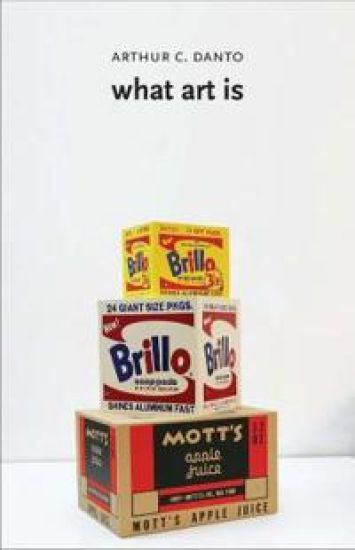
A lively meditation on the nature of art by one of America's most celebrated art critics What is it to be a work of art? Renowned author and critic Arthur C. Danto addresses this fundamental, complex question. Part philosophical monograph and part memoiristic meditation, What Art Is challenges the popular interpretation that art is an indefinable concept, instead bringing to light the properties that constitute universal meaning. Danto argues that despite varied approaches, a work of art is always defined by two essential criteria: meaning and embodiment, as well as one additional criterion contributed by the viewer: interpretation. Danto crafts his argument in an accessible manner that engages with both philosophy and art across genres and eras, beginning with Plato’s definition of art in The Republic, and continuing through the progress of art as a series of discoveries, including such innovations as perspective, chiaroscuro, and physiognomy. Danto concludes with a fascinating discussion of Andy Warhol’s famous shipping cartons, which are visually indistinguishable from the everyday objects they represent.Throughout, Danto considers the contributions of philosophers including Descartes, Kant, and Hegel, and artists from Michelangelo and Poussin to Duchamp and Warhol, in this far-reaching examination of the interconnectivity and universality of aesthetic production.
Dawoud Bey – Picturing People

Dawoud Bey – Picturing People

Julie Bernson; Arthur C. Danto; Hamza Walker; Dawoud Bey

Renaissance Society at the University of Chicago
2012
sidottu
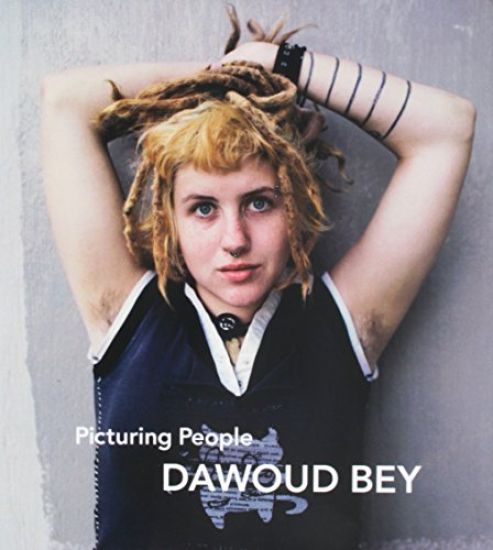
Since 1975, photographer Dawoud Bey has developed a body of work distinguished for its commitment to portraiture as a means for reflecting social circumstances. Ranging from street encounters to studio portraits, Bey has investigated numerous photographic methods to find increased engagement with his subjects. The Renaissance Society exhibition this catalogue accompanies (May 13 – July 13, 2012) included selections from Bey's work spanning the thirty years from 1982 to the present. The exhibition offered a comprehensive look at Bey's oeuvre, and provided an opportunity to explore related subjects in art history and social discourse, such as the presentation of self, race, site, and the relationship between artist and subject. Includes essays by Arthur Danto and Julie Bernson as well as an interview between Bey and the Renaissance Society's Associate Curator and Director of Education, Hamza Walker.
Andy Warhol

Andy Warhol

Arthur C. Danto

Les Belles Lettres
2011
nidottu
Dans cet essai brillant et concis, le philosophe et critique d'art Arthur Danto expose les mille et une metamorphoses d'Andy Warhol (1928-1987), personnelles, artistiques et philosophiques. Danto retrace l'evolution de l'icone pop art depuis ses premieres creations, ses relations avec d'autres artistes, comme Jasper Johns ou Robert Rauschenberg ainsi que le phenomene Factory . Il propose une lecture approfondie des oeuvres de Warhol, analysant leur contexte socio-historique, leur dimension philosophique, la difference essentielle que Warhol entretient avec ses predecesseurs, Marcel Duchamp notamment ainsi que les paralleles qui peuvent etre traces avec un successeur comme Jeff Koons. Tout en faisant revivre l'epoque de Warhol, Danto dresse le portrait d'un artiste en perpetuelle transformation, dont les multiples visages - activiste politique, realisateur, ecrivain voire philosophe - ont contribue a faire de lui une figure fondatrice de la culture americaine et plus largement occidentale. Le secret du triomphe de Warhol? Avoir su sublimer les gouts et les valeurs de l'Americain moyen , faire des objets les plus quotidiens une oeuvre d'art avant-gardiste .
Analytical Philosophy of Action

Analytical Philosophy of Action

Arthur C. Danto

Cambridge University Press
2009
pokkari
A study of the philosophical problems associated with the concept of action. Professor Danto is concerned to isolate logically the notion of a 'basic action' and to examine the way in which context and intention, for example, can convert physiological movements into significant actions. He finds many suggestive parallels between the concepts - the logical architecture - of action and cognition and in developing this theme he becomes involved in and proposes new approaches to various long-standing problems connected with causality, determinism and materialism. As in his earlier books, Analytical Philosophy of History and Analytical Philosophy of Knowledge, Professor Danto places the discussion in a broad historical and philosophical perspective and brings to it a wide reading and an unusual range of interests. He is always prepared to venture novel ideas to stimulate further debate and research and the book as a whole is presented as an original contribution to a subject which is attracting increasing attention from philosophers and from psychologists with an interest in the conceptual assumptions behind their work.
Unnatural Wonders

Unnatural Wonders

Arthur C. Danto

Columbia University Press
2007
pokkari
Arthur C. Danto's essays not only critique bodies of work but reflect upon art's conceptual evolution as well, drawing for the reader a kind of "philosophical map" indicating how art and the criteria for judging it has changed over the twentieth century. In Unnatural Wonders the renowned critic finds himself at a point when contemporary art has become wholly pluralistic, even chaotic-with one medium as good as another-and when the moment for the "next thing" has already passed. So the theorist goes in search of contemporary art's most exhilarating achievements, work that bridges the gap between art and life, which, he argues, is now the definitive art of our time. Danto considers the work of such young artists as John Currin and Renee Cox and older living masters including Gerhard Richter and Sol LeWitt. He discusses artists of the New York School, like Philip Guston and Joan Mitchell, and international talents, such as the South African William Kentridge. Danto conducts a frank analysis of Matthew Barney's The Cremaster Cycle, Damien Hirst's skeletons and anatomical models, and Barbara Kruger's tchotchke-ready slogans; finds the ghost of Henry James in the work of Barnett Newman; and muses on recent Whitney Biennials and art influenced by 9/11. He argues that aesthetic considerations no longer play a central role in the experience and critique of art. Instead art addresses us in our humanity, as men and women who seek meaning in the "unnatural wonders" of art, a meaning that philosophy and religion are unable to provide.
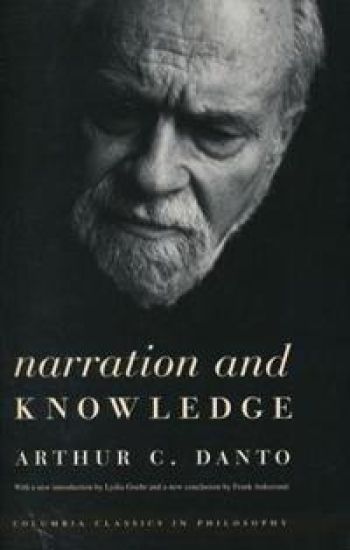
Narration and Knowledge

Narration and Knowledge

Arthur C. Danto; Lydia Goehr; Franklin Rudolf Ankersmit

Columbia University Press
2007
pokkari
Now in its third edition, Narration and Knowledge is a classic work exploring the nature of historical knowledge and its reliance on narrative. Analytical philosopher Arthur C. Danto introduces the concept of "narrative sentences," in which an event is described with reference to later events (for example, "the Thirty Years' War began in 1618") and discusses why such sentences cannot be understood until the later event happens (no one could have said in 1618 that "the Thirty Years' War began today"). Danto compares narrative and scientific explanation and explores the legitimacy of historical laws. He also argues that history is an autonomous and humanist discipline incapable of being reduced to scientific descriptions. Lydia Goehr's new introduction illustrates Danto's main arguments by questioning her very role, first, as an introducer of a book that has not yet been read by readers and, second, as an interpreter of a book written forty years ago. Frank Ankersmit's conclusion revisits the initial impact of the publication of Narration and Knowledge and considers its enduring legacy.
Narration and Knowledge

Narration and Knowledge

Arthur C. Danto; Lydia Goehr; Franklin Rudolf Ankersmit

Columbia University Press
2007
sidottu
Now in its third edition, Narration and Knowledge is a classic work exploring the nature of historical knowledge and its reliance on narrative. Analytical philosopher Arthur C. Danto introduces the concept of "narrative sentences," in which an event is described with reference to later events (for example, "the Thirty Years' War began in 1618") and discusses why such sentences cannot be understood until the later event happens (no one could have said in 1618 that "the Thirty Years' War began today"). Danto compares narrative and scientific explanation and explores the legitimacy of historical laws. He also argues that history is an autonomous and humanist discipline incapable of being reduced to scientific descriptions. Lydia Goehr's new introduction illustrates Danto's main arguments by questioning her very role, first, as an introducer of a book that has not yet been read by readers and, second, as an interpreter of a book written forty years ago. Frank Ankersmit's conclusion revisits the initial impact of the publication of Narration and Knowledge and considers its enduring legacy.
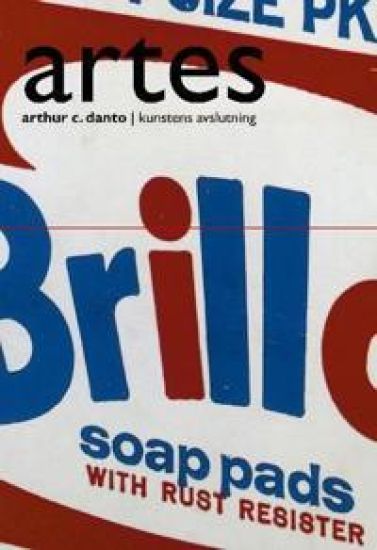
Kunstens avslutning

Kunstens avslutning

Arthur C. Danto

Pax
2007
nidottu
Hva gjør et kunstverk til kunst? Et det egenskaper ved selve verket eller sammenhengen det inngår i? Ifølge den amerikanske kunstfilosofen Arthur C. Danto (f. 1924) finnes det ikke lenger noen faste kriterier for hva som skiller kunst fra ikke-kunst. Det interessante er hva som defineres som kunst når. Dette avgjøres blant annet i det Danto kaller kunstverdenen. Sentralt i hans resonnement er en drøfting av Andy Warhols Brillo-esker, etterligninger av en alminnelig forbruksvare: en kasse med vaskemidler. Warhols valg gjorde Brillo til et ikon i popkunsten. Arthur C. Dantos tanker om forholdet mellom kunst og kontekst har vært banebrytende i moderne kunstteori. Tekstene hans er hyppig brukte referanser, og blir nå for første gang også tilgjengelige på norsk. Danto bidrar stadig med innspill til den kunstteoretiske debatten og er en innflytelsesrik kurator og kunstkritiker. Høsten 2005 gjestet han Norge som ForArt foredragsholder. I "Kunstens avslutning" inngår "Kunstverdenen", "Alminnelige tings tranfigurasjon", "Kunstens avslutning"og "Tre tiår etter kunstens avslutning".
Nietzsche as Philosopher

Nietzsche as Philosopher

Arthur C. Danto

Columbia University Press
2005
sidottu
Few philosophers are as widely read or as widely misunderstood as Friedrich Nietzsche. When Danto's classic study was first published in 1965, many regarded Nietzsche as a brilliant but somewhat erratic thinker. Danto, however, presented a radically different picture, arguing that Nietzsche offered a systematic and coherent philosophy that anticipated many of the questions that define contemporary philosophy. Danto's clear and insightful commentaries helped canonize Nietzsche as a philosopher and continue to illuminate subtleties in Nietzsche's work as well as his immense contributions to the philosophies of science, language, and logic. This new edition, which includes five additional essays, not only further enhances our understanding of Nietzsche's philosophy; it responds to the misunderstandings that continue to muddy his intellectual reputation. Even today, Nietzsche is seen as everything from a precursor of feminism and deconstruction to a prophetic writer and spokesperson for disgruntled teenage boys. As Danto points out in his preface, Nietzsche's writings have purportedly inspired recent acts of violence and school shootings. Danto counters these misreadings by elaborating an anti-Nietzschian philosophy from within Nietzsche's own philosophy "in the hope of disarming the rabid Nietzsche and neutralizing the vivid frightening images that have inspired sociopaths for over a century." The essays also consider specific works by Nietzsche, including Human, All Too Human and The Genealogy of Morals, as well as the philosopher's artistic metaphysics and semantical nihilism.
Nietzsche as Philosopher

Nietzsche as Philosopher

Arthur C. Danto

Columbia University Press
2005
pokkari
Few philosophers are as widely read or as widely misunderstood as Friedrich Nietzsche. When Danto's classic study was first published in 1965, many regarded Nietzsche as a brilliant but somewhat erratic thinker. Danto, however, presented a radically different picture, arguing that Nietzsche offered a systematic and coherent philosophy that anticipated many of the questions that define contemporary philosophy. Danto's clear and insightful commentaries helped canonize Nietzsche as a philosopher and continue to illuminate subtleties in Nietzsche's work as well as his immense contributions to the philosophies of science, language, and logic. This new edition, which includes five additional essays, not only further enhances our understanding of Nietzsche's philosophy; it responds to the misunderstandings that continue to muddy his intellectual reputation. Even today, Nietzsche is seen as everything from a precursor of feminism and deconstruction to a prophetic writer and spokesperson for disgruntled teenage boys. As Danto points out in his preface, Nietzsche's writings have purportedly inspired recent acts of violence and school shootings. Danto counters these misreadings by elaborating an anti-Nietzschian philosophy from within Nietzsche's own philosophy "in the hope of disarming the rabid Nietzsche and neutralizing the vivid frightening images that have inspired sociopaths for over a century." The essays also consider specific works by Nietzsche, including Human, All Too Human and The Genealogy of Morals, as well as the philosopher's artistic metaphysics and semantical nihilism.
The Philosophical Disenfranchisement of Art

The Philosophical Disenfranchisement of Art

Arthur C. Danto; Jonathan Gilmore

Columbia University Press
2004
sidottu
In this acclaimed work, first published in 1986, world-renowned scholar Arthur C. Danto explored the inextricably linked but often misunderstood relationship between art and philosophy. In light of the book's impact-especially the essay "The End of Art," which dramatically announced that art ended in the 1960s-this enhanced edition includes a foreword by Jonathan Gilmore that discusses how scholarship has changed in response to it. Complete with a new bibliography of work on and influenced by Danto's ideas, The Philosophical Disenfranchisement of Art continues to be of interest to anyone who thinks seriously about art, as well as to philosophers, aestheticians, and art historians.
The Philosophical Disenfranchisement of Art

The Philosophical Disenfranchisement of Art

Arthur C. Danto; Jonathan Gilmore

Columbia University Press
2004
pokkari
In this acclaimed work, first published in 1986, world-renowned scholar Arthur C. Danto explored the inextricably linked but often misunderstood relationship between art and philosophy. In light of the book's impact-especially the essay "The End of Art," which dramatically announced that art ended in the 1960s-this enhanced edition includes a foreword by Jonathan Gilmore that discusses how scholarship has changed in response to it. Complete with a new bibliography of work on and influenced by Danto's ideas, The Philosophical Disenfranchisement of Art continues to be of interest to anyone who thinks seriously about art, as well as to philosophers, aestheticians, and art historians.