Kirjojen hintavertailu. Mukana 12 595 353 kirjaa ja 12 kauppaa.

Kirjailija

Augustine

Kirjat ja teokset yhdessä paikassa: 160 kirjaa, julkaisuja vuosilta 1930-2026, suosituimpien joukossa Confessions. Vertaile teosten hintoja ja tarkista saatavuus suomalaisista kirjakaupoista.

160 kirjaa

Kirjojen julkaisuhaarukka 1930-2026.

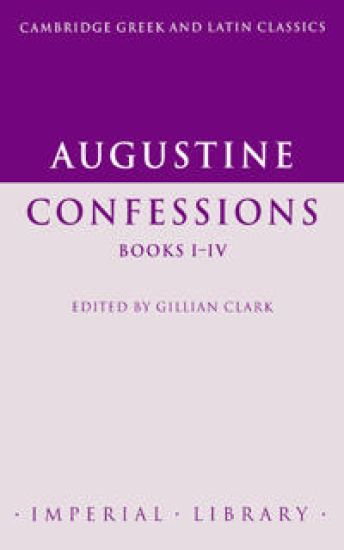
Augustine: Confessions Books I–IV

Augustine: Confessions Books I–IV

Augustine

Cambridge University Press
1995
pokkari
Augustine’s Confessions is one of the most influential and most innovative works of Latin literature. Written in the author’s early forties in the last years of the fourth century AD, they reflect on his life and on the activity of remembering and interpreting a life. Books I–IV are concerned with infancy and learning to talk, school days, sexual desire and adolescent rebellion, intense friendships and intellectual exploration. Augustine evolves and analyses his past with all the resources of the reading which shaped his mind: Virgil and Cicero, Neoplatonism and the Bible. This edition, which aims to be usable by students who are new to Augustine, alerts readers to the verbal echoes and allusions of Augustine’s brilliant and varied Latin, and explains his theological and philosophical questioning of what God is and what it is to be human.
Against the Academicians and The Teacher

Against the Academicians and The Teacher

Augustine

Hackett Publishing Co, Inc
1995
sidottu
These new translations of two treatises dealing with the possibility and nature of knowledge in the face of skeptical challenges are the first to be rendered from the Latin critical edition, the first to be made specifically with a philosophical audience in mind, and the first to be translated by a scholar with expertise in both modern epistemology and philosophy of language.
Against the Academicians and The Teacher

Against the Academicians and The Teacher

Augustine

Hackett Publishing Co, Inc
1995
pokkari
These new translations of two treatises dealing with the possibility and nature of knowledge in the face of skeptical challenges are the first to be rendered from the Latin critical edition, the first to be made specifically with a philosophical audience in mind, and the first to be translated by a scholar with expertise in both modern epistemology and philosophy of language.
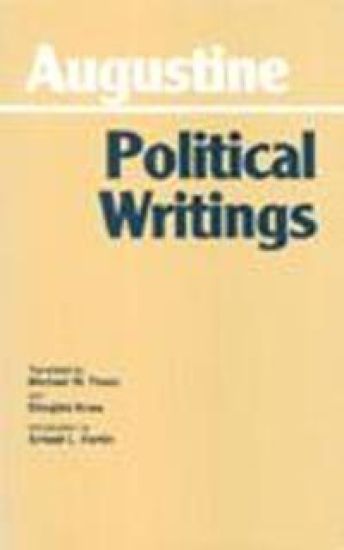
Augustine: Political Writings

Augustine: Political Writings

Augustine

Hackett Publishing Co, Inc
1994
sidottu
The best available introduction to the political thought of Augustine, if not to Christian political thought in general. Included are generous selections from City of God, as well as from many lesser-known writings of Augustine.
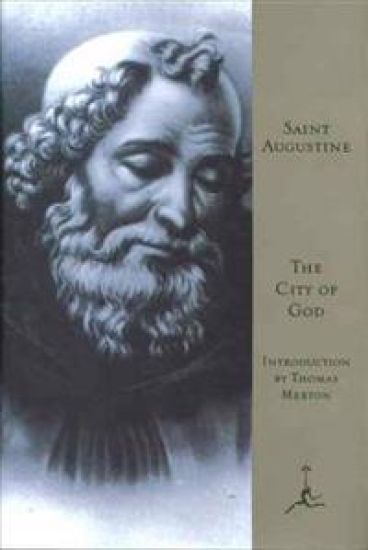
The City of God

The City of God

Augustine

Modern Library Inc
1994
sidottu
One of the great cornerstones in the history of Christian philosophy, The City of God provides an insightful interpretation of the development of modern Western society and the origin of most Western thought. Contrasting earthly and heavenly cities--representing the omnipresent struggle between good and evil--Augustine explores human history in its relation to all eternity. In Thomas Merton's words, "The City of God is the autobiography of the Church written by the most Catholic of her great saints."This Modern Library Paperback Classics edition is a complete and unabridged version of the Marcus Dods translation.
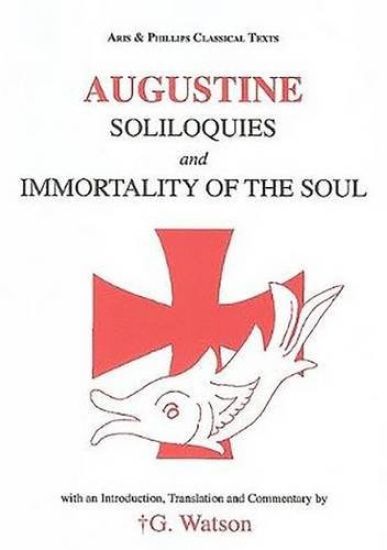
Augustine: Soliloquies and Immortality of the Soul
Augustine intended the Soliloquies and the Immortality of the Soul to form a single book. For those who are unacquainted with Augustine, it is a good book with which to begin. It deals, as he says, with those matters about which he most wanted to know at this time, i.e. between his conversion in the summer of 386 and his baptism at Easter, 387. The matters are the primacy of mind over things of sense, and the immortality of the soul. These central tenets of Neoplatonism are not simply theoretical questions for Augustine. He had been through a period of intense strain, close to a nervous breakdown, and the Soliloquies are the description of his most intimate feelings, a form of therapy. The Soliloquies and the Immortality of the Soul are the finished and the unfinished parts respectively of the same work. The latter shows us the raw material of a dialogue: in the Soliloquies we have a piece of theatre, the dramatised conflict between two personae. They are two aspects of the one character (he invented the word soliloquies), and the presentation gives us a picture of Augustine at this time which is even more immediate than his self-portrait in the Confessions. This early work gives us the first direct evidence on the temperament of the man who created the Confessions: someone fascinated with the mystery of the personality, and particularly memory, a lover of puzzles and paradoxes, a rhetorician with a deep interest in philosophy, a highly emotional human being, and above all, a questioner concerned with knowing the truth. [Latin text with facing-page English translation, introduction and commentary.]
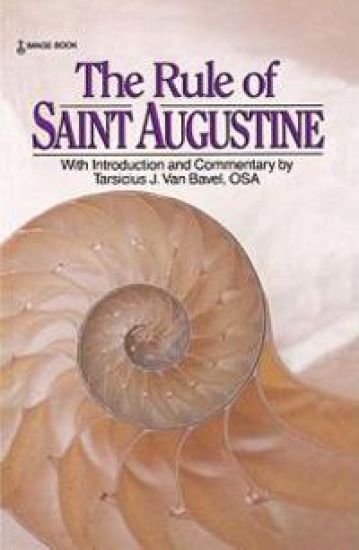
The Rule of Saint Augustine

The Rule of Saint Augustine

Augustine

Galilee Trade
1986
nidottu
The oldest monastic Rule in the West A giant of the faith, St. Augustine is well known as "the restless searcher for truth." His life and the Rule he formulated have had enduring influence on the Christian ideal of the religious life. This is a new, modern English translation of the Rule from the original critical Latin text. An extensive Commentary elucidates its meaning and its relevance to those who follow or study it today. Augustine's concise spiritual directions, based heavily on the Scriptures, cover such subjects as prayer, love and community, mutual responsibility, service, authority and obedience. He outlines the basics for exercising genuine love, the goal of all things -- indeed life itself. This brief but classic guide is as inspiring and applicable to the twentieth century as it was to Augustine's early followers. It clearly reflects his own vision and spiritual depth. As Van Bavel observes in his Introduction: "We could characterize the Rule of Augustine as a call to the evangelical equality of all people. It voices the Christian demand to bring all men and women into full community." The Rule of St. Augustine is, indeed, a Rule for all Christians -- religious and laity alike.
The Essential Augustine

The Essential Augustine

Augustine

Hackett Publishing Co, Inc
1974
sidottu
TABLE OF CONTENTS: Foreword to the Second Edition. I. THE MAN AND HIS WRITINGS: How Augustine Came to the Episcopacy (Sermon 355, 2); Augustine Chooses Eraclius as His Successor (Letter 213, 1, 5, & 6); Augustine on His Own Writings (Retractations Prol. I, 1-3). II. FAITH AND REASON: Belief is Volitional Consent (On the Spirit and Letter 21, 54; 34, 60); To Believe Is to Think with Assent (Predestination of the Saints 5); Believing and Understanding (On Free Choice II, 2, 4-6); Authority and Reason (Against the Academics III, 20, 43); Two Ways to Knowledge (On Order II, 9, 26-27); Reason and Authority in Manicheism (Value of Believing 1-4); The Relation of Authority to Reason (True Religion 24, 45 -- 25, 47); If I Am Deceived, I Am Alive (City of God XI, 26); I Know that I Am Alive (The Trinity XV, 12, 21-22); Knowledge and Wisdom (The Trinity XII, 14, 21 -- 15, 25); Error and Ignorance (Enchiridion 17). III. THREE LEVELS OF REALITY: Creator, Human Soul, Body (Questions for Simplicianus I, 2, 18); Natures on Three Levels (Letter 18, 2); Soul, Ruled by God, Rules Its Body (On Music VI, 5, 12-13); Soul: Above the Sensible, Below God (True Religion 3. 3); God, Mutable Spirits, and Bodies (Nature of the Good 1-25); Divine, Psychic and Bodily Nature (City of God VIII, 5-6); Causality: Divine, Psychic and Bodily (City of God V, 9); Divine Ideas as Prototypes (Eighty-Three Different Questions 46, 1-2); God Set Spiritual Creation Above the Corporeal (Literal Commentary on Genesis VIII, 20, 39; 25, 46; 26, 48); Evil: the Privation of the Good (Enchiridion 10-12). IV. MAN'S SOUL: Existence, Life, Sense and Reason (On Free Choice II, 3, 7-8, 10); Sensation as an Activity of the Soul (On Music VI, 5, 9-10); Memory, Understanding and Will (The Trinity X, 11, 17-18); The Wonders of Memory (Confessions X, 8-26); Three Levels of Vision (Literal Commentary on Genesis XII, 6, 15 -- 11, 22; 30, 58 -- 31, 59). V. THE WORLD OF BODIES: All Bodily Natures Are Good (City of God XII, 4); Invisible Seeds in the Elements (The Trinity III, 8, 13); The Elements Contain Seminal Reasons (Literal Commentary on Genesis IX, 17, 32); Measure, Number, and Weight (Literal Commentary on Genesis IV, 3, 7); Concerning Formless Matter (Confessions XII, 3. 3 -- 9, 9); Place, Time and the Physical World (City of God XI, 5-6); The Wonders of Nature (City of God XXI, 4-5); God Works Throughout Nature (The Trinty III, 5, 11 -- 6, 11); Man's Natural Endowments (City of God XXII, 24); The Physical World and the Christian (Enchiridion 9). VI. APPROACHING GOD THROUGH UNDERSTANDING: Creation is a Great Book (Sermon, Mai 126, 6); The Journey of the Soul to God (On Free Choice II, 12, 33-34; 15, 39-40; 16, 41-42); The Soul's Ascent to God (Confessions VII, 10, 16 -- 17, 23); The Whole World Proclaims Its Maker (On Psalm 26, Serm. 2, 12); Ascending to the Supreme Truth (True Religion 29, 52 -- 31, 58); Plato's View of God (City of God VII, 4); How to Think About God (The Trinity V, 1, 2 -- 2, 3); The Problem of Speaking About God (The Trinity VII, 4, 7-9); God Is the Selfsame (On Psalm 121, 3, 5); A Divine Invocation (Soliloquies I, 2-6); Late Have I Loved Thee (Confessions X, 27, 38 -- 28, 39). VII. MORAL AND RELIGIOUS LIFE: All Men Desire Happiness (On Psalm 32, Serm. 3, 15-16); Man's Greatest Good (Moral Behavior of the Catholic Church 3-8); Good Love and Bad Love (City of God XIV, 6-7); Moral Evil Stems from Bad Will (City of God XII, 6); Two Precepts of Love (City of God XIX, 14); On Diversities of Local Customs (Letter 54, 1-4); Doing Good to Body and Soul (Moral Behavior of the Catholic Church 27-28); The Evil of Telling a Lie (Enchiridion 18, 19, 22); Lying and Concealing the Truth (On Psalm 5, 7); Faith, Hope and Charity (Enchiridion 8); No Virtues Apart from God (City of God XIX, 25); Our Reward Is Not in This Life (On Psalm 48, Serm. 2). VIII. DIMENSIONS OF GRACE: What the Grace of God Is (On Admonition and Grace 2, 3); Augustine Was Never a Pelagian (Retractations I, 9, 2-4); What True Grace Is (On the Grace of Christ 26, 27); The Work of Grace (City of God XXI, 15-16); How Freedom Is Restored by Grace (Enchiridion 30-32); God's Foreknowledge and Human Willing (City of God V, 10); Grace Before and After the Fall (Enchiridion 104-106); Grace and Good Works (On Psalm 31, Serm. 2, 6-8); Prevenient Grace (On Psalm 18, Serm. 2); Grace and Human Miseries (City of God XXII, 20-22); The Beatific Vision (On Psalm 36, Serm. 2, 8). IX. THE TWO CITIES: Augustine's Analysis of the City of God (Letter to Firmus); How the Two Cities Differ (City of God XIV, 1); Two Loves Make Two Cities (Literal Commentary on Genesis XI, 15, 20); Two Cities Formed by Two Loves (City of God XIV, 28); The Unimportance of Externals (City of God XIX, 19); Relation of the Heavenly and Earthly Cities (City of God XIX, 17); Jerusalem and Babylon (On Psalm 64, 2); Summary of the Two Cities (City of God XVIII, 1); All Nations Are in the City of God (On Psalm 86, 5); The Church and the City of God (On Psalm 98, 4); The Foundation of the Holy City (On Psalm 121, 4); Religion and Human Destiny (True Religion 7, 13 -- 8, 14); The Meaning of a People (City of God XIX, 23-24); Peace: the Tranquility of Order (City of God XIX, 11-13); Two Kingdoms After the Resurrection (Enchiridion 111). X. PHILOSOPHY OF HISTORY: Belief and Historical Events (Eighty-Three Different Questions 48); The Universality of Providence (City of God V, 11); Meaning in History (True Religion 50, 98-99); Six Ages in Biblical History (On Psalm 92, 1); Symbolic Meaning of Jewish History (On Psalm 64, 1); Christ in History (Letter 137, 4, 15-16); The Two Cities in History (On Catechizing the Uninstructed 21, 37); What Is Time? (Confessions XI, 14, 17 -- 30, 40); Critique of Cyclicism (City of God XII, 13-15). APENDIXES: I. Selected, Annotated Bibliography. II. Alphabetical List of Augustine's Writings. III. Glossary of Terms. INDEX.
City of God, Volume VII

City of God, Volume VII

Augustine

Harvard University Press
1972
sidottu
A Church Father’s theological citadel.Aurelius Augustine (AD 354–430), one of the most important figures in the development of western Christianity and philosophy, was the son of a pagan, Patricius of Tagaste, and his Christian wife, Monnica. While studying to become a rhetorician, he plunged into a turmoil of philosophical and psychological doubts, leading him to Manichaeism. In 383 he moved to Rome and then Milan to teach rhetoric. Despite exploring classical philosophical systems, especially skepticism and Neoplatonism, his studies of Paul’s letters with his friend Alypius, and the preaching of Bishop Ambrose, led in 386 to his momentous conversion from mixed beliefs to Christianity. He soon returned to Tagaste and founded a religious community, and in 395 or 396 became bishop of Hippo.From Augustine’s large output the Loeb Classical Library offers that great autobiography the Confessions (in two volumes); On the City of God (seven volumes), which unfolds God’s action in the progress of the world’s history, and propounds the superiority of Christian beliefs over pagan in adversity; and a selection of Letters which are important for the study of ecclesiastical theologians.
City of God, Volume III
A Church Father’s theological citadel.Aurelius Augustine (AD 354–430), one of the most important figures in the development of western Christianity and philosophy, was the son of a pagan, Patricius of Tagaste, and his Christian wife, Monnica. While studying to become a rhetorician, he plunged into a turmoil of philosophical and psychological doubts, leading him to Manichaeism. In 383 he moved to Rome and then Milan to teach rhetoric. Despite exploring classical philosophical systems, especially skepticism and Neoplatonism, his studies of Paul’s letters with his friend Alypius, and the preaching of Bishop Ambrose, led in 386 to his momentous conversion from mixed beliefs to Christianity. He soon returned to Tagaste and founded a religious community, and in 395 or 396 became bishop of Hippo.From Augustine’s large output the Loeb Classical Library offers that great autobiography the Confessions (in two volumes); On the City of God (seven volumes), which unfolds God’s action in the progress of the world’s history, and propounds the superiority of Christian beliefs over pagan in adversity; and a selection of Letters which are important for the study of ecclesiastical theologians.
City of God, Volume IV
A Church Father’s theological citadel.Aurelius Augustine (AD 354–430), one of the most important figures in the development of western Christianity and philosophy, was the son of a pagan, Patricius of Tagaste, and his Christian wife, Monnica. While studying to become a rhetorician, he plunged into a turmoil of philosophical and psychological doubts, leading him to Manichaeism. In 383 he moved to Rome and then Milan to teach rhetoric. Despite exploring classical philosophical systems, especially skepticism and Neoplatonism, his studies of Paul’s letters with his friend Alypius, and the preaching of Bishop Ambrose, led in 386 to his momentous conversion from mixed beliefs to Christianity. He soon returned to Tagaste and founded a religious community, and in 395 or 396 became bishop of Hippo.From Augustine’s large output the Loeb Classical Library offers that great autobiography the Confessions (in two volumes); On the City of God (seven volumes), which unfolds God’s action in the progress of the world’s history, and propounds the superiority of Christian beliefs over pagan in adversity; and a selection of Letters which are important for the study of ecclesiastical theologians.
City of God, Volume V

City of God, Volume V

Augustine

Harvard University Press
1965
sidottu
A Church Father’s theological citadel.Aurelius Augustine (AD 354–430), one of the most important figures in the development of western Christianity and philosophy, was the son of a pagan, Patricius of Tagaste, and his Christian wife, Monnica. While studying to become a rhetorician, he plunged into a turmoil of philosophical and psychological doubts, leading him to Manichaeism. In 383 he moved to Rome and then Milan to teach rhetoric. Despite exploring classical philosophical systems, especially skepticism and Neoplatonism, his studies of Paul’s letters with his friend Alypius, and the preaching of Bishop Ambrose, led in 386 to his momentous conversion from mixed beliefs to Christianity. He soon returned to Tagaste and founded a religious community, and in 395 or 396 became bishop of Hippo.From Augustine’s large output the Loeb Classical Library offers that great autobiography the Confessions (in two volumes); On the City of God (seven volumes), which unfolds God’s action in the progress of the world’s history, and propounds the superiority of Christian beliefs over pagan in adversity; and a selection of Letters which are important for the study of ecclesiastical theologians.
City of God, Volume II
A Church Father’s theological citadel.Aurelius Augustine (AD 354–430), one of the most important figures in the development of western Christianity and philosophy, was the son of a pagan, Patricius of Tagaste, and his Christian wife, Monnica. While studying to become a rhetorician, he plunged into a turmoil of philosophical and psychological doubts, leading him to Manichaeism. In 383 he moved to Rome and then Milan to teach rhetoric. Despite exploring classical philosophical systems, especially skepticism and Neoplatonism, his studies of Paul’s letters with his friend Alypius, and the preaching of Bishop Ambrose, led in 386 to his momentous conversion from mixed beliefs to Christianity. He soon returned to Tagaste and founded a religious community, and in 395 or 396 became bishop of Hippo.From Augustine’s large output the Loeb Classical Library offers that great autobiography the Confessions (in two volumes); On the City of God (seven volumes), which unfolds God’s action in the progress of the world’s history, and propounds the superiority of Christian beliefs over pagan in adversity; and a selection of Letters which are important for the study of ecclesiastical theologians.
City of God, Volume VI
A Church Father’s theological citadel.Aurelius Augustine (AD 354–430), one of the most important figures in the development of western Christianity and philosophy, was the son of a pagan, Patricius of Tagaste, and his Christian wife, Monnica. While studying to become a rhetorician, he plunged into a turmoil of philosophical and psychological doubts, leading him to Manichaeism. In 383 he moved to Rome and then Milan to teach rhetoric. Despite exploring classical philosophical systems, especially skepticism and Neoplatonism, his studies of Paul’s letters with his friend Alypius, and the preaching of Bishop Ambrose, led in 386 to his momentous conversion from mixed beliefs to Christianity. He soon returned to Tagaste and founded a religious community, and in 395 or 396 became bishop of Hippo.From Augustine’s large output the Loeb Classical Library offers that great autobiography the Confessions (in two volumes); On the City of God (seven volumes), which unfolds God’s action in the progress of the world’s history, and propounds the superiority of Christian beliefs over pagan in adversity; and a selection of Letters which are important for the study of ecclesiastical theologians.
City of God

City of God

Augustine

Bantam Doubleday Dell
1958
pokkari
St. Augustine's masterpiece is an interpretation of history in terms of the struggle between good and evil: the City of God in conflict with the City of the Devil. Abridged for the modern reader.
City of God, Volume I
A Church Father’s theological citadel.Aurelius Augustine (AD 354–430), one of the most important figures in the development of western Christianity and philosophy, was the son of a pagan, Patricius of Tagaste, and his Christian wife, Monnica. While studying to become a rhetorician, he plunged into a turmoil of philosophical and psychological doubts, leading him to Manichaeism. In 383 he moved to Rome and then Milan to teach rhetoric. Despite exploring classical philosophical systems, especially skepticism and Neoplatonism, his studies of Paul’s letters with his friend Alypius, and the preaching of Bishop Ambrose, led in 386 to his momentous conversion from mixed beliefs to Christianity. He soon returned to Tagaste and founded a religious community, and in 395 or 396 became bishop of Hippo.From Augustine’s large output the Loeb Classical Library offers that great autobiography the Confessions (in two volumes); On the City of God (seven volumes), which unfolds God’s action in the progress of the world’s history, and propounds the superiority of Christian beliefs over pagan in adversity; and a selection of Letters which are important for the study of ecclesiastical theologians.
Select Letters

Select Letters

Augustine

LOEB
1930
sidottu
Correspondence of a Church Father.Aurelius Augustine (AD 354–430), one of the most important figures in the development of western Christianity and philosophy, was the son of a pagan, Patricius of Tagaste, and his Christian wife, Monnica. While studying to become a rhetorician, he plunged into a turmoil of philosophical and psychological doubts, leading him to Manichaeism. In 383 he moved to Rome and then Milan to teach rhetoric. Despite exploring classical philosophical systems, especially skepticism and Neoplatonism, his studies of Paul’s letters with his friend Alypius, and the preaching of Bishop Ambrose, led in 386 to his momentous conversion from mixed beliefs to Christianity. He soon returned to Tagaste and founded a religious community, and in 395 or 396 became bishop of Hippo.From Augustine’s large output the Loeb Classical Library offers that great autobiography the Confessions (in two volumes); On the City of God (seven volumes), which unfolds God’s action in the progress of the world’s history, and propounds the superiority of Christian beliefs over pagan in adversity; and a selection of Letters which are important for the study of ecclesiastical theologians.