Kirjojen hintavertailu. Mukana 12 595 353 kirjaa ja 12 kauppaa.
Kirjailija
Augustine
Kirjat ja teokset yhdessä paikassa: 160 kirjaa, julkaisuja vuosilta 1930-2026, suosituimpien joukossa Confessions. Vertaile teosten hintoja ja tarkista saatavuus suomalaisista kirjakaupoista.
During the brief period between 412 and 414, Augustine's many theological and pastoral concerns produced an abundant correspondence (Letters 131-164) on issues ranging from the Pelagian views of grace and the soul's origin to the need for assimilating former Donatists into Catholic society with compassion and a conciliatory spirit, as well as questions of theology, social mores, and physical versus spiritual knowledge.
Augustine's Letters 83-130 were written between 408 and 412, during a time when North Africa was in an uproar over the necessity to resolve the Donatist schism and the imperial government's role in this process. Augustine exchanged correspondence with clergymen and laity, both Catholic and Donatist; in addition, he responded to requests for pastoral advice from ascetically minded men and women, as well as pleas for social justice.
Although the eighty-two Letters in this volume do not themselves specifically state when they were written, the research of modern scholars leads to a fairly firm conclusion that they were composed over a span of approximately ten years, 386-405. On a basis of internal evidence, it seems that the first twenty letters date from a period prior to Augustine's priestly ordination. The addressees represent a fair cross section of society in the late fourth and early fifth centuries of our era. Bishops and priests, however, outnumber other contemporaries. Widely varied in subject matter, some of the letters deal with theological, polemical, exegetical and ecclesiastical topics, other offer moral and spiritual guidance, while still others discuss philosophical questions and touch on historical events. A surprising amount of information pertains to the life, customs, and abuses in the Church in northern Africa at this period. As one would suspect at this period in Augustine's life, the errors of the Pelagians and Donatists do not escape notice. In these Letters the modern reader can acquaint himself with some of the interests and thoughts of two towering figures that have influenced western civilization: St. Jerome and St. Augustine.
Written during the time when the Roman Empire was crumbling, Augustine's De civitate Dei tackles the questions raised by the decline of the political and social order. Here, in Books One through Seven (of the total of twenty-two books in this monumental work), Augustine examines the history of the Roman Republic and Empire. Though based on a false religion and a lust for domination, the rise of Rome was nevertheless ordained by God's providence.
This volume contains translations of four of Augustine's earliest works: De beata vita, Contra Academicos, De ordine, and Soliloquia. His embrace of Platonic certitude regarding the primacy of the unseen world of perfection and eternal truth is at the forefront of these philosophical works, which were composed in the genre of the dialogue. Writing at Cassiciacum in the year 386, the young Augustine grapples with questions of epistemology, theodicy, morality, and the soul's quest for God.
This volume continues the translation of St. Augustine's monumental work The City of God, a product of his vast erudition. Three books in particular, viz. 8, 9, and 10, reveal Augustine's grasp of the tenets of the Platonists, Peripatetics and Cynics. The greater part of this continuation, however, is concerned with Augustine's treatment of theological and scriptural topics. There is no strictly logical sequence, however, and numerous digressions intervene. In the course of books 11 and 16, he finds occasion to discuss, among many other topics, the creation of angels and their nature, demons and evils, the age of the earth and of the human race, death and dying, and the purpose of marriage. From the discussion of such topics, he passes easily to comments on the Hebrew and Greek texts of the Bible, the accuracy of the Septuagint and Latin translations, the discrepancies among various texts. As a product of his times, Augustine shares the opinion that Hebrew may be the oldest, and perhaps most common, language before the Tower of Babel incident recorded in Scripture. Most of Augustine's treatment of scriptural passages is concerned with allegorical interpretation. In book 14, however, the former professor of rhetoric at milan comes through again in his discussion of the semantics of the words caritas, amor, dilago, and amo
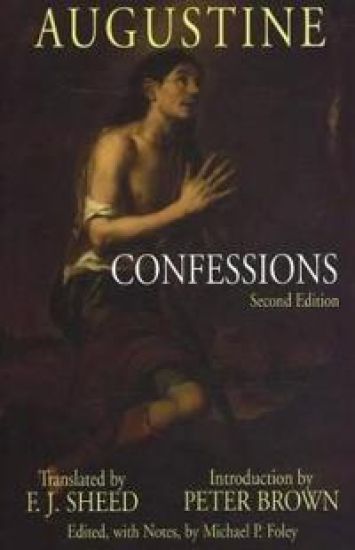
Augustine wrote his famous Confessiones during the early years of his episcopate, specifically, between 397 and 400. This work, ground-breaking in its time, is a piece of introspection and personal reminiscence aimed at glorifying God in gratitude for Augustine's conversion to Christianity. Augustine lays bare his personal journey, which took him from youthful carousal through phases of Manichaean dualism, Stoic speculation, skepticism, and Neo-Platonism, to the discovery of salvation in Jesus Christ. The final three "books" of this work offer Augustine's exegesis of the creation narratives in the Book of Genesis.
This edition of St Augustine's The City of God (De Civitate Dei) is the only one in English to provide a text and translation as well as a detailed commentary of this most influential document in the history of western Christianity. In these books Augustine offers a Christian perspective on the growth of Rome, which its pagan apologists attribute to the providential protection of its gods. Book III spotlights both the injustices inflicted and the privations endured by the Romans, thus rebutting such claims. Book IV offers a withering account of the Roman deities, basing its analysis on the researches of Terentius Varro. This section of The City of God is a vital document for students of Roman history, and especially of Roman religion, for it provides the most detailed evidence of Varro’s learned works. Latin text with facing-page English translation, introduction and commentary.
This edition of St Augustine's The City of God (De Civitate Dei) is the only one in English to provide a text and translation as well as a detailed commentary of this most influential document in the history of western Christianity. In these books Augustine offers a Christian perspective on the growth of Rome, which its pagan apologists attribute to the providential protection of its gods. Book III spotlights both the injustices inflicted and the privations endured by the Romans, thus rebutting such claims. Book IV offers a withering account of the Roman deities, basing its analysis on the researches of Terentius Varro. This section of The City of God is a vital document for students of Roman history, and especially of Roman religion, for it provides the most detailed evidence of Varro’s learned works. Latin text with facing-page English translation, introduction and commentary.
Offers notes on philosophical, theological, historical, and liturgical issues raised by the "Confessions", as well as paragraph numbers of the Latin critical edition, and an index.
Offers notes on philosophical, theological, historical, and liturgical issues raised by the "Confessions", as well as paragraph numbers of the Latin edition, and an index.
Most of the works of St. Augustine of Hippo (354-430) have been extant and studied for centuries by Christians throughout the world. Since this Doctor of the Western Church has long been the best known and most widely read of the Latin Fathers, it is so much more unexpected that a previously unknown work should be found. Johannes Divjak found not only a single work but in fact a whole collection of letters, which he published in a critical Latin edition in 1980.This volume contains the first English translation of these newly discovered letters. The letters range in size from short memoranda to long treatises on various subjects. In addition, there are three other previously unknown letters: two written to Augustine by Consentius, a North African rhetorician, and one written by Saint Jerome to Aurelius of Carthage.These letters, taken as a whole, present a vivid and fascinating view of life in North Africa at the beginning of the fifth century. In addition to the comments about ecclesiastical and episcopal affairs, there are also letters on various threats to peace and security common in this period of the late empire, on slavery and the growth of the slave trade, and on Roman involvement in African affairs, both ecclesiastical and civil.There are letters dealing with moral questions and pastoral problems, in both marriage and the family, as well as in larger areas of doctrine and discipline in the Church. The conflict resulting from the end of the Donatist schism becomes clearer, as does the refrain of desperation stemming from an inadequate supply of clergy for parishes needing to be served. A large number of these letters illustrate the day-to-day worries of a fifth century North African bishop: clerical scandals, Church finances, people seeking sanctuary in a church (and the ensuing problems with the civil authorities), and disputed episcopal succession.Until the time as scholars agree on a numbering system that will integrate these letters into a previously known corpus of Augustinian letters, they are numbered 1*-29*, with the asterick added to distinguish them from letters 1-29 of the traditional body of letters.
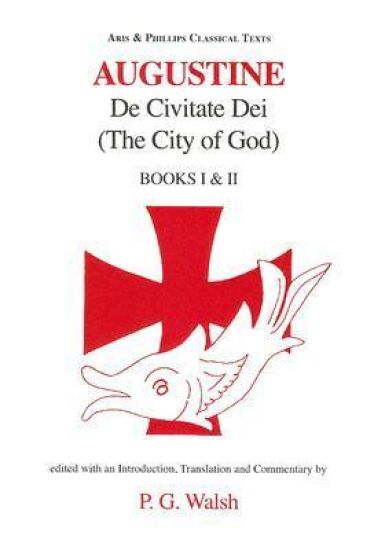
This edition of Books I & II of St Augustine's The City of God (De Civitate Dei) is the only edition in English to provide a text and translation as well as a detailed commentary of this most influential document in the history of western Christianity. In these books, written in the aftermath of the sack of Rome in AD 410 by the Goths, Augustine replies to the pagans, who attributed the fall of Rome to the Christian religion and its prohibition of the worship of the pagan gods. Latin text with facing-page English translation, introduction and commentary.
This edition of Books I & II of St Augustine's The City of God (De Civitate Dei) is the only edition in English to provide a text and translation as well as a detailed commentary of this most influential document in the history of western Christianity. In these books, written in the aftermath of the sack of Rome in AD 410 by the Goths, Augustine replies to the pagans, who attributed the fall of Rome to the Christian religion and its prohibition of the worship of the pagan gods. Latin text with facing-page English translation, introduction and commentary.
The Julian mentioned in the title is Julian of Eclanum who was born at Eclanum in Italy in 380 and died in Sicily ca. 455. After the death of his wife, Julian joined the clergy of his native diocese and eventually succeeded his father as bishop. With a mastery of Greek and Latin Julian combined a great store of theological learning which, however, was tainted with Pelagian errors. Because of his support of Pelagius Julian himself was condemned, deposed and expelled from Italy. In his authentic work, four books to Turbantius, three letters, and eight books to Florus, Julian's heterodox teachings reduced grace to a simple, protective, divine assistance and practically denied that the taint of Adam's sin passed on to the human race.In Against Julian Augustine stresses in the first two books the traditional teachings of the Church found in the Fathers and contrasts their teaching with the rationalism of the Pelagians. Thereupon he refutes the error of the Pelagians that grace is given according to merits. To refute the Pelagian error concerning concupiscence Augustine explains the Pauline teaching "that each one may know how to possess his vessel." In the concluding book we find a detailed explanation of the practice of infant baptism. This section is a valuable witness to the ritual of baptism as it was conferred in the age of the Fathers.
St. Augustine (354-430), greatest of the Church Fathers, continues to exercise a unique and profound influence upon the intellectual history of the West after more than fifteen hundred years. Pioneer in the theology of Grace and in a psychological understanding of the Trinity, his impact upon subsequent theological speculation, Protestant as well as Catholic, has been unrivaled. The timeless and timely character of his teaching is perhaps nowhere more apparent than in the documents of the Second Vatican Council where the African Bishop is cited more frequently than any other Father or Doctor of the Church. "Founder of Christian philosophy", his principles and method have largely inspired the rise of such diversified currents of contemporary thought as existentialism, philosophic spiritualism, and personalism. The three works included in the present volume range over a period of some forty years, from Augustine's days as a neo-convert and priest to the closing years of his life as Bishop, and offer representative examples of his rich and versatile genius as Christian pedagogue, philosopher, and theologian.
Of the 124 tractates that St. Augustine delivered to his congregation at Hippo Regius, the first fifty-four form a distinct group. They differ in length and character from the remaining tractates, contain many chronological references, and consist of bitter attacks on the Donatists and other heresies. The remaining tractates (55-124) are brief and contain no chronological references to prior tractates. Scholars maintain that the latter were dictated for later reading to the people rather than extemporaneously delivered. This volume contains tractates 11-27. In 11-16 Augustine continues the attack, begun in tractates 1-10, on the heresies of Manichaeism, Donatism, and Pelagianism. Beginning with the seventeenth tractate, however, he focuses greater attention on Arianism, a Trinitarian heresy whose major tenet was that divine being was uncreated, unbegotten, and unique and that Christ was not true God but a creature who had a beginning. Augustine also attacks lesser Christological heresies: the Apollinarists, who assert that Christ did not assume the complete human nature but only the body, and Photinus of Sirmium, who held that Christ did not except for his miraculous birth and acquired a plenitude of grace through moral perfection.In these tractates Augustine combines scriptural exegesis, the refutation of false teachings, and theological reflections with the spiritual and moral instruction of his congregation. "Look for separation in the Father and Son, you do not find it; even if you have soared high, then you do not find it; if you have touched something beyond your intellect, then you do not find it. For if you busy yourself in these things which the erring mind makes for itself, you speak with your own images, not with the Word of God; your images deceive you. Transcend the body and savor the mind. Transcend the mind also and savor God."
Augustine's long exposition of the doctrine of theTrinity was written after the Council of Constantinople (381) had settled the matter of the consubstantiality of the three Persons of the Trinity. Augustine began this work around the year 400 and completed it in 416. Taking the image of God in the human being (Genesis 1:26-27) as his starting-point, Augustine reasons that since God is triune, the image must be so, too. There ensues a laborious quest for three aspects of every individual human being that serve as a mirror of the Trinity. En route to the successful outcome of his quest, Augustine explores a variety of theological and anthropological concepts.
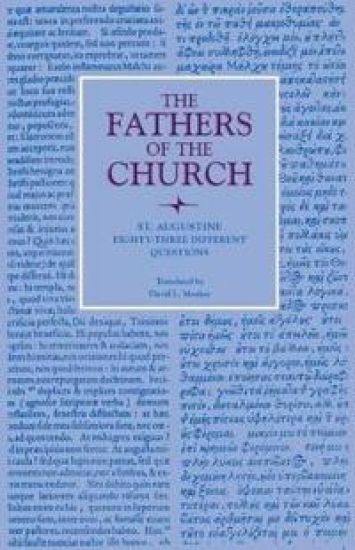
In the autumn of A.D. 388, St. Augustine returned from Italy to northern Africa. Here in his native Thagaste he assembled a monastic community. When the brethren found their leader Augustine in a rare moment of leisure, they had no misgivings about putting questions to him on a variety of topics which he answered from the store of his vast knowledge. These questions together with the answers were later collected and assembled in a random order (ractions ). The English translation presented here affords the reader a rare opportunity to glimpse some of the topics that interested members of a community that eventually gave the early Church four bishops: Alypius of Thagaste, Severus of Milevis, Profuturus of Citra, and Possidius of Calama.Even though St. Augustine intended no specific sequence in this collection, four broad categories in the question and answer literary form are discernible. One category serves as Christian apologetic, e.g., against Arian and Manichaean errors. The second presents Augustine in the role of exegete of selected passages from both the Old and New Testaments. The third and fourth categories, containing the greater number of questions and answers, show Augustine the philosopher and theologian, a person of towering intellectual stature in western Christianity and one of the important "Founders of the Middle Ages." Though formulated between the years A.D. 388 and 395/97 and presented from the viewpoint of Neoplatonists, many topics, e.g., the cause of evil, sin and freewill, still have great relevance for the modern reader.