Kirjojen hintavertailu. Mukana 12 514 420 kirjaa ja 12 kauppaa.

Kirjailija

Brian Davies

Kirjat ja teokset yhdessä paikassa: 40 kirjaa, julkaisuja vuosilta 1993-2026, suosituimpien joukossa Thomas Aquinas's Philosophy of God. Vertaile teosten hintoja ja tarkista saatavuus suomalaisista kirjakaupoista.

40 kirjaa

Kirjojen julkaisuhaarukka 1993-2026.

Thomas Aquinas's Philosophy of God

Thomas Aquinas's Philosophy of God

Brian Davies

Cambridge University Press
2026
sidottu
Aquinas argues that, abstracting from divine revelation, God's existence can be argued for successfully, and that God is the source of the existence of all that is not divine for as long as it exists. His philosophical thought about God has been seminal for later thinkers, but can be hard to grasp as it is scattered across a broad range of his writings. This book provides a comprehensive and accessible single-volume account of Aquinas's philosophy of God which also evaluates it in the light both of various criticisms that have been made of it, and of philosophical thought more generally. It situates Aquinas's thinking about God in relation to major philosophers of the past and a number of important philosophers writing today, which will enable readers to understand Aquinas's philosophy of God in the context of centuries of philosophical thought.
Thomas Aquinas's Philosophy of God

Thomas Aquinas's Philosophy of God

Brian Davies

Cambridge University Press
2026
pokkari
Aquinas argues that, abstracting from divine revelation, God's existence can be argued for successfully, and that God is the source of the existence of all that is not divine for as long as it exists. His philosophical thought about God has been seminal for later thinkers, but can be hard to grasp as it is scattered across a broad range of his writings. This book provides a comprehensive and accessible single-volume account of Aquinas's philosophy of God which also evaluates it in the light both of various criticisms that have been made of it, and of philosophical thought more generally. It situates Aquinas's thinking about God in relation to major philosophers of the past and a number of important philosophers writing today, which will enable readers to understand Aquinas's philosophy of God in the context of centuries of philosophical thought.
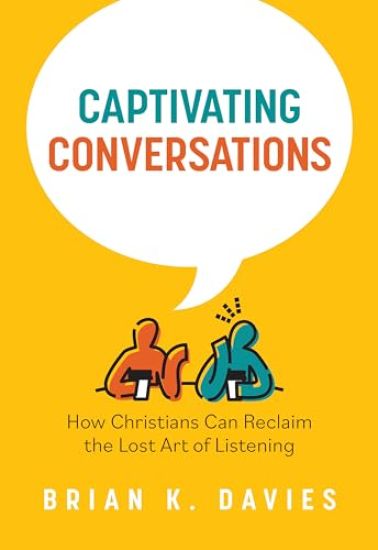
Captivating Conversations: How Christians Can Reclaim the Lost Art of Listening
Are you a good listener? Many people believe that they are but, when asked if they believe others are a good listener, the answer is usually no. Perhaps we all can learn to be better listeners. And there's no better model than Jesus Christ Himself. Join Brian Davies on a journey of sitting back, opening your heart, and learning how to truly hear what others are saying. Follow Christ's numerous examples to see how asking questions can broaden your perspectives and deepen the conversations you're having with others. Each chapter includes reflection questions to help you internalize the teachings and apply them to your own life. Start new habits this year and come to conversations with a new posture of listening before speaking with Captivating Conversations.
Taking God Seriously

Taking God Seriously

Brian Davies; Michael Ruse

Cambridge University Press
2021
pokkari
Is debate on issues related to faith and reason still possible when dialogue between believers and non-believers has collapsed? Taking God Seriously not only proves that it is possible, but also demonstrates that such dialogue produces fruitful results. Here, Brian Davies, a Dominican priest and leading scholar of Thomas Aquinas, and Michael Ruse, a philosopher of science and well-known non-believer, offer an extended discussion on the nature and plausibility of belief in God and Christianity. They explore key topics in the study of religion, notably the nature of faith, the place of reason in discussions about religion, proofs for the existence of God, the problem of evil, and the problem of multiple competing religious systems, as well as the core concepts of Christian belief including the Trinity and the justification of morality. Written in a jargon-free manner, avoiding the extremes of evangelical literalism and New Atheism prejudice, Taking God Seriously does not compromise integrity or shy from discussing important or difficult issues.
Taking God Seriously

Taking God Seriously

Brian Davies; Michael Ruse

Cambridge University Press
2021
sidottu
Is debate on issues related to faith and reason still possible when dialogue between believers and non-believers has collapsed? Taking God Seriously not only proves that it is possible, but also demonstrates that such dialogue produces fruitful results. Here, Brian Davies, a Dominican priest and leading scholar of Thomas Aquinas, and Michael Ruse, a philosopher of science and well-known non-believer, offer an extended discussion on the nature and plausibility of belief in God and Christianity. They explore key topics in the study of religion, notably the nature of faith, the place of reason in discussions about religion, proofs for the existence of God, the problem of evil, and the problem of multiple competing religious systems, as well as the core concepts of Christian belief including the Trinity and the justification of morality. Written in a jargon-free manner, avoiding the extremes of evangelical literalism and New Atheism prejudice, Taking God Seriously does not compromise integrity or shy from discussing important or difficult issues.
Introduction to the Philosophy of Religion
An Introduction to the Philosophy of Religion provides a critical examination of the fundamental questions posed by religious belief: What does it mean to believe in God? Can God's existence be proven? Is there life after death? Brian Davies considers these questions and many others, sometimes offering provocative answers of his own, but more often giving students room to form their own conclusions. In addition to exploring the views of several classic philosophers of religion--including Anselm, Aquinas, Descartes, Leibniz, Hume, and Kant--Davies surveys a variety of contemporary thinkers. Revised and updated to cover the latest developments in the field, the new edition of this influential textbook provides an ideal introduction for all students of the philosophy of religion.
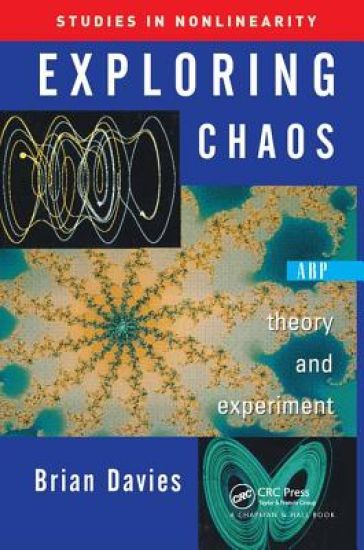
Exploring Chaos

Exploring Chaos

Brian Davies

CRC Press
2019
sidottu
This book presents elements of the theory of chaos in dynamical systems in a framework of theoretical understanding coupled with numerical and graphical experimentation. It describes the theory of fractals, focusing on the importance of scaling and ordinary differential equations.
Thomas Aquinas

Thomas Aquinas

Brian Davies

SPCK Publishing
2017
pokkari
'The study of philosophy is that we may know not what men have thought, but what the truth of things is.' Thomas Aquinas (c. 1225-74) was one of the most influential philosophers of the Middle Ages, and his works continue to be widely read today. The leading classical proponent of natural theology and the founder of Thomism, he is regarded as one of the greatest Western thinkers of all time. Written by a world authority, this brief history begins with an engaging account of Aquinas's life and intellectual context. Thomas Aquinas goes on to explain the main contours of his thought for readers who may have no previous knowledge of him, or of academic philosophy and theology. It concludes with an informed assessment of the scale and significance of his legacy.
Thomas Aquinas's Summa Contra Gentiles

Thomas Aquinas's Summa Contra Gentiles

Brian Davies

Oxford University Press Inc
2016
sidottu
One of Aquinas's best known works after the Summa Theologica, Summa Contra Gentiles is a theological synthesis that explains and defends the existence and nature of God without invoking the authority of the Bible. A detailed expository account of and commentary on this famous work, Davies's book aims to help readers think about the value of the Summa Contra Gentiles (SCG) for themselves, relating the contents and teachings found in the SCG to those of other works and other thinkers both theological and philosophical. Following a scholarly account of Aquinas's life and his likely intentions in writing the SCG, the volume works systematically through all four books of the text. It is, therefore, a solid and reflective introduction both to the SCG and to Aquinas more generally. The book is aimed at students of medieval philosophy and theology, and of Aquinas in particular. It will interest teachers of medieval philosophy and theology, though it does not presuppose previous knowledge of Aquinas or of his works. Davies's book is the longest and most detailed account and discussion of the SCG available in English in one volume.
Thomas Aquinas's Summa Contra Gentiles

Thomas Aquinas's Summa Contra Gentiles

Brian Davies

Oxford University Press Inc
2016
nidottu
One of Aquinas's best known works after the Summa Theologica, Summa Contra Gentiles is a theological synthesis that explains and defends the existence and nature of God without invoking the authority of the Bible. A detailed expository account of and commentary on this famous work, Davies's book aims to help readers think about the value of the Summa Contra Gentiles (SCG) for themselves, relating the contents and teachings found in the SCG to those of other works and other thinkers both theological and philosophical. Following a scholarly account of Aquinas's life and his likely intentions in writing the SCG, the volume works systematically through all four books of the text. It is, therefore, a solid and reflective introduction both to the SCG and to Aquinas more generally. The book is aimed at students of medieval philosophy and theology, and of Aquinas in particular. It will interest teachers of medieval philosophy and theology, though it does not presuppose previous knowledge of Aquinas or of his works. Davies's book is the longest and most detailed account and discussion of the SCG available in English in one volume.
Thomas Aquinas's Summa Theologiae

Thomas Aquinas's Summa Theologiae

Brian Davies

Oxford University Press Inc
2014
sidottu
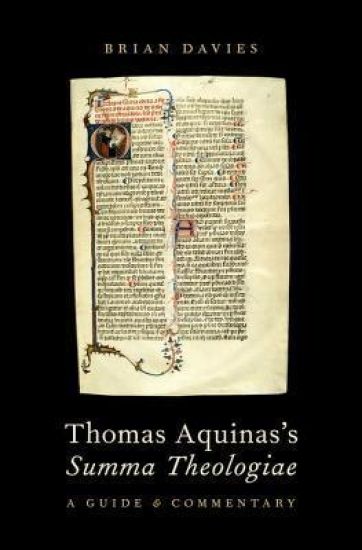
This book is a detailed account of and commentary on Thomas Aquinas's most influential work: the Summa Theologiae. Intended for students and general readers interested in medieval philosophy and theology, the book will also appeal to professors and scholars, although it does not presuppose any previous knowledge of its subject. Following a scholarly account of Aquinas's life, the book explores his purposes in writing the Summa Theologiae and works systematically through each of its three Parts. It also relates their contents and Aquinas's teachings to that of other works and other thinkers both theological and philosophical. In addition to being expository, the volume aims to help readers think about the value of the Summa Theologiae for themselves. The concluding chapter considers the impact Aquinas's best-known work has had since its first appearance, and why it is still studied today. Davies's study is a solid and reflective introduction both to the Summa Theologiae and to Aquinas in general.
Thomas Aquinas's Summa Theologiae

Thomas Aquinas's Summa Theologiae

Brian Davies

Oxford University Press Inc
2014
nidottu
Following a scholarly account of Thomas Aquinas's life, Davies explores his purposes in writing the Summa Theologiae and works systematically through each of its three Parts. He also relates their contents and Aquinas's teachings to those of other works and other thinkers both theological and philosophical. The concluding chapter considers the impact Aquinas's best-known work has exerted since its first appearance, and why it is still studied today. Intended for students and general readers interested in medieval philosophy and theology, Davies's study is a solid and reflective introduction both to the Summa Theologiae and to Aquinas in general.
Social Control and Education (RLE Edu L)
Social control is a central sociological concept which has generated many influential ‘models’ of man in society. This book examines these major models, and examines the rise of compulsory schooling in Britain and the USA and shows us which aspects of education and social control have been elaborated or neglected in the sociology of education down to the mid 1970s.
Empire and Military Revolution in Eastern Europe
In terms of resource mobilization and devastation the wars between Russia, the Crimean Khanate and the Ottoman Empire were some of the largest of the eighteenth century, and had enormous consequences for the balance of power in Eastern Europe. Davies examines how these conflicts characterized the course of Russian military development in response to Ottoman and Crimean Tatar threats and to determine under what circumstances and in what ways Russian military power experienced a "revolution" awarding it clear preponderance over the Ottoman-Crimean system. A central part of this Davies' argument is that identifying and explaining a Military Revolution must involve examining the role of factors not purely military. One must look not only at new military technology, new force and command structure, new tactical thinking, and new recruitment and military finance practices but also consider the impact of larger demographic, economic, and sociopolitical changes.
Social Control and Education (RLE Edu L)
Social control is a central sociological concept which has generated many influential ‘models’ of man in society. This book examines these major models, and examines the rise of compulsory schooling in Britain and the USA and shows us which aspects of education and social control have been elaborated or neglected in the sociology of education down to the mid 1970s.
Thomas Aquinas on God and Evil

Thomas Aquinas on God and Evil

Brian Davies

Oxford University Press Inc
2011
sidottu
Brian Davies offers the first in-depth study of Saint Thomas Aquinas's thoughts on God and evil, revealing that Aquinas's thinking about God and evil can be traced through his metaphysical philosophy, his thoughts on God and creation, and his writings about Christian revelation and the doctrines of the Trinity and the Incarnation. Davies first gives an introduction to Aquinas's philosophical theology, as well as a nuanced analysis of the ways in which Aquinas's writings have been considered over time. For hundreds of years scholars have argued that Aquinas's views on God and evil were original and different from those of his contemporaries. Davies shows that Aquinas's views were by modern standards very original, but that in their historical context they were more traditional than many scholars since have realized. Davies also provides insight into what we can learn from Aquinas's philosophy. Thomas Aquinas on God and Evil is a clear and engaging guide for anyone who struggles with the relation of God and theology to the problem of evil.