

Kirjailija
Brian Morris
Kirjat ja teokset yhdessä paikassa: 42 kirjaa, julkaisuja vuosilta 1970-2026, suosituimpien joukossa The European Community 1991/2. Vertaile teosten hintoja ja tarkista saatavuus suomalaisista kirjakaupoista.
42 kirjaa
Kirjojen julkaisuhaarukka 1970-2026.


Buddhism is a world religion, a vast and complex social movement and a philosophical tradition with a history spanning over two thousand years. In this volume, Brian Morris adopts the Buddha’s own ‘critical spirit’ to provide a thoughtful introduction to this expansive and important topic. Morris focuses on the formative phase of early Buddhism in northern India, and on five important and widely recognized Buddhist spiritual traditions: Theravada, Mahayana, Tibetan, Zen and Engaged Buddhism. In these accounts, he takes an anthropological perspective that emphasizes cultural diversity, while revealing a shared humanity that enlarges our sense of moral community and places humans ‘within nature’. Drawing on classical anthropological portraits of Buddhism as a living tradition, Morris also delves into historical and biographical studies, hermeneutics and political theory. He engages with Buddhist metaphysics and the core teachings through the lens of Western philosophy, but without giving it cognitive priority, and while giving due consideration to cultural contexts. He explores Buddhism’s relationship to ecology and ethics, bringing to the discussion his own perspective of an evolutionary naturalist. While seeking to include what is often missing from books on Buddhism, namely the role of women, Morris discusses nuns as ‘renouncers’ of family life in the quest for spiritual enlightenment and the movement for full ordination. In this wide-ranging yet accessible book, Brian Morris guides you engagingly across continents, cultures and centuries to a greater understanding of one of the world’s most enduring spiritual traditions.

Leaving school at fifteen, Brian Morris has had a and varied career in Malawi, before becoming a university teacher. Now Emeritus Professor of Anthropology at Goldsmiths College, University of London, he is the author of numerous articles and books on anthropology, religion and symbolism, hunter gatherer societies, concepts of the individual and radical politics. His most recent books are Homage to Peasant Smallholders (Luviri Press 2022) and Anthropology and Dialectical Naturalism (Black Rose 2022).After writing much about Anthropology, Brian Morris finally shares about his life. While in his youth the academic future seemed very dim, an all consuming interest in nature was already there. The author does not only share the formative experiences in Malawi and India, but he also shares his intellectual development to become a Dialectical Anthropologist. His travel and research experiences are fascinating, and it is amazing how much fits into one life.

his fast moving and sometimes disturbing book starts at the point where Brian is about to be arrested for smuggling a kilogram of cocaine into the country in 1995 worth a police estimate of one and a half million pounds, earning him a prison sentence of 12 years.The book continues by telling how he arrived at that point - his disadvantaged life, growing up in Wales in impoverished circumstances with a number of brothers and sisters, all with the same mother but several different fathers. He tells of his first experience with drugs at the tender age of 16, and how by the time he was 19 he had met a Dutch girl and moved to Holland. The book continues to chart his descent into drugs and drug dealing, and how after his break-up with the Dutch girl, he decides to go to Sri Lanka to start a new life, only to get involved in drug smuggling between Sri Lanka and India, whilst living with a poor fisherman and his family who showed him great kindness.He describes life as a dealer and the many smuggling trips to and from different countries, before he was finally arrested in Swansea, the point at which the book starts.The rest of the book deals with his Christian conversion, and the difficulties experienced by him and other prisoners who tried to live out their Christian lives in a harsh and hostile prison environment, and how, in spite of the pressures temptations and setbacks, including seeing fellow believers take their own lives whilst in prison or very shortly after release, because of good behavior his prison term is vastly reduced, and he is finally released. He starts to train to help others overcome the horror which drug involvement brings into a persons life, showing them how they can receive new life in Jesus. Although the book deals with very real and sometimes harrowing situations it is not without a wry humour.The book will appeal to all those who have ever wondered what life is really like in some of Britain's best known high security jails, those who have loved ones who are still dependent on drugs, those who want to better understand why people are attracted to drugs in the first place, and those who enjoy a good story, well told, with all the emotional highs and lows that one would expect from such a tale. Author and Broadcaster David Waite

The Eight Pillars of SurvivalMany survival and emergency preparedness experts today use the pyramid approach to survival prioritization, putting food, water, shelter and security in the largest block at the base of the pyramid and then community, sustainability and higher needs in smaller brackets at the top of the pyramid. My survival model takes a different and linear approach to survival using an eight-pillar system. The eight pillars that I use as the basis of my survival methodology are food, water, shelter, security, communication, health, survival navigation and fire-craft. In my system no one pillar takes priority to another initially. It is up to the survivor to assess their situation and then choose the pillar that is needed most to survive in the situation at hand. Much like a rifle pop-up target range where a shooter is expected to hit the closer (more dangerous) 50-meter target first before engaging the 300-meter target, the survivor needs to prioritize the pillars and choose the pillar that is most urgent and necessary to save his life under the circumstances. The foundation for my methodology is KISS which stands for “keep it simple, stupid”, an acronym widely used by the military to remind soldiers that the best solutions are often the simplest. I developed this 8 Pilar approach over decades of serving as a Green Beret in the US Army Special Forces

Anthropology and Dialectical Naturalism - A Philosophical Manifesto
Brian Morris
Black Rose Books
2021
sidottu
Is the world just a cultural construct where people create their own realities? In this illuminating and wide-ranging philosophical treatise, Brian Morris critiques broad swathes of recent theory as he seeks to reclaim anthropology as a historical social science. He achieves this by grounding it within a metaphysic of "dialectical naturalism" or "evolutionary realism"--a tradition long ignored by academic philosophy. After reviewing the anthropological background of this worldview--the Greeks and the Enlightenment--Morris explores two essential themes. First, he critically assesses the main forms of dialectical naturalism, including Darwin's evolutionary theory, Marx's historical materialism, and the hylo-realism of the philosopher-scientist Mario Bunge. Second, he offers a strong plea to retain the dual heritage of anthropology as a historical science that combines both humanism and naturalism. A powerful philosophical manifesto, the book cogently upholds dialectical naturalism as the most grounding philosophy for anthropology and the social sciences.

Anthropology and Dialectical Naturalism - A Philosophical Manifesto
Brian Morris
Black Rose Books
2021
nidottu
Is the world just a cultural construct where people create their own realities? In this illuminating and wide-ranging philosophical treatise, Brian Morris critiques broad swathes of recent theory as he seeks to reclaim anthropology as a historical social science. He achieves this by grounding it within a metaphysic of "dialectical naturalism" or "evolutionary realism"--a tradition long ignored by academic philosophy. After reviewing the anthropological background of this worldview--the Greeks and the Enlightenment--Morris explores two essential themes. First, he critically assesses the main forms of dialectical naturalism, including Darwin's evolutionary theory, Marx's historical materialism, and the hylo-realism of the philosopher-scientist Mario Bunge. Second, he offers a strong plea to retain the dual heritage of anthropology as a historical science that combines both humanism and naturalism. A powerful philosophical manifesto, the book cogently upholds dialectical naturalism as the most grounding philosophy for anthropology and the social sciences.
The first ethnographic study of a community with structured trading relationships, the nomadic forest community of the Hill Pandarm.

Anarchism, Anarchist Communism, And The State
Peter Kropotkin; Brian Morris; Iain McKay
PM Press
2019
nidottu

An Environmental History of Southern Malawi
Brian Morris
Springer International Publishing AG
2018
nidottu
This book is a pioneering and comprehensive study of the environmental history of Southern Malawi. With over fifty years of experience, anthropologist and social ecologist Brian Morris draws on a wide range of data – literary, ethnographic and archival – in this interdisciplinary volume. Specifically focussing on the complex and dialectical relationship between the people of Southern Malawi, both Africans and Europeans, and the Shire Highlands landscape, this study spans the nineteenth century until the end of the colonial period. It includes detailed accounts of the early history of the peoples of Northern Zambezia; the development of the plantation economy and history of the tea estates in the Thyolo and Mulanje districts; the Chilembwe rebellion of 1915; and the complex tensions between colonial interests in conserving natural resources and the concerns of the Africans of the Shire Highlands in maintaining their livelihoods.A landmark work, Morris’s study constitutes a major contribution to the environmental history of Southern Africa. It will appeal not only to scholars, but to students in anthropology, economics, history and the environmental sciences, as well as to anyone interested in learning more about the history of Malawi, and ecological issues relating to southern Africa.
Every ten years, notoriously eclectic thinker Brian Morris takes a year of sabbatical and launches out into another field about which he knows nothing. In the 1980s it was botany; in the 1990s, zoology; in the 2000s, entomology. The quintessential polymath, Morris has written on his incredible breadth of interests in wide-ranging essays, with subjects ranging from boxing to deep ecology to new-age gurus. Collected here for the first time, Visions of Freedom brings together all of Morris's concise yet diverse essays on politics, history, and ecology written since 1989. It includes book reviews, letters, and articles in the engaging and accessible style for which Morris is known. The thinkers he deals with are as diverse as Thomas Paine to C. L. R. James, from Karl Marx to Krishnamurti, from Max Weber to Naomi Klein. He also delves into the canon of classic anarchist thinkers like Kropotkin, Bakunin, Reclus, Proudhon, and Flores Magnon. Taking a stance against the obscurantism of contemporary academic discourse, Morris' writings demonstrate an interdisciplinary approach that moves seamlessly between topics, developing practical connections between scholarly debates and the pressing social, ecological and political issues of our times.
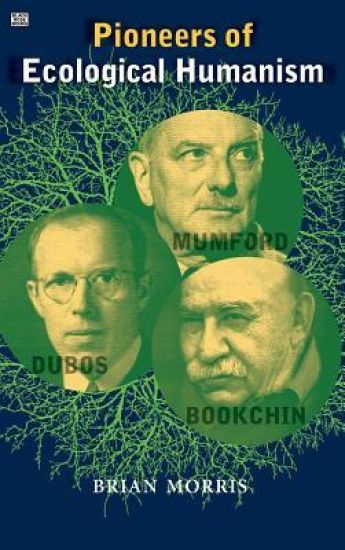
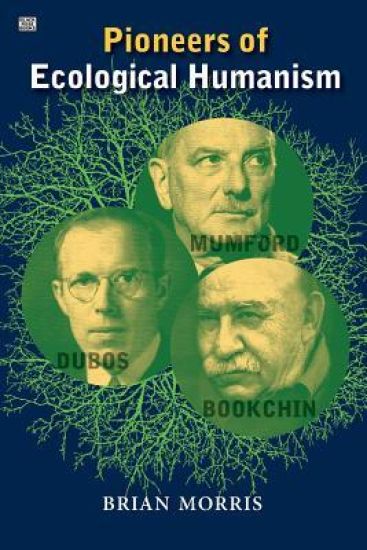
In our world of ecological catastrophe and social crisis, some roundly condemn modern civilisation as the source of our Promethean predicament. What can follow is a rejection of humanism, science and the City and a turn to either nostalgic primitivism or esoteric spirituality. But do we really need to flee the city for the woods in order to build a free society? In this triple intellectual biography, Brian Morris lucidly discusses three intellectual giants who made an enormous, though often overlooked, contribution to modern ecology: Lewis Mumford, Ren Dubos, and Murray Bookchin. Morris argues that they have forged a third way beyond both industrialism and anti-modernism: ecological humanism (also known as social ecology), a tradition that embraces both ecological realities and the ethical and cultural wealth of humanism. In examining their thought, Professor Morris paves the way for fresh debate on ecology, charting an optimistic vision for the profound reharmonisation of nature and culture as well as the ecological, egalitarian and democratic transformation of our cities and society.Essential reading for anyone with an interest or active role in ecology or philosophy and their associated disciplines, Pioneers of Ecological Humanism is written in a clear and refreshingly direct style that will appeal to academics, activists, and armchair ecologists alike.Leaving school at the age of fifteen, Brian Morris had a varied career: foundry worker, seaman, and tea-planter in Malawi, before becoming a university teacher. Now Emeritus Professor of Anthropology at Goldsmiths College, University of London, he is the author of numerous articles and books on ethnobotany, religion and symbolism, hunter-gatherer societies and concepts of the individual. His books include Richard Jefferies and the Ecological Vision (2006), Religion and Anthropology: A Critical Introduction(2006), Insects and Human Life (2004) and Kropotkin: The Politics of Community (2004). Black Rose Books is also the publisher of hisBakunin: The Philosophy of Freedom (1993) and the forthcoming Anarchist Miscellany.

An Environmental History of Southern Malawi
Brian Morris
Springer International Publishing AG
2016
sidottu
This book is a pioneering and comprehensive study of the environmental history of Southern Malawi. With over fifty years of experience, anthropologist and social ecologist Brian Morris draws on a wide range of data – literary, ethnographic and archival – in this interdisciplinary volume. Specifically focussing on the complex and dialectical relationship between the people of Southern Malawi, both Africans and Europeans, and the Shire Highlands landscape, this study spans the nineteenth century until the end of the colonial period. It includes detailed accounts of the early history of the peoples of Northern Zambezia; the development of the plantation economy and history of the tea estates in the Thyolo and Mulanje districts; the Chilembwe rebellion of 1915; and the complex tensions between colonial interests in conserving natural resources and the concerns of the Africans of the Shire Highlands in maintaining their livelihoods.A landmark work, Morris’s study constitutes a major contribution to the environmental history of Southern Africa. It will appeal not only to scholars, but to students in anthropology, economics, history and the environmental sciences, as well as to anyone interested in learning more about the history of Malawi, and ecological issues relating to southern Africa.

Like a Native: Teaching English, Living Italian
Brian Morris
Createspace Independent Publishing Platform
2016
nidottu

The Wellness Code: The Evidence-Based Prescription for Weight Loss, Longevity, Health and Happiness
Brian Morris
Vista Hill Press
2015
nidottu
In the tradition of The 7 Habits of Highly Effective People by Stephen Covey, The Happiness Project by Gretchen Rubin, The Four Agreements by Don Miguel Ruiz and The Life-Changing Magic of Tidying Up by Marie Kondo comes the national bestseller The Wellness Code by Dr. Brian Morris. The Wellness Code is unlike any health or diet book you've ever read. In this life-changing book, you will learn why conventional diets don't work and what actually works. You will learn Dr. Morris' four-column process that is pivotal to long-term wellness. You will also learn the 50 most important habits that promote weight loss, longevity, health, and happiness. For years, Dr. Brian Morris has shared the secrets to maintaining a healthy lifestyle and an optimal weight with his patients. For the first time, Dr. Morris is making this information available to the general public. Backed by hundreds of references from the medical literature, The Wellness Code synthesizes decades of scientific research and clinical experience into a time-tested, holistic program for looking and feeling great. The Wellness Code will show you how to create a personalized plan to finally lose the weight, transform your health, and find lasting happiness. You will learn how to live long and live well. "In The Wellness Code, Dr. Morris achieves what few have done. He provides scientific, yet understandable, explanations of how to live long and prosper." -Nina Shapiro, M.D., Bestselling Author of Take a Deep Breath: Clear The Air For The Health of Your Child "Thank you, Dr. Morris, for a clear and well thought out long-term plan for healthy change." -Jordan Kerner, Producer of Charlotte's Web, Fried Green Tomatoes, The Smurfs, and The Mighty Ducks "The Wellness Code is a recipe for long-term success." -Cynthia Sass, M.P.H., M.A., R.D., C.S.S.D., Nutritionist and New York Times Bestselling Author "The Wellness Code is a true game-changer. It is required reading for anyone looking to finally lose the weight and make a health transformation." -Gavin James, President and CEO, Western Asset Mortgage Capital "The Wellness Code is a valuable science-based program for enhancing total wellness" -David Heber, M.D., Ph.D., Bestselling Author of What Color Is Your Diet?

The Minotaur's Forgotten Drum: Rainshadow 2
Brian Morris
Createspace Independent Publishing Platform
2015
nidottu

Over the course of a long career, Brian Morris has created an impressive body of engaging and insightful writings--from social anthropology and ethnography to politics, history, and philosophy--that is accessible to the layperson without sacrificing analytical rigor. But until now, the essays collected here, originally published in obscure journals and political magazines, have been largely unavailable to the broad readership to which they are so naturally suited. The opposite of arcane, specialized writing, Morris's work takes an interdisciplinary approach that offers connections between various scholarly interests and anarchist politics and thought. There is a long history of anarchist writers drawing upon works in a range of fields, and Morris's essays both explore past connections and suggest ways that broad currents of anarchist thought will have new and ever-emerging relevance for anthropology and many other ways of understanding social relationships.