Kirjojen hintavertailu. Mukana 12 595 353 kirjaa ja 12 kauppaa.

Kirjailija

Bruce Fleming

Kirjat ja teokset yhdessä paikassa: 24 kirjaa, julkaisuja vuosilta 2004-2025, suosituimpien joukossa Academia versus the World Outside. Vertaile teosten hintoja ja tarkista saatavuus suomalaisista kirjakaupoista.

24 kirjaa

Kirjojen julkaisuhaarukka 2004-2025.

Academia versus the World Outside

Academia versus the World Outside

Bruce Fleming

TAYLOR FRANCIS LTD
2025
nidottu
Academia versus the World Outside lays out the givens of the knowledge industry located within the ivory tower, colleges and universities. It then moves outside academia to consider this restricted world the way most people see it. The contrast between these two views of academia explains and is at the basis of the left–right animosity of our day. The knowledge industry, a creation of the post-Enlightenment modern age along with other industrial and post-industrial enterprises, is based on creating and adding to a store of knowledge as its own end. This makes academia alien to the more random and personal nature of knowledge acquisition in our everyday lives, as indeed every industry is alien to everyday life in the modern age. Yet most academics are so immersed in the peculiar project they have chosen as their life’s work that they are either unaware of or unsympathetic to the fact that people outside live very different lives with very different presuppositions. Most non-academics, for their part, find academia strange, and for very good reason. Academia versus the World Outside makes this contrast and conflict clear from both directions. This book is aimed primarily at academics, most of whom so take for granted the givens of what they do that they fail to understand why the vast majority of people outside find academia alien. This has led to an increasingly hostile and utterly predictable left–right political conflict, academia tending increasingly left and the world outside increasingly right. The goal of this book is to reduce the tension between both sides: if read by non-academics, this book may help these understand the givens of a world as strange to everyday life as any other specialized industry in the modern age.
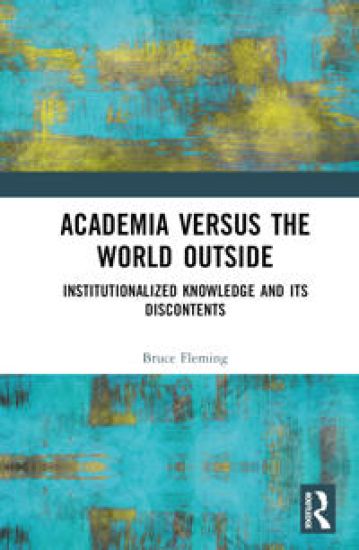
Academia versus the World Outside

Academia versus the World Outside

Bruce Fleming

TAYLOR FRANCIS LTD
2024
sidottu
Academia versus the World Outside lays out the givens of the knowledge industry located within the ivory tower, colleges and universities. It then moves outside academia to consider this restricted world the way most people see it. The contrast between these two views of academia explains and is at the basis of the left–right animosity of our day.The knowledge industry, a creation of the post-Enlightenment modern age along with other industrial and post-industrial enterprises, is based on creating and adding to a store of knowledge as its own end. This makes academia alien to the more random and personal nature of knowledge acquisition in our everyday lives, as indeed every industry is alien to everyday life in the modern age. Yet most academics are so immersed in the peculiar project they have chosen as their life’s work that they are either unaware of or unsympathetic to the fact that people outside live very different lives with very different presuppositions. Most non-academics, for their part, find academia strange, and for very good reason. Academia versus the World Outside makes this contrast and conflict clear from both directions.This book is aimed primarily at academics, most of whom so take for granted the givens of what they do that they fail to understand why the vast majority of people outside find academia alien. This has led to an increasingly hostile and utterly predictable left–right political conflict, academia tending increasingly left and the world outside increasingly right. The goal of this book is to reduce the tension between both sides: if read by non-academics, this book may help these understand the givens of a world as strange to everyday life as any other specialized industry in the modern age.
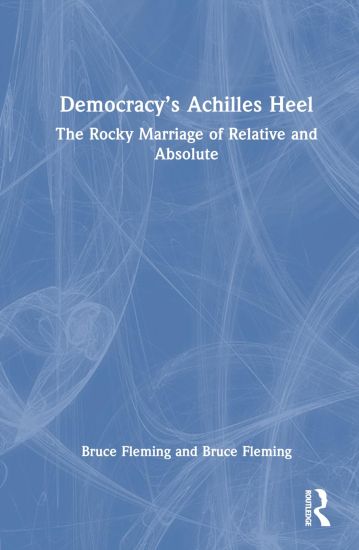
Democracy’s Achilles Heel

Democracy’s Achilles Heel

Bruce Fleming

TAYLOR FRANCIS LTD
2023
sidottu
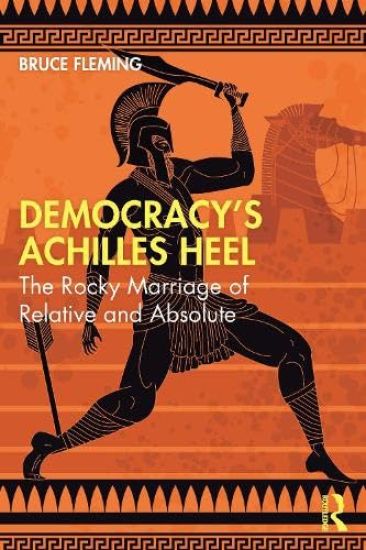
Democracy’s Achilles Heel argues that the structure of democracy is a combination of two incompatible worldviews: one relativist and liberal, the other absolutist and conservative. This combination of opposites is essential for its survival, yet places democracy at risk since each worldview is prone to trying to engulf the other, creating threats from both the right and the left. This is democracy’s Achilles heel: it never goes away and can only be avoided. The nature of open societies means that absolutisms, for example of a religious kind, can exist quite comfortably within democracy, yet for democracy to succeed, they must permit other belief systems and worldviews, absolute or otherwise, to exist alongside them. Likewise, relativism can undermine the liberal nature of democracy itself in seeking to reduce the existence of absolutisms to nothing, thus threatening freedom and destabilizing democracy. Reacting to the recent clashes in Western democracies between left and right, and drawing on the theories of such now-classic thinkers as Fromm, Berlin, and Hoffer, as well as more recent sources such as Levitsky and Ziblatt’s How Democracies Die, the author moves beyond the usual defenses of democracy, accepting the fact that democracy, because of its combination of opposites, is always unstable and always at risk, while urging those who live within democratic polities to strengthen its chances of survival by remembering its fundamental value and purpose. An impassioned defense of the democratic way of life even given (and indeed because of) its eternally threatened nature, Democracy’s Achilles Heel will appeal to scholars, students, and readers with interests in political sociology, philosophy, and political theory.
Democracy’s Achilles Heel

Democracy’s Achilles Heel

Bruce Fleming

TAYLOR FRANCIS LTD
2023
nidottu
Democracy’s Achilles Heel argues that the structure of democracy is a combination of two incompatible worldviews: one relativist and liberal, the other absolutist and conservative. This combination of opposites is essential for its survival, yet places democracy at risk since each worldview is prone to trying to engulf the other, creating threats from both the right and the left. This is democracy’s Achilles heel: it never goes away and can only be avoided. The nature of open societies means that absolutisms, for example of a religious kind, can exist quite comfortably within democracy, yet for democracy to succeed, they must permit other belief systems and worldviews, absolute or otherwise, to exist alongside them. Likewise, relativism can undermine the liberal nature of democracy itself in seeking to reduce the existence of absolutisms to nothing, thus threatening freedom and destabilizing democracy. Reacting to the recent clashes in Western democracies between left and right, and drawing on the theories of such now-classic thinkers as Fromm, Berlin, and Hoffer, as well as more recent sources such as Levitsky and Ziblatt’s How Democracies Die, the author moves beyond the usual defenses of democracy, accepting the fact that democracy, because of its combination of opposites, is always unstable and always at risk, while urging those who live within democratic polities to strengthen its chances of survival by remembering its fundamental value and purpose. An impassioned defense of the democratic way of life even given (and indeed because of) its eternally threatened nature, Democracy’s Achilles Heel will appeal to scholars, students, and readers with interests in political sociology, philosophy, and political theory.
What Does ‘Art’ Mean Now?

What Does ‘Art’ Mean Now?

Bruce Fleming

TAYLOR FRANCIS LTD
2023
nidottu
What Does ‘Art’ Mean Now? asks, and answers, fundamental questions about the nature of aesthetic experience and role of the arts in contemporary society. The Modern Age, Romanticism and beyond, viewed art as something transcending and separated from life, and usually something encountered in museums or classrooms. Nowadays, however, art tends to be defined not by a commonly agreed-upon standard of “quality” or by its forms, such as painting and sculpture, but instead by political and ideological criteria. So how do we connect with the works in museums whose point was precisely that they stood apart from such considerations? Can we and should we be educated to “appreciate” art—and what does it do for us anyway? What are we to make of the so-different newer works—installations, performances, excerpts from the world—held to be art that increasingly make it into museums? Adopting a subjectivist approach, this book argues that in the absence of a universal judgment or standard of taste, the experience of art is one of freedom. The arts give us the means to conceptualize our lives, showing us ourselves as we are and as we might wish—or not wish—to be, as well as where we have been and where we are going. It will appeal to scholars of sociology, philosophy, museum studies, and art history, and to anyone interested in, or puzzled by, museums or college courses and their presentation of art today.
What Does ‘Art’ Mean Now?

What Does ‘Art’ Mean Now?

Bruce Fleming

TAYLOR FRANCIS LTD
2023
sidottu
What Does ‘Art’ Mean Now? asks, and answers, fundamental questions about the nature of aesthetic experience and role of the arts in contemporary society. The Modern Age, Romanticism and beyond, viewed art as something transcending and separated from life, and usually something encountered in museums or classrooms. Nowadays, however, art tends to be defined not by a commonly agreed-upon standard of “quality” or by its forms, such as painting and sculpture, but instead by political and ideological criteria. So how do we connect with the works in museums whose point was precisely that they stood apart from such considerations? Can we and should we be educated to “appreciate” art—and what does it do for us anyway? What are we to make of the so-different newer works—installations, performances, excerpts from the world—held to be art that increasingly make it into museums? Adopting a subjectivist approach, this book argues that in the absence of a universal judgment or standard of taste, the experience of art is one of freedom. The arts give us the means to conceptualize our lives, showing us ourselves as we are and as we might wish—or not wish—to be, as well as where we have been and where we are going. It will appeal to scholars of sociology, philosophy, museum studies, and art history, and to anyone interested in, or puzzled by, museums or college courses and their presentation of art today.
Masculinity from the Inside

Masculinity from the Inside

Bruce Fleming

TAYLOR FRANCIS LTD
2022
nidottu
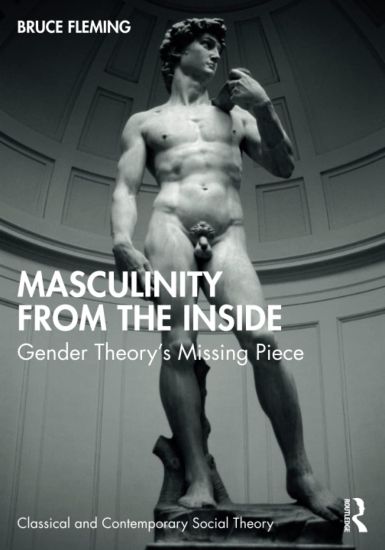
Rejecting the vocabulary and presuppositions common in Western talk about men, this book considers the ways in which men see, speak about, and understand themselves. Based on the author’s experience of teaching young men at a military academy and drawing on a range of theory, it identifies a disconnect between academic discourses on “masculinity,” based as these are on theoretical positions that describe the world from a position of “outsidership,” and the reality of most men’s experience—or, the way in which men see themselves. With an erroneous view of men dominating the airwaves, most men simply fail to engage, leaving the mistaken conceptions of masculinity to circulate and allowing policies to develop that treat men as predators and aggressors. Presenting insights into masculinity drawn from experience with young men drawn toward military life, Masculinity from the Inside seeks to address the gulf between scholarly understandings of men and men’s own understandings of themselves. It will therefore appeal to scholars and students of sociology, cultural studies, and gender studies, to anyone with interests in contemporary masculinity and the question of what it means to be a man.
Masculinity from the Inside

Masculinity from the Inside

Bruce Fleming

TAYLOR FRANCIS LTD
2022
sidottu
Rejecting the vocabulary and presuppositions common in Western talk about men, this book considers the ways in which men see, speak about, and understand themselves. Based on the author’s experience of teaching young men at a military academy and drawing on a range of theory, it identifies a disconnect between academic discourses on “masculinity,” based as these are on theoretical positions that describe the world from a position of “outsidership,” and the reality of most men’s experience—or, the way in which men see themselves. With an erroneous view of men dominating the airwaves, most men simply fail to engage, leaving the mistaken conceptions of masculinity to circulate and allowing policies to develop that treat men as predators and aggressors. Presenting insights into masculinity drawn from experience with young men drawn toward military life, Masculinity from the Inside seeks to address the gulf between scholarly understandings of men and men’s own understandings of themselves. It will therefore appeal to scholars and students of sociology, cultural studies, and gender studies, to anyone with interests in contemporary masculinity and the question of what it means to be a man.
The Civilizing Process and the Past We Now Abhor
Drawing on the thought of Norbert Elias and using as a thread a purposely apolitical example of cruelty to animals to focus on changes in attitudes, this book explores the ways in which we deal with a past that we now abhor. As we struggle to deal with the fact that our past shapes us—indeed is us, but is not us—and cannot be changed, the modern tendency is to demand merely cosmetic rather than real changes to the world and to judge harshly the individuals with whom the past is populated, pulling down statues or re-naming institutions. An examination of our modern colonialism of time rather than place, which refuses to consider or accept the fact that without our past, we wouldn’t be here at all, let alone in a position to judge, The Civilizing Process and the Past We Now Abhor will appeal to scholars and students of sociology, cultural studies, and literature with interests in contemporary questions of race, morality, and efforts to correct the wrongs of our past.
The Civilizing Process and the Past We Now Abhor
Drawing on the thought of Norbert Elias and using as a thread a purposely apolitical example of cruelty to animals to focus on changes in attitudes, this book explores the ways in which we deal with a past that we now abhor. As we struggle to deal with the fact that our past shapes us—indeed is us, but is not us—and cannot be changed, the modern tendency is to demand merely cosmetic rather than real changes to the world and to judge harshly the individuals with whom the past is populated, pulling down statues or re-naming institutions. An examination of our modern colonialism of time rather than place, which refuses to consider or accept the fact that without our past, we wouldn’t be here at all, let alone in a position to judge, The Civilizing Process and the Past We Now Abhor will appeal to scholars and students of sociology, cultural studies, and literature with interests in contemporary questions of race, morality, and efforts to correct the wrongs of our past.
The End of the Modernist Era in Arts and Academia
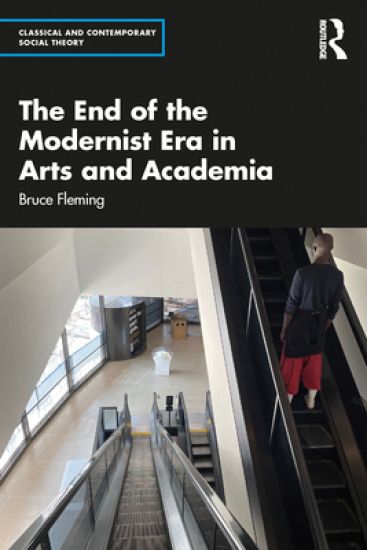
This book identifies the—now moribund—Modernist spirit of the twentieth century, with its "make it new" attitude in the arts, and its tendency towards abstraction and the scientific process, as the impetus behind the academic structures of universities and museums, together with the development of discrete scholarly disciplines such as literary theory, sociology, and art history based on quasi-scientific principles. Arguing that the Modernist project is approaching exhaustion and that the insights that it has left to yield are approaching triviality, it explores the Modernist links between the arts and academic pursuits of the West—and their relationship with street protests—in the long twentieth century, considering what might follow this Modernist era. An examination of the broad cultural and intellectual—and now political—trends of our age, and their decline, The End of the Modernist Era in Arts and Academia will appeal to scholars and students of social theory, philosophy, literary studies, and cultural studies.
The End of the Modernist Era in Arts and Academia
This book identifies the—now moribund—Modernist spirit of the twentieth century, with its "make it new" attitude in the arts, and its tendency towards abstraction and the scientific process, as the impetus behind the academic structures of universities and museums, together with the development of discrete scholarly disciplines such as literary theory, sociology, and art history based on quasi-scientific principles. Arguing that the Modernist project is approaching exhaustion and that the insights that it has left to yield are approaching triviality, it explores the Modernist links between the arts and academic pursuits of the West—and their relationship with street protests—in the long twentieth century, considering what might follow this Modernist era. An examination of the broad cultural and intellectual—and now political—trends of our age, and their decline, The End of the Modernist Era in Arts and Academia will appeal to scholars and students of social theory, philosophy, literary studies, and cultural studies.
Bridging the Military-Civilian Divide

Bridging the Military-Civilian Divide

Bruce Fleming

Potomac Books Inc
2010
sidottu
Civilians and military personnel do not have a clear view of each other in the United States today. Conspiring against such understanding are the norms and traditions of the two cultures. On the one hand, the military is considered to like its secrecy and think of itself as morally superior to the civilians it is meant to serve. On the other hand, civilians praise or blame the armed forces based on political exigencies and generally without true comprehension of their culture. And their mutual misperceptions seem greater now than in the late 1960s and early 1970s during the Vietnam War. Yet, as U.S. Naval Academy professor Bruce Fleming points out, the military is linked to the civilian world so fundamentally that all of us pay the price if they do not develop an appreciation of one another—but that is achievable only if each side also strives to see itself clearly. As the military fulfills its mission of protecting Americans and their way of life, civilians must also do their part and support the military through budget allocations, legislation, and enlistment. Without this shared commitment, American interests suffer as a whole. Fleming shows how to close a military-civilian gap that yawns so large in twenty-first-century America that it potentially threatens national security and essential freedoms.
Running is Life

Running is Life

Bruce Fleming

University Press of America
2010
nidottu
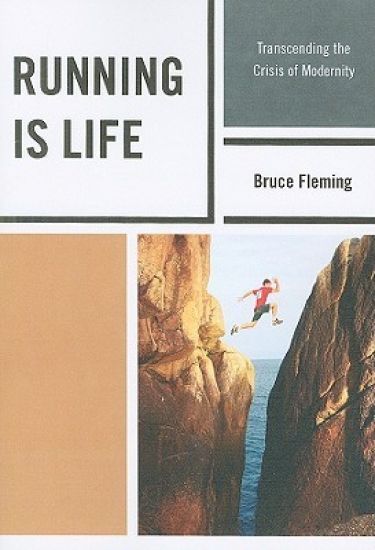
Running feels good. It also centers the runner in the world, solves the problems implied by the Cartesian split between body and soul, and establishes an active relationship between the self and others. Running takes the motion we are all born with (that is the essence of life) and with the individual providing the impetus, projects us into the world of others. When we run, we transcend ourselves and place ourselves in the world. Running is Life is set in many places—Cairo, the Eastern Sierras, Las Vegas, New York's Adirondack Mountains, and Barcelona, among others—but always in the moving body of the runner hurtling both through and into the world. Running is Life is both a hymn to human motion and an explanation of its sweetness.
Homage to Eugene O'Neill

Homage to Eugene O'Neill

Bruce Fleming

University Press of America
2008
nidottu
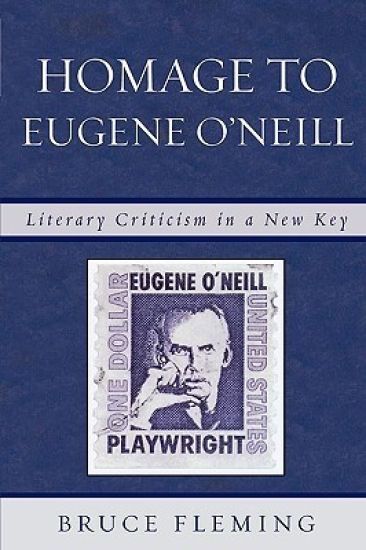
Homage to Eugene O'Neill re-invokes O'Neill's own muses to offer a re-conception of his artistic world, a re-enactment, and an entirely new work not so much in the style but in the spirit of the Nobel-prize winning American dramatist. Most closely allied with Strange Interlude but with echoes as well of Long Day's Journey Into Night and Morning Becomes Electra, Homage to Eugene O'Neill breathes new life into an epic sweep of familial history: the rise, fall, and perhaps rise again of a family of North Carolina industrialists-a family which may have bought its success by sacrificing its son to war, a family of weak men and strong women, a family that both embraces and tries to understand its tumultuous fate. Homage to Eugene O'Neill is both new work and an old, speaking through the masks of the ancestors, causing them to live anew-the literary criticism of the future.
The Thanksgiving Symposium

The Thanksgiving Symposium

Bruce Fleming

University Press of America
2007
nidottu
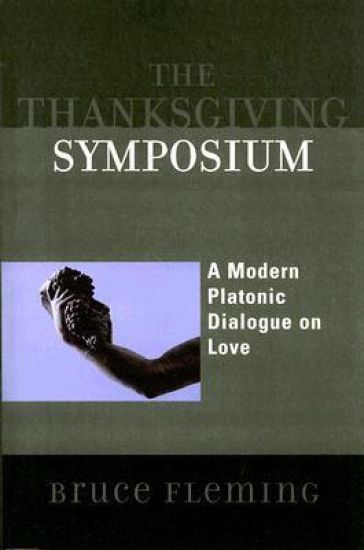
What if Plato's Symposium took place in present-day America rather than in ancient Athens? The Thanksgiving Symposium imagines this, and makes it happen. Like Plato's dialogue, The Thanksgiving Symposium focuses on the age-old question: what is the nature of love? In The Thanksgiving Symposium, three men and three women of varying ages and degrees of closeness meet for Thanksgiving dinner. Their particular situations give rise to a discussion of love in the general and the specific, leavened with the normal give and take of social interaction. During the evening, much is discussed and some things are decided. Plato's dialogue verges on being a play about philosophy rather than a philosophy, people discussing things rather than a philosopher telling us what to conclude. The Thanksgiving Symposium develops this aspect of Plato while offering a new philosophy that responds to the old. Is the result a play? A dialogue? A philosophy? Like Plato's Symposium, it is all of these at once.
Bill the Goat's Adult Refresher Guide to Writing

Bill the Goat's Adult Refresher Guide to Writing

Bruce Fleming

University Press of America
2007
nidottu
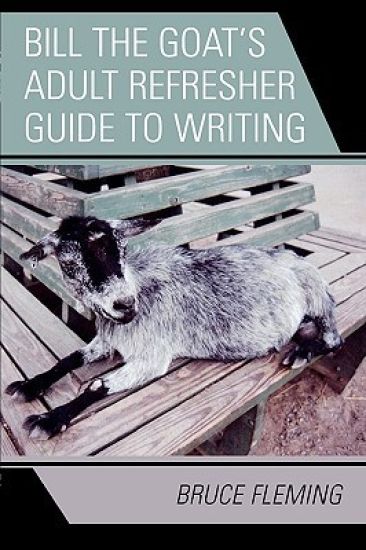
Many otherwise competent adults are wobbly writers, whether they're college students or already thriving in a job. They probably exhibit a "go get 'em" attitude for most of their lives, but find themselves stumped by a blank computer screen or a piece of paper. What, they wonder, do I do now? What's my next word, next sentence? But their problems aren't solved by somebody telling them what to do, only by someone helping them figure things out themselves. As the adage says: give a person a fish and s/he eats that day; teach a person to fish and s/he eats for life. They need a little help from Bill the Goat. Bill is the mascot of the U.S. Naval Academy, where Bruce Fleming has taught literature and writing for over twenty years. Bill is the fellow, or at least the old goat, who's reading what you've written. The secret to answering your question, "What do I do now?" is seeing writing not from your own perspective, but from Bill's. Learning to write is difficult, like learning to act. What you feel doesn't matter, only what it looks like to the audience. Your audience is Bill. Bill the Goat's Adult Refresher Guide to Writing isn't a reference book, to be kept tucked into your office bookshelf for crisis management. Even its grammar section is different from usual grammar brush-ups. It's a book to be read and internalized, a book to re-align the way you conceive. It's a book for the beach, the porch, the subway, or an armchair. It's fun to read. You're the Bill for this book, after all. It's for students and executives, leaders and followers, everybody who has to communicate effectively in writing. You don't even have to hide this book behind another when you read it. There's no shame in a refresher course from Bill. He's your buddy, and he's here to remind you that when you make mistakes, he pays the price. This is grammar without guilt, syntax without a sense of sin. It's pure pragmatics. If you want Bill to get your point, you have to keep him in mind.
The Aesthetic Sense of Life

The Aesthetic Sense of Life

Bruce Fleming

University Press of America
2007
nidottu
The Aesthetic Sense of Life is a fast-moving book about how to see the world and get value from living every day with the "everyday." Do the infinite number of sensations we're surrounded with every day have intrinsic value? If not, what gives them value? Who appreciates the sunrise if we don't? Is it enough for just us to appreciate it? Or do we have to share it? The Aesthetic Sense of Life considers and answers to questions such as these in clear, readable prose, offering a way of looking at life that makes clear its value and its meaning. The aesthetic sense of life is neither the viewpoint of the saints—for whom the sensations of the world are mere murmuring and illusion—nor the viewpoint of those completely fulfilled by their things, their gadgets, the particulars of their own lives. Most of us fall in the middle between these two extremes: we appreciate, say, a good cup of coffee, a power tool, a new set of towels, or a juicy steak, but don't think the answer to the riddle of existence is to be found in any of these. We appreciate them without thinking them sufficient. What's missing from them? What's missing is this: a sense that they can give meaning to life. The Aesthetic Sense of Life proposes that meaning is found not in these particulars, but in consciousness of the patterns they form. The feel of our towels or the taste of our coffee is just for us. Others have their own sensations, so they don't need ours. What we can share with other people, and thus use to re-establish the bonds of human warmth, are the patterns made by these particulars, something others can appreciate as well. Awareness of these patterns constitutes the aesthetic sense of life, which gives richness and meaning to the everyday.
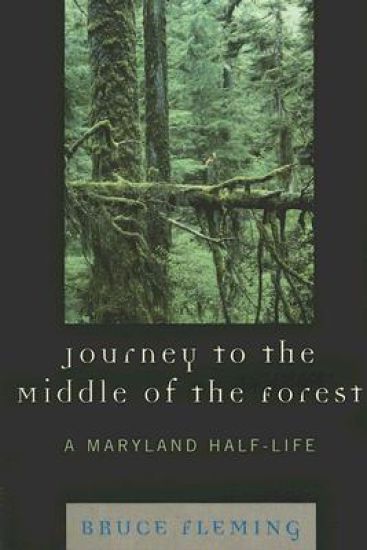
Journey to the Middle of the Forest

Journey to the Middle of the Forest

Bruce Fleming

Hamilton Books
2007
nidottu
What is the taste of life as we really live it, rather than the way we imagine it in others? What does it feel like to become aware of the hand of cards we've been dealt, to play them as well as we can, to understand what has happened to us, and to try to control the future? Journey to the Middle of the Forest answers these questions in a way that celebrity memoirs, where events seem so much more intense than happenings in our own lives because of our perspective and the writer's fame, cannot. In Journey to the Middle of the Forest, Bruce Fleming considers the slippages between presupposition and reality in a life begun and continued in Maryland, with intervals in pre-civil war Rwanda, the walled-in city of West Berlin, and the central European Freiburg im Breisgau, once Austrian, then part of the Duchy of Baden, now part of Germany. Like all lives, it has its crises—more, it may be, than an average life: a childhood marked by an alcoholic and abusive father, a marriage gone horribly awry, an autistic child and a bipolar stepchild, a dragged-out divorce, the death of a brother to AIDS, and the re-tooling of hopes to meet the new givens of the world. And, then re-marriage, two little boys, and the threat of childhood leukemia. Fleming's intense and vivid memoir asks us to consider this fundamental question: Do we gain wisdom as we age? We may tell ourselves we do, as a way of summarizing what's happened to us: we figure everything we've been through has to be good for something. But if we do become wiser, it's not with a wisdom that can help us with any subsequent challenge-and the challenges never cease. Life gets no easier as we age, we just get deeper into the forest.