Kirjojen hintavertailu. Mukana 12 595 353 kirjaa ja 12 kauppaa.

Kirjailija

Bruno Latour

Kirjat ja teokset yhdessä paikassa: 62 kirjaa, julkaisuja vuosilta 1986-2026, suosituimpien joukossa Prospecting Ocean. Vertaile teosten hintoja ja tarkista saatavuus suomalaisista kirjakaupoista.

62 kirjaa

Kirjojen julkaisuhaarukka 1986-2026.

Critical Zones

Critical Zones

Bruno Latour

MIT Press
2020
sidottu
This monumental volume, drawn from a 2020 exhibition at the ZKM Center for Art and Media, portrays the disorientation of life in world facing climate change. It traces this disorientation to the disconnection between two different definitions of the land on which modernizing humans live- the sovereign nation from which they derive their rights, and another one, hidden, from which they gain their wealth--the land they live on, and the land they live from. Charting the land they will inhabit, they find not a globe, not the iconic "blue marble," but a series of critical zones--patchy, heterogenous, discontinuous.
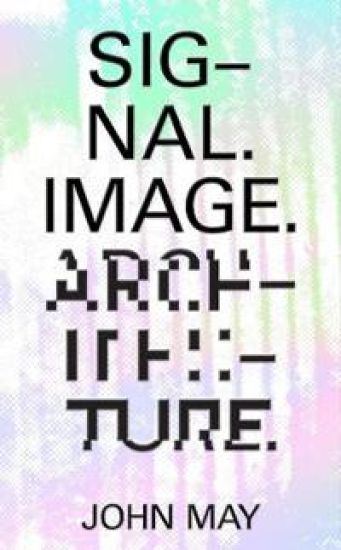
Signal. Image. Architecture.

Signal. Image. Architecture.

John May; Bruno Latour

Columbia Books on Architecture and the City
2019
nidottu
Architecture is immersed in an immense cultural experiment called imaging. ?Yet the technical status and nature of that imaging must be reevaluated. What happens to the architectural mind when it stops pretending that electronic images of drawings made by computers are drawings? When it finally admits that imaging is not drawing, but is instead something that has already obliterated drawing? These are questions that, in general, architecture has scarcely begun to pose?, ?imagining that somehow its ideas and practices can resist the culture of imaging in which ?the rest of life now either swims or drowns. To patiently describe the world to oneself is to prepare the ground for an as yet unavailable politics. New descriptions can, under the right circumstances, be made to serve as the raw substrate for political impulses that cannot yet be expressed or lived, because their preconditions have not been arranged and articulated. Signal. Image. Architecture.? aims to clarify the status of computational images in contemporary architectural thought and practice by showing what happens if the technical basis of architecture is examined very closely, if its technical terms and concepts are taken very seriously, at times even literally. It is not a theory of architectural images, but rather a brief philosophical description of architecture after imaging.
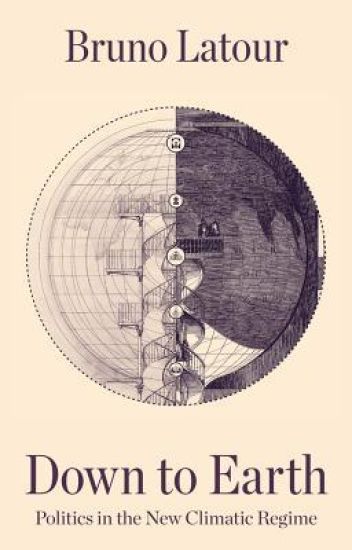
Down to Earth

Down to Earth

Bruno Latour

Polity Press
2018
sidottu
The present ecological mutation has organized the whole political landscape for the last thirty years. This could explain the deadly cocktail of exploding inequalities, massive deregulation, and conversion of the dream of globalization into a nightmare for most people. What holds these three phenomena together is the conviction, shared by some powerful people, that the ecological threat is real and that the only way for them to survive is to abandon any pretense at sharing a common future with the rest of the world. Hence their flight offshore and their massive investment in climate change denial.The Left has been slow to turn its attention to this new situation. It is still organized along an axis that goes from investment in local values to the hope of globalization and just at the time when, everywhere, people dissatisfied with the ideal of modernity are turning back to the protection of national or even ethnic borders.This is why it is urgent to shift sideways and to define politics as what leads toward the Earth and not toward the global or the national. Belonging to a territory is the phenomenon most in need of rethinking and careful redescription; learning new ways to inhabit the Earth is our biggest challenge. Bringing us down to earth is the task of politics today.
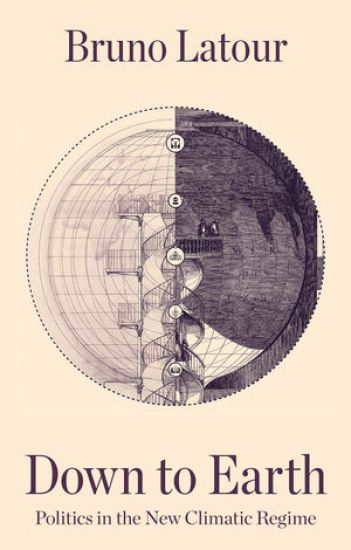
Down to Earth

Down to Earth

Bruno Latour

Polity Press
2018
nidottu
The present ecological mutation has organized the whole political landscape for the last thirty years. This could explain the deadly cocktail of exploding inequalities, massive deregulation, and conversion of the dream of globalization into a nightmare for most people. What holds these three phenomena together is the conviction, shared by some powerful people, that the ecological threat is real and that the only way for them to survive is to abandon any pretense at sharing a common future with the rest of the world. Hence their flight offshore and their massive investment in climate change denial.The Left has been slow to turn its attention to this new situation. It is still organized along an axis that goes from investment in local values to the hope of globalization and just at the time when, everywhere, people dissatisfied with the ideal of modernity are turning back to the protection of national or even ethnic borders.This is why it is urgent to shift sideways and to define politics as what leads toward the Earth and not toward the global or the national. Belonging to a territory is the phenomenon most in need of rethinking and careful redescription; learning new ways to inhabit the Earth is our biggest challenge. Bringing us down to earth is the task of politics today.
Aramis

Aramis

Bruno Latour; Henning Schmidgen

Mohr Siebeck
2018
sidottu
"Aramis ist eine automatische Metro, die fast im Süden von Paris gebaut worden wäre. Ich habe daraus den Helden eines Dossiers in Szientifiktion gemacht. Alle Abenteuer dieses nicht-menschlichen Helden werden wahrheitsgetreu berichtet. Aber sie erscheinen nie wahrscheinlich, weil wir es nicht gewohnt sind, die Liebe und den Hass einer Spitzentechnologie im Detail zu erforschen. Zum ersten Mal, glaube ich, entfaltet sich vor unseren Augen die Geschichte einer soziologischen Untersuchung und die Liebesgeschichte einer Maschine. Zum ersten Mal sprechen auch die Ingenieure direkt, und ihre Stimmen wie ihre Dokumente gleichen kaum dem furchterregenden Mythos von der seelenlosen Technik."Basierend auf zahlreichen Interviews, technischen Berichten und Dokumentationen spürt Bruno Latour dem gescheiterten Großprojekt eines modularen Nahverkehrssystems nach. Latour analysiert dieses Scheitern in Form eines literarisch anspruchsvollen Hybrids aus Kriminalroman und Wissenschafts- bzw. Technikforschung. Die verschiedenen Akteure dieser Geschichte eines hochkomplexen Mensch-Ding-Systems - Menschen, Schaltpläne, Motoren, Prototypen, Schienensysteme etc. - kommen dabei in einer Weise gleichberechtigt zu Wort, die für das Verständnis der Akteur-Netzwerk-Analyse von exemplarischem Wert ist. Die Schriftenreihe Historische Wissensforschung eröffnet mit der ersten deutschen Übersetzung dieses Klassikers ihre Rubrik "Unter dem Radar", in deren Rahmen vergessene oder schwer zugängliche Arbeiten der Wissenssoziologie und -geschichte vorgelegt und historisch kontextualisiert werden.
An Inquiry into Modes of Existence

An Inquiry into Modes of Existence

Bruno Latour

Harvard University Press
2018
nidottu
Over the past twenty-five years, Bruno Latour has developed a research protocol different from the actor-network theory with which his name is now associated—a research protocol that follows the different types of connectors that provide specific truth conditions. These are the connectors that prompt a climate scientist challenged by a captain of industry to appeal to the institution of science, with its army of researchers and mountains of data, rather than to “capital-S Science” as a higher authority. Such modes of extension—or modes of existence, Latour argues here—account for the many differences between law, science, politics, and other domains of knowledge.“Magnificent…An Inquiry into Modes of Existence shows that [Latour] has lost none of his astonishing fertility as a thinker, or his skill and wit as a writer…Latour’s main message—that rationality is ‘woven from more than one thread’—is intended not just for the academic seminar, but for the public square—and the public square today is global as never before.”—Jonathan Rée, Times Literary Supplement“Latour’s work makes the world—sorry, worlds—interesting again.”—Stephen Muecke, Los Angeles Review of Books
Ned på Jorden

Ned på Jorden

Bruno Latour

Informations Forlag
2018
nidottu
"Opfindsom, engageret, velskrevet" ????? – PolitikenI dette flammeskrift nytænker den anerkendte, franske antropolog Bruno Latour forbindelserne mellem ulighed, globalisering og klimakrise. Ironisk takker han Donald Trumps klimafornægtelse og USA's udtrædelse af Paris-aftalen for at overbevise mange om, at nu må der handles. Klodens velstand koncentreres på færre og færre hænder, nationalismen blomstrer og hundredetusinder af mennesker er på flugt som følge af naturkatastrofer, superstorme og oversvømmelserIfølge Latour er nationalstaten forældet som løsningsmodel for samtidens problemer med klima, migration og finansspekulation. Sociale og territoriale spørgsmål om, hvad vi er knyttet til og hvad vi kæmper for, hænger sammen, og det europæiske samarbejde – som historisk, innovativt eksperiment – må være rammen for at besvare politisk presserende spørgsmål på tværs af traditionelle, ideologiske skel. OM FORFATTERENBruno Latour (f. 1947) er antropolog og filosof og regnes for en af de største, nulevende franske tænkere. Han er professor ved Sciences-Po i Paris og har udgivet et utal af bøger og artikler.
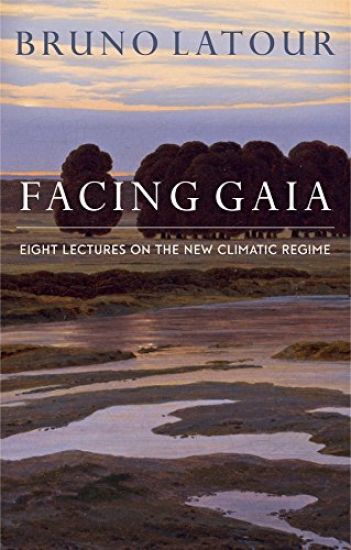
Facing Gaia

Facing Gaia

Bruno Latour

Polity Press
2017
sidottu
The emergence of modern sciences in the seventeenth century profoundly renewed our understanding of nature. For the last three centuries new ideas of nature have been continually developed by theology, politics, economics, and science, especially the sciences of the material world. The situation is even more unstable today, now that we have entered an ecological mutation of unprecedented scale. Some call it the Anthropocene, but it is best described as a new climatic regime. And a new regime it certainly is, since the many unexpected connections between human activity and the natural world oblige every one of us to reopen the earlier notions of nature and redistribute what had been packed inside. So the question now arises: what will replace the old ways of looking at nature? This book explores a potential candidate proposed by James Lovelock when he chose the name 'Gaia' for the fragile, complex system through which living phenomena modify the Earth. The fact that he was immediately misunderstood proves simply that his readers have tried to fit this new notion into an older frame, transforming Gaia into a single organism, a kind of giant thermostat, some sort of New Age goddess, or even divine Providence. In this series of lectures on 'natural religion,' Bruno Latour argues that the complex and ambiguous figure of Gaia offers, on the contrary, an ideal way to disentangle the ethical, political, theological, and scientific aspects of the now obsolete notion of nature. He lays the groundwork for a future collaboration among scientists, theologians, activists, and artists as they, and we, begin to adjust to the new climatic regime.
Facing Gaia

Facing Gaia

Bruno Latour

Polity Press
2017
nidottu
The emergence of modern sciences in the seventeenth century profoundly renewed our understanding of nature. For the last three centuries new ideas of nature have been continually developed by theology, politics, economics, and science, especially the sciences of the material world. The situation is even more unstable today, now that we have entered an ecological mutation of unprecedented scale. Some call it the Anthropocene, but it is best described as a new climatic regime. And a new regime it certainly is, since the many unexpected connections between human activity and the natural world oblige every one of us to reopen the earlier notions of nature and redistribute what had been packed inside. So the question now arises: what will replace the old ways of looking at nature? This book explores a potential candidate proposed by James Lovelock when he chose the name 'Gaia' for the fragile, complex system through which living phenomena modify the Earth. The fact that he was immediately misunderstood proves simply that his readers have tried to fit this new notion into an older frame, transforming Gaia into a single organism, a kind of giant thermostat, some sort of New Age goddess, or even divine Providence. In this series of lectures on 'natural religion,' Bruno Latour argues that the complex and ambiguous figure of Gaia offers, on the contrary, an ideal way to disentangle the ethical, political, theological, and scientific aspects of the now obsolete notion of nature. He lays the groundwork for a future collaboration among scientists, theologians, activists, and artists as they, and we, begin to adjust to the new climatic regime.
Thinking with Whitehead

Thinking with Whitehead

Isabelle Stengers; Bruno Latour

Harvard University Press
2014
nidottu
Alfred North Whitehead has never gone out of print, but for a time he was decidedly out of fashion in the English-speaking world. In a splendid work that serves as both introduction and erudite commentary, Isabelle Stengers—one of today’s leading philosophers of science—goes straight to the beating heart of Whitehead’s thought. The product of thirty years’ engagement with the mathematician-philosopher’s entire canon, this volume establishes Whitehead as a daring thinker on par with Gilles Deleuze, Felix Guattari, and Michel Foucault.Reading the texts in broadly chronological order while highlighting major works, Stengers deftly unpacks Whitehead’s often complicated language, explaining the seismic shifts in his thinking and showing how he called into question all that philosophers had considered settled after Descartes and Kant. She demonstrates that the implications of Whitehead’s philosophical theories and specialized knowledge of the various sciences come yoked with his innovative, revisionist take on God. Whitehead’s God exists within a specific epistemological realm created by a radically complex and often highly mathematical language.“To think with Whitehead today,” Stengers writes, “means to sign on in advance to an adventure that will leave none of the terms we normally use as they were.”
Rejoicing

Rejoicing

Bruno Latour

Polity Press
2013
nidottu
Bruno Latour’s long term project is to compare the felicity and infelicity conditions of the different values dearest to the heart of those who have ‘never been modern’. According to him, this is the only way to develop an anthropology of the Moderns. After his work on science, on technology and, more recently, on law, this book explores the truth conditions of religious speech acts. Even though there is no question that religion is one of the values that has been intensely cherished in the course of history, it’s also clear that it has become immensely difficult to tune in to its highly specific mode of enunciation. Every effort to speak in the right key sounds awkward, reactionary, pious or simply empty. Hence the necessity of devising a way of writing that brings to the fore this elusive form of speech to render it audible again. In this highly original book, the author offers a completely different tack on the endless ‘science and religion’ conflict by protecting them both from the confusion with the notion of information. Like The Making of Law, this book is one more attempt at developing this ‘inquiry on modes of existence’ that provides an alternative definition of society.
Rejoicing

Rejoicing

Bruno Latour

Polity Press
2013
sidottu
Bruno Latour’s long term project is to compare the felicity and infelicity conditions of the different values dearest to the heart of those who have ‘never been modern’. According to him, this is the only way to develop an anthropology of the Moderns. After his work on science, on technology and, more recently, on law, this book explores the truth conditions of religious speech acts. Even though there is no question that religion is one of the values that has been intensely cherished in the course of history, it’s also clear that it has become immensely difficult to tune in to its highly specific mode of enunciation. Every effort to speak in the right key sounds awkward, reactionary, pious or simply empty. Hence the necessity of devising a way of writing that brings to the fore this elusive form of speech to render it audible again. In this highly original book, the author offers a completely different tack on the endless ‘science and religion’ conflict by protecting them both from the confusion with the notion of information. Like The Making of Law, this book is one more attempt at developing this ‘inquiry on modes of existence’ that provides an alternative definition of society.