Kirjailija
Cees Nooteboom
Kirjat ja teokset yhdessä paikassa: 66 kirjaa, julkaisuja vuosilta 1996-2024, suosituimpien joukossa All Souls' Day. Vertaile teosten hintoja ja tarkista saatavuus suomalaisista kirjakaupoista.
66 kirjaa
Kirjojen julkaisuhaarukka 1996-2024.
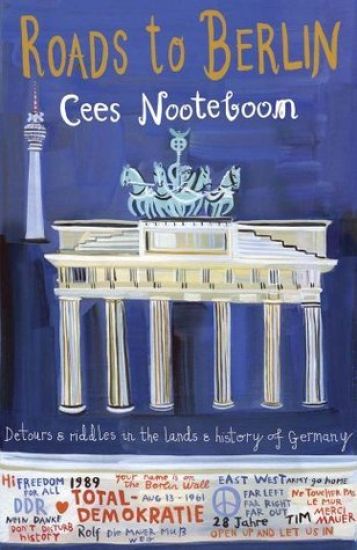
Roads to Berlin maps the changing landscape of Germany, from the period before the fall of the Wall to the present. Written and updated over the course of several decades, an eyewitness account of the pivotal events of 1989 gives way to a perceptive appreciation of its difficult passage to reunification. Nooteboom's writings on politics, people, architecture and culture are as digressive as they are eloquent; his innate curiosity takes him through the landscapes of Heine and Goethe, steeped in Romanticism and mythology, and to Germany's baroque cities. With an outsider's objectivity he has crafted an intimate portrait of the country to its present day.


A morose provincial inspector of roads in Aragon settles down to write the fable of the Snow Queen. The Netherlands has now been stretched into a vast country with Northern flatlands and hazardous Alpine ranges in the south. Kai and Lucia are circus illusionists, and when Kai is kidnapped, Lucia must rescue him from the Snow Queen's palace. In the Dutch Mountains is an elegantly constructed story within a story, laced with the wit that characterises the work of this outstanding European writer.
In Rituals, Amsterdam of the fifties, sixties and seventies is viewed from the perspective of the capricious Inni Wintrop. An unintentional suicide survivor, the unexpected gift of life returned lends him the curiousity, and impartiality, to survey others' lives and rountines. Inni's opposite, the one-eyed downhill skier Arnold Taads measures his life by the clock, while his disowned son Philip follows Japanese rituals which themselves seem to render his existence meaningless. A novel for those who seek to unravel our mysterious, apparently directionless lives...

Set in the cities and islands of the Mediterranean, and linked thematically, the eight stories in The Foxes Come at Night read more like a novel, a meditation on memory, life and death. Their protagonists collect and reconstruct fragments of lives lived intensely, and now lost, crystallized in memory or in the detail of a photograph. And yet the tone of these stories is far from pessimistic: it seems that death is nothing to be afraid of.
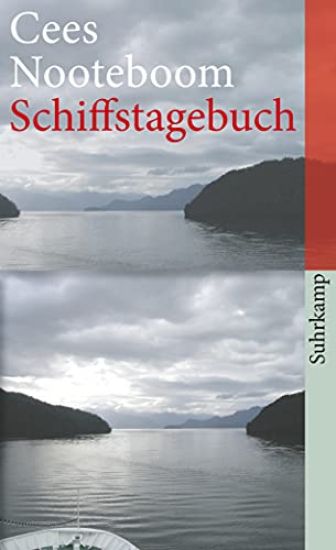
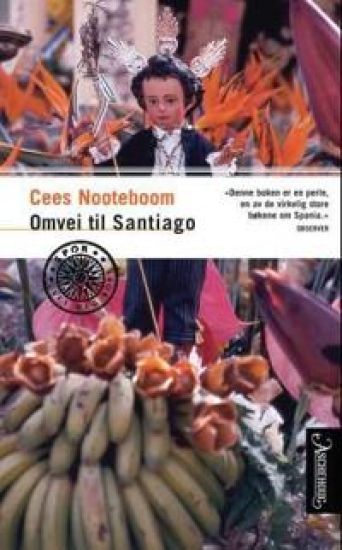
Cees Nooteboom, som er en vår tids største nederlandske forfattere, har også skrevet en rekke reiseskildringer. I "Omvei til Santiago" tar han leseren med på en personlig og følelsesladet kulturhistorisk reise gjennom et Spania, som vil være ukjent for de fleste. Boken bygger på forfatterens uttallige reiser til dette landet gjennom 40 år og er en uforbeholden kjærlighetserklæring til dette uutgrunnelige og gåtefulle landet. Her fortelles det om alt fra landskapet Don Quijote og Sancho Panza vandret gjennom, til Pradomuseet og den spanske borgerkrig. Nysgjerrigheten bringer Nooteboom inn på stadig nye avveier, før han til slutt når Santiago de Compostela, byen som har vært målet for pilegrimer helt siden middelalderen. "Omvei til Santiago" er en reise i tid og rom gjennom 1000 års spansk historie og kultur.
I forfatterens poesi opptrer persepsjonen som den viktigste referansen. I denne boken domineres komposisjonen fullstendig av figuren øyet. Forfatteren lar også inntrykk fra andre kulturer nedfelles i sin poesi. Som poet er han utpreget elektiker.
In Lost Paradise, Nooteboom sets out to connect two seemingly unrelated strangers whom he has glimpsed on his travels, and to explore the major impact that small interactions can have on the course of our journeys. A beautiful woman aboard a Berlin-bound flight becomes Alma, a young lady who leaves her parents' Sao Paolo home on a hot summer night in a fit of depression. Her car engine dies in one of the city's most dangerous favelas, a mob surrounds her, and she is pulled from the automobile. To escape her memory of the assault, she flees across the world, to Australia, where she becomes involved in the beautiful but bizarre Angel Project. Not long after, Dutch literary critic Erik Zontag is in Perth, Australia, for a conference. He has found a winged woman curled up in a closet in an empty house. He reaches out, and for a second allows his fingertips to brush her feathers--and then she speaks. The intersection of their paths illuminates the extraordinary coincidences that propel our lives.

Als Cees Nootebooms Reisebericht erstmals erscheint, ist man sich einig: Mit Der Umweg nach Santiago liegt das Spanienbuch schlechthin vor. Nooteboom bricht von Barcelona nach Santiago de Compostela auf, ohne jede Eile, denn der Weg ist das Ziel. Der große niederländische Erzähler ergänzt sein erfolgreiches Reisebuch nun durch weitere Texte über das Land seiner Leidenschaft.
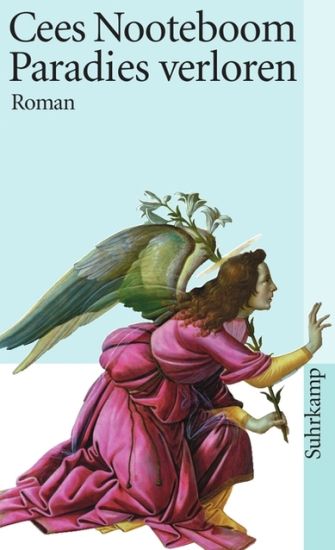
Wer hat bloß die Engel aus der Welt verbannt, obwohl ich sie noch immer um mich spüre?" Ein überraschender Gedanke für eine junge Frau, die am eigenen Leibe erfahren mußte, daß unsere Welt "mehr mit der Hölle zu tun hat als mit dem Paradies". Alma ist eines Abends auf einer ziellosen Fahrt durch Sao Paulo in die Favela Parais?polis geraten und vergewaltigt worden. Um den Schatten zu bannen, reist sie mit ihrer Freundin Almut in das Land ihrer gemeinsamen Kindheitsträume, Australien, und begegnet in der Leere der Wüste einer Stille, die sie versöhnt. Doch die Traumzeit ist längst vergangen, die mythische Welt der Aborigines versunken: "Mein Australien war eine Fiktion." Alma nimmt Abschied von den Reservaten des Garten Eden und macht die Welt zu ihrer Wüste - nicht ohne darin ihre Spuren zu hinterlassen. Ob von Füßen oder Flügeln: dem alternden Literaturkritiker, dessen Weg sie kreuzt, ist sie eine Offenbarung des Himmels. In seinem neuen Roman erbringt Cees Nooteboom den poetischen Beweis dafür, daß Phantasie Flügel verleiht und daß die Verstoßung aus dem Paradies das Beste war, das Gott für die Literatur hatte tun können. Denn Geschichten sind wie Engel, sie verkehren zwischen dem Irdischen und dem Imaginären, mit einer entscheidenden Einschränkung: die Passage verläuft nicht ohne Störungen, das ist ihr Ursprung. Der Irrfahrt Almas erwächst eine der schönsten Geschichten seit Miltons Dichtung über Adam und Eva.

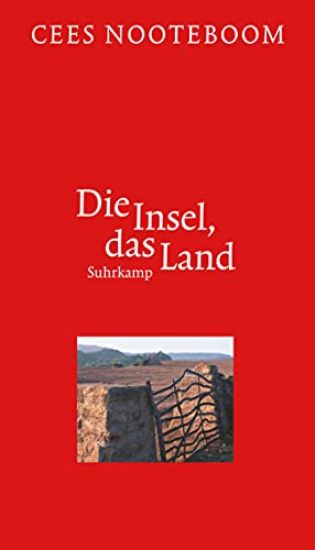
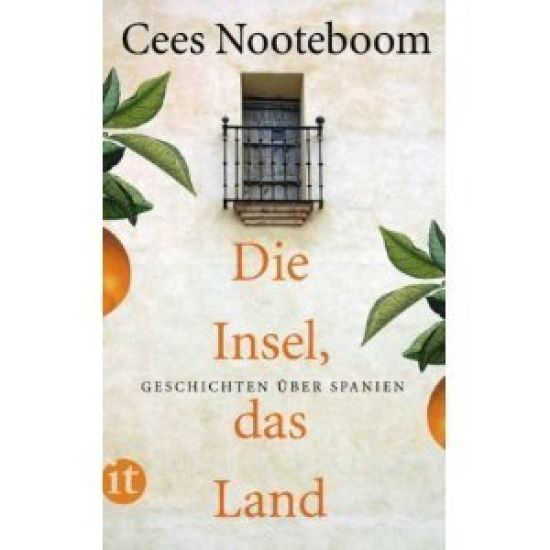
?Ich bin wieder angekommen in meinem Sommerdomizil. Die herrenlose Katze hat sich zum Fressen eingefunden, die Palmen sind um einen unsichtbaren Zentimeter gewachsen, da sind die Bücher wieder, die ich vergessen habe, und ich nehme Platz gegenüber der weiß verputzten Natursteinmauer, die mich schon seit fast zwanzig Jahren mit ihrer Leere erregt.? Jedes Jahr im Juli landet Cees Nooteboom auf seiner Insel Menorca und bringt von dort und anderen Teilen Spaniens Geschichten mit, denen wir in seinen Romanen, seinen Feuilletons, Reportagen und Gedichten wiederbegegnen. In Die Insel, das Land erzählt der große Autor von Don Miguel, dem 87 Jahre alten Postboten, von einem Mädchen namens ?Schnee? und einem anderen, das ?Liebe? heißt, von Blumen, der Sonne und dem Meer, erinnert sich an die unvergeßliche Stimme einer spanischen Nachrichtensprecherin, thematisiert aber auch Gefahren, die dem Lande drohen: von Fanatikern und unfähigen Politikern, vom Tourismus, der die Küsten zerstört, und von sozialen Veränderungen, die das Gleichgewicht der Gesellschaft Spaniens gefährden. Nooteboom schildert uns ein Land, in dem ?die Zeit aus Sand? ist und dessen Menschen er mit Zuneigung betrachtet, wissend, daß er nur ein Passant ist, einer aber, der von sich sagen kann: ?Ich liebe Spanien.?