Kirjojen hintavertailu. Mukana 12 390 323 kirjaa ja 12 kauppaa.

Kirjailija

Charles Darwin

Kirjat ja teokset yhdessä paikassa: 1 189 kirjaa, julkaisuja vuosilta 1859-2026, suosituimpien joukossa Lajien synty. Vertaile teosten hintoja ja tarkista saatavuus suomalaisista kirjakaupoista.

1 189 kirjaa

Kirjojen julkaisuhaarukka 1859-2026.

The Voyage of the Beagle

The Voyage of the Beagle

Charles Darwin

Modern Library Inc
2001
pokkari
In 1831, Charles Darwin embarked on an expedition that, in his own words, determined my whole career. The Voyage of the Beagle chronicles his five-year journey around the world and especially the coastal waters of South America as a naturalist on the H.M.S. Beagle. While traveling through these unexplored countries collecting specimens, Darwin began to formulate the theories of evolution and natural selection realized in his master work, The Origin of Species. Travel memoir and scientific primer alike, The Voyage of the Beagle is a lively and accessible introduction to the mind of one of history's most influential thinkers.
Arternes oprindelse

Arternes oprindelse

Charles Darwin

Jørgen Paludans Forlag ApS
1999
nidottu
Charles Darwins banebrydende værk som ligger til grund for al biologisk evolutionsteori. Når man læser Darwins bog, forbavses man over hans alsidighed, viden og kombinationsevne. Han er naturhistoriker af det helt store format og så kendte han store dele af jorden". Få andre bøger har skabt en sådan storm af kontroverser som Arternes Oprindelse. Darwins teori om, at arter stammer fra andre arter ved en gradvis evolutionær proces – og at gennemsnitsniveauet for hver art øges ud fra grundtanken om at – kun den bedst egnede overlever (”the survival of the fittest”), hvilket fik debatten til at tage nye højder. Den senere accept af Darwins teorier, revolutionerede det videnskabens forløb. Darwins bidrag til den moderne videnskab, er altafgørende for, hvordan vi ser verden i dag - og næsten umulig at evaluere. Arternes oprindelse bør læses af alle med interesse indenfor biologi og for verdens evolution. Ligesom bogen har bidraget til heftig debat og fortolkning indenfor områder som filosofi og teologi. Bogen regnes for det vigtigste bidrag til biologien i videnskabens historie.Den originale version af Darwins "Arternes Oprindelse" udgives af Paludans Forlag, hvor bogen indgår i serien blandt klassiske historiske værker.
The Correspondence of Charles Darwin: Volume 11, 1863

The Correspondence of Charles Darwin: Volume 11, 1863

Charles Darwin

Cambridge University Press
1999
sidottu
This volume includes many letters not previously published, and chronicles a year that was enlivened by scientific controversy and filled with scientific queries and discussions relating to Darwin’s transmutation theory. His love of botany and his expanding experimental programme is well depicted by correspondence with professional botanists, horticulturalists, and hobbyists. Nine appendixes complement the letters by providing additional information from the Darwin Archive and from nineteenth-century publications. The letters also provide glimpses of life among the Victorian gentry, and reveal the practical and emotional support Darwin received from his family. Awarded the Founder’s Medal of the Society of the History of Natural History, and the Modern Language Association of America’s first Morton N. Cohen Award for a distinguished edition of letters.
The Origin of Species

The Origin of Species

Charles Darwin

Bantam Books Inc
1999
pokkari
It was sold out on its first day of publication in 1859. It is the major book of the last century and remains the most readable and accessible of all the great revolutionary works of the scientific imagination. It beguiled then and still does today. Darwin's aim was to show the probability that every species is a development from previous species, which implied that man evolved from earlier and different forms of life. Darwin concluded that there exists a "natural selection" of favorable variations, which in the course of years succeeds in producing a variety of living things through this process of evolution. Darwin, like Freud after him, transformed the way people thought about God, the world around them, other people and themselves.
The Origin of Species

The Origin of Species

Charles Darwin; Edward J. Larson

Random House USA Inc
1998
pokkari
Perhaps the most readable and accessible of the great works of scientific imagination, The Origin of Species sold out on the day it was published in 1859. Theologians quickly labeled Charles Darwin the most dangerous man in England, and, as the Saturday Review noted, the uproar over the book quickly "passed beyond the bounds of the study and lecture-room into the drawing-room and the public street." Yet, after reading it, Darwin's friend and colleague T. H. Huxley had a different reaction: "How extremely stupid not to have thought of that."Based largely on Darwin's experience as a naturalist while on a five-year voyage aboard H.M.S. Beagle, The Origin of Species set forth a theory of evolution and natural selection that challenged contemporary beliefs about divine providence and the immutability of species. A landmark contribution to philosophical and scientific thought, this edition also includes an introductory historical sketch and a glossary Darwin later added to the original text.Charles Darwin grew up considered, by his own account, "a very ordinary boy, rather below the common standard of intellect." A quirk of fate kept him from the career his father had deemed appropriate--that of a country parson--when a botanist recommended Darwin for an appointment as a naturalist aboard H.M.S. Beagle from 1831 to 1836. Darwin is also the author of the five-volume work Zoology of the Voyage of the Beagle (1839) and The Descent of Man (1871).
The Origin of Species

The Origin of Species

Charles Darwin

Wordsworth Editions Ltd
1998
nidottu
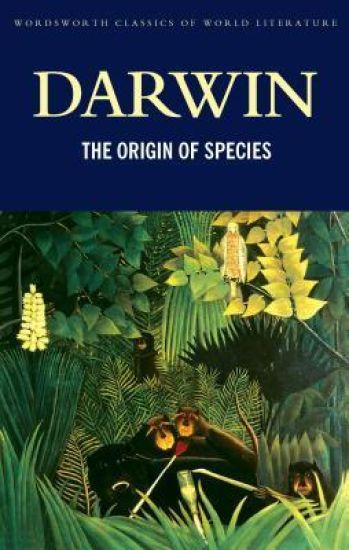
With an Introduction by Jeff Wallace. 'A grain in the balance will determine which individual shall live and which shall die...'. Darwin's theory of natural selection issued a profound challenge to orthodox thought and belief: no being or species has been specifically created; all are locked into a pitiless struggle for existence, with extinction looming for those not fitted for the task. Yet The Origin of Species (1859) is also a humane and inspirational vision of ecological interrelatedness, revealing the complex mutual interdependencies between animal and plant life, climate and physical environment, and - by implication - within the human world. Written for the general reader, in a style which combines the rigour of science with the subtlety of literature, The Origin of Species remains one of the founding documents of the modern age.
The Descent of Man

The Descent of Man

Charles Darwin

Prometheus Books UK
1997
pokkari
In The Descent of Man (1871, 1874) Charles Darwin (1809-1882) focused special attention on the origin and history of our own species, a subject he had avoided in his previous writings on evolution. He claimed that the human animal is closest in ancestry to the two African "pongids," or anthropoid apes (chimpanzees and gorillas). Further, Darwin held that our species and these two pongids differ merely in degree rather than in kind - a controversial view that contradicted religious doctrine. The Descent of Man looks at the emergence of humans in terms of primate evolution. Darwin presents a strictly mechanistic and materialist interpretation of our species that is free from superstition and spiritualism.
The Correspondence of Charles Darwin: Volume 10, 1862

The Correspondence of Charles Darwin: Volume 10, 1862

Charles Darwin

Cambridge University Press
1997
sidottu
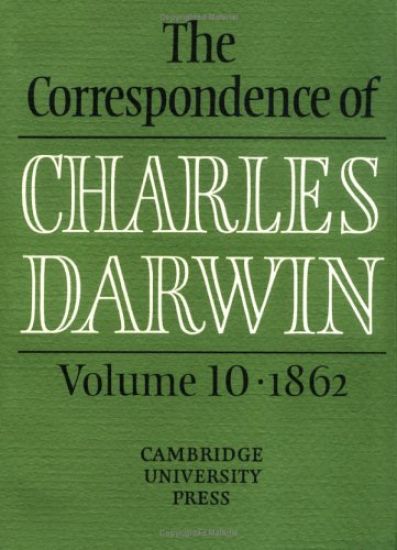
As the sheer volume of his correspondence indicates, 1862 was a very productive year for Darwin. This was not only the case in his published output (two botanical papers and a book on the pollination mechanisms of orchids), but more particularly in the extent and breadth of the botanical experiments he carried out. The promotion of his theory of natural selection also continued: Darwin's own work on it expanded, Thomas Henry Huxley gave lectures about it, and Henry Walter Bates invoked it to explain mimicry in butterflies. As well as monitoring the progress of his scientific work, the correspondence also records the continuing effects of Darwin's ill-health. Serious illness in two of his children also disrupts his work.
On Evolution

On Evolution

Charles Darwin

Hackett Publishing Co, Inc
1996
sidottu
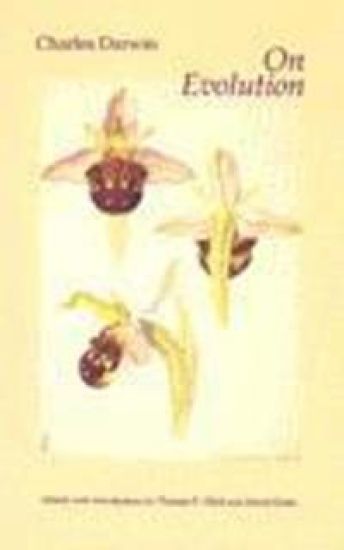
Designed for use in a broad range of courses in the humanities, Darwin's theory is laid out in a concise general Introduction and followed up in short chapter introductions. Each chapter concludes with an excerpt from Darwin's correspondence, commenting on the work in question, and its significance, impact, and reception. Two short appendixes are included—the first three chapters from Malthus, On Population, which gave Darwin the idea for natural selection and the paper by Wallace that motivated Darwin to abandon the Big Species Book and write Origin of Species.
The Correspondence of Charles Darwin: Volume 9, 1861

The Correspondence of Charles Darwin: Volume 9, 1861

Charles Darwin

Cambridge University Press
1994
sidottu
The correspondence in this volume reveals Darwin carefully monitoring the response to The Origin of Species. Early in 1861 he completed the preparation of a third and much-revised edition, using the opportunity to answer his critics. As these letters make clear, Darwin understood the importance of support from younger scientists for the future of his theory. Darwin's long-time supporters - including Asa Gray, Charles Lyell and Joseph Dalton Hooker - also feature largely in his correspondence. Escaping the confines of collating and writing up his work on variation in domesticated animals and plants, Darwin plunged into detailed studies of insectivorous plants and orchid pollination. On a more personal side, the correspondence details Darwin in the role of solicitous father ensuring a secure future for his son William. The letters in Volume 9 provide another indispensable collection for those interested in Darwin's life, work and world.
On the Origin of Species

On the Origin of Species

Charles Darwin

Hawk Press
1994
pokkari
Darwin's theory of natural selection issued a profound challenge to orthodox thought and belief: no being or species has been specifically created; all are locked into a pitiless struggle for existence, with extinction looming for those not fitted for the task.Yet (1859) is also a humane and inspirational vision of ecological interrelatedness, revealing the complex mutual interdependencies between animal and plant life, climate and physical environment, and-by implication-within the human world.Written for the general reader, in a style that combines the rigour of science with the subtlety of literature, The Origin of Species remains one of the founding documents of the modern age.
The Portable Darwin

The Portable Darwin

Charles Darwin; Duncan Porter; Peter Graham

PENGUIN BOOKS LTD
1994
nidottu
Charles Darwin's notes from his voyage on the "Beagle" brought about the reinvention of the natural sciences and irrevocably altered the way humanity saw itself. This anthology encapsulates the grand arc of Darwin's thoughts on the origin of species, natural history, "savage" man and child psychology. This book contains five chapters on "The Origin of Species", along with major extracts from Darwin's preceding works, scientific papers, travel writings, letters and a family memorial.
The Autobiography of Charles Darwin: 1809-1882

The Autobiography of Charles Darwin: 1809-1882

Charles Darwin

W. W. Norton Company
1993
nidottu
Charles Darwin's Autobiography was first published in 1887, five years after his death. It was a bowdlerized edition: Darwin's family, attempting to protect his posthumous reputation, had deleted all the passages they considered too personal or controversial. The present complete edition did not appear until 1959, one hundred years after the publication of The Origin of Species. Upon its appearance, Loren Eiseley wrote: "No man can pretend to know Darwin who does not know his autobiography. Here, for the first time since his death, it is presented complete and unexpurgated, as it exists in the family archives. It will prove invaluable to biographers and cast new light on the personality of one of the world's greatest scientists. Nora Barlow, Darwin's granddaughter, has proved herself a superb editor. Her own annotations make fascinating reading." The daring and restless mind, the integrity and simplicity of Darwin's character are revealed in this direct and personal account of his life--his family, his education, his explorations of the natural world, his religion and philosophy. The editor has provided page and line references to the more important restored passages, and previously unpublished notes and letters on family matters and on the controversy between Samuel Butler appear in an appendix.
The Correspondence of Charles Darwin: Volume 8, 1860

The Correspondence of Charles Darwin: Volume 8, 1860

Charles Darwin

Cambridge University Press
1993
sidottu
The correspondence in this volume is dominated by the public and private response to the publication of Darwin's Origin of Species. Volume 8 opens with Darwin eagerly scrutinising each new review, as one by one all the major organs of the day carried notices of the book. To those who express their views privately in letters, Darwin responds patiently and thoughtfully, answering their objections and attempting to guide their fuller understanding of the operation of natural selection. His more personal thoughts emerge in letters to his friends Joseph Dalton Hooker, Charles Lyell, and Thomas Henry Huxley. This volume presents a wealth of detailed information, giving the full range of response to the Origin and revealing how the Victorians coped with a theory that many well recognised would revolutionise thinking about the organic world and human ancestry.