Kirjojen hintavertailu. Mukana 12 390 323 kirjaa ja 12 kauppaa.

Kirjailija

Charles Darwin

Kirjat ja teokset yhdessä paikassa: 1 189 kirjaa, julkaisuja vuosilta 1859-2026, suosituimpien joukossa Lajien synty. Vertaile teosten hintoja ja tarkista saatavuus suomalaisista kirjakaupoista.

1 189 kirjaa

Kirjojen julkaisuhaarukka 1859-2026.

The Correspondence of Charles Darwin: Volume 7, 1858–1859

The Correspondence of Charles Darwin: Volume 7, 1858–1859

Charles Darwin

Cambridge University Press
1992
sidottu
The letters in this volume cover two of the most momentous years in Darwin’s life. Begun in 1856 and the fruit of twenty years of study and reflection, Darwin’s manuscript on the species question was a little more than half finished, and at least two years from publication, when in June 1858 Darwin unexpectedly received a letter and a manuscript from Alfred Russel Wallace indicating that he too had independently formulated a theory of natural selection. The letters detail the various stages in the preparation of what was to become one of the world's most famous works: Darwin’s On the Origin of Species by Means of Natural Selection, published by John Murray in November 1859. They reveal the first impressions of Darwin’s book given by his most trusted confidants, and they relate Darwin’s anxious response to the early reception of his theory by friends, family members, and prominent naturalists. This volume provides the capstone to Darwin’s remarkable efforts for more than two decades to solve one of nature’s greatest riddles - the origin of species.
The Correspondence of Charles Darwin: Volume 6, 1856–1857

The Correspondence of Charles Darwin: Volume 6, 1856–1857

Charles Darwin

Cambridge University Press
1990
sidottu
This volume covers the culmination of Darwin's work on species. From early in 1856, when he was persuaded that the time had come to publish an account of his heterodox theories, through 1857, Darwin's letters document the labour involved in composing his 'big species book', his zest for research, and his unflagging determination to succeed. As always, old friends and more recent acquaintances were drawn into the project. Darwin writes for the first time to Alfred Russel Wallace seeking specimens of Malayan fowls. Joseph Dalton Hooker is his sounding-board for botanical speculations and Thomas Henry Huxley soon takes up a similar role in matters of comparative anatomy and embryology. William Bernhard Tegetmeier is the provider of pigeons and poultry and Asa Gray dispatches from Massachusetts invaluable botanical data. Darwin fully exploits his gift for drawing the best from his correspondents and, collectively, their letters provide a remarkable survey of what was - and was not - believed about the nature and origin of species in the middle years of the nineteenthcentury.
The Correspondence of Charles Darwin: Volume 5, 1851–1855

The Correspondence of Charles Darwin: Volume 5, 1851–1855

Charles Darwin

Cambridge University Press
1990
sidottu
The correspondence in this volume reveals the two sides of Darwin’s life in a new intensity. It opens with a family tragedy in the death of Darwin’s oldest and best loved daughter, Anne, and goes on to show how Darwin sought relief from his loss through work, with a single-minded but increasingly weary commitment to the completion of his cirripede monographs. In September 1854, as soon as the final proofs of the last barnacle volume had been returned to the printer, Darwin threw himself into a resumption of his species work. He followed up old ideas by initiating new experiments and establishing a worldwide correspondence that encompassed geographical distribution, variation, and plant and animal breeding. The wealth of letters through 1855 makes evident the frenzy of intellectual activity that followed Darwin’s terse announcement in his diary: ‘Sept. 9th (1854) began sorting notes for Species Theory …’
The Voyage of the Beagle

The Voyage of the Beagle

Charles Darwin

Penguin Classics
1989
pokkari
The Voyage of the Beagle is Charles Darwin's account of the momentous voyage which set in motion the current of intellectual events leading to The Origin of Species. This Penguin Classics edition is edited with an introduction and notes by Janet Brown and Michael Neve.When HMS Beagle sailed out of Devonport on 27 December 1831, Charles Darwin was twenty-two and setting off on the voyage of a lifetime. His journal, here reprinted in a shortened form, shows a naturalist making patient observations concerning geology, natural history, people, places and events. Volcanoes in the Galapagos, the Gossamer spider of Patagonia and the Australasian coral reefs - all are to be found in these extraordinary writings. The insights made here were to set in motion the intellectual currents that led to the theory of evolution, and the most controversial book of the Victorian age: The Origin of Species.This volume reprints Charles Darwin's journal in a shortened form. In their introduction Janet Brown and Michael Neve provide a background to Darwin's thought and work, and this edition also includes notes, maps, appendices and an essay on scientific geology and the Bible by Robert FitzRoy, Darwin's friend and Captain of the Beagle.Charles Darwin (1809-82), a Victorian scientist and naturalist, has become one of the most famous figures of science to date. The advent of On the Origin of Species by Means of Natural Selection in 1859 challenged and contradicted all contemporary biological and religious beliefs.If you enjoyed The Voyage of the Beagle, you might enjoy Darwin's On the Origin of Species, also available in Penguin Classics.
The Correspondence of Charles Darwin: Volume 4, 1847–1850

The Correspondence of Charles Darwin: Volume 4, 1847–1850

Charles Darwin

Cambridge University Press
1989
sidottu
This is the fourth volume of the complete edition of The Correspondence of Charles Darwin. For the first time full authoritative texts of Darwin’s letters are available, edited according to modern textual editorial principles and practice. This volume covers the first years of Darwin’s study of the structure and systematics of barnacles: work that involved a worldwide search for specimens, detailed microscopic investigations, a consideration of the theoretical assumptions underlying classification schemes, and the solution of practical problems of zoological nomenclature. Darwin’s convictions about the nature and origin of species influenced his observations and conclusions and provided insights that led to some remarkable discoveries. Throughout this period Darwin also maintained his involvement in major geological debates, as shown by important exchanges with Charles Lyell, Robert Chambers, James Dwight Dana, Bernhard Studer, and others. The letters to Darwin include Joseph Dalton Hooker’s descriptions of his dramatic and frequently dangerous travels through previously closed regions of Sikkim and Tibet.
The Correspondence of Charles Darwin: Volume 3, 1844–1846

The Correspondence of Charles Darwin: Volume 3, 1844–1846

Charles Darwin

Cambridge University Press
1988
sidottu
This is the third volume of the complete edition of The Correspondence of Charles Darwin. For the first time full authoritative texts of Darwin's letters are available, edited according to modern textual editorial principles and practice. The letters in this volume were written during the years 1844–6. By 1844 Darwin had become an established figure within the circle of London naturalists and his life at Down had assumed the regularity that the responsibility for a thriving and growing household entailed. Despite his move to rural Kent, Darwin was not isolated, and this volume shows how frequent were his trips to London and further afield, how regular his meetings with his scientific colleagues, and how extensive his network of correspondents.
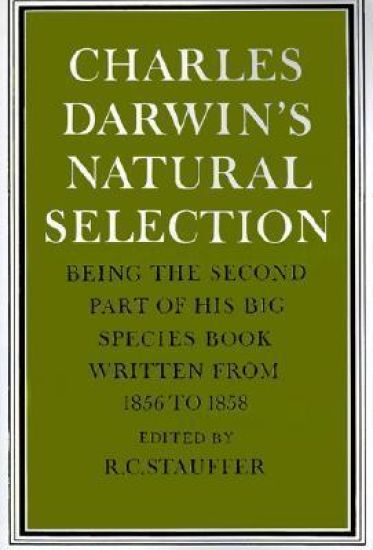
Charles Darwin's Natural Selection

Charles Darwin's Natural Selection

Charles Darwin

Cambridge University Press
1987
pokkari
Charles Darwin’s On the Origin of Species is unquestionably one of the chief landmarks in biology. The Origin (as it is widely known) was literally only an abstract of the manuscript Darwin had originally intended to complete and publish as the formal presentation of his views on evolution. Compared with the Origin, his original long manuscript work on Natural Selection, which is presented here and made available for the first time in printed form, has more abundant examples and illustrations of Darwin’s argument, plus an extensive citation of sources.
The Correspondence of Charles Darwin: Volume 2, 1837–1843

The Correspondence of Charles Darwin: Volume 2, 1837–1843

Charles Darwin

Cambridge University Press
1987
sidottu
This is the second volume of the complete edition of The Correspondence of Charles Darwin. For the first time full authoritative texts of Darwin’s letters are available, edited according to modern textual editorial principles and practice. The letters in this volume were written during the seven years following Darwin’s return to England from the Beagle voyage. It was a period of extraordinary activity and productivity in which he became recognised as a naturalist of outstanding ability, as an author and editor, and as a professional man with official responsibilities in several scientific organisations. During these years he published two books and fifteen papers and also organised and superintended the publication of the Zoology of the Voyage of HMS Beagle, for which he described the locations of the fossils and the habitats and behaviour of the living species he had collected. Busy as he was with scientific activities, Darwin found time to re-establish family ties and friendships, and to make new friends among the naturalists with whom his work brought him into close contact. In November 1838, two years after his return Darwin became engaged to his cousin, Emma Wedgwood, whom he subsequently married.
The Correspondence of Charles Darwin: Volume 1, 1821–1836

The Correspondence of Charles Darwin: Volume 1, 1821–1836

Charles Darwin

Cambridge University Press
1985
sidottu
This volume inaugurates a complete edition of The Correspondence of Charles Darwin. For the first time full authoritative texts of Darwin’s letters are available, edited according to modern textual editorial principles and practice. The first volume of the edition contains the letters of the years 1821–1836. They begin with one written to Darwin at the age of twelve and continue through his school days at Shrewsbury, his two years as a medical student at Edinburgh, the undergraduate years at Cambridge, and his five years of exploration and learning during the voyage of the Beagle. These were Darwin’s years of initiation and preparation for a life of science. In the earliest letters Darwin appears already keenly interested in natural history and an avid collector of minerals, plants, marine invertebrates, and insects - especially beetles. The letters of the succeeding years tell the story of the young Darwin’s development up to his return to England when, at the age of twenty-seven, he was received as a colleague by Charles Lyell, Adam Sedgwick, and other leading scientists, who had already heard of his discoveries and observations during the Beagle voyage.
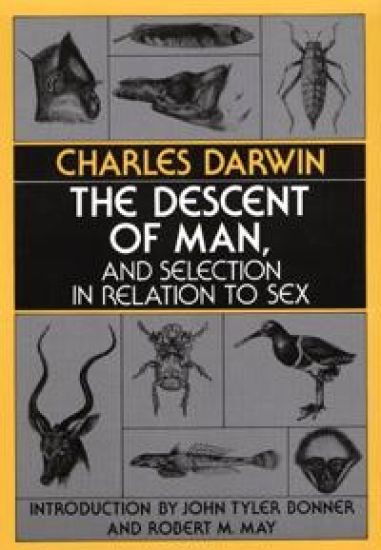
The Descent of Man, and Selection in Relation to Sex

The Descent of Man, and Selection in Relation to Sex

Charles Darwin

Princeton University Press
1981
pokkari
In the current resurgence of interest in the biological basis of animal behavior and social organization, the ideas and questions pursued by Charles Darwin remain fresh and insightful. This is especially true of The Descent of Man and Selection in Relation to Sex, Darwin's second most important work. This edition is a facsimile reprint of the first printing of the first edition (1871), not previously available in paperback. The work is divided into two parts. Part One marshals behavioral and morphological evidence to argue that humans evolved from other animals. Darwin shoes that human mental and emotional capacities, far from making human beings unique, are evidence of an animal origin and evolutionary development. Part Two is an extended discussion of the differences between the sexes of many species and how they arose as a result of selection. Here Darwin lays the foundation for much contemporary research by arguing that many characteristics of animals have evolved not in response to the selective pressures exerted by their physical and biological environment, but rather to confer an advantage in sexual competition. These two themes are drawn together in two final chapters on the role of sexual selection in humans. In their Introduction, Professors Bonner and May discuss the place of The Descent in its own time and relation to current work in biology and other disciplines.
The Expression of the Emotions in Man and Animals

The Expression of the Emotions in Man and Animals

Charles Darwin

University of Chicago Press
1965
nidottu
Darwin's work of 1872 still provides the point of departure for research in the theory of emotion and expression. Although he lacked the modern research tool of cybernetics, his basic methods have not been improved upon: the study of infants, of the insane, of paintings and sculpture, of some of the commoner animals; the use of photographs of expression submitted to different judges; and the comparative study of expression among different peoples. This new edition will be warmly welcomed by those behavioral scientists who have recently shown an intense interest in the scientific study of expression. Lay readers, too, will be struck by the freshness and directness of this book, which includes, among other data, Darwin's delightfully objective analysis of his own baby's smiles and pouts.
On the Origin of Species

On the Origin of Species

Charles Darwin

Harvard University Press
1964
nidottu
It is now generally recognized that the publication of Darwin's Origin of Species in 1859 not only decisively altered the basic concepts of biological theory but had a profound and lasting influence on social, philosophic, and religious thought. This work is rightly regarded as one of the most important books ever printed.The first edition had a freshness and uncompromising directness that were considerably weakened in subsequent editions. Nearly all reprints were based on the greatly modified sixth edition (1872), and the only modern reprint changes pagination, making references to the original very difficult. Clearly, there has been a need for a facsimile reprint. Professor Mayr's introduction has a threefold purpose: to list passages in the first edition that Darwin altered in later editions; to point out instances in which Darwin was clearly pioneering; and to call attention to neglected passages that show Darwin as a much deeper thinker than has been recognized. No one can fail to be impressed by the originality of Darwin's treatment and by the intellectual challenge his work presents even to the modern reader.
The Life and Letters of Charles Darwin, Volume II
"If we choose to let conjecture run wild, then animals, our fellow brethren in pain, disease, death, suffering and famine-our slaves in the most laborious works, our companions in our amusements-they may partake from our origin in one common ancestor-we may be all melted together." -Charles Darwin, The Life and Letters of Charles Darwin, Volume II (1896)The Life and Letters of Charles Darwin, Volume II (1896) is a compilation of letters written by Darwin, as well as an autobiographical chapter intended less for publication and more to inform his children and grandchildren. The second volume focuses on the foundations, growth, and writing of The Origin of Species. This glimpse into Darwin's early years as a naturalist and his family life is a must read for all who love science and history.
The Life and Letters of Charles Darwin, Volume I
"In the selection and arrangement of the material he Francis Darwin] was chiefly guided by a wish to portray his father's personal character, and he succeeded...in giving a true picture of the man and the student, the methods of Darwin's work and the gradual development of his opinions." -The Times (1925)The Life and Letters of Charles Darwin, Volume I (1896) is a compilation of letters written by Darwin, as well as an autobiographical chapter intended less for publication and more to inform his children and grandchildren. The first biography of Darwin, it was edited by his son, Francis Darwin and was touted as "one of the best biographies ever written" by The Times in 1925. This glimpse into Darwin's early years as a naturalist and his family life is a must read for all who love science and history.
The Life and Letters of Charles Darwin, Two Volumes in One
"If we choose to let conjecture run wild, then animals, our fellow brethren in pain, disease, death, suffering and famine-our slaves in the most laborious works, our companions in our amusements-they may partake from our origin in one common ancestor-we may be all melted together." -Charles Darwin, The Life and Letters of Charles Darwin, Volume II (1896)The Life and Letters of Charles Darwin, including an Autobiographical (Two Volumes in One) (1896) is a compilation of letters written by Darwin, as well as an autobiographical chapter intended less for publication and more to inform his children and grandchildren. It also focuses on the foundations, growth, and writing of The Origin of Species. This glimpse into Darwin's early years as a naturalist and of his family life is a must read for all who love science and history.
The Power of Movement in Plants

The Power of Movement in Plants

Charles Darwin; Francis Darwin

Cosimo Classics
1880
pokkari
"...I think that I have succeeded in showing. . . kind of movement common to all parts of all plants from their earliest youth." - Charles Darwin, The Life and Letters of Charles Darwin, Volume II (1880) The Power of Movement in Plants (1880) includes illustrations and documents the extensive research and study of phototropism among other plant movements by Charles Darwin and his son, Francis. The chapters focus particularly on a plant's evolution and adaptation to external stimuli with particular attention to circumnutation. This in-depth research is a must-read for lovers of the origins of botany and biology.
The Power of Movement in Plants

The Power of Movement in Plants

Charles Darwin; Francis Darwin

Cosimo Classics
1880
sidottu
"...I think that I have succeeded in showing. . . kind of movement common to all parts of all plants from their earliest youth." - Charles Darwin, The Life and Letters of Charles Darwin, Volume II (1880) The Power of Movement in Plants (1880) includes illustrations and documents the extensive research and study of phototropism among other plant movements by Charles Darwin and his son, Francis. The chapters focus particularly on a plant's evolution and adaptation to external stimuli with particular attention to circumnutation. This in-depth research is a must-read for lovers of the origins of botany and biology.