Kirjojen hintavertailu. Mukana 12 365 147 kirjaa ja 12 kauppaa.

Kirjailija

Charlotte Bronte

Kirjat ja teokset yhdessä paikassa: 866 kirjaa, julkaisuja vuosilta 1847-2026, suosituimpien joukossa Kotiopettajattaren romaani. Vertaile teosten hintoja ja tarkista saatavuus suomalaisista kirjakaupoista.

Mukana myös kirjoitusasut: Charlotte Brontë, Charlotte Bronte'

866 kirjaa

Kirjojen julkaisuhaarukka 1847-2026.

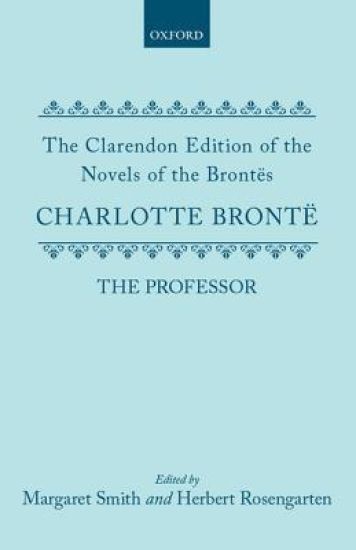
The Professor

The Professor

Charlotte Brontë

Oxford University Press
1987
sidottu
For the first time a major novel by Charlotte Brontë appears in an edition based directly on the author's manuscript. Like her other mature work, The Professor owes much to her relationship with M. Heger, her Brussels schoolmaster. The first of her full-length novels, it is of special interest since it was written comparatively soon after her experiences in Brussels in the early 1840s, but not published until 1857, after her death. A full introduction gives an account of its composition, analyses the manuscript, and describes the circumstances of its eventual publication, in an inaccurate form, under the editorship of A. B. Nicholls. Appendices include an unused `Preface' - one of Charlotte Brontë's attempts to `recast' the novel - and a list of substantive variants between the manuscript and the first edition. Her last fragmentary novel, `Emma', begun after Villette, is now transcribed directly from the author's rough draft, instead of from the polished and revised text produced by Nicholls, George Smith, and Thackeray for the Cornhill Magazine in 1860. The volume contains full indexes to Biblical and literary allusions in Charlotte Brontë's four major novels, thus giving a fascinating guide to the nature and extent of her reading. The editors also make use of continuing research by providing a list of additions and corrections to all previous volumes in the Clarendon Brontë series.
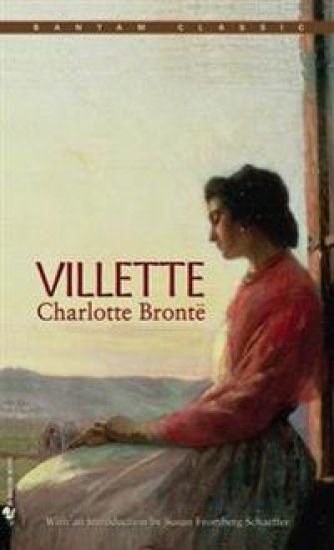
Villette

Villette

Charlotte Bronte

Bantam USA
1986
pokkari
With her final novel, Villette, Charlotte Bronte reached the height of her artistic power. First published in 1853, Villette is Bronte's most accomplished and deeply felt work, eclipsing even Jane Eyre in critical acclaim. Her narrator, the autobiographical Lucy Snowe, flees England and a tragic past to become an instructor in a French boarding school in the town of Villette. There, she unexpectedly confronts her feelings of love and longing as she witnesses the fitful romance between Dr. John, a handsome young Englishman, and Ginerva Fanshawe, a beautiful coquetter. This first pain brings others, and with them comes the heartache Lucy has tried so long to escape. Yet in spite of adversity and disappointment, Lucy Snowe survives to recount the unstinting vision of a turbulent life's journey--a journey that is one of the most insightful fictional studies of a woman's consciousness in English literature.
Villette

Villette

Charlotte Brontë

Oxford University Press, USA
1985
sidottu
My godmother lived in a handsome house in the clean and ancient town of Bretton. Her husband's family had been residents there for generations, and bore, indeed, the name of their birthplace-Bretton of Bretton: whether by coincidence, or because some remote ancestor had been a personage of sufficient importance to leave his name to his neighbourhood, I know not.When I was a girl I went to Bretton about twice a year, and well I liked the visit. The house and its inmates specially suited me. The large peaceful rooms, the well-arranged furniture, the clear wide windows, the balcony outside, looking down on a fine antique street, where Sundays and holidays seemed always to abide-so quiet was its atmosphere, so clean its pavement-these things pleased me well.One child in a household of grown people is usually made very much of, and in a quiet way I was a good deal taken notice of by Mrs. Bretton, who had been left a widow, with one son, before I knew her; her husband, a physician, having died while she was yet a young and handsome woman.
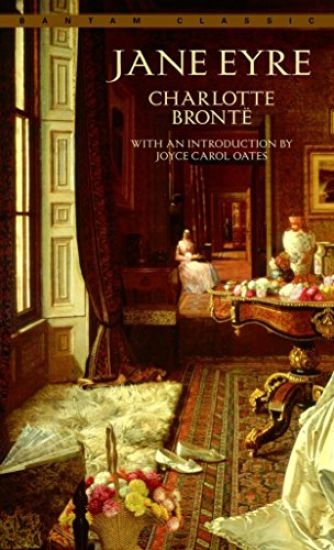
Jane Eyre

Jane Eyre

Charlotte Bronte

Bantam Doubleday Dell Publishing Group
1983
pokkari
Introduction by Joyce Carol Oates - Nominated as one of America's best-loved novels by PBS's The Great American Read Initially published under the pseudonym Currer Bell in 1847, Charlotte Bront 's Jane Eyreerupted onto the English literary scene, immediately winning the devotion of many of the world's most renowned writers, including William Makepeace Thackeray, who declared it a work "of great genius." Widely regarded as a revolutionary novel, Bront 's masterpiece introduced the world to a radical new type of heroine, one whose defiant virtue and moral courage departed sharply from the more acquiescent and malleable female characters of the day. Passionate, dramatic, and surprisingly modern, Jane Eyre endures as one of the world's most beloved novels.
Jane Eyre

Jane Eyre

Charlotte Brontë

Oxford University Press
1969
sidottu
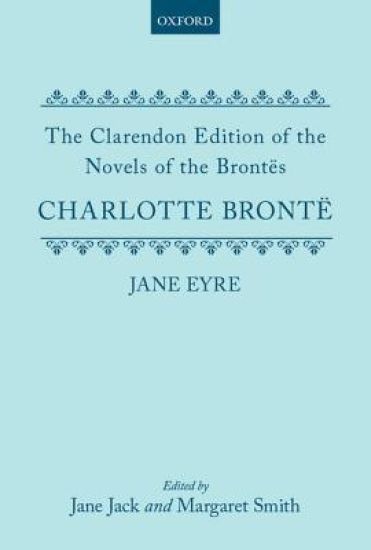
A scholarly edition of a novel by Charlotte Brontë. The edition presents an authoritative text, together with an introduction, commentary notes, and scholarly apparatus.
Jane Eyre by Charlotte Bronte (Annotated)

Jane Eyre by Charlotte Bronte (Annotated)

Charlotte Bronte

Books Explorer
1847
sidottu
Charlotte Bront's novel "Jane Eyre" was first published in 1847. Jane Eyre is the bildungsroman whose plot follows the development of the eponymous character throughout her maturation into a grownup and her attraction to Mr. Rochester, the master of the nearby Thornfield Hall. The novel is noteworthy because of its revolutionary way of prose fiction, because it had been among the first to concentrate on the spiritual and moral growth of its protagonist through an individual first-person account.It's set in northern England during the early 19th century and it is arranged into 5 separate stages. Childhood at Gateshead Hall, schooling at Lowood School, governess at Thornhill Hall, time at Moor House, along with reunion and union with Mr. Rochester. The novel looks at social problems as well as ideas at all phases - some of which challenge the status quo - race, sexuality, faith, feminism.Individualism, moral conviction as well as character are defining features of Jane Eyre's character. The novel also includes social criticism anchored in Christian morality. The novel's handling of different things and Jane's character make it regarded as avant - garde.Jane experiences mistreatment as well as struggles as a kid, her development as well as learning at Lowood School, her complex relationship with Mr Rochester at Thornfield Hall and her spiritual and moral adversities. The novel concludes with Jane reconnection with Rochester after he's been blinded as well as hurt, and their ensuing union and content life.The "Jane Eyre" series is renowned for its complexities and advanced thinking views, especially in its portrayal of Jane as an independent, driven woman protagonist.Charlotte Bront's "Jane Eyre" is an intricate and richly detailed novel which permits very much to examine. Listed here are major findings from its analysis: Bildungsroman Genre: . "Jane Eyre" is a bildungsroman which charts Jane's psychological and moral growth from her infancy to her adulthood. The journey is not just physical but also profoundly psychological, expressing the character's inner strength as well as moral resolve.The relation between Feminism and Social Critiques: Jane Eyre is frequently acknowledged as a very early feminist novel. Jane's persona challenges traditional female expectations of the 19th century. She values her self worth and also wants emotional and financial independence, wants equality of relationships and believes in self worth. The novel critiques the few choices attainable to women of the era as well as questions class and gender conventions.Gothic Features: This novel includes elements of the Gothic style - the enigmatic Thornfield Hall, the town Byronic hero Mr. Mr. Rochester and also the madwoman in the attics. The psychological and emotional depth of the novel is enhanced by these elements that produce a feeling of suspens e and foreboding.Religion as well as Morality: "Jane Eyre" is a religious tale. The novel concentrates on different religious figures and how they impacted Jane, like Mr. Brocklehurst as well as Helen Burns, who all practice hypocrisy and compassionate Christianity. The book deals with Jane's spiritual and moral growth as she applies her principles in a world which frequently opposes her values.