Kirjojen hintavertailu. Mukana 12 252 406 kirjaa ja 12 kauppaa.

Kirjailija

Christopher Norris

Kirjat ja teokset yhdessä paikassa: 55 kirjaa, julkaisuja vuosilta 1987-2026, suosituimpien joukossa Titian's Blue. Vertaile teosten hintoja ja tarkista saatavuus suomalaisista kirjakaupoista.

55 kirjaa

Kirjojen julkaisuhaarukka 1987-2026.

Deconstruction After All

Deconstruction After All

Christopher Norris

LIVERPOOL UNIVERSITY PRESS
2015
nidottu
This collection of interviews, reflections, and creative criticism presents Christopher Norris's vigorous polemics with Hayden White, Michel Foucault, Jean Baudrillard, Jean-Francois Lyotard, Thomas Kuhn, Emmanuel Levinas, Pierre Bourdieu, Richard Rorty, and Stanley Fish. Alongside Norris's uncompromising critiques there emerge passages of close and careful reading of Jacques Derrida's texts, as he cites and reiterates Derrida's philosophical contexts in the works of Immanuel Kant, Gaston Bachelard, and Georges Canguilhem, and in the current discursive fields of epistemology and philosophy of science. The book also offers a coda of essays on Frank Kermode, Terry Eagleton, and Terence Hawkes. This collection, prefaced with the author's own academic memoir, provides an accessible and provocative introduction to Norris's critical thought, and highlights the wide range of his interests and philosophical engagements.

Derrida, Badiou and the Formal Imperative

Derrida, Badiou and the Formal Imperative

Christopher Norris

Bloomsbury Academic
2014
nidottu
In this path-breaking study Christopher Norris proposes a transformed understanding of the much-exaggerated differences between analytic and continental philosophy. While keeping the analytic tradition squarely in view his book focuses on the work of Jacques Derrida and Alain Badiou, two of the most original and significant figures in the recent history of ideas.Norris argues that these thinkers have decisively reconfigured the terrain of contemporary philosophy and, between them, pointed a way beyond some of those seemingly intractable issues that have polarised debate on both sides of the notional rift between the analytic and continental traditions. In particular his book sets out to show - against the received analytic wisdom - that continental philosophy has its own analytic resources and is capable of bringing some much-needed fresh insight to bear on problems in philosophy of language, logic and mathematics. Norris provides not only a unique comparative account of Derrida's and Badiou's work but also a remarkably wide-ranging assessment of their joint contribution to philosophy's current - if widely resisted - potential for self-transformation.
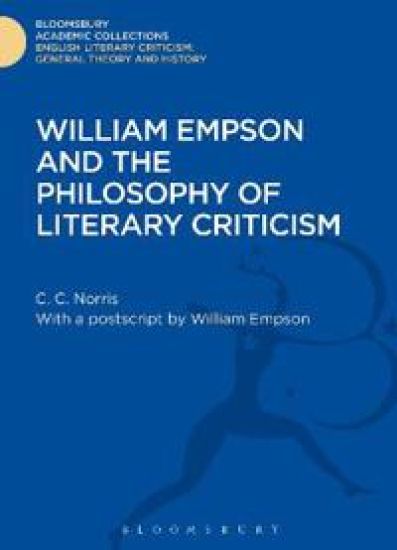
William Empson and the Philosophy of Literary Criticism

William Empson and the Philosophy of Literary Criticism

Christopher Norris

Bloomsbury Academic
2013
sidottu
Following the publication of Seven Types of Ambiguity in 1930 William Empson was quickly recognised as a critic of great originality and unique creative gifts and he has inspired a whole new method and style of approach in literary criticism. But this is the first full-length study of his work and it is an important part of Dr Norris’s purpose to account for the gulf that has emerged between Empson’s viewpoint and the development of his ideas by others, especially the American New Critics, and for the consequent failure of Empson’s later books to generate the informed discussion they demand and deserve. Here particular attention is given to his critical summa, The Structure of Complex Words. To understand Empson’s work as a consistent whole, Dr Norris argues, one must relate it to his philosophy of humanistic rationalism. This is to give a new perspective not only to his practical criticism but also to his differences with Eliot and Leavis and to his anti-Christian polemic.
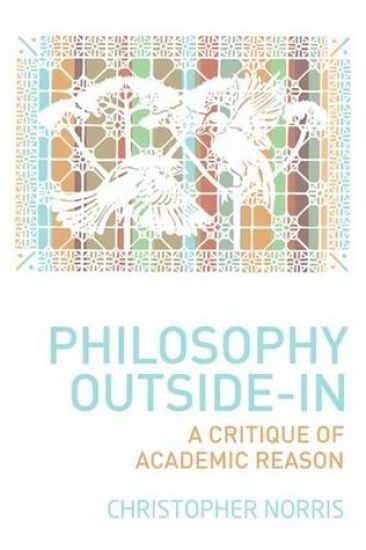
Philosophy Outside-In

Philosophy Outside-In

Christopher Norris

Edinburgh University Press
2013
sidottu
This is a sustained critique of present-day academic philosophy combined with a practical agenda for change. Christopher Norris raises some basic questions about the way that analytic philosophy has been conducted over the past 25 years. In doing so, he offers an alternative to what he sees as an over-specialisation of a lot of recent academic work. Arguing that analytic philosophy has led to a narrowing of sights to the point where other approaches that might be more productive are blocked from view, he goes against the grain to claim that Continental philosophy holds the resources for a creative renewal of analytic thought. It draws on a wide range of examples to shine light on one topic: philosophy's current condition and how we can move beyond it. It addresses issues of interest to students and teachers of philosophy in both the analytic and the Continental traditions: speculative realism, the 'extended mind' hypothesis, experimental philosophy, the ontology of political song, linguistic philosophy, anti-realism and epistemological scepticism. It interrogates the analytical zeitgeist through a vigorous critique of the prevailing modes of thought.
Derrida, Badiou and the Formal Imperative

Derrida, Badiou and the Formal Imperative

Christopher Norris

CONTINUUM PUBLISHING CORPORATION
2012
sidottu
In this path-breaking study Christopher Norris proposes a transformed understanding of the much-exaggerated differences between analytic and continental philosophy. While keeping the analytic tradition squarely in view his book focuses on the work of Jacques Derrida and Alain Badiou, two of the most original and significant figures in the recent history of ideas. Norris argues that these thinkers have decisively reconfigured the terrain of contemporary philosophy and, between them, pointed a way beyond some of those seemingly intractable issues that have polarised debate on both sides of the notional rift between the analytic and continental traditions. In particular his book sets out to show - against the received analytic wisdom - that continental philosophy has its own analytic resources and is capable of bringing some much-needed fresh insight to bear on problems in philosophy of language, logic and mathematics. Norris provides not only a unique comparative account of Derrida's and Badiou's work but also a remarkably wide-ranging assessment of their joint contribution to philosophy's current - if widely resisted - potential for self-transformation.
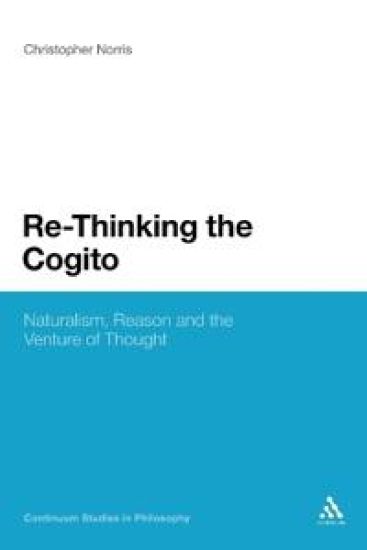
Re-Thinking the Cogito

Re-Thinking the Cogito

Christopher Norris

Continuum Publishing Corporation
2012
nidottu
Re-Thinking the Cogito seeks to combine a strongly naturalistic with a distinctively rationalist perspective on some nowadays much-discussed issues in philosophy of mind. Against the common view that they involve downright incompatible conceptions of mind, knowledge and ethics it seeks to unite a naturalism that draws on recent advances in neurophysiology and cognitive science with an outlook that gives full weight to those normative values at the heart of rationalist thought. True to the book's constructive spirit, Norris offers various detailed proposals for bringing the two approaches into a mutually enhancing - though also mutually provocative - relationship. He finds that claim strikingly prefigured in Spinoza's working-out of a non-reductive yet metaphysically uncompromising mind/body monism. Moreover he suggests how a thoroughly naturalised approach might yet become a locus of productive engagement with the work of an ultra-rationalist thinker such as Alain Badiou. Thus Norris puts the case that physically embodied human thought has cognitive, intellectual and creative powers that cannot and need not be accounted for in terms of conscious (let alone self-conscious) reflection.
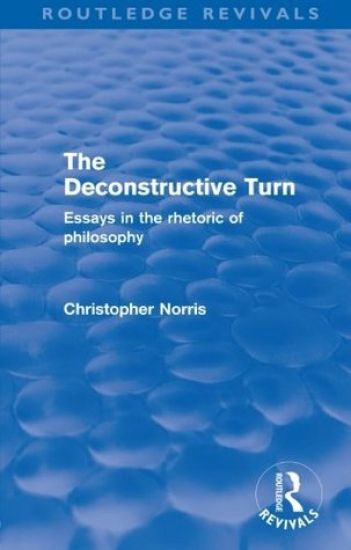
The Deconstructive Turn (Routledge Revivals)
What might be the outcome for philosophy if its texts were subjected to the powerful techniques of rhetorical close-reading developed by current deconstructionist literary critics? When first published in 1983, Christopher Norris’ book was the first to explore such questions in the context of modern analytic and linguistic philosophy, opening up a new and challenging dimension of inter-disciplinary study and creating a fresh and productive dialogue between philosophy and literary theory.
Re-Thinking the Cogito

Re-Thinking the Cogito

Christopher Norris

CONTINUUM PUBLISHING CORPORATION
2010
sidottu
Christopher Norris argues for and constructs a new approach to philosophy of mind that combines naturalistic and rationalist perspectives usually thought to be at odds. "Re-Thinking the Cogito" seeks to combine a strongly naturalistic with a distinctively rationalist perspective on some nowadays much-discussed issues in philosophy of mind. Against the common view that they involve downright incompatible conceptions of mind, knowledge and ethics it seeks to unite a naturalism that draws on recent advances in neurophysiology and cognitive science with an outlook that gives full weight to those normative values at the heart of rationalist thought. True to the book's constructive spirit, Norris offers various detailed proposals for bringing the two approaches into a mutually enhancing - though also mutually provocative - relationship. He finds that claim strikingly prefigured in Spinoza's working-out of a non-reductive yet metaphysically uncompromising mind/body monism. Moreover he suggests how a thoroughly naturalised approach might yet become a locus of productive engagement with the work of an ultra-rationalist thinker such as Alain Badiou. Thus Norris puts the case that physically embodied human thought has cognitive, intellectual and creative powers that cannot and need not be accounted for in terms of conscious (let alone self-conscious) reflection. "Continuum Studies in Philosophy" presents cutting-edge scholarship in all the major areas of research and study. The wholly original arguments, perspectives and research findings in titles in this series make it an important and stimulating resource for students and academics from a range of disciplines across the humanities and social sciences.
Paul de Man (Routledge Revivals)

Paul de Man (Routledge Revivals)

Christopher Norris

Routledge
2010
nidottu
Paul de Man - literary critic, literary philosopher, "American deconstructionist" - changed the landscape of criticism through his rigorous theories and writings. Upon its original publication in 1988, Christopher Norris' book was the first full-length introduction to de Man, a reading that offers a much-needed corrective to the pattern of extreme antithetical response which marked the initial reception to de Man's writings.Norris addresses de Man's relationship to philosophical thinking in the post-Kantian tradition, his concern with "aesthetic ideology" as a potent force of mystification within and beyond that tradition, and the vexed issue of de Man's politics. Norris brings out the marked shift of allegiance in de Man's thinking, from the thinly veiled conservative implications of the early essays to the engagement with Marx and Foucault on matters of language and politics in the late, posthumous writing. At each stage, Norris raises these questions through a detailed close reading of individual texts which will be welcomed by those who lack any specialised knowledge of de Man's work.
The Deconstructive Turn (Routledge Revivals)
What might be the outcome for philosophy if its texts were subjected to the powerful techniques of rhetorical close-reading developed by current deconstructionist literary critics? When first published in 1983, Christopher Norris’ book was the first to explore such questions in the context of modern analytic and linguistic philosophy, opening up a new and challenging dimension of inter-disciplinary study and creating a fresh and productive dialogue between philosophy and literary theory.
Paul de Man (Routledge Revivals)

Paul de Man (Routledge Revivals)

Christopher Norris

Routledge
2010
sidottu
Paul de Man - literary critic, literary philosopher, "American deconstructionist" - changed the landscape of criticism through his rigorous theories and writings. Upon its original publication in 1988, Christopher Norris' book was the first full-length introduction to de Man, a reading that offers a much-needed corrective to the pattern of extreme antithetical response which marked the initial reception to de Man's writings.Norris addresses de Man's relationship to philosophical thinking in the post-Kantian tradition, his concern with "aesthetic ideology" as a potent force of mystification within and beyond that tradition, and the vexed issue of de Man's politics. Norris brings out the marked shift of allegiance in de Man's thinking, from the thinly veiled conservative implications of the early essays to the engagement with Marx and Foucault on matters of language and politics in the late, posthumous writing. At each stage, Norris raises these questions through a detailed close reading of individual texts which will be welcomed by those who lack any specialised knowledge of de Man's work.
Contest of Faculties (Routledge Revivals)

Contest of Faculties (Routledge Revivals)

Christopher Norris

Routledge
2009
nidottu
This Routledge Revival, first published in 1985, gives detailed attention to the bearing of literary theory on questions of truth, meaning and reference. On the one hand, deconstruction brings a vigilant awareness of the figural and narrative tropes that make up the discourse of philosophic reason. On the other it insists that argumentative rigour cannot be divorced from the kind of close reading that has come to characterize literary theory in its more advanced or speculative forms. This present-day ‘contest of faculties’ has large implications for philosophers and critics, many of whom will welcome the reissue of such a clear-headed statement of the impact of deconstruction.
Contest of Faculties (Routledge Revivals)

Contest of Faculties (Routledge Revivals)

Christopher Norris

Routledge
2009
sidottu
This Routledge Revival, first published in 1985, gives detailed attention to the bearing of literary theory on questions of truth, meaning and reference. On the one hand, deconstruction brings a vigilant awareness of the figural and narrative tropes that make up the discourse of philosophic reason. On the other it insists that argumentative rigour cannot be divorced from the kind of close reading that has come to characterize literary theory in its more advanced or speculative forms. This present-day ‘contest of faculties’ has large implications for philosophers and critics, many of whom will welcome the reissue of such a clear-headed statement of the impact of deconstruction.
Badiou's 'Being and Event'

Badiou's 'Being and Event'

Christopher Norris

Continuum International Publishing Group Ltd.
2009
sidottu
Badiou is with doubt the most influential philosopher working in Europe today - this book will provide the first detailed introduction to "Being and Event", a hugely important, but challenging book. Alain Badiou's "Being and Event" is the most original and significant work of French philosophy to have appeared in recent decades. It is the magnum opus of a thinker who is widely considered to have reshaped the character and set new terms for the future development of philosophy in France and elsewhere.This book has been written very much with a view to clarifying Badiou's complex and demanding work for non-specialist readers. It offers guidance on: philosophical and intellectual context; key themes; reading the text; reception and influence; and, further reading."Continuum Reader's Guides" are clear, concise and accessible introductions to key texts in literature and philosophy. Each book explores the themes, context, criticism and influence of key works, providing a practical introduction to close reading, guiding students towards a thorough understanding of the text. They provide an essential, up-to-date resource, ideal for undergraduate students.
Badiou's 'Being and Event'

Badiou's 'Being and Event'

Christopher Norris

Continuum International Publishing Group Ltd.
2009
nidottu
Badiou is with doubt the most influential philosopher working in Europe today - this book will provide the first detailed introduction to Being and Event, a hugely important, but challenging book. Alain Badiou's "Being and Event" is the most original and significant work of French philosophy to have appeared in recent decades. It is the magnum opus of a thinker who is widely considered to have reshaped the character and set new terms for the future development of philosophy in France and elsewhere.This book has been written very much with a view to clarifying Badiou's complex and demanding work for non-specialist readers. It offers guidance on: philosophical and intellectual context; key themes; reading the text; reception and influence; and, further reading."Continuum Reader's Guides" are clear, concise and accessible introductions to key texts in literature and philosophy. Each book explores the themes, context, criticism and influence of key works, providing a practical introduction to close reading, guiding students towards a thorough understanding of the text. They provide an essential, up-to-date resource, ideal for undergraduate students.
Fiction, Philosophy and Literary Theory

Fiction, Philosophy and Literary Theory

Christopher Norris

Continuum International Publishing Group Ltd.
2007
sidottu
This book brings together three main topics - deconstruction, philosophy of language, and literary theory - that have figured centrally in Christopher Norris' work over the past two decades. It offers a refreshingly clear and vigorous statement of his views as to how 'theory' might profit from a greater awareness of current philosophical debates while philosophy might likewise gain by adopting a more open-minded attitude toward developments in literary theory. Most significant here is Norris's continuing exploration of the various points of contact between Jacques Derrida's thought and the kinds of concern - especially with issues in philosophical semantics and speech-act theory - that have preoccupied thinkers in the 'other', mainstream-analytic line of descent. However, his focus is consistently on matters that should be of interest to philosophers and literary theorists alike. Thus, Norris devotes some penetrating commentary to topics such as modal or 'possible-worlds' logic as it bears upon issues in narrative theory; the 'two cultures' (science versus literature) controversy; the different ways in which literary theory has alternately embraced and rejected the appeal to 'scientific' modes of analysis; and some possible reasons for Wittgenstein's well-known aversion to Shakespeare. He also suggests a novel approach to the free-will/determinism issue by way of debates about the nature of language and the scope it affords for expressive creativity despite - or owing to - the limits imposed by various structural constraints. Altogether, this important new book provides a welcome overview of the author's current thinking and an equally welcome enlargement of horizons in contrast to the narrowly specialised character of much present-day academic discourse.
Fiction, Philosophy and Literary Theory

Fiction, Philosophy and Literary Theory

Christopher Norris

Continuum International Publishing Group Ltd.
2007
nidottu
This book brings together three main topics - deconstruction, philosophy of language, and literary theory - that have figured centrally in Christopher Norris's work over the past two decades. It offers a refreshingly clear and vigorous statement of his views as to how 'theory' might profit from a greater awareness of current philosophical debates while philosophy might likewise gain by adopting a more open-minded attitude toward developments in literary theory. Most significant here is Norris's continuing exploration of the various points of contact between Jacques Derrida's thought and the kinds of concern - especially with issues in philosophical semantics and speech-act theory - that have preoccupied thinkers in the 'other', mainstream-analytic line of descent. However, his focus is consistently on matters that should be of interest to philosophers and literary theorists alike. Thus, Norris devotes some penetrating commentary to topics such as modal or 'possible-worlds' logic as it bears upon issues in narrative theory; the 'two cultures' (science versus literature) controversy; the different ways in which literary theory has alternately embraced and rejected the appeal to 'scientific' modes of analysis; and some possible reasons for Wittgenstein's well-known aversion to Shakespeare. He also suggests a novel approach to the free-will/determinism issue by way of debates about the nature of language and the scope it affords for expressive creativity despite - or owing to - the limits imposed by various structural constraints. Altogether, this important new book provides a welcome overview of the author's current thinking and an equally welcome enlargement of horizons in contrast to the narrowly specialised character of much present-day academic discourse.
Platonism, Music and the Listener's Share

Platonism, Music and the Listener's Share

Christopher Norris

Continuum International Publishing Group Ltd.
2006
sidottu
What is a musical work? What are its identity-conditions and the standards (if any) that they set for a competent, intelligent, and musically perceptive act of performance or audition? Should the work-concept henceforth be dissolved as some New Musicologists would have it into the various, everchanging socio-cultural or ideological contexts that make up its reception-history to date? Can music be thought of as possessing certain attributes, structural features, or intrinsically valuable qualities that are response-transcendent, i.e., that might always elude or surpass the best state of (current or future) informed opinion? These are some of the questions that Christopher Norris addresses by way of a sustained critical engagement with the New Musicology and other debates in recent philosophy of music. His book puts the case for a qualified Platonist approach that would respect the relative autonomy of musical works as objects of more or less adequate understanding, appreciation, and evaluative judgement. At the same time this approach would leave room for listeners share the phenomenology of musical experience in so far as those works necessarily depend for their repeated realisation from one performance or audition to the next upon certain subjectively salient modalities of human perceptual and cognitive response. Norris argues for a more philosophically and musically informed treatment of these issues that combines the best insights of the analytic and the continental traditions. Perhaps the most distinctive feature of Norris's book, true to this dual orientation, is its way of raising such issues through a constant appeal to the vivid actuality of music as a challenge to philosophic thought. This is a fascinating study of musical understanding from one of the worlds leading contemporary theorists.
On Truth and Meaning

On Truth and Meaning

Christopher Norris

Continuum International Publishing Group Ltd.
2006
nidottu
As one of the world's leading and most highly-acclaimed contemporary theorists, Christopher Norris has spent much of the last twenty years trying to promote better relations and mutual understanding between the divisive analytic and continental philosophical traditions. In his new book, "On Truth and Meaning", Norris examines key issues in the philosophy of logic, mind and language those that have defined the agenda of current debate in analytic philosophy. Among the book's central themes are a number of much-rehearsed, but as yet unresolved questions that have preoccupied many leading analytic philosophers. In a fresh and provocative examination of recent debates, Norris shows certain features of the analytic enterprise in a sharp and revealing light, and proposes that those who approach such debates from an analytic viewpoint might profit by reflecting on the challenge posed to their accustomed modes of thought by certain distinctly 'continental' themes. Arguing that, contra to the orthodox view, philosophers in the continental line of descent, from Husserl to Derrida, have long engaged with the same sorts of issues that preoccupy their analytic counterparts, Norris explores both traditions alongside one another in order to point up certain contrasts or communities of interest. In this timely and provocative book, Norris proposes grounds for a new era of cooperation and mutual interrogative exchange between the two schools of thought in a narrative that will engage and influence those from both philosophical camps.
Epistemology: Key Concepts in Philosophy

Epistemology: Key Concepts in Philosophy

Christopher Norris

Continuum International Publishing Group Ltd.
2005
nidottu
Key Concepts in Philosophy is a series of concise, accessible and engaging introductions to the core ideas and topics encountered in the study of philosophy. Specially written to meet the needs of students and those with little prior knowledge of the subject, these books open up a whole range of important, yet often difficult ideas. The series builds to give a solid grounding in philosophy and each book is also ideal as a companion to further study. Epistemology - inquiry into the nature, possibility and scope of human knowledge - has been at the heart of the philosophy from ancient Greek times to the present. Christopher Norris provides a lucid survey and analysis of the issues that have shaped that enterprise and continue to dominate present-day discussion. He also brings out with exceptional clarity the ways in which certain 'technical' issues in epistemology can have a decisive bearing on matters of practical concern. The text highlights continuities and contrasts between early and contemporary approaches, and between the sorts of thinking that have typified the mainstream analytic and the modern 'continental' lines of descent. Norris introduces the main topics of debate, among them arguments for and against adopting a realist position with regard to various fields of knowledge, from mathematics to the physical sciences and history. Philosophy undergraduates will find this an invaluable aid to study, one that goes beyond simple definitions and summaries to open up a new and stimulating range of ideas.