Kirjojen hintavertailu. Mukana 12 250 584 kirjaa ja 12 kauppaa.

Kirjailija

Christopher Norris

Kirjat ja teokset yhdessä paikassa: 55 kirjaa, julkaisuja vuosilta 1987-2026, suosituimpien joukossa Titian's Blue. Vertaile teosten hintoja ja tarkista saatavuus suomalaisista kirjakaupoista.

55 kirjaa

Kirjojen julkaisuhaarukka 1987-2026.

Truth Matters

Truth Matters

Christopher Norris

Edinburgh University Press
2005
nidottu
Truth Matters is the first full-length introduction to response-dependence, a topic that has become a main focus of interest for philosophers across a wide range of disciplines and subject areas. The response-dependence claim, in brief, is to provide a 'third way' between the realist (or objectivist) conception of truth as always potentially transcending the limits of human ascertainment and the anti-realist (or verificationist) case that truth cannot possibly transcend those limits since then we could never acquire or manifest a knowledge of it. While setting out the issues clearly and concisely, Norris also provides some relevant background history to this current debate, including discussion of its sources and analogues in Plato, Locke, Kant and Wittgenstein. His book offers invaluable guidance for student readers in search of a reliable introductory survey of the field. Among those with a more specialist interest it may sometimes provoke disagreement, as when Norris argues that the response-dependence approach often goes along with a disguised anti-realist bias and hence fails to make good on its 'third-way' promise. However, its combination of wide-ranging coverage with clarity of focus and depth of philosophical treatment will be welcomed. Key Features: *Clear, accessible account of some complex philosophical issues; *First book-length study of the response-dependence debate; *Informative discussion of its pre-history in philosophers from Plato to Hume, Locke and Kant; *Aimed at readers seeking a reliable, well-informed introductory account while relevant to those with a more specialist knowledge of the topic.
Philosophy of Language and the Challenge to Scientific Realism
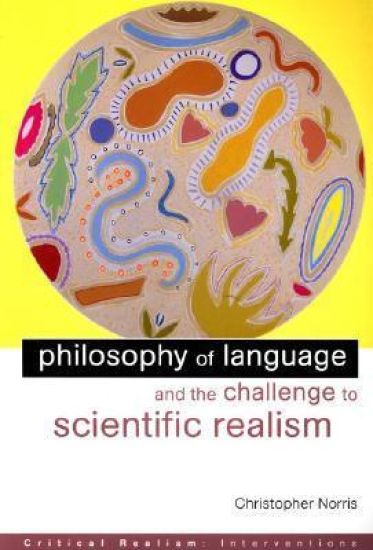
In this book Christopher Norris develops the case for scientific realism by tackling various adversary arguments from a range of anti-realist positions. Through a close critical reading he shows how they fail to make adequate sense on any rational, consistent, and scientifically-informed survey of the evidence. Along the way he incorporates a number of detailed case-studies from the history and philosophy of science. Norris devotes much of his discussion to some of the most prominent and widely influential source-texts of anti-realism. Also included are the sophisticated versions of verificationism developed - albeit in very different ways - by thinkers such as Michael Dummett and Bas van Fraassen. Central to Norris's argument is a prolonged engagement with the once highly influential but nowadays neglected work of Norwood Russell Hanson. This book will be welcomed especially by readers who possess some knowledge of the background debate and who wish to deepen and extend their understanding of these issues beyond an introductory level.
Philosophy of Language and the Challenge to Scientific Realism
In this book Christopher Norris develops the case for scientific realism by tackling various adversary arguments from a range of anti-realist positions. Through a close critical reading he shows how they fail to make adequate sense on any rational, consistent, and scientifically-informed survey of the evidence. Along the way he incorporates a number of detailed case-studies from the history and philosophy of science. Norris devotes much of his discussion to some of the most prominent and widely influential source-texts of anti-realism. Also included are the sophisticated versions of verificationism developed - albeit in very different ways - by thinkers such as Michael Dummett and Bas van Fraassen. Central to Norris's argument is a prolonged engagement with the once highly influential but nowadays neglected work of Norwood Russell Hanson. This book will be welcomed especially by readers who possess some knowledge of the background debate and who wish to deepen and extend their understanding of these issues beyond an introductory level.
Deconstruction

Deconstruction

Christopher Norris

Routledge
2002
sidottu
Deconstruction: Theory and Practice has been acclaimed as by far the most readable, concise and authoritative guide to this topic. Without oversimplifying or glossing over the challenges, Norris makes deconstruction more accessible to the reader. The volume focuses on the works of Jacques Derrida which caused this seismic shift in critical thought, as well as the work of North American critics Paul de Man, Geoffrey Hartman, J. Hillis Miller and Harold Bloom.In this third, revised edition, Norris builds on his 1991 Afterword with an entirely new Postscript, reflecting upon recent critical debate. The Postscript includes an extensive list of recommended reading, complementing what was already one of the most useful bibliographies available.
Deconstruction

Deconstruction

Christopher Norris

Routledge
2002
nidottu
Deconstruction: Theory and Practice has been acclaimed as by far the most readable, concise and authoritative guide to this topic. Without oversimplifying or glossing over the challenges, Norris makes deconstruction more accessible to the reader. The volume focuses on the works of Jacques Derrida which caused this seismic shift in critical thought, as well as the work of North American critics Paul de Man, Geoffrey Hartman, J. Hillis Miller and Harold Bloom.In this third, revised edition, Norris builds on his 1991 Afterword with an entirely new Postscript, reflecting upon recent critical debate. The Postscript includes an extensive list of recommended reading, complementing what was already one of the most useful bibliographies available.
Deconstruction and the Unfinished Project of Modernity

Deconstruction and the Unfinished Project of Modernity

Christopher Norris

Continuum International Publishing Group Ltd.
2000
nidottu
Deconstruction and postmodernism have been misunderstood. In this provocative book, Christopher Norris challenges the widespread idea of deconstruction as merely an offshoot of the various trends and cultural phenomena grouped under the label of "postmodernism". Through an analysis of the key theorists in the field - Derrida, Foucault, De Man, Habermas and Levinas - Norris argues that deconstruction is the "unfinished project" of modernity, a project whose interests and values it upholds precisely by continuing to question them in a spirit of enlightened self-critical enquiry. Assessing the impact of postmodernist theorizing across a range of disciplines, the book presents a lucid analysis and guide to the future of critical theory.
Quantum Theory and the Flight from Realism
This book is a critical introduction to the long-standing debate concerning the conceptual foundations of quantum mechanics and the problems it has posed for physicists and philosophers from Einstein to the present. Quantum theory has been a major infulence on postmodernism, and presents significant problems for realists. Keeping his own realist position in check, Christopher Norris subjects a wide range of key opponents and supporters of realism to a high and equal level of scrutiny. With a characteristic combination of rigour and intellectual generosity, he draws out the merits and weaknesses from opposing arguments. In a sequence of closely argued chapters, Norris examines the premises of orthodox quantum theory, as developed most influentially by Bohr and Heisenberg, and its impact on varous philosophical developments. These include the ideas developed by W.V Quine, Thomas Kuhn, Michael Dummett, Bas van Fraassen, and Hilary Puttnam. In each case, Norris argues, these thinkers have been influenced by the orthodox construal of quantum mechanics as requiring drastic revision of principles which had hitherto defined the very nature of scientific method, causal explanati and rational enquiry. Putting the case for a realist approach which adheres to well-tried scientific principles of causal reasoning and inference to the best explanation, Christopher Norris clarifies these debates to a non-specialist readership and scholars of philosophy, science studies and the philosophy of science alike. Quantum Theory and the Flight From Realism suggests that philosophical reflection can contribute to a better understanding of these crucial, current issues.
What's Wrong with Postmodernism?

What's Wrong with Postmodernism?

Christopher Norris

Johns Hopkins University Press
1998
pokkari
In What's Wrong with Postmodernism Norris critiques the "postmodern-pragmatist malaise" of Baudrillard, Fish, Rorty, and Lyotard. In contrast he finds a continuing critical impulse-an "enlightened or emancipatory interest"-in thinkers like Derrida, de Man, Bhaskar, and Habermas. Offering a provocative reassessment of Derrida's influence on modern thinking, Norris attempts to sever the tie between deconstruction and American literary critics who, he argues, favor endless, playful, polysemic interpretation at the expense of systematic argument. As he explores leftist attempts to arrive at an accommodation with postmodernism, Norris addresses the politics of deconstruction, the issue of men in feminism, Habermas' quarrel with Derrida, narrative theory as a hermeneutic paradigm, musical aesthetics in relation to literary theory, and various aspects of postmodern debate. A chapter on Stanley Fish brings several of these topics together and offers a generalized statement on the function of current criticism.
Against Relativism

Against Relativism

Christopher Norris

Blackwell Publishers
1997
nidottu
This book offers a vigorous and constructive challenge to relativism by examining a wide range of anti-realist theories, and in response offering a variety of arguments amounting to a strong defence of critical realism in the natural and social sciences.
Reclaiming Truth

Reclaiming Truth

Christopher Norris

Lawrence Wishart Ltd
1996
pokkari
We live in a world where questions of truth and of falsehood are left increasingly unattended. Such questions are often replaced by a relativism which allows any group the right to assert their values with impunity. Should, however, stories from an event such as the Holocaust be given equal truth status to neo-Nazi claims that it never happened? This book is a polemical warning against a too easy rejection of the standards of truth and value in the modern world, and is a further sortie in Christopher Norris's prolonged battle with the wilder side of postmodernism. Christopher Norris makes a timely reassessment of the cultural theorist Louis Althusser, and also makes a political case for Jacques Derrida whose "deconstruction" techniques are described as a useful tool when up against the rhetorical gestures of those theorists, such as Stanley Fish and Richard Rorty, who are trapped in the postmodern playpen. The book should be of interest to any student of contemporary philosophy, critical theory and politics, and should be a contribution to the debate that is currently dominated by conservative thinkers. Christopher Norris is the author of "The Deconstructive Turn", Jacques Derrida", "What's Wrong with Postmodernism" and "Uncritical Theory: Intellectuals, Politics and the Gulf War".
The Truth about Postmodernism

The Truth about Postmodernism

Christopher Norris

Blackwell Publishers
1993
nidottu
This book was written with a view to sorting our some of the muddles and misreadings - especially misreadings of Kant - that have charaterized recent postmodernist and post-structuralist thought. For these issues have a relevance, as Norris argues, far beyond the academic enclaves of philosophy, literary theory, and cultural criticism. Thus he makes large claims for the importance of getting Kant right on the relation between epistemology, ethics and aesthetics; for pursuing the Kantian question 'What is Enlightenment?' as raised in Foucault's late essays; or again, for recalling William Empson's spirited attempt to reassert the values of reason and truth against the orthodox 'lit crit' wisdom of his time. These are specialized concerns. But for better or worse it has been largely in the context of 'theory'- that capacious though ill-defined genre- that such issues have received their most scrutiny over the past two decades. As its title suggests, The Truth About Postmodernism disputes a good deal of what currently passes for advance theoretical wisdom. Above all it mounts a challenge to those fashionable doctrines - variants of the 'end-of-ideology' theme - that assimilate truth to some existing range of language-games, discourses, or in-place consensus beliefs. Norris's book will be welcomed for its clarity of style, its depth of philosophical engagement, and its refusal to endorse the more facile varieties of present-day textualist thought. It will also serve as a timely reminder that the 'politics of theory' cannot be practised in safe isolation from the politics (and ethics) of activist social concern.
Spinoza and the Origins of Modern Critical Theory

Spinoza and the Origins of Modern Critical Theory

Christopher Norris

Blackwell Publishers
1990
nidottu
This book offers a detailed account of Spinoza's influence on various schools of present-day critical thought. That influence extends from Althusserian Marxism to hermeneutics, deconstruction, narrative poetics, new historicism, and the unclassifiable writings of a thinker like Giles Deleuze. The author combines a close exegesis of Spinoza's texts with a series of chapters that trace the evolution of literary theory from its period of high scientific rigour in the mid-1960s to its latest "postmodern", neopragmatist or anti-theoretical phase. He examines the thought of Althusser, Macherey and Deleuze as well as others (including the new historicists) who have registered the impact of his pioneering work without any overt acknowledgement. On the one hand, theorists like Althusser and Macherey could celebrate Spinoza as the first philosopher before Marx to understand the need for a riorous distinction between science (or "theoretical practice") and ideology (or the realm of lived experience subject to various forms of imaginary error of misrecognition). On the other, Deleuze makes Spinoza the hero of his crusade against theories of whatever kind - Kantian, Marxist, Freudian, post structuralist - which always end up by imposing some abstract order of concepts and categories on the libidinal flux of "desiring production", or the "body-without-organs" of anarchic instinctual drives.
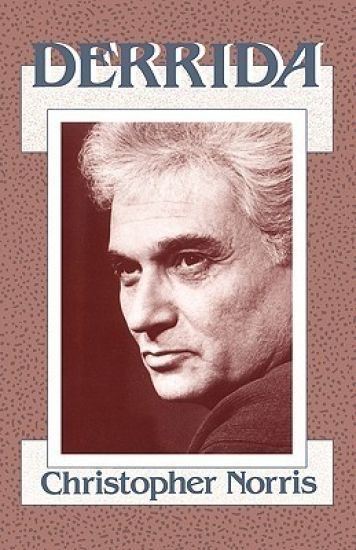
Derrida

Derrida

Christopher Norris

HARVARD UNIVERSITY PRESS
1988
nidottu
Jacques Derrida (born 1930) is undoubtedly the single most influential figure in current Anglo-American literary theory. Yet many scholars and students, not to mention general readers, would be hard put to give an account of Derrida's own writings. In this admirably clear and intelligent introduction, Christopher Norris demonstrates that Derrida's texts should be understood as belonging more to philosophy than to literature. Norris explains the significance of Derrida's writing on texts in the Western philosophical tradition, from Plato to Kant, Hegel, and Husserl, placing him squarely within that tradition. He also discusses some of the reasons for the massive institutional resistance that has so far prevented philosophers from engaging seriously with Derrida's work. This book will be welcomed by readers in search of an introduction to Derrida's work that neither underrates its difficulties nor invests his ideas with a kind of protective mystique.
Post-structuralist Readings of English Poetry

Post-structuralist Readings of English Poetry

Richard Machin; Christopher Norris

Cambridge University Press
1987
pokkari
A group of leading critics have been invited to offer close readings of well-known poetic texts from the established canon of English literature. The volume is organised historically, with texts ranging from the Renaissance, Augustan and Romantic periods through to the twentieth century. All the essays are motivated by ideas and debates in critical theory and will prove a challenge to conventional valuations and ways of construing literary history. By combining theory and practical application, this volume should prove particularly helpful to those keen to pursue the implications of current critical theory.
Post-structuralist Readings of English Poetry

Post-structuralist Readings of English Poetry

Machin Richard; Christopher Norris

Cambridge University Press
1987
sidottu
A group of leading critics have been invited to offer close readings of well-known poetic texts from the established canon of English literature. The volume is organised historically, with texts ranging from the Renaissance, Augustan and Romantic periods through to the twentieth century. All the essays are motivated by ideas and debates in critical theory and will prove a challenge to conventional valuations and ways of construing literary history. By combining theory and practical application, this volume should prove particularly helpful to those keen to pursue the implications of current critical theory.