Kirjailija
Christopher Tilley
Kirjat ja teokset yhdessä paikassa: 26 kirjaa, julkaisuja vuosilta 1987-2021, suosituimpien joukossa Stone Worlds. Vertaile teosten hintoja ja tarkista saatavuus suomalaisista kirjakaupoista.
26 kirjaa
Kirjojen julkaisuhaarukka 1987-2021.
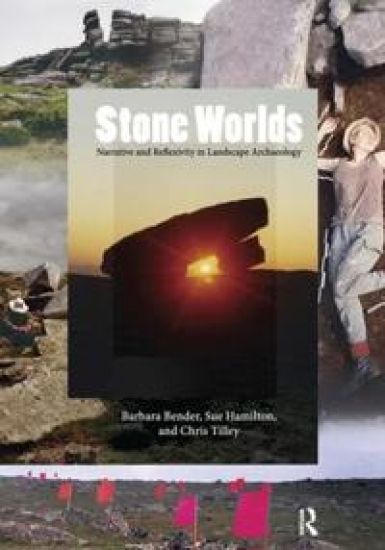
This book represents an innovative experiment in presenting the results of a large-scale, multidisciplinary archaeological project. The well-known authors and their team examined the Neolithic and Bronze Age landscapes on Bodmin Moor of Southwest England, especially the site of Leskernick. The result is a multivocal, multidisciplinary telling of the stories of Bodmin Moor—both ancient and modern—using a large number of literary genres and academic disciplines. Dialogue, storytelling, poetry, photo essays and museum exhibits all appear in the volume, along with contributions from archaeologists, anthropologists, sociologists, geologists, and ecologists. The result is a major synthesis of the Bronze Age settlements and ritual sites of the Moor, contextualized within the Bronze Ages of southwestern and central Britain, and a tracing of the changing meaning of this landscape over the past five thousand years. Of obvious interest to those in British prehistory, this is a substantial presentation of a groundbreaking project that will also be of interest to many concerned with the interpretation of social landscapes and the public presentation of archaeology.
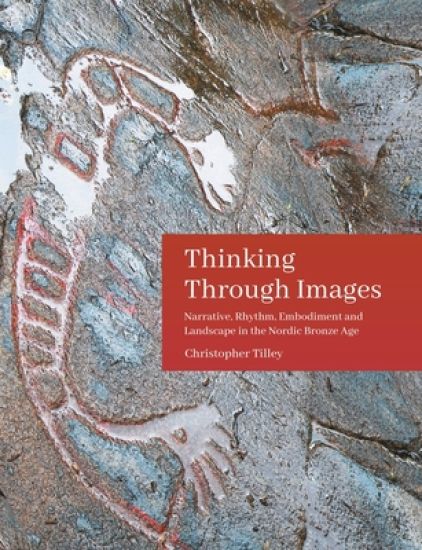
This book provides a general self-reflexive review and critical analysis of Scandinavian rock art from the standpoint of Chris Tilley’s research in this area over the last thirty years. It offers a novel alternative theoretical perspective stressing the significance of visual narrative structure and rhythm, using musical analogies, putting particular emphasis on the embodied perception of images in a landscape context.Part I reviews the major theories and interpretative perspectives put forward to understand the images, in historical perspective, and provides a critique discussing each of the main types of motifs occurring on the rocks. Part II outlines an innovative theoretical and methodological perspective for their study stressing sequence and relationality in bodily movement from rock to rock. Part III is a detailed case study and analysis of a series of rocks from northern Bohuslän in western Sweden. The conclusions reflect on the theoretical and methodological approach being taken in relation to the disciplinary practices involved in rock art research, and its future.
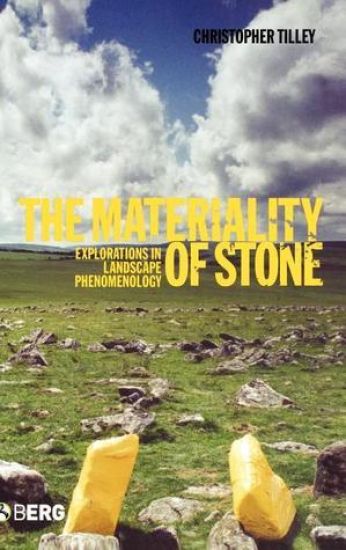
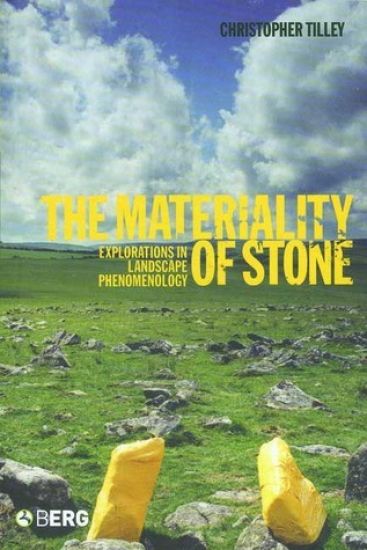
With Wayne Bennett From the silky wax qualities of the surfaces of some quartz menhirs to the wood-grain textures of others, to the golden honeycombed limestones of Malta, to the icy frozen waves of the Cambrian sandstone of south-east Sweden, this book investigates the sensuous material qualities of stone. Tactile sensations, sonorous qualities, colour, and visual impressions are all shown to play a vital part in our understanding of the power and significance of prehistoric monuments in relation to their landscapes. In The Materiality of Stone, Christopher Tilley presents a radically new way of analyzing the significance of both 'cultural' and 'natural' stone in prehistoric European landscapes. Tilley's groundbreaking approach is to interpret human experience in a multidimensional and sensuous human way, rather than through an abstract analytical gaze. The studies range widely from the menhirs of prehistoric Brittany to Maltese Neolithic temples to Bronze Age rock carvings and cairns in southern Sweden. Tilley leaves no stone unturned as he also considers how the internal spaces and landscape settings are interpreted in relation to artifacts, substances, and related places that were deeply meaningful to the people who inhabited them and remain no less evocative today. In its innovative approach to understanding human experience through the tangible rocks and stone of our past, The Materiality of Stone is both a major theoretical and substantive contribution to the field of material culture studies and the study of European prehistory.
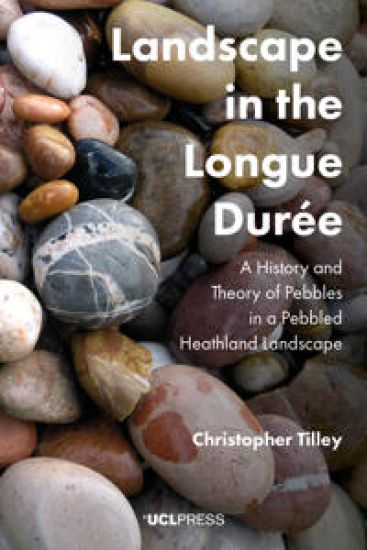
A history and theory of pebbles in te pebbled heathland landscape.
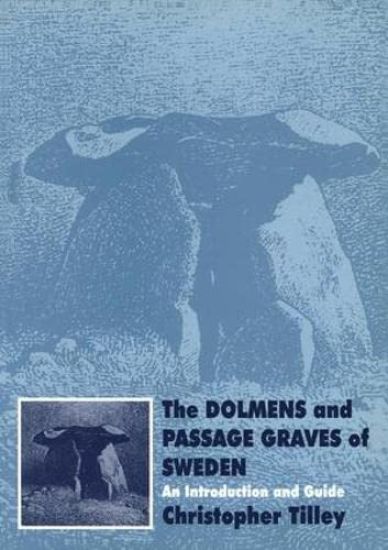
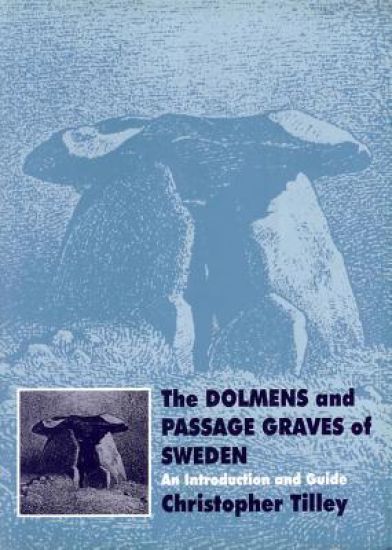
This book is the first comprehensive introduction and guide to Sweden‘s most spectacular Stone Age monuments: the dolmens and passage graves, which began to be constructed over 5000 years ago. The introduction provides a detailed social interpretation of these monuments outlining how and why they were built and the ways in which they related to economy and landscape, politics, ceremony, symbolism and belief. This is followed by a systematic regional guide to all the major monuments in Sk Halland, V ergotland,and and Bohusl illustrated by numerous photographs, plans and maps.
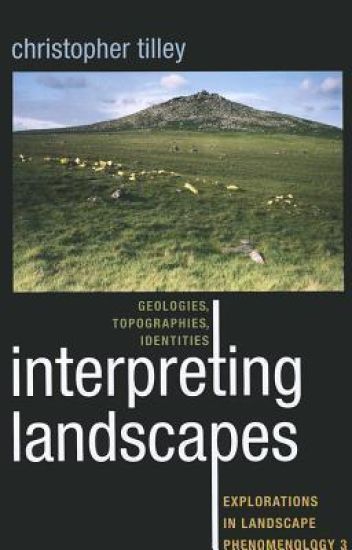
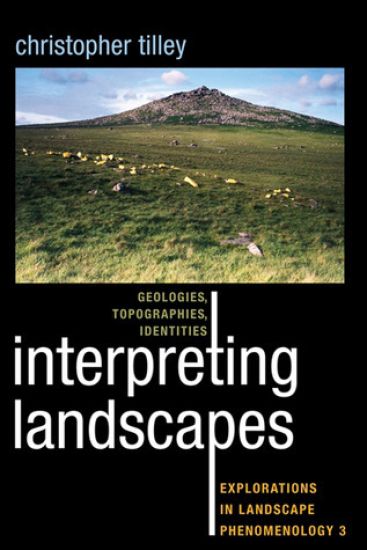
This book takes a new approach to writing about the past. Instead of studying the prehistory of Britain from Mesolithic to Iron Age times in terms of periods or artifact classifications, Tilley examines it through the lens of their geology and landscapes, asserting the fundamental significance of the bones of the land in the process of human occupation over the long durée. Granite uplands, rolling chalk downlands, sandstone moorlands, and pebbled hilltops each create their own potentialities and symbolic resources for human settlement and require forms of social engagement. Taking his findings from years of phenomenological fieldwork experiencing different landscapes with all senses and from many angles, Tilley creates a saturated and historically imaginative account of the landscapes of southern England and the people who inhabited them. This work is also a key theoretical statement about the importance of landscapes for human settlement.
The Extraordinary in the Ordinary. An Anthropology of Landscapetells the fascinating story of a heathland landscape in south-west England and the way different individuals and groups engage with it. Based on a long-term anthropological study, the book emphasises four individual themes embodied identities, the landscape as a sensuous material form that is acted upon and in turn acts on people, the landscape as contested, and its relation to emotion. The landscape is discussed in relation to these themes as both taskscape and leisurescape, and from the perspective of different user groups. The book makes an innovative contribution to
Originally published in 1991, this is the first book-length exploration of post-structuralist discourse theory in archaeology. It tackles the most basic problem of historical and archaeological analysis - the relationship between text and artefact – in an analysis of prehistoric art fusing theory and the practice of interpretation to create a fresh framework for understanding the relationship between past and present. Focusing on a collection of rock carvings from northern Sweden, the author shows how alternative conceptualizations of the material from structuralist, hermeneutic and structural-Marxist frameworks substantially alter our understanding of their meaning and significance. Engaging readers in an interpretive process, this book is for specialists in archaeology, anthropology, art history and cultural studies.
InRe-Constructing Archaeology, Shanks and Tilley aim to challenge the disciplinary practices of both traditional and the `new' archaeology and to present a radical alternative - a critically self-consious archaeology aware of itself as pracitce in the present, and equally a social archaeology that appreciates artefacts not merely as ovjects of analysis but as part of a social world of past and present that is charged with meaning. It is a fresh and invigorating contribution to the emergence of a philosophically and politically informed archaeology.
Originally published in 1991, this is the first book-length exploration of post-structuralist discourse theory in archaeology. It tackles the most basic problem of historical and archaeological analysis - the relationship between text and artefact – in an analysis of prehistoric art fusing theory and the practice of interpretation to create a fresh framework for understanding the relationship between past and present. Focusing on a collection of rock carvings from northern Sweden, the author shows how alternative conceptualizations of the material from structuralist, hermeneutic and structural-Marxist frameworks substantially alter our understanding of their meaning and significance. Engaging readers in an interpretive process, this book is for specialists in archaeology, anthropology, art history and cultural studies.
This book takes a new approach to writing about the past. Instead of studying the prehistory of Britain from Mesolithic to Iron Age times in terms of periods or artifact classifications, Tilley examines it through the lens of their geology and landscapes, asserting the fundamental significance of the bones of the land in the process of human occupation over the long durée. Granite uplands, rolling chalk downlands, sandstone moorlands, and pebbled hilltops each create their own potentialities and symbolic resources for human settlement and require forms of social engagement. Taking his findings from years of phenomenological fieldwork experiencing different landscapes with all senses and from many angles, Tilley creates a saturated and historically imaginative account of the landscapes of southern England and the people who inhabited them. This work is also a key theoretical statement about the importance of landscapes for human settlement.
The Dolmens and Passage Graves of Sweden
Christopher Tilley
University of London Institute of Archaeology
2009
nidottu
This book is the first comprehensive introduction and guide to Sweden’s most spectacular Stone Age monuments: the dolmens and passage graves, which began to be constructed over 5000 years ago. The introduction provides a detailed social interpretation of these monuments outlining how and why they were built and the ways in which they related to economy and landscape, politics, ceremony, symbolism and belief. This is followed by a systematic regional guide to all the major monuments in Skåne, Halland, Västergotland, Öland and Bohuslän, illustrated by numerous photographs, plans and maps.
Ideology, Power and Prehistory
Daniel Miller; Christopher Tilley
Cambridge University Press
2008
pokkari
This book starts from the premise that methodology - the procedures for obtaining an 'objective' knowledge of the past - has always dominated archaeology to the detriment of broader social theory. It argues that social theory is archaeological theory, and that past failure to recognise this has resulted in disembodied archaeological theory and weak disciplinary practice. Ideology, Power and Prehistory therefore seeks to reinstate the primacy of social theory and the social nature of the past worlds that archaeologists seek to understand. The contributors to this book argue that past peoples, the creators of the archaeological records, should be understood as actively manipulating their own material world to represent and misrepresent their own and others' interests. Thus the concepts of ideology and power, long discussed in social and political science yet largely ignored by archaeologists, must henceforward play a central role in our understanding of the past as a social creation. Archaeologists must now consider how the material remains they study were used to create images by past societies, which do not simply mirror or reflect but actively orientate the nature of these societies.
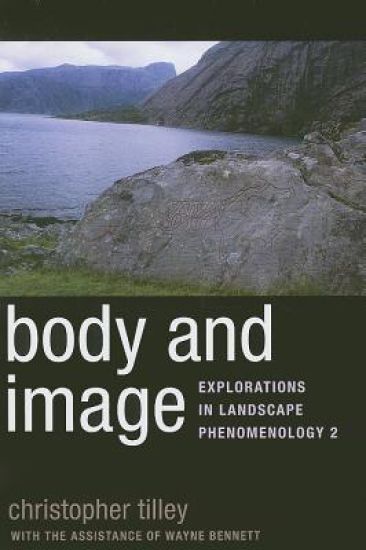
The understanding and interpretation of ancient architecture, landscapes, and art has always been viewed through an iconographic lens—a cognitive process based on traditional practices in art history. But ancient people did not ascribe their visions on canvas, rather on hills, stones, and fields. Thus, Chris Tilley argues, the iconographic approach falls short of understanding how ancient people interacted with their imagery. A kinaesthetic approach, one that uses the full body and all the senses, can better approximate the meaning that these artifacts had for their makers and today’s viewers. The body intersects the landscape in a myriad of ways—through the effort to reach the image, the angles that one can use to view, the multiple senses required for interaction. Tilley outlines the choreographic basis of understanding ancient landscapes and art phenomenologically, and demonstrates the power of his thesis through examples of rock art and megalithic architecture in Norway, Ireland, and Sweden. This is a powerful new model from one of the leading contemporary theorists in archaeology.
With Wayne Bennett From the silky wax qualities of the surfaces of some quartz menhirs to the wood-grain textures of others, to the golden honeycombed limestones of Malta, to the icy frozen waves of the Cambrian sandstone of south-east Sweden, this book investigates the sensuous material qualities of stone. Tactile sensations, sonorous qualities, colour, and visual impressions are all shown to play a vital part in our understanding of the power and significance of prehistoric monuments in relation to their landscapes. In The Materiality of Stone, Christopher Tilley presents a radically new way of analyzing the significance of both 'cultural' and 'natural' stone in prehistoric European landscapes. Tilley's groundbreaking approach is to interpret human experience in a multidimensional and sensuous human way, rather than through an abstract analytical gaze. The studies range widely from the menhirs of prehistoric Brittany to Maltese Neolithic temples to Bronze Age rock carvings and cairns in southern Sweden. Tilley leaves no stone unturned as he also considers how the internal spaces and landscape settings are interpreted in relation to artifacts, substances, and related places that were deeply meaningful to the people who inhabited them and remain no less evocative today. In its innovative approach to understanding human experience through the tangible rocks and stone of our past, The Materiality of Stone is both a major theoretical and substantive contribution to the field of material culture studies and the study of European prehistory.
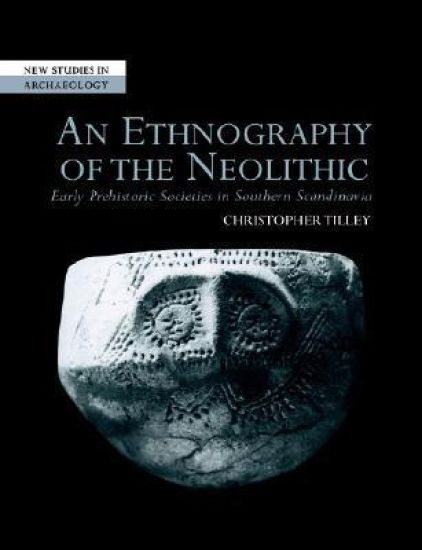
Archaeological research in Sweden and Denmark has uncovered a startling array of evidence over the last 150 years, but until now there has been no comprehensive synthesis and interpretation of the material. An Ethnography of the Neolithic bridges this gap, giving an accessible and up-to-date analysis of a wide range of evidence, from landscapes to monumental tombs to portable artifacts. Christopher Tilley also uses this material as a basis for a provocative and novel reconstruction of late Mesolithic and earlier Neolithic societies in southern Scandinavia, over a period of 3,000 years. His skilful integration of archaeological evidence with new anthropological approaches makes this book an original contribution to an important topic, whose significance stretches outside Scandinavia, and beyond the Neolithic.