Kirjojen hintavertailu. Mukana 12 390 323 kirjaa ja 12 kauppaa.

Kirjailija

Clive Emsley

Kirjat ja teokset yhdessä paikassa: 30 kirjaa, julkaisuja vuosilta 1991-2021, suosituimpien joukossa Crime, Police, and Penal Policy. Vertaile teosten hintoja ja tarkista saatavuus suomalaisista kirjakaupoista.

30 kirjaa

Kirjojen julkaisuhaarukka 1991-2021.

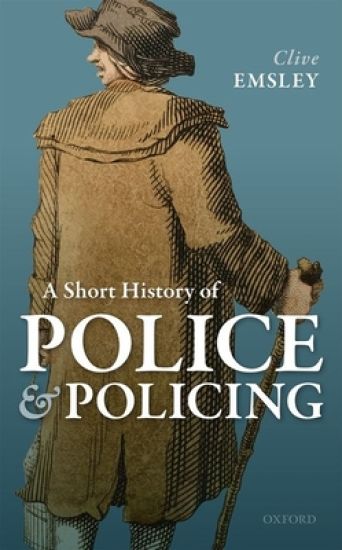
A Short History of Police and Policing

A Short History of Police and Policing

Clive Emsley

Oxford University Press
2021
sidottu
The police are constantly under scrutiny. They are criticized for failings, praised for successes, and hailed as heroes for their sacrifices. Starting from the premise that every society has norms and ways of dealing with transgressors, A Short History of Police and Policing traces the evolution of the multiple forms of 'policing' that existed in the past. It examines the historical development of the various bodies, individuals, and officials who carried these out in different societies, in Europe and European colonies, but also with reference to countries such as ancient Egypt, China, and the USA. By demonstrating that policing was never the exclusive dominion of the police, and that the institution of the police, as we know it today, is a relatively recent creation, Professor Emsley explores the idea and reality of policing, and shows how an institution we now call 'the police' came to be virtually universal in our modern world.

Crime and Society in England, 1750–1900
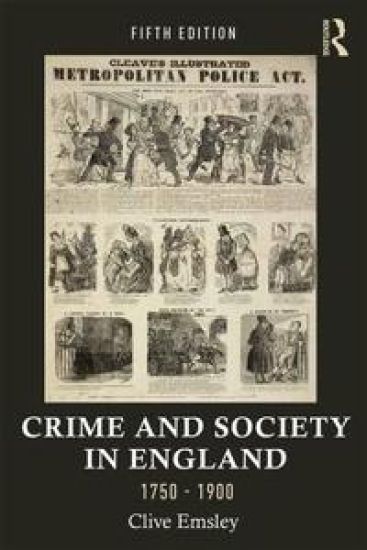
Ranging from the middle of the eighteenth through to the end of the nineteenth century, Crime and Society in England, 1750–1900 explores the developments in policing, the courts and the penal system as England became increasingly industrialised and urbanised. Through a consideration of the difficulty of defining crime, the book presents criminal behaviour as being intrinsically tied to historical context and uses this theory as the basis for its examination of crime within English society during this period. In this fifth edition Professor Emsley explores the most recent research, including the increased focus on ethnicity, gender and cultural representations of crime, allowing students to gain a broader view of modern English society. Divided thematically, the book’s coverage includes: the varying perceptions of crime across different social groups crime in the workplace the concepts of a ‘criminal class’ and ‘professional criminals’ the developments in the courts, the police and the prosecution of criminals.Thoroughly updated to address key questions surrounding crime and society in this period, and fully equipped with illustrations, tables and charts to further highlight important aspects, Crime and Society in England, 1750–1900 is the ideal introduction for students of modern crime.
Crime and Society in England, 1750–1900
Ranging from the middle of the eighteenth through to the end of the nineteenth century, Crime and Society in England, 1750–1900 explores the developments in policing, the courts and the penal system as England became increasingly industrialised and urbanised. Through a consideration of the difficulty of defining crime, the book presents criminal behaviour as being intrinsically tied to historical context and uses this theory as the basis for its examination of crime within English society during this period. In this fifth edition Professor Emsley explores the most recent research, including the increased focus on ethnicity, gender and cultural representations of crime, allowing students to gain a broader view of modern English society. Divided thematically, the book’s coverage includes: the varying perceptions of crime across different social groups crime in the workplace the concepts of a ‘criminal class’ and ‘professional criminals’ the developments in the courts, the police and the prosecution of criminals.Thoroughly updated to address key questions surrounding crime and society in this period, and fully equipped with illustrations, tables and charts to further highlight important aspects, Crime and Society in England, 1750–1900 is the ideal introduction for students of modern crime.
Exporting British Policing During the Second World War
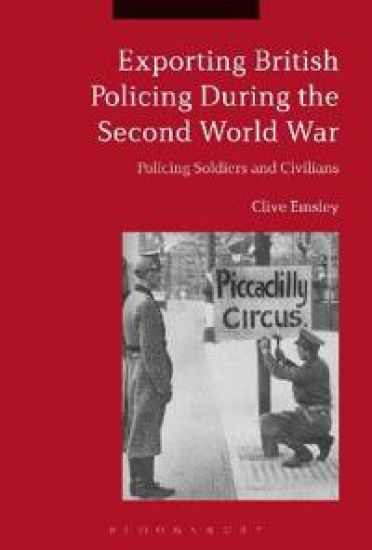
Exporting British Policing is a comprehensive study of British military policing in liberated Europe during the Second World War. Preventing and detecting thefts, receiving and profiteering together with the maintenance of order in its broadest sense are, in the peacetime world, generally confided to the police. However, the Second World War witnessed the use of civilian police to create a detective division of the British Army’s Military Police (SIB), and the use of British civilian police, alongside American police, as Civil Affairs Officers to restore order and civil administration. Part One follows the men of the SIB from their pre-war careers to confrontations with mafiosi and their investigations into widespread organised crime and war crimes during which they were constantly hampered by being seen as a Cinderella service commanded by ‘temporary gentlemen’. Part Two focuses on the police officers who served in Civil Affairs who tended to come from higher ranks in the civilian police than those who served in SIB. During the war they occupied towns with the assault troops, and then sought to reorganise local administration; at the end of the war in the British Zones of Germany and Austria they sought to turn both new Schutzmänner and police veterans of the Third Reich into British Bobbies. Using memoirs and anecdotes, Emsley critically draws on the subjective experiences of these police personnel, assessing the successes of these wartime efforts for preventing and investigating crimes such as theft and profiteering and highlighting the importance of historical precedent, given current difficulties faced by international policing organizations in enforcing democratic police reform in post-conflict societies.
Crime and Society in Twentieth Century England
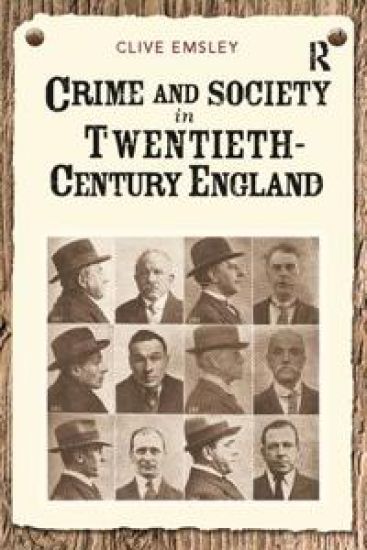
Crime and Society in Twentieth-Century England traces the broad pattern of criminal offending over a hundred year period that experienced unprecedented levels of upheaval and change. This period included two world wars, the end of the British Empire, significant shifts in both gender relations and ethnic mix and a decline in the power of the economy. In this new textbook, Professor Clive Emsley provides an up-to-date assessment of changes in attitudes to crime as well as of the developments in policing, in the courts and in penal sanctions over the course of the century. He explores the impact of growing gender equality and ethnic diversity on crime and criminal justice, and looks at the way in which crime became increasingly central to political agendas in the last third of the century. Written in a clear and accessible manner, the book examines: Perceptions of crime and criminality across the century Varieties of offending from murder to benefit fraud The role of the media in constructing and reinforcing the understanding of crime and the criminal The decline and demise of corporal and capital punishment The shift from largely progressive to more punitive penal practice The first serious attempt to explore the history of crime and criminal justice in twentieth-century England, this book will be an invaluable introduction to the student and interested general reader alike.
Napoleonic Europe

Napoleonic Europe

Clive Emsley

Routledge
2017
sidottu
The impact of Napoleon on France and on Europe was immediate and enduring. He dominated his age as his armies dominated the continent; and no European country was untouched, or unchanged, by the events of these turbulent years. Keeping one's bearings geographically, militarily, politically and chronologically in the prevailing turmoil is no easy matter, even for the specialist, and Clive Emsley's concise but authoritative guide to the Napoleonic age will be a boon to students, scholars and general readers alike.
Britain and the French Revolution
The French Revolution catapulted Europe into a new period of political upheaval, social change, and into the modern era.This book provides a concise introduction to the impact of the French Revolution on Britain and to the ways in which this impact has been assessed by historians.The book is organised thematically. It begins with a survey of the ideological debate sparked off by the Revolution discussing, in particular, the work of people such as Burke, Paine, Spence and Wollstonecraft. From here it presents an exploration of the Revolution s impact on* Parliamentary polities* The growth of radicalism and loyalism* The way in which French ideas influenced Irish aspirations to generate rebellionThe third main section of the book focuses on the causes and course of Britain s war with Revolutionary France, and on the effects of the war on the home front, most notably the recurrent, serious food shortages.
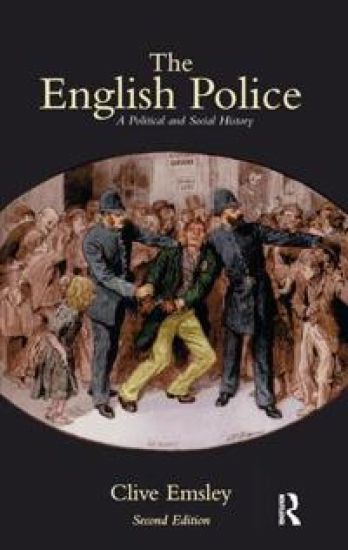
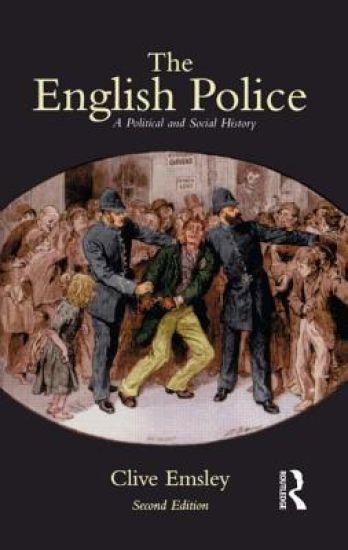
The English Police

The English Police

Clive Emsley

Routledge
2016
sidottu
A comprehensive history of policing from the eighteenth century onwards, which draws on largely unused police archives. Clive Emsley addresses all the major issues of debate; he explores the impact of legislation and policy at both national and local levels, and considers the claim that the English police were non-political and free from political control. In the final section, he looks at the changing experience of police life. Established as a standard introduction to the subject on its first appearance, the Second Edition has been substantially revised and is now published under the Longman imprint for the first time.
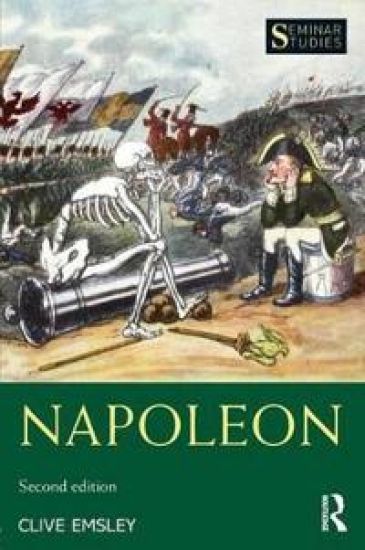
Napoleon

Napoleon

Clive Emsley

Routledge
2014
sidottu
Napoleon had a profound impact on the development of both France and Europe, and his career had repercussions across the wider world. His career had all the elements of a classical tragedy: having begun with spectacular military and civil achievements, it ended in exile on the tiny Atlantic island of St Helena. Almost two centuries after Napoleon’s death, historians continue to argue about his aims, his achievements and his legacy. In this thoroughly revised and updated new edition, Clive Emsley brings these historiographical debates up-to-date, and broadens his study to include discussion of the cultural and social impact of the Napoleonic era. Divided into five parts this new edition: offers a succinct summary of Napoleon’s career examines his impact on France and Europe, as well as including a new chapter on the impact of the Napoleonic adventure on the wider world considers the relationship between Napoleon and the French Revolution outlines the difficulties in assessing his career explores the current debates surrounding Napoleon contains an expanded selection of primary source documents, ranging from state papers to police reports. A Chronology, Glossary and Who’s Who of key characters are also provided, making this an indispensable textbook for students of nineteenth-century French and European history.
Napoleon

Napoleon

Clive Emsley

Routledge
2014
nidottu
Napoleon had a profound impact on the development of both France and Europe, and his career had repercussions across the wider world. His career had all the elements of a classical tragedy: having begun with spectacular military and civil achievements, it ended in exile on the tiny Atlantic island of St Helena. Almost two centuries after Napoleon’s death, historians continue to argue about his aims, his achievements and his legacy. In this thoroughly revised and updated new edition, Clive Emsley brings these historiographical debates up-to-date, and broadens his study to include discussion of the cultural and social impact of the Napoleonic era. Divided into five parts this new edition: offers a succinct summary of Napoleon’s career examines his impact on France and Europe, as well as including a new chapter on the impact of the Napoleonic adventure on the wider world considers the relationship between Napoleon and the French Revolution outlines the difficulties in assessing his career explores the current debates surrounding Napoleon contains an expanded selection of primary source documents, ranging from state papers to police reports. A Chronology, Glossary and Who’s Who of key characters are also provided, making this an indispensable textbook for students of nineteenth-century French and European history.
Crime, Police, and Penal Policy

Crime, Police, and Penal Policy

Clive Emsley

Oxford University Press
2013
nidottu
How did ideas about crime and criminals change in Europe from around 1750 to 1940? How did European states respond to these changes with the development of police and penal institutions? Clive Emsley addresses these questions using recent research on the history of crime and criminal justice in Europe. Exploring the subject chronologically, he addresses the forms of offending, the changing interpretations and understandings of that offending at both elite and popular levels, and how the emerging nation states of the period responded to criminal activity by the development of police forces and the refinement of forms of punishment. The book focuses on the comparative nature in which different states studied each other and their institutions, and the ways in which different reformers exchanged ideas and investigated policing and penal experiments in other countries. It also explores the theoretical issues underpinning recent research, emphasising that the changes in ideas on crime and criminals were neither linear nor circular, and demonstrating clearly that many ideas hailed as new by contemporary politicians and in current debate on crime and its 'solutions', have a very long and illustrious history.
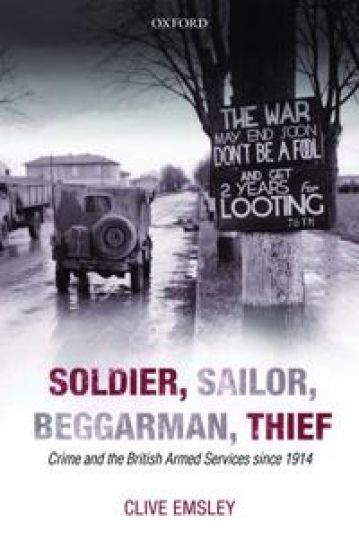
Soldier, Sailor, Beggarman, Thief

Soldier, Sailor, Beggarman, Thief

Clive Emsley

Oxford University Press
2013
sidottu
The belief that crime declines at the beginning of major wars, as young men are drawn into the armed forces, and increases with the restoration of peace, as brutalised veterans are released on to a labour market reorganising for peace, has a long pedigree in Britain. But it has rarely been examined critically and scarcely at all for the period of the two world wars of the twentieth century. This is the first serious investigation of criminal offending by members of the British armed forces both during and immediately after these wars. Its particular focus is the two world wars but, recognising the concerns and the problems voiced in recent years about veterans of the Falklands, the Gulf wars, and the campaign in Afghanistan, Clive Emsley concludes his narrative in the present.
The History of Policing:  4-Volume Set

The History of Policing: 4-Volume Set

Clive Emsley

Ashgate Publishing Limited
2011
muu
In recent years the history of police and policing has become a key area of debate across a range of disciplines: criminology, sociology, political science and history. This authoritative series brings together the most important and influential English-language scholarship in the field, arranged chronologically across four volumes. The series includes articles on the shifting meaning of 'police', the growth of bureaucratic policing during the late eighteenth and nineteenth centuries, consolidation in the twentieth century, and the international diffusion of export models and practices. The texts included come from a range of disciplines and chart the recent debates from traditional Whig history, revisionist work published during the last quarter of the twentieth century, and subsequent reassessments. Each volume is edited by a historian recognised as an authority in the area, and features an introductory essay which explains the key changes in the period and the significance of the selected articles and essays. The series provides a valuable resource for scholars new to the area as well as for those who may have overlooked an important essay or article published in an edited collection, or in a journal with limited circulation or from a discipline that they might not normally consult.
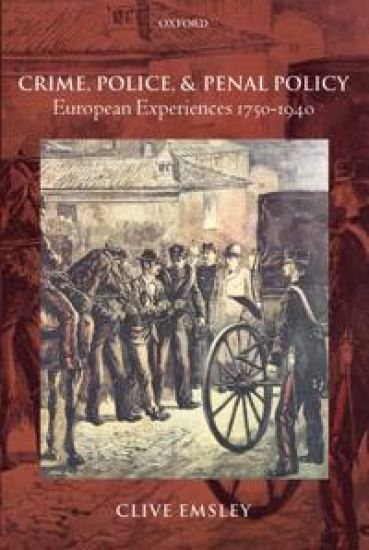
Crime, Police, and Penal Policy

Crime, Police, and Penal Policy

Clive Emsley

Oxford University Press
2007
sidottu
How did ideas about crime and criminals change in Europe from around 1750 to 1940? How did European states respond to these changes with the development of police and penal institutions? Clive Emsley attempts to address these questions using recent research on the history of crime and criminal justice in Europe. Exploring the subject chronologically, he addresses the forms of offending, the changing interpretations and understandings of that offending at both elite and popular levels, and how the emerging nation states of the period responded to criminal activity by the development of police forces and the refinement of forms of punishment. The book focuses on the comparative nature in which different states studied each other and their institutions, and the ways in which different reformers exchanged ideas and investigated policing and penal experiments in other countries. It also explores the theoretical issues underpinning recent research, emphasising that the changes in ideas on crime and criminals were neither linear nor circular, and demonstrating clearly that many ideas hailed as new by contemporary politicians and in current debate on crime and its 'solutions', have a very long and illustrious history.
Police Detectives in History, 1750–1950

Police Detectives in History, 1750–1950

Clive Emsley

Ashgate Publishing Limited
2006
sidottu
While the history of the uniformed police has prompted considerable research, the historical study of police detectives has been largely neglected; confined for the most part to a chapter or a brief mention in books dealing with the development of the police in general. The collection redresses this imbalance. Investigating themes central to the history of detection, such as the inchoate distinction between criminals and detectives, the professionalisation of detective work and the establishment of colonial police forces, the book provides a the first detailed examination of detectives as an occupational group, with a distinct occupational culture. Essays discuss the complex relationship between official and private law enforcers and examine the ways in which the FBI in the U.S.A. and the Gestapo in Nazi Germany operated as instruments of state power. The dynamic interaction between the fictional and the real life image of the detective is also explored. Expanding on themes and approaches introduced in recent academic research of police history, the comparative studies included in this collection provide new insights into the development of both plain-clothes policing and law enforcement in general, illuminating the historical importance of bureaucratic and administrative changes that occurred within the state system.
Hard Men

Hard Men

Clive Emsley

Hambledon Continuum
2005
sidottu
The garrotters who terrified London in 1862, the Irish Fenians who carried our terrorist bombings in London and the gangs who dominated parts of the East End in the early years of the twentieth century all used violence to achieve their ends. Hard Men is a survey of the changing pattern of violent behaviour, public and private, in England over two hundred and fifty years. People in the eighteenth and nineteenth centuries were certainly more tolerant of domestic violence and rough communal sports and celebrations. Contentious public meetings, notably elections, could end in serious injuries; the state and the police exercised control by violent means where they deemed it necessary; and there were of course violent crimes committed by men, women and children. While the exercise of violence reflected changes in society and attitudes, it is difficult to point to a golden age in the past without it.
Britain and the French Revolution
The French Revolution catapulted Europe into a new period of political upheaval, social change, and into the modern era. This book provides a concise introduction to the impact of the French Revolution on Britain and to the ways in which this impact has been assessed by historians. The book is organised thematically. It begins with a survey of the ideological debate sparked off by the Revolution discussing, in particular, the work of people such as Burke, Paine, Spence and Wollstonecraft. From here it presents an exploration of the Revolution s impact on * Parliamentary polities* The growth of radicalism and loyalism* The way in which French ideas influenced Irish aspirations to generate rebellion The third main section of the book focuses on the causes and course of Britain s war with Revolutionary France, and on the effects of the war on the home front, most notably the recurrent, serious food shortages.
Gendarmes and the State in Nineteenth-Century Europe

Gendarmes and the State in Nineteenth-Century Europe

Clive Emsley

Oxford University Press
1999
sidottu
The history of police and policing have been the subject of much interest and research in recent years, but this book provides the first serious academic exploration of the origins and development of the role of soldier-policemen: the gendarmeries of nineteenth-century Europe. The author presents a detailed account of the French Gendarmeries from the old regime up to the First World War, and looks at the reasons for how and why this model came to be exported across continental Europe in the wake of the Revolutionary and Napoleonic armies. In particular their role is examined within the differing national contexts of Italy, Germany and the Habsburg Empire. The gendarmeries, it is argued, played a significant role in establishing the state, particularly in rural areas. As the physical manifestation of the state, gendarmes carried the state's law and a promise of protection, whilst at the same time ensuring in turn that the state received its annual levies of conscripts and taxes This account fully explores how the organisation and style of nineteenth-century soldier-policing in France developed in such a way that it brought the idea of the state and the state's law to much of twentieth-century continental Europe.
The English Police

The English Police

Clive Emsley

Longman
1996
nidottu
A comprehensive history of policing from the eighteenth century onwards, which draws on largely unused police archives. Clive Emsley addresses all the major issues of debate; he explores the impact of legislation and policy at both national and local levels, and considers the claim that the English police were non-political and free from political control. In the final section, he looks at the changing experience of police life. Established as a standard introduction to the subject on its first appearance, the Second Edition has been substantially revised and is now published under the Longman imprint for the first time.
Crime History and Histories of Crime

Crime History and Histories of Crime

Clive Emsley

Praeger Publishers Inc
1996
sidottu
When is a crime a crime—or an act condoned by a significant portion of society? When is a criminal a criminal—or a revolutionary or a national hero? As the chapters in this collection make clear, what constitutes criminal activity varies, to a degree, among different societies and at different moments in a society's history. In this wide-ranging work, major historians of criminology and penology examine aspects of crime and criminal justice from medieval Western Europe to modern day Canada.In addition to examining crime, the judicial system, and punishment in various societies, the chapters look at the evolution of police systems as societies urbanize and undergo population changes. Together these chapters look at many key questions concerning the modern study of criminal behavior. As such, the volume will be of great interest to researchers and scholars of the history of crime.