Kirjojen hintavertailu. Mukana 12 175 567 kirjaa ja 12 kauppaa.

Kirjailija

Colin P. Clarke

Kirjat ja teokset yhdessä paikassa: 25 kirjaa, julkaisuja vuosilta 2010-2026, suosituimpien joukossa Assessing Security Cooperation as a Preventive Tool. Vertaile teosten hintoja ja tarkista saatavuus suomalaisista kirjakaupoista.

Mukana myös kirjoitusasut: Colin P Clarke

25 kirjaa

Kirjojen julkaisuhaarukka 2010-2026.

Assessing Security Cooperation as a Preventive Tool

Assessing Security Cooperation as a Preventive Tool

Michael J. McNerney; Angela O'Mahony; Thomas S. Szayna; Derek Eaton; Caroline Baxter; Colin P. Clarke; Emma Cutrufello; Michael McGee; Heather Peterson; Leslie Adrienne Payne; Calin Trenkov-Wermuth

RAND
2014
pokkari
The report tested the assertion that U.S. security cooperation (SC) can help reduce fragility in partner states. Based on an analysis of SC data and state fragility scores for 107 countries in 1991 2008, the study found a correlation between provision of SC by the United States and a reduction in partner state fragility, though the presence and degree of correlation depended on partner country characteristics and the type of SC provided."
Countering Violent Nonstate Actor Financing

Countering Violent Nonstate Actor Financing

Trevor Johnston; Erik E Mueller; Irina a Chindea; Hannah Jane Byrne; Nathan Vest; Colin P Clarke; Anusree Garg; Howard J Shatz

RAND Corporation
2023
pokkari
Violent nonstate actors must have the resources to carry out their activities. Disrupting their financing plays a critical role in degrading these groups. It is not, however, always obvious which tools are effective and which would be counterproductive. This report presents five cases describing how five groups financed their activities, the effectiveness of various tools to disrupt that financing, and how the Army can contribute to the effort.
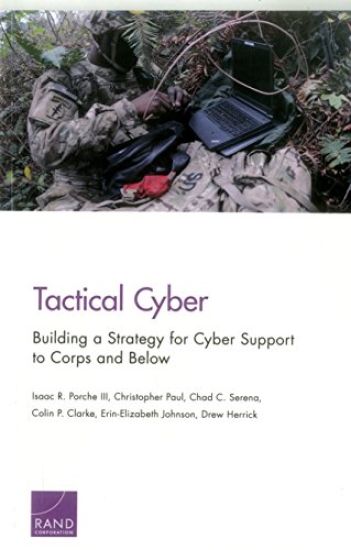
Tactical Cyber

Tactical Cyber

Isaac R. Porche; Christopher Paul; Chad C. Serena; Colin P. Clarke; Erin-Elizabeth Johnson; Drew Herrick

RAND
2017
pokkari
RAND Arroyo Center was asked by U.S. Army Cyber Command's G35 office to develop and document an Army strategy for providing cyber support to corps and below. This report proposes a strategy for tactical Army cyber operations, enumerating overarching goals, objectives, and associated activities. Instructive case studies are provided that support implementation of the strategy.
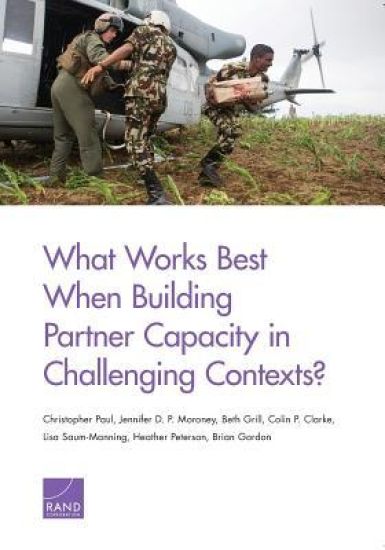
What Works Best When Building Partner Capacity in Challenging Contexts?

What Works Best When Building Partner Capacity in Challenging Contexts?

Christopher Paul; Jennifer D. P. Moroney; Beth Grill; Colin P. Clarke; Lisa Saum-Manning; Heather Peterson; Brian Gordon

RAND
2015
pokkari
Strategic imperatives sometimes compel the United States to work with partner nations that lack the characteristics that favor success in building partner capacity. This report explores what the United States can do in such contexts to maximize prospects for success by specifically looking at potential challenges and workarounds and deriving recommendations for future engagements.
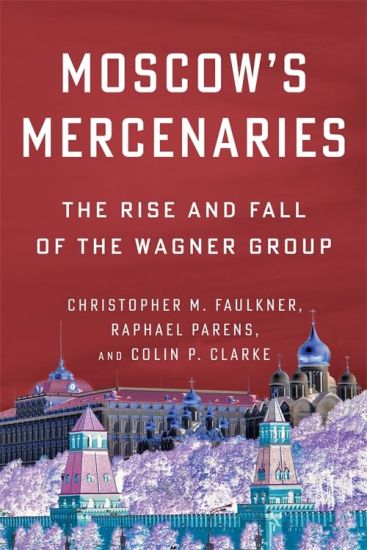
Moscow’s Mercenaries

Moscow’s Mercenaries

Christopher M. Faulkner; Raphael Parens; Colin P. Clarke

Columbia University Press
2026
sidottu
The Wagner Group emerged from Russia’s shadowy criminal underworld in 2014 and soon became one of the world’s most infamous private military companies. Led by the provocative oligarch Yevgeny Prigozhin, Wagner developed into a key instrument of Russian power projection, with deep and direct ties to the Kremlin. Its mercenaries fought on the front lines in Ukraine, propped up regimes in the Middle East and Africa, and exploited chaos to secure lucrative resource contracts before Prigozhin’s mutiny against Moscow in 2023 brought him down. This book traces the Wagner Group’s violent ascent and descent, exposing how a shadow army built an empire that seemed to have no end in sight until it turned on its masters. Drawing on a wide range of sources and interviews, Moscow’s Mercenaries offers a comprehensive examination of Wagner’s inner workings: its hybrid structure, battlefield tactics, propaganda campaigns, and connections to the Russian military. From Ukraine to brutal counterinsurgency campaigns in Syria, the Central African Republic, Mali, and beyond, the book shows how Wagner evolved into a global criminal syndicate and reveals why its ambitions led to a fatal collision with the Russian state. Moscow’s Mercenaries explores what Wagner’s rise tells us about the future of modern warfare, the erosion of international norms, and how authoritarian regimes outsource violence. Anyone interested in the evolution of mercenary warfare, great power competition, and the dark underbelly of global security stands to learn important lessons from this well-timed and insightful book.
Moscow’s Mercenaries

Moscow’s Mercenaries

Christopher M. Faulkner; Raphael Parens; Colin P. Clarke

Columbia University Press
2026
pokkari
The Wagner Group emerged from Russia’s shadowy criminal underworld in 2014 and soon became one of the world’s most infamous private military companies. Led by the provocative oligarch Yevgeny Prigozhin, Wagner developed into a key instrument of Russian power projection, with deep and direct ties to the Kremlin. Its mercenaries fought on the front lines in Ukraine, propped up regimes in the Middle East and Africa, and exploited chaos to secure lucrative resource contracts before Prigozhin’s mutiny against Moscow in 2023 brought him down. This book traces the Wagner Group’s violent ascent and descent, exposing how a shadow army built an empire that seemed to have no end in sight until it turned on its masters. Drawing on a wide range of sources and interviews, Moscow’s Mercenaries offers a comprehensive examination of Wagner’s inner workings: its hybrid structure, battlefield tactics, propaganda campaigns, and connections to the Russian military. From Ukraine to brutal counterinsurgency campaigns in Syria, the Central African Republic, Mali, and beyond, the book shows how Wagner evolved into a global criminal syndicate and reveals why its ambitions led to a fatal collision with the Russian state. Moscow’s Mercenaries explores what Wagner’s rise tells us about the future of modern warfare, the erosion of international norms, and how authoritarian regimes outsource violence. Anyone interested in the evolution of mercenary warfare, great power competition, and the dark underbelly of global security stands to learn important lessons from this well-timed and insightful book.
Return and Expand?

Return and Expand?

Patrick B Johnston; Mona Alami; Colin P Clarke

RAND
2021
nidottu
With the end of its territorial caliphate, the Islamic State will almost certainly attempt a comeback. Such efforts will require money. This report details the group's history, drawing from the literature, documents, and interviews with people who lived under the caliphate, with a focus on the group's revenue-raising activities and expenses, both as a self-styled caliphate and as an insurgency.
After the Caliphate

After the Caliphate

Colin P. Clarke

Polity Press
2019
nidottu
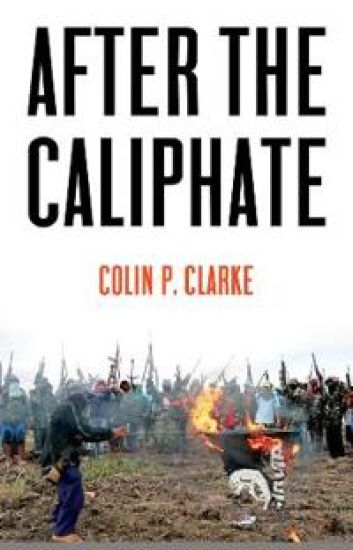
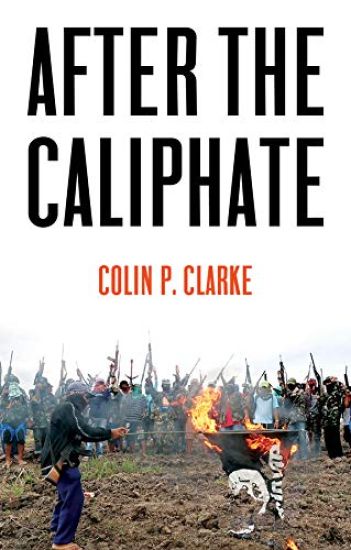
In 2014, the declaration of the Islamic State caliphate was hailed as a major victory by the global jihadist movement. But it was short-lived. Three years on, the caliphate was destroyed, leaving its surviving fighters – many of whom were foreign recruits – to retreat and scatter across the globe. So what happens now? Is this the beginning of the end of IS? Or can it adapt and regroup after the physical fall of the caliphate? In this timely analysis, terrorism expert Colin P. Clarke takes stock of IS – its roots, its evolution, and its monumental setbacks – to assess the road ahead. The caliphate, he argues, was an anomaly. The future of the global jihadist movement will look very much like its past – with peripatetic and divided groups of militants dispersing to new battlefields, from North Africa to Southeast Asia, where they will join existing civil wars, establish safe havens and sanctuaries, and seek ways of conducting spectacular attacks in the West that inspire new followers. In this fragmented and atomized form, Clarke cautions, IS could become even more dangerous and challenging for counterterrorism forces, as its splinter groups threaten renewed and heightened violence across the globe.
After the Caliphate

After the Caliphate

Colin P. Clarke

Polity Press
2019
sidottu
In 2014, the declaration of the Islamic State caliphate was hailed as a major victory by the global jihadist movement. But it was short-lived. Three years on, the caliphate was destroyed, leaving its surviving fighters – many of whom were foreign recruits – to retreat and scatter across the globe. So what happens now? Is this the beginning of the end of IS? Or can it adapt and regroup after the physical fall of the caliphate? In this timely analysis, terrorism expert Colin P. Clarke takes stock of IS – its roots, its evolution, and its monumental setbacks – to assess the road ahead. The caliphate, he argues, was an anomaly. The future of the global jihadist movement will look very much like its past – with peripatetic and divided groups of militants dispersing to new battlefields, from North Africa to Southeast Asia, where they will join existing civil wars, establish safe havens and sanctuaries, and seek ways of conducting spectacular attacks in the West that inspire new followers. In this fragmented and atomized form, Clarke cautions, IS could become even more dangerous and challenging for counterterrorism forces, as its splinter groups threaten renewed and heightened violence across the globe.
Improving C2 and Situational Awareness for Operations in and Through the Information Environment
It is difficult to achieve command and control and situational awareness of the information environment (IE) because it is not a physical place. Although every military activity has informational aspects, the IE is often not effectively integrated into operational planning, doctrine, or processes. Addressing gaps and shortfalls will require a stronger understanding of the IE, associated concepts and capabilities, and roles and responsibilities.
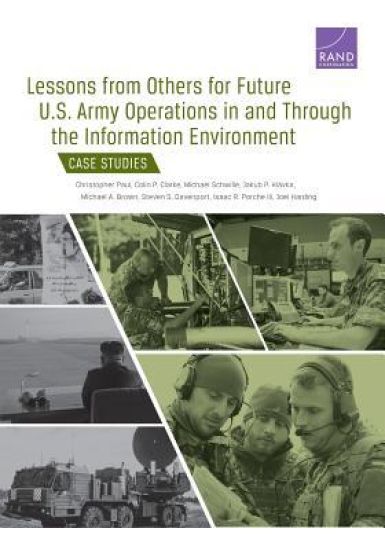
Lessons from Others for Future U.S. Army Operations in and Through the Information Environment
Harnessing the potential of old and new technology, state and nonstate actors alike dedicate significant effort to developing and employing information power. This examination of the evolution of allied and adversary activities in and through the information environment and comparative analysis of capability areas in which these others excel can guide future U.S. Army force planning.
Lessons from Others for Future U.S. Army Operations in and Through the Information Environment
Harnessing the power of old and new technology, state and nonstate actors alike dedicate significant effort to developing and employing information power. Twelve detailed case studies examine the information-related activities and strategic goals of a range of allies, adversaries, and potential adversaries, highlighting insights for U.S. Army planning.
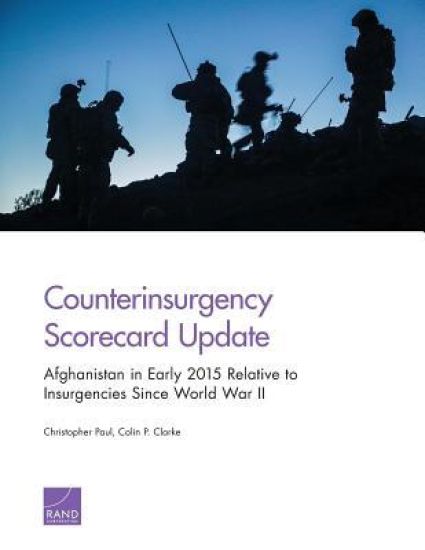
Counterinsurgency Scorecard Update

Counterinsurgency Scorecard Update

Christopher Paul; Colin P. Clarke

RAND
2016
pokkari
A key finding of previous RAND research on insurgencies worldwide since World War II was that an overall score on a scorecard of 15 equally weighted good and 11 equally weighted bad counterinsurgency factors and practices distinguished conflicts historical outcomes. Using the scorecard approach and an expert elicitation exercise, a RAND study sought to extend the findings to the case of Afghanistan in 2015."
A Building Partner Capacity Assessment Framework

A Building Partner Capacity Assessment Framework

Christopher Paul; Brian Gordon; Jennifer D. P. Moroney; Lisa Saum-Manning; Beth Grill; Colin P. Clarke; Heather Peterson

RAND
2015
pokkari
The Department of Defense conducts an assortment of building partner capacity (BPC) efforts. The needs and existing capabilities of various nations differ, however, as will results. Planning for each BPC effort carefully, assessing progress while the effort is in progress, and assessing results are all important to ensure that it meets U.S. goals and partner expectations. This report presents a framework intended to aid all these steps.
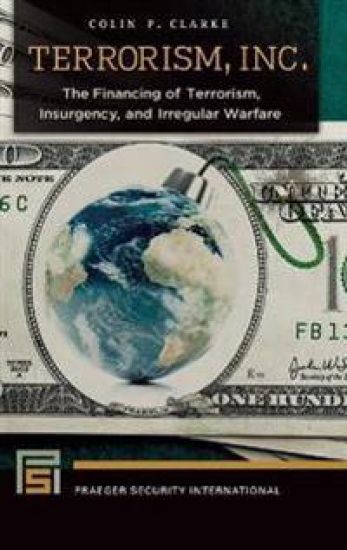
Terrorism, Inc.

Terrorism, Inc.

Colin P. Clarke

Praeger Publishers Inc
2015
sidottu
This in-depth, historical analysis of terrorism investigates the major funding streams of terrorists, insurgents, guerrillas, warlords, militias, and criminal organizations throughout the world as well as the efforts of the international community to thwart their efforts.Terrorist financing is an ongoing game of creating, concealing, and surreptitiously utilizing funds. This intriguing book considers every facet of guerrilla funding—from how activities are financed, to what insurgents do with the revenue they generate, to the range of countermeasures in place for deterring their moneymaking activities. Case studies prompt an analysis of past government responses and inform recommendations for countering irregular warfare worldwide.Author Colin P. Clarke presents the business side of terrorism, taking a look at the cash-producing ventures he labels "gray activities" such as diaspora support, charities, fraudulent businesses, front companies, and money laundering as well as "dark activities" including kidnapping for ransom, robbery, smuggling, trafficking, and extortion. He considers the transnational efforts to stop terrorist activities—from wiretaps and electronic surveillance to financial sanctions and the freezing of funds and accounts—and points to the emergence of interagency task forces for detaining and destroying the operations of major criminal organizations across the globe.
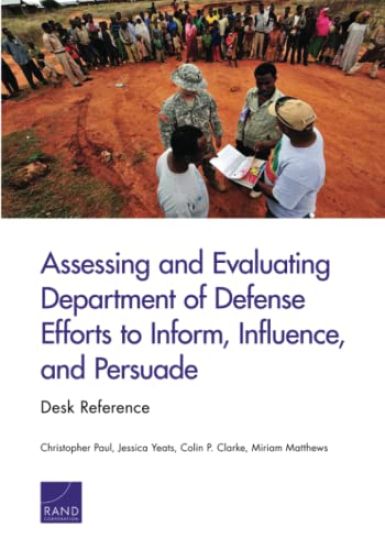
Assessing and Evaluating Department of Defense Efforts to Inform, Influence, and Persuade

Assessing and Evaluating Department of Defense Efforts to Inform, Influence, and Persuade

Christopher Paul; Jessica Yeats; Colin P. Clarke; Miriam Matthews

RAND
2015
pokkari
The U.S. Department of Defense has struggled to assess the progress and effectiveness of its efforts to inform, influence, and persuade audiences in support of key national security objectives. Best practices and examples from a range of sectors can guide the assessment of these activities, ensuring that they support broader military campaign goals while saving time and limited resources.
Mexico is Not Colombia

Mexico is Not Colombia

Christopher Paul; Colin P. Clarke; Chad C. Serena

RAND
2014
pokkari
Despite the scope of the threat they pose to Mexico s security, violent drug-trafficking organizations are not well understood, and optimal strategies to combat them have not been identified. While there is no perfectly analogous case to Mexico s current security situation, historical case studies may offer lessons for policymakers as they cope with challenges related to violence and corruption in that country."
Mexico is Not Colombia

Mexico is Not Colombia

Christopher Paul; Colin P. Clarke; Chad C. Serena

RAND
2014
pokkari
Despite the scope of the threat they pose to Mexico s security, violent drug-trafficking organizations are not well understood, and optimal strategies to combat them have not been identified. While there is no perfectly analogous case from history, Mexico stands to benefit from historical lessons and efforts that were correlated with improvement in countries facing similar challenges related to violence and corruption."
From Stalemate to Settlement

From Stalemate to Settlement

Colin P. Clarke; Christopher Paul

RAND
2014
pokkari
A comprehensive review of historical insurgencies that ended in settlement after a military stalemate shows that these negotiations followed a similar path that can be generalized into a master narrative of seven steps executed in a common sequence. Such a narrative could help guide and assess the progress of a similar approach to resolving the conflict in Afghanistan as U.S. forces prepare to withdraw."