Kirjojen hintavertailu. Mukana 12 253 512 kirjaa ja 12 kauppaa.
Kirjailija
Cristina Berna
Kirjat ja teokset yhdessä paikassa: 411 kirjaa, julkaisuja vuosilta 2018-2026, suosituimpien joukossa Joaquín Sorolla Boote. Vertaile teosten hintoja ja tarkista saatavuus suomalaisista kirjakaupoista.
The 8 Views is a Chinese artistic and literary theme developed already in the 10th century and then transposed into Japanese culture, where it developed its own independent expression.Print artist Utagawa Hiroshige as many other Japanese artists took up the issue of 8 Views of Ōmi and again as other Japanese artists he expanded the theme into 8 Views of Kanazawa, 8 Views of Edo Environs and other locations.Hiroshige issued some 20 different versions just of the 8 Views of Ōmi. The authors may return to the subject later. This book is an introduction to 8 Views, with a series of Ōmi, of Kanazawa and Edo Environs. For comparison a series of 8 Views of Ōmi by Suzuki Harunobu c. 1760 is also included.It is possible to travel to see the same sites today and enjoy the views of Japan, which is a very important tourist destination.

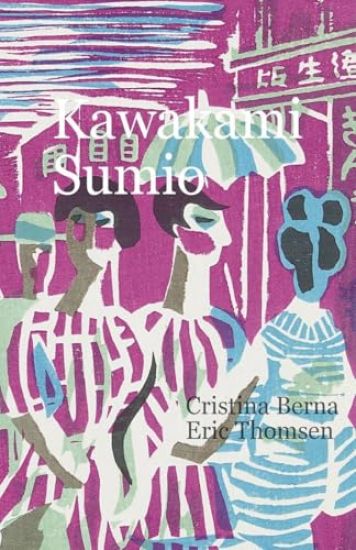
Kawakami Sumio (10 April 1895 - 1 September 1972) was a Japanese painter and print maker. He is also known by his real name Chosei Kawakami. He was one of the most original print artists in this period. He is especially known for his Nan-ban - Southern Foreigners" prints. Sumio Kawakami moved to Canada in 1917. He spent a year in Canada and the US, working at various jobs, that included a salmon cannery in Alaska and house painting in Seattle. Kawakami began exploring printmaking upon his return from North America. He actively engaged with various sosaku hanga associations, regularly exhibiting his works with these groups. He primarily produced single-sheet prints and created 33 limited edition books, which were largely self-carved and self-printed. In 1921 he found a position as an English teacher at Tochigi Prefectural Utsunomiya Junior High School. Kawakami said he was mostly self-taught, though he had attended an art school in his childhood. His early woodcuts were made in the usual manner, carving multiple blocks for the outlines and colors. He then adopted a method of carving only the keyblock while brushing on colors by hand. His artistic style is characterized by irony and humor. Kawakami was against Japanese militarism; during the Second World War he lost his job as teacher because the Ministry of Education banned the teaching of English language in schools. His main income at the time was from the sale of his books.
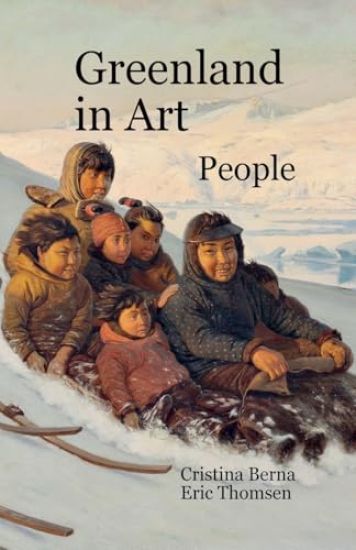
The majority of Greenlanders today are descendants of the Thule Inuit, who arrived in Greenland around the 12th century. They became a maritime culture, specializing in hunting marine mammals like seals and walrus. The art shown here is mainly from the last two hundred years and show a Greenland of the past. Another volume shows traditional marine transportation, see Greenland in Art Ships and Boats. Greenlanders today represent a blend of Inuit and mainly Danish ancestry, with Inuit culture playing a dominant role. Many Greenlanders identify strongly with their Inuit heritage and maintain traditional practices like throat singing and drum dancing. Modern Greenland has long since switched to fishing, see authors book Greenland in Ships with advanced modern transportation, see Helicopters in Greenland and Airplanes in Greenland. Greenlanders also focus on the development of tourism as an important contributor to the Greenland economy. Previously there was more mining here and Greenlanders hope this industry will take off again, see authors book Greenland Arctic Flashpoint.
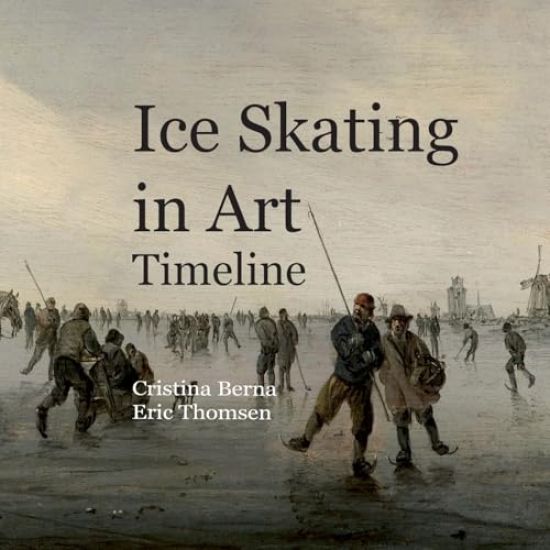
Ice skating is a fascinating subject for a timeline study of the development of Western art, mainly painting. Not covered here are sculptures, reliefs and similar art forms. Skating scenes were popular in Old Dutch and Flemish paintings due to a period of colder winters known as the Little Ice Age (circa 1550-1700). Artists like Pieter Bruegel the Elder and Hendrick Avercamp depicted these frozen waterways as a setting for lively genre paintings. These works of art captured the social life of the time, showing people of all classes engaged in skating, games like "kolf" (an early form of golf), and other activities on the ice, often with humorous and detailed anecdotes. The language of art changed quite a lot since then even when the subject is rather well defined. This is something completely different compared to skiing in art, covered by the authors in a companion volume - and which although has examples much, much older Sleighs in art which has many more modern artists engaged and is also covered in a separate volume.
Many artists are drawn to skiing for its blend of danger and beauty, the sense of freedom and spiritual connection it offers, and the dynamic and exhilarating movement it provides, which they express through various art like painting, illustration, design and sculpture. One of the great modern examples is the Japanese print artist Osamu Sugiyama (1946 - ) whose work is however not covered here, but rather in a special volume by the authors with the title Osamu Sugiyama Mountains. The art in the present book is older and mainly European. Especially artists from the Alps and the Nordic countries feature here, but also examples from the hunting and military use of skiing. Historical data shows skiing as a sport was growing strongly, with estimates indicating that at least 18,000 British tourists visited the Alps for winter sports in 1912, but it was not until after the first Winter Olympics in 1924 that skiing's popularity truly began to boom. Now, approximately 350 million people worldwide visit ski resorts each year, though this number can fluctuate. Other estimates suggest around 150 million people actively ski, while another source cites 200 million total participants.