Kirjailija
D. H. Lawrence
Kirjat ja teokset yhdessä paikassa: 425 kirjaa, julkaisuja vuosilta 1985-2027, suosituimpien joukossa Women in Love. Vertaile teosten hintoja ja tarkista saatavuus suomalaisista kirjakaupoista.
Mukana myös kirjoitusasut: D H Lawrence, D.H. Lawrence, D H. Lawrence
425 kirjaa
Kirjojen julkaisuhaarukka 1985-2027.
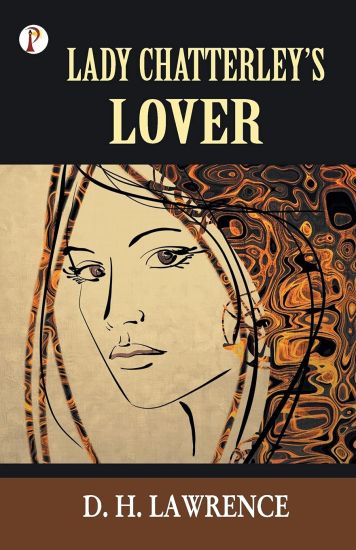
The story concerns a young married woman, the former Constance Reid Lady Chatterley, whose upper-class husband, Sir Clifford Chatterley, described as a handsome, well-built man, is paralysed from the waist down due to a Great War injury. In addition to Clifford's physical limitations, his emotional neglect of Constance forces distance between the couple. Her emotional frustration leads her into an affair with the gamekeeper, Oliver Mellors. The class difference between the couple highlights a major motif of the novel, which is the unfair dominance of intellectuals over the working class. The novel is about Constance's realization that she cannot live with the mind alone; she must also be alive physically. This realization stems from a heightened sexual experience that Constance has only felt with Mellors, suggesting that love can only happen with the element of the body, not just the mind.
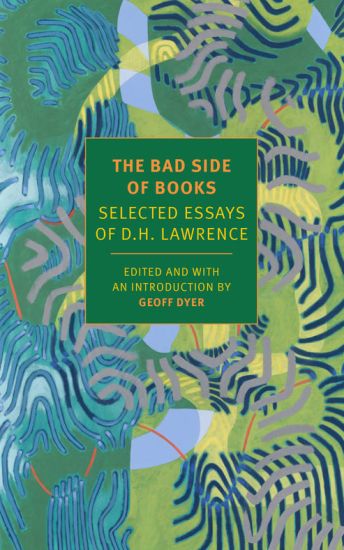
The Bad Side of Books: Selected Essays of D.H. Lawrence
D. H. Lawrence
New York Review of Books
2019
nidottu
You could describe D.H. Lawrence as the great multi-instrumentalist among the great writers of the twentieth century. He was a brilliant, endlessly controversial novelist who transformed, for better and for worse, the way we write about sex and emotions; he was a wonderful poet; he was an essayist of burning curiosity, expansive lyricism, odd humor, and radical intelligence, equaled, perhaps, only by Virginia Woolf. Here Geoff Dyer, one of the finest essayists of our day, draws on the whole range of Lawrence's published essays to reintroduce him to a new generation of readers for whom the essay has become an important genre. We get Lawrence the book reviewer, writing about Death in Venice and welcoming Ernest Hemingway; Lawrence the travel writer, in Mexico and New Mexico and Italy; Lawrence the memoirist, depicting his strange sometime-friend Maurice Magnus; Lawrence the restless inquirer into the possibilities of the novel, writing about the novel and morality and addressing the question of why the novel matters; and, finally, the Lawrence who meditates on birdsong or the death of a porcupine in the Rocky Mountains. Dyer's selection of Lawrence's essays is a wonderful introduction to a fundamental, dazzling writer.
Paradoxen Poe : Edgar Allan Poe som inspiratör och föregångare
Lars Nyberg; D. H. Lawrence; George Bernard Shaw; Jules Verne; Fjodor Dostojevskij; Charles Baudelaire
H:ström Text Kultur AB
2019
nidottu
Med sin nydanande stil och sitt intresse för det mänskliga psykets skuggsidor har Edgar Allan Poe varit en inflytelserik föregångar till såväl symbolister, naturalister och modernister i litteraturhistorien. Han kan dessutom sägas vara skaparen av science fiction- och detektivgenrerna.I denna volym samlas texter om Poe av fem författare ur världshistorien, som alla, om än på radikalt olika sätt, tagit intryck av hans egenartade och varierande författarskap: Charles Baudelaire, Fjodor Dostojevskij, Jules Verne, George Bernard Shaw och D. H. Lawrence.Lars Nyberg, översättare av Baudelaire, Rilke och Xenofon med flera, ger i en initierad inledning en bakgrund till den ofta motsägelsefulla receptionen av Poes författarskap och belyser de skiftande aspekterna i de impulser Poe givit sina efterföljare.
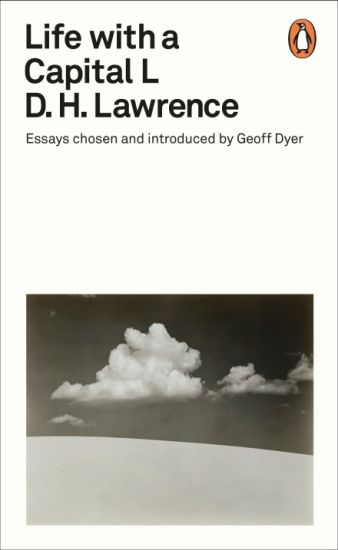
A brilliantly varied new selection of D. H. Lawrence's essays, chosen and introduced by Geoff DyerFor D. H. Lawrence the novel was the pinnacle, 'the one bright book of life', yet his non-fiction shows him at his most freewheeling and playful. This is a selection of his essays, on subjects including art, morality, obscenity, songbirds, Italy, Thomas Hardy, the death of a porcupine in the Rocky Mountains and the narcissism of photographing ourselves. Arranged chronologically to illuminate the patterns of Lawrence's thought over time, and including many little-known pieces, they reveal a writer of enduring freshness and force. 'The greatest writer of this century, and in many things the greatest writer of all times' Philip Larkin
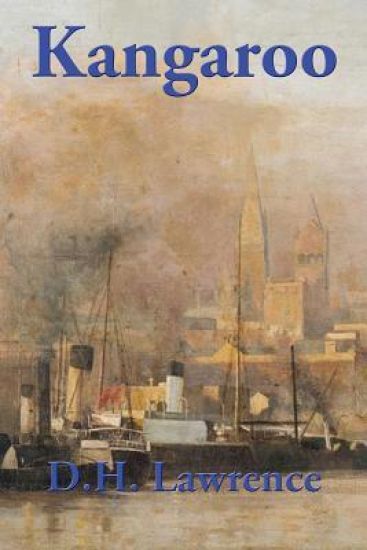
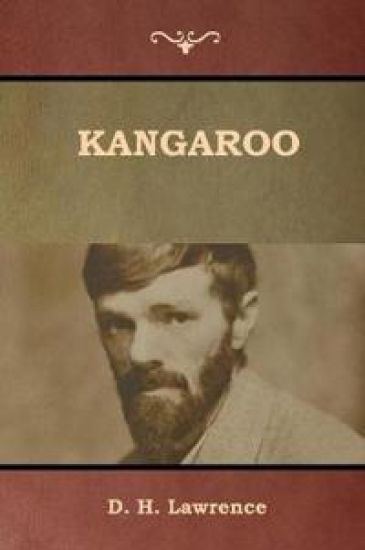
Kangaroo is a semi-autobiographical novel by D. H. Lawrence. It follows a British writer on his visit to New South Wales. In it there are vivid descriptions of the Australian countryside and a powerful glimpse into a wartime Cornwall. Lawrence delves deeply into his thoughts on relationship, power and the people of Australia. Perhaps Lawrence's finest, if not most accessible, novel. "One of the sharpest fictional visions of the country Australia] and its people."--Gideon Haigh
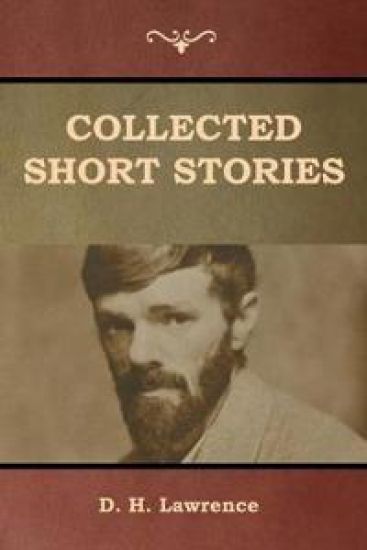
David Herbert Lawrence (11 September 1885 - 2 March 1930) was an English writer and poet. His collected works represent, among other things, an extended reflection upon the dehumanising effects of modernity and industrialisation. Some of the issues Lawrence explores are sexuality, emotional health, vitality, spontaneity, and instinct.Lawrence's opinions earned him many enemies and he endured official persecution, censorship, and misrepresentation of his creative work throughout the second half of his life, much of which he spent in a voluntary exile he called his "savage pilgrimage." At the time of his death, his public reputation was that of a pornographer who had wasted his considerable talents. E. M. Forster, in an obituary notice, challenged this widely held view, describing him as "the greatest imaginative novelist of our generation." The philosopher Bertrand Russell characterised Lawrence as a "proto-German Fascist." Later, the literary critic F. R. Leavis championed both his artistic integrity and his moral seriousness.D.H. Lawrence is best known for his infamous novel 'Lady Chatterley's Lover, ' which was banned in the United States until 1959. He is widely regarded as one of the most influential writers of the 20th century. (Wikipedia.org)
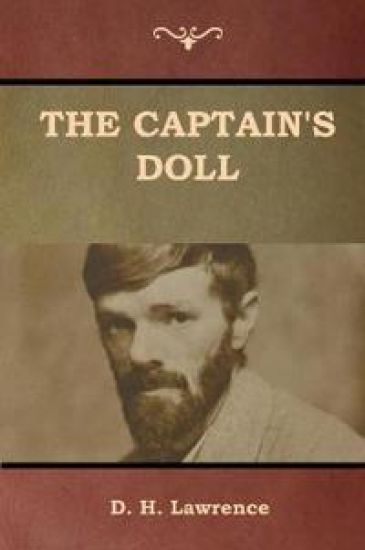
David Herbert Lawrence (11 September 1885 - 2 March 1930) was an English writer and poet. His collected works represent, among other things, an extended reflection upon the dehumanising effects of modernity and industrialisation. Some of the issues Lawrence explores are sexuality, emotional health, vitality, spontaneity, and instinct.Lawrence's opinions earned him many enemies and he endured official persecution, censorship, and misrepresentation of his creative work throughout the second half of his life, much of which he spent in a voluntary exile he called his "savage pilgrimage." At the time of his death, his public reputation was that of a pornographer who had wasted his considerable talents. E. M. Forster, in an obituary notice, challenged this widely held view, describing him as "the greatest imaginative novelist of our generation." The philosopher Bertrand Russell characterised Lawrence as a "proto-German Fascist." Later, the literary critic F. R. Leavis championed both his artistic integrity and his moral seriousness.The Captain's Doll is a short story or novella by the English author D. H. Lawrence. It was written in 1921 and first published by Martin Secker in March 1923 in a volume with The Ladybird and The Fox. It was the basis of the 1983 TV film of the same name with Jeremy Irons as the Captain.The story chronicles the journey of fallen German aristocrat Countess Johanna 'Hannele' zu Rassentlow as she dates a Scottish officer of unusual philosophy. The relationship develops into one of D. H. Lawrence's idiosyncratic 'wicked triangles'. The intimate relationship between Captain Alexander Hepburn and Hannele is intruded upon when the captain's wife Evangeline travels to Germany suspicious of foul play.The plot unfolds with two parallel narratives; one in the symbolic domain, the other a traditional short story narrative about these protagonists. The concurrent symbolic tale that unfolds centers around the central image of The Captain's Doll-after which the story gains its title. This doll is a striking portrait of the Captain, with his "slender legs" and mesmerizing dark stare encapsulated in the silks and calico of a lifeless, inanimate object.This doll is an ongoing motif throughout the story as it acts as a metaphor for the dehumanizing effects of war on Hepburn - an English gentleman who had been part of the war machine and in the aftermath has come to believe that "we are worth so very little." (wikipedia.org)
Kangaroo is a novel by D. H. Lawrence, first published in 1923. It is set in Australia.Kangaroo is an account of a visit to New South Wales by an English writer named Richard Lovat Somers and his German wife Harriet in the early 1920s. This appears to be semi-autobiographical, based on a three-month visit to Australia by Lawrence and his wife Frieda, in 1922. The novel includes a chapter ("Nightmare") describing the Somers' experiences in wartime St Ives, Cornwall, vivid descriptions of the Australian landscape, and Richard Somers' sceptical reflections on fringe politics in Sydney. Kangaroo's movement, and the "great general emotion" of Kangaroo himself, do not appeal to Somers, and in this the novel begins to reflect Lawrence's own experiences during World War I. Somers also rejects the socialism of Struthers, which emphasises "generalised love."Australian journalist Robert Darroch - in several articles in the late 1970s, and a 1981 book entitled D.H. Lawrence in Australia - claimed that Lawrence based Kangaroo on real people and events he witnessed in Australia. The extent to which this is true remains a matter of controversy - particularly by Joseph Davis in his 1989 D. H. Lawrence at Thirroul. Davis is sympathetic to the view that "Kangaroo" may be based on real events but argues that it is impossible that Lawrence had time to meet clandestine political leaders in Sydney when he was too busy writing his novel in Thirroul. Davis feels it is more likely to have been a local south-coast identity associated with Thirroul who would have provided some of the details of Lawrence's political plot."Kangaroo" is the fictional nickname of one of Lawrence's characters, Benjamin Cooley, a prominent ex-soldier and lawyer, who is also the leader of a secretive, fascist paramilitary organisation, the "Diggers Club." Cooley fascinates Somers, but he maintains his distance from the movement itself. It has been suggested by Darroch and others that Cooley was based on Major General Charles Rosenthal, a notable World War I leader and right-wing activist. It has also been alleged that Rosenthal was involved with the Old Guard, a secret anti-communist militia.Similarly, according to Darroch, the character of Jack Calcott - who is the Somers' neighbour in Sydney and introduces Richard Somers to Cooley - may have been based on a controversial Australian military figure, Major John Scott, who was both an associate of Rosenthal and an Old Guard official. Another central character is Willie Struthers, a left-wing activist reputed to have been based partly on Willem Siebenhaar, who made Lawrence's acquaintance in Western Australia.Kangaroo is sometimes cited as an influence on the Jindyworobak movement, an Australian nationalist literary group, which emerged about a decade later. Gideon Haigh saw fit to dub it "one of the sharpest fictional visions of the country and its people."It was adapted as a film, also called Kangaroo, in 1986, featuring Colin Friels as Somers, Judy Davis as Harriet and Hugh Keays-Byrne as "Kangaroo." (wikipedia.org)
David Herbert Lawrence (11 September 1885 - 2 March 1930) was an English writer and poet. His collected works represent, among other things, an extended reflection upon the dehumanising effects of modernity and industrialisation. Some of the issues Lawrence explores are sexuality, emotional health, vitality, spontaneity, and instinct.Lawrence's opinions earned him many enemies and he endured official persecution, censorship, and misrepresentation of his creative work throughout the second half of his life, much of which he spent in a voluntary exile he called his "savage pilgrimage." At the time of his death, his public reputation was that of a pornographer who had wasted his considerable talents. E. M. Forster, in an obituary notice, challenged this widely held view, describing him as "the greatest imaginative novelist of our generation." The philosopher Bertrand Russell characterised Lawrence as a proto-German Fascist. Later, the literary critic F. R. Leavis championed both his artistic integrity and his moral seriousness.The Fox is a novella by D. H. Lawrence which first appeared in The Dial in 1922. Set in Berkshire, England, during World War I, The Fox, like many of D. H. Lawrence's other major works, deals with the psychological relationships of three protagonists in a triangle of love and hatred. Without the help of any male laborers, Nellie March and Jill Banford struggle to maintain a marginal livelihood at the Bailey Farm. A fox has raged through the poultry, and although the women--particularly the more masculine Nellie--have tried to shoot the intruder, he seems always to elude traps or gunshot.Banford and March live on a farm together because it does not look like they will marry. Although they are only in their late twenties, in that era women who were still single at their age were generally considered to have forgone the prospect of marriage. Banford is thin and frail, in contrast to her companion who is physically masculine. However particular emphasis is given to March's face, which is feminine and expressive. The women are depicted as fearful of femininity and fertility. For example, they sell a heifer before it calves.The fox becomes a hindrance to Banford and March, but March finds she cannot hunt it, and rather, she becomes entranced by it. Shortly after this, Henry, a young man, comes to stay with the women, and a link is established between the fox and Henry.This intriguing novella explores gender roles, sexuality, femininity, and the pity of war, as do two other Lawrence novellas written at the same time, The Ladybird and The Captain's Doll. (wikipedia.org)
David Herbert Lawrence (11 September 1885 - 2 March 1930) was an English writer and poet. His collected works represent, among other things, an extended reflection upon the dehumanising effects of modernity and industrialisation. Some of the issues Lawrence explores are sexuality, emotional health, vitality, spontaneity, and instinct.Lawrence's opinions earned him many enemies and he endured official persecution, censorship, and misrepresentation of his creative work throughout the second half of his life, much of which he spent in a voluntary exile he called his "savage pilgrimage." At the time of his death, his public reputation was that of a pornographer who had wasted his considerable talents. E. M. Forster, in an obituary notice, challenged this widely held view, describing him as "the greatest imaginative novelist of our generation." The philosopher Bertrand Russell characterised Lawrence as a "proto-German Fascist." Later, the literary critic F. R. Leavis championed both his artistic integrity and his moral seriousness.D.H. Lawrence is best known for his infamous novel 'Lady Chatterley's Lover, ' which was banned in the United States until 1959. He is widely regarded as one of the most influential writers of the 20th century. (Wikipedia.oeg)
Kangaroo is an account of a visit to New South Wales by an English writer named Richard Lovat Somers and his German wife Harriet in the early 1920s. This appears to be semi-autobiographical, based on a three-month visit to Australia by Lawrence and his wife Frieda, in 1922. The novel includes a chapter ("Nightmare") describing the Somers' experiences in wartime St Ives, Cornwall, vivid descriptions of the Australian landscape, and Richard Somers' sceptical reflections on fringe politics in Sydney. Kangaroo's movement, and the "great general emotion" of Kangaroo himself, do not appeal to Somers, and in this the novel begins to reflect Lawrence's own experiences during World War I. Somers also rejects the socialism of Struthers, which emphasises "generalised love."
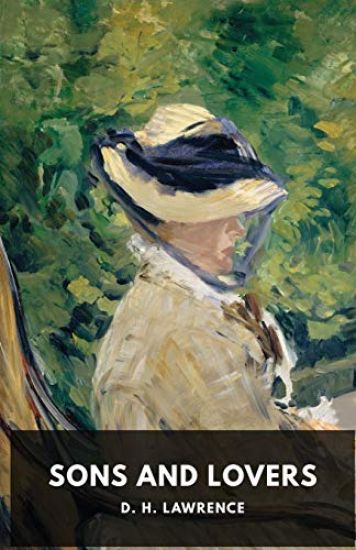
Sons and Lovers is a 1913 novel by the English writer D. H. Lawrence. The Modern Library placed it ninth on their list of the 100 best novels of the 20th century. While the novel initially received a lukewarm critical reception, along with allegations of obscenity, it is today regarded as a masterpiece by many critics and is often regarded as Lawrence's finest achievement. The marriage of Gertrude and Walter Morel has become a battleground. Repelled by her uneducated and sometimes violent husband, delicate Gertrude devotes her life to her children, especially to her sons, William and Paul - determined they will not follow their father into working down the coal mines. But conflict is evitable when Paul seeks to escape his mother's suffocating grasp through relationships with women his own age. Set in Lawrence's native Nottinghamshire, Sons and Lovers is a highly autobiographical and compelling portrayal of childhood, adolescence and the clash of generations.
In his last novel, published less than a year before his untimely death at the age of forty-five, D.H. Lawrence takes up the theme of Christ's resurrection and his final days on Earth. Lawrence recounts Christ's agonizing journey from death back to life with an alarmingly profane realism, depicting the tale from the moment of his initial painful awakening to his eventual redemptive sexual relationship with the priestess of the pagan goddess Isis. The story expands beyond its Christian roots to explore and embrace Lawrence's abiding faith in the life-force apparent in every aspect of the natural world. For his final work, Lawrence has encapsulated a lifetime of extraordinary vision into one profound and exquisite parable