

Kirjailija
D. H. Lawrence
Kirjat ja teokset yhdessä paikassa: 425 kirjaa, julkaisuja vuosilta 1985-2027, suosituimpien joukossa Women in Love. Vertaile teosten hintoja ja tarkista saatavuus suomalaisista kirjakaupoista.
Mukana myös kirjoitusasut: D H Lawrence, D.H. Lawrence, D H. Lawrence
425 kirjaa
Kirjojen julkaisuhaarukka 1985-2027.


The third published novel of D. H. Lawrence, taken by many to be his earliest masterpiece, tells the story of Paul Morel, a young man and budding artist. Richard Aldington explains the semi-autobiographical nature of his masterpiece:
Full text.A classic Lawrence novel of sensual awakening and the yearning for freedom, and winner of the 1920 James Tait Black Memorial Prize.The daughter of well-to-do trades people in the fictional mining town of Woodhouse, Alvina Houghton struggles to find excitement in her provincial surroundings and worries that she is condemned to become an old maid. After plans to elope with her lover to Australia and train as a nurse in London lead to nothing, she joins a traveling theater group and succumbs to the charms of the dark, passionate Italian Ciccio.

Full text.This D.H. Lawrence's matserpiece follows three generations of the Brangwen family (a dynasty of farmers and craftsmen) living in Nottinghamshire, particularly focusing on the individual's struggle to growth and fulfilment within the confining strictures of English social life.Censorship: Lawrence's frank treatment of sexual desire and the part it plays within relationships as a natural and even spiritual force of life, caused The Rainbow to be prosecuted in an obscenity trial at Bow Street Magistrates' Court on 13 November 1915, as a result of which 1,011 copies were seized and burnt. After this ban it was unavailable in Britain for 11 years, although editions were available in the United States.Quote: "Why, oh why must one grow up, why must one inherit this heavy, numbing responsibility of living an undiscovered life? Out of the nothingness and the undifferentiated mass, to make something of herself But what? In the obscurity and pathlessness to take a direction But whither? How take even one step? And yet, how stand still? This was torment indeed, to inherit the responsibility of one's own life."



But let us retreat to the early eighties, when Alvina was a baby: or even further back, to the palmy days of James Houghton. In his palmy days, James Houghton was cr me de la cr me of Woodhouse society. The house of Houghton had always been well-to-do: tradespeople, we must admit; but after a few generations of affluence, tradespeople acquire a distinct cachet. Now James Houghton, at the age of twenty-eight, inherited a splendid business in Manchester goods, in Woodhouse. He was a tall, thin, elegant young man with side-whiskers, genuinely refined, somewhat in the Bulwer style. He had a taste for elegant conversation and elegant literature and elegant Christianity: a tall, thin, brittle young man, rather fluttering in his manner, full of facile ideas, and with a beautiful speaking voice: most beautiful. Withal, of course, a tradesman. He courted a small, dark woman, older than himself, daughter of a Derbyshire squire. He expected to get at least ten thousand pounds with her. In which he was disappointed, for he got only eight hundred. Being of a romantic-commercial nature, he never forgave her, but always treated her with the most elegant courtesy. To seehim peel and prepare an apple for her was an exquisite sight.

D. H. Lawrence: S hne und Liebhaber Edition Holzinger. Taschenbuch Berliner Ausgabe, 2017 Durchgesehener Neusatz bearbeitet und eingerichtet von Michael Holzinger Sons and Lovers. Erstdruck: 1913. Hier in der bersetzung von Franz Franzius, Leipzig, Insel-Verlag, 1925. Herausgeber der Reihe: Michael Holzinger Reihengestaltung: Viktor Harvion Umschlaggestaltung unter Verwendung des Bildes: Thomas Sully, Mutter und Sohn, 1840 Gesetzt aus der Minion Pro, 11 pt.
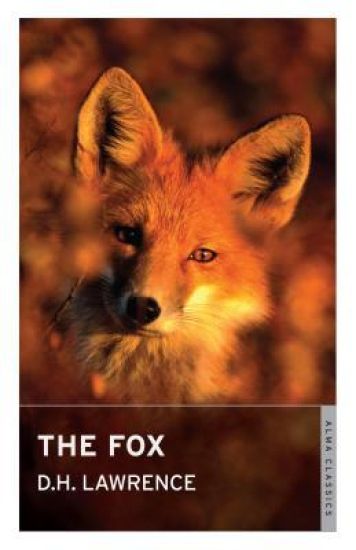
Nellie March and Jill Banford manage an ailing Berkshire farm at the time of the First World War, a task which is made all the more complicated by the frequent rampages of a local fox through their chicken coop. When a young soldier turns up and begins to interfere with the farm and the lives of the two women, they must find ways to react to this new fox in their midst. A compelling study of the question of power, gender and sexuality, as well as a realistic portrayal of wartime rural England, The Fox showcases Lawrence’s inimitable gift for psychological observation and dramatic description.
Women in Love (1920) by: D. H. Lawrence ( NOVEL )
D. H. Lawrence
Createspace Independent Publishing Platform
2017
nidottu
Lady Chatterley's Lover (1928) by: D. H. Lawrence ( NOVEL )
D. H. Lawrence
Createspace Independent Publishing Platform
2017
nidottu
Lady Chatterley's Lover is a novel by D. H. Lawrence written in 1928. The publication of the book caused a scandal due to its explicit sex scenes, including previously banned four-letter words, and perhaps particularly because the lovers were a working-class male and an aristocratic female. The story is said to have originated from events in Lawrence's own unhappy domestic life, and he took inspiration for the settings of the book from Ilkeston in Derbyshire where he lived for a while. According to some critics the fling of Lady Ottoline Morrell with "Tiger", a young stonemason who came to carve plinths for her garden statues also influenced the story.

Ursula and Gudrun Brangwen are sisters living in The Midlands in England in the 1910s. Ursula is a teacher, Gudrun an artist. They meet two men who live nearby, school inspector Rupert Birkin and coal-mine heir Gerald Crich, and the four become friends. Ursula and Birkin become involved, and Gudrun and Gerald eventually begin a love affair.All four are deeply concerned with questions of society, politics, and the relationship between men and women. At a party at Gerald's estate, Gerald's sister Diana drowns. Gudrun becomes the teacher and mentor of Gerald's youngest sister. Soon Gerald's coal-mine-owning father dies as well, after a long illness. After the funeral, Gerald goes to Gudrun's house and spends the night with her while her parents sleep in another room.Birkin asks Ursula to marry him, and she agrees. Gerald and Gudrun's relationship, however, becomes stormy.The two couples holiday in the Alps. Gudrun begins an intense friendship with Loerke, a physically puny but emotionally commanding artist from Dresden. Gerald, enraged by Loerke and most of all by Gudrun's verbal abuse and rejection of his manhood, and driven by his own internal violence, tries to strangle Gudrun. Before he has killed her, however, he realises that this is not what he wants, and he leaves Gudrun and Loerke, and climbs the mountain, eventually slips into a snowy valley where he falls asleep, and freezes to death.The impact of Gerald's death upon Birkin is profound. The novel ends a few weeks after Gerald's death with Birkin trying to explain to Ursula that he needs Gerald as he needs her; her for the perfect relationship with a woman, and Gerald for the perfect relationship with a man.
The Lost Girl is a novel by D. H. Lawrence, first published in 1920. It was awarded the 1920 James Tait Black Memorial Prize in the fiction category. Lawrence started it shortly after writing Women in Love, and worked on it only sporadically until he completed it in 1920.Alvina Houghton, the daughter of a widowed Midlands draper, comes of age just as her father's business is failing. In a desperate attempt to regain his fortune and secure his daughter's proper upbringing, James Houghton buys a theater. Among the traveling performers he employs is Ciccio, a sensual Italian who immediately captures Alvina's attention. Fleeing with him to Naples, she leaves her safe world behind and enters one of sexual awakening, desire, and fleeting freedom.