Kirjailija
Daisaku Ikeda
Kirjat ja teokset yhdessä paikassa: 67 kirjaa, julkaisuja vuosilta 1992-2025, suosituimpien joukossa The Flower of Chinese Buddhism. Vertaile teosten hintoja ja tarkista saatavuus suomalaisista kirjakaupoista.
67 kirjaa
Kirjojen julkaisuhaarukka 1992-2025.
Apprendre tout au long de sa vie
Larry Hickman; Jim Garrison; Daisaku Ikeda
Editions L'Harmattan
2025
nidottu
Un dialogue entre Orient et Occident
Daisaku Ikeda; Diez hochleitner
Editions L'Harmattan
2025
nidottu
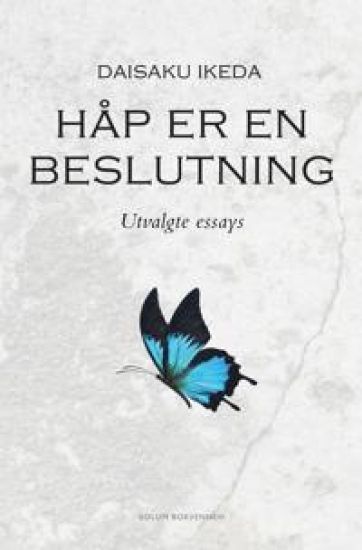
I disse essayene leder den buddhistiske filosofen og fredsbyggeren Daisaku Ikeda leseren med på en inspirerende reise i søken etter håp i krevende tider. Boken gir innsiktsfulle perspektiver på aktuelle temaer som atomvåpen og terrorisme så vel som de evige spørsmål om det gode og det onde og om vår aldring og død. Essayenes refleksjon over poesi og vennskap fremhever hvordan våre åndelige sysler bidrar til å skape livsglede i mørke tider. Hver tekst foreslår ulike veier vi kan gå for knytte vår personlige søken etter styrke, visdom og håp til ønsket om å skape et rettferdig, humant og omsorgsfullt samfunn.
Notre monde est à construire
Daisaku Ikeda; Ved Nanda; Soka Gakkai Japan
Editions L'Harmattan
2024
nidottu
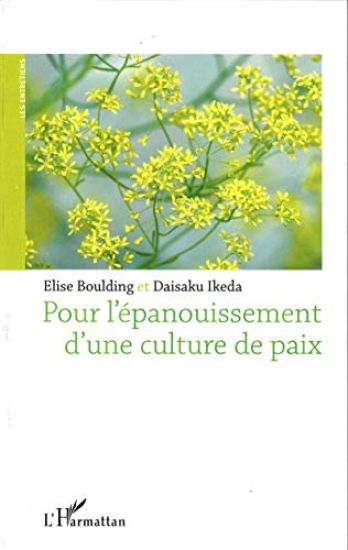
Pour l'épanouissement d'une culture de paix
Elise Boulding; Daisaku Ikeda
Editions L'Harmattan
2022
nidottu
This new selection of writings on education--many previously published under the title Soka Education--comes from some five decades of works by Buddhist philosopher and founder of the Soka schools system, Daisaku Ikeda. From educational proposals and university lectures to personal essays, the writings not only delve into the meaning of soka (value-creating) education but offer a hopeful vision of the power of education to bring happiness to the individual and peace to the world.
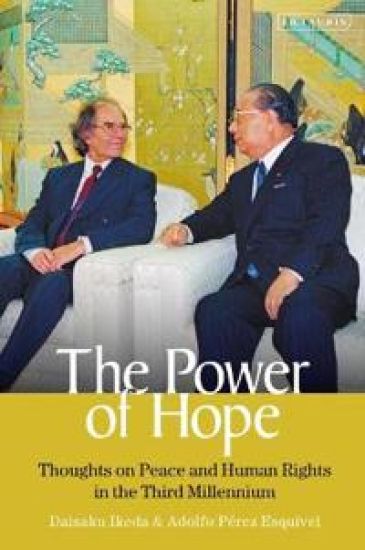
Human history has been marked by the great number of people born into conditions of war, violence, oppression and social exclusion. But at the same time, this history has been shaped by the long struggle for human rights and the people who have committed themselves to the practices of solidarity and nonviolence. The Power of Hope: Thoughts on Peace and Human Rights in the Third Millennium is a dialogue between two high-profile activists and thinkers who discuss the concrete ways we can shift to a world that prioritises justice and human dignity. Adolfo Pérez Esquivel - Argentinian human rights activist and winner of the 1980 Nobel Peace Prize - played a vital role in resisting military dictatorship and was arrested and tortured under the Argentine militarist government. Daisaku Ikeda is a peacebuilder, Buddhist philosopher, educator, author and poet as well as being the founding president of Soka Gakkai International (SGI), the world’s largest Buddhist lay organisation. Their dialogue intertwines their rich personal experiences in the struggle for human rights with wider reflections on how to make the Third Millennium the millennium of peace. The book combines rich accounts of Latin America under the brutality of the 1970s military regimes; insights from the Buddhist faith on the role of meditation for human rights activists; recognition of the crucial role of women in the practice of nonviolence; thoughts on international geopolitics and the legacies of Hiroshima; and discussion of the perilous role of globalisation in the loss of identities and ethical values.
Human history has been marked by the great number of people born into conditions of war, violence, oppression and social exclusion. But at the same time, this history has been shaped by the long struggle for human rights and the people who have committed themselves to the practices of solidarity and nonviolence.The Power of Hope: Thoughts on Peace and Human Rights in the Third Millennium is a dialogue between two high-profile activists and thinkers who discuss the concrete ways we can shift to a world that prioritises justice and human dignity. Adolfo Pérez Esquivel - Argentinian human rights activist and winner of the 1980 Nobel Peace Prize - played a vital role in resisting military dictatorship and was arrested and tortured under the Argentine militarist government. Daisaku Ikeda is a peacebuilder, Buddhist philosopher, educator, author and poet as well as being the founding president of Soka Gakkai International (SGI), the world’s largest Buddhist lay organisation. Their dialogue intertwines their rich personal experiences in the struggle for human rights with wider reflections on how to make the Third Millennium the millennium of peace. The book combines rich accounts of Latin America under the brutality of the 1970s military regimes; insights from the Buddhist faith on the role of meditation for human rights activists; recognition of the crucial role of women in the practice of nonviolence; thoughts on international geopolitics and the legacies of Hiroshima; and discussion of the perilous role of globalisation in the loss of identities and ethical values.
Le bouddhisme ou la voie des valeurs
Lokesh Chandra; Daisaku Ikeda
Editions L'Harmattan
2020
nidottu
The culture of peace and non-violence is essential to human existence, development and progress. In 1999, the United Nations General Assembly adopted by consensus the norm-setting, forward-looking “Declaration and Programme of Action on a Culture of Peace”. Governments, institutions, NGOs, other civil society entities and, in particular, individuals – all are encouraged therein to contribute to the global movement for the culture of peace.Related to this vision, this rich and varied dialogue discusses how the culture of peace can be achieved in the world. Based on the extensive personal and professional experiences of two high-profile thinkers and activists, they analyse the challenges unfolding at local, national and global levels and how these relate to humanity’s quest for peace, human security and happiness. Although coming from very different positions – one a Buddhist philosopher, educator and leader; the other a UN diplomat renowned for his international work in peace, development and human rights – these interlocutors are united in their search for justice and better quality of life for all and their conviction that women and young people are the most effective means to achieving positive change in the world.The dialogue provides ideas on the key challenges that face our planet: poverty and deprivation, war and violence, nuclear weapons and small arms, climate change and environmental degradation, weak governance and financial crises, marginalization of women and alienation of youth and the relentless drive for materialism. They also invite us to consider how the culture of peace can be practically achieved through an individual, collective and institutional transformation.Recognizing that global citizenship, multilateralism, women’s equality and value-creating education are central and inter-linked themes, this dialogue also underscores the inherent strength of spirituality, compassion, empathy, forgiveness, respect for diversity and empowerment that comes from the trials and tribulations of life.