Kirjojen hintavertailu. Mukana 12 390 323 kirjaa ja 12 kauppaa.

Kirjailija

Daniel B. Flores

Kirjat ja teokset yhdessä paikassa: 33 kirjaa, julkaisuja vuosilta 2010-2017, suosituimpien joukossa Puerto de Luna: Shadows of the Past. Vertaile teosten hintoja ja tarkista saatavuus suomalaisista kirjakaupoista.

33 kirjaa

Kirjojen julkaisuhaarukka 2010-2017.

Billy the Kid: His Legacy in Guadalupe County

Billy the Kid: His Legacy in Guadalupe County

Daniel B. Flores

Createspace Independent Publishing Platform
2017
nidottu
Billy the Kid, His Legacy in Guadalupe County is about several connections that the famous outlaw of the Old West had in what is now New Mexico's Guadalupe county. Billy was very active in Lincoln and San Miguel counties during his heyday, though his exploits also extended to other parts of New Mexico. Billy the Kid, His Legacy Guadalupe County includes several sections about those people who had strong ties to Guadalupe county and knew Billy or were somehow associated with those who knew him. Guadalupe county was created by the New Mexico territorial legislature in 1891 and officially came into existence in 1893. The land which became part of the new county was taken from the southern part of San Miguel county. In 1903 Guadalupe county ceased to exist and was replaced by Leonard Wood county. The eastern part of Guadalupe county became Quay county. The western part of the Guadalupe county became the new Leonard Wood county. Puerto de Luna had been the county seat of the old Guadalupe county. The new railroad towns of Santa Rosa and Tucumcari became the county seats of Guadalupe and Quay counties. Billy the Kid, His Legacy in Guadalupe County consists of ten sections devoted to nine men and a woman who had strong direct or indirect associations with the outlaw. The nine men all knew Billy the Kid. Three of the men were Billy's close friends. The other six included two lawmen and four acquaintances. The only woman in the group was born after Billy the Kid's death but had strong family ties to Billy Kid's stomping grounds in Fort Sumner. Also included is a section about a Puerto de Luna building that through the years has played a major role in preserving the Guadalupe county legacy and lore about Billy the Kid. Billy himself is known to have visited the building. The building over the years has been the subject of many news articles about the famous outlaw. During the depression the building was used as a headquarters by two men who have played an important role in preserving his legacy for posterity. Though now dilapidated, the building still stands in Puerto de Luna as a reminder of the rich and colorful past of the area.

Santa Rosa, the Early Days

Santa Rosa, the Early Days

Daniel B. Flores

Createspace Independent Publishing Platform
2017
nidottu
Santa Rosa, the Early Days is the fifth book in a series about Santa Rosa, the railroad community located in Guadalupe county, written by the author. Present day Santa Rosa owes its existence to the coming of the Rock Island & Chicago railroad into the area in 1901. The new town of Santa Rosa came into existence with the construction of the new railroad north of old Santa Rosa, the community founded by Don Celso Baca in the last quarter of the 1800s. Santa Rosa consists of a series of short vignettes taken from early newspapers articles, mostly from old New Mexico newspapers, though there are also vignettes based on articles from out of state newspapers. Most of the vignettes cover the time frame from 1900 to 1920, though there are several that extend into the 1930s. The newspaper articles are valuable in providing a window into the rich and colorful past of today's Santa Rosa. Santa Rosa also has one lengthier section consisting of general information columns derived from the old newspapers. The columns contain information about the people who called Santa Rosa home and their everyday life, including their work, religious and social activities. There are also many period photographs that help illustrate many of the vignettes. The photographs provide excellent documentation of the Santa Rosa that existed during that period. They also show that one picture is indeed worth a thousand words.
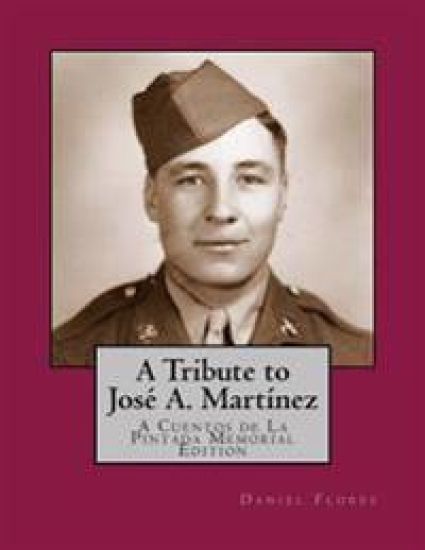
A Tribute to José A. Martínez: A Cuentos de La Pintada Memorial Edition

A Tribute to José A. Martínez: A Cuentos de La Pintada Memorial Edition

Daniel B. Flores

Createspace Independent Publishing Platform
2017
nidottu
A Tribute to Jos A. Mart nez is written in honor of the life of a good and true friend, Joe A. Mart nez who passed away on December 17 after a having lived a very full and productive life. During his life he was a very active man, a Santa Rosa Lion, a World War II veteran, a New Mexico State Aggie, an educator, a community leader, a good Catholic, a compadre, a padrino, an uncle, and a husband. Most importantly he was a friend to everyone he ever met. When he entered eternal life he left behind many relatives and a multitude of friends to mourn his passing and to celebrate having known the man whom everyone lovingly referred to as "Alcario." Everyone was left with a void in their hearts. He also left his friends with the knowledge that they are better for having known him and have precious memories of his life. He had a special love for the community where he was born and in which he spent his elementary school year, a community which he always fondly referred to as "La Pintada." He had been born into the pioneer Martinez family, a family that had strong roots in La Pintada. His grandfather was one of the New Mexicans who drafted a Constitution for the Territory of New Mexico that led to statehood being granted in 1912. His family was a firm believer in the value of a good education. One of his older sisters became a school teacher in the Guadalupe county schools. Alcario followed in her footsteps by becoming a teacher and later a school administrator. Several of his nieces are also teachers. He was also a rancher and had extensive land holding in La Pintada. He continued being actively involved in the operation of his ranch into his early nineties. La Pintada and his ranch were always very special to him.
Más Cuentos del Anton Chico II

Más Cuentos del Anton Chico II

Daniel B. Flores

Createspace Independent Publishing Platform
2017
nidottu
M s Cuentos del Anton Chico II follows the earlier Cuentos del Anton Chico and M s Cuentos del Anton Chico. All three Cuentos help tell the story of Anton Chico, a history that began early in the 19th century and has continued to the present, a history that is very rich and colorful and deserves to be preserved for posterity. M s Cuentos del Anton Chico II is being written as a follow up to Cuentos del Anton Chico and M s Cuentos del Anton Chico. It includes more cuentos, stories or vignettes, about the rich and colorful past of the Anton Chico area. Many of the vignettes include old articles taken from early New Mexico newspapers. At one time there were many Spanish language newspapers in the Las Vegas and Santa Fe areas. The style and they used were a lot different, certainly more colorful and descriptive than the language used today. Many of the words and idiomatic expressions used have long since fallen out of use in everyday Spanish. The Spanish language articles have all been translated into English. During the 19th century and early part of the 20th century the name used for Anton Chico was Antonchico, a one word name. Some articles during that period also used the current name, Anton Chico.
Más Cuentos de La Pintada

Más Cuentos de La Pintada

Daniel B. Flores

Createspace Independent Publishing Platform
2016
nidottu
M s Cuentos de la Pintada continues the rich and colorful history of the Guadalupe county settlement fondly called "La Pintada" by it residents, both former and present. It is expands on the original Cuentos de La Pintada, and provides much more information and expands on the original volume.
Cuentos de Milagro: Tales of a Guadalupe County Village

Cuentos de Milagro: Tales of a Guadalupe County Village

Daniel B. Flores

Createspace Independent Publishing Platform
2015
nidottu
Cuentos de Milagro, Tales of a Guadalupe County Village is a about the old Guadalupe county village located off Interstate 40 on the western end of the county, about two miles east of Torrance county. The small village once had a post office, an elementary school and a Catholic church. The post office was opened in 1916 and was closed in 1935. The school was in operation from then 1910s until it was closed in 1965. The church, Nuestra Se ora de Dolores, only had services for special occasions and was served by a priest from Anton Chico. The church has been kept in good repair and is now maintained by the Mu iz family. A Sunday afternoon mass is held one Sunday a month. The priest comes from Santa Rosa. Most of the early settlers to the area arrived there to claim land under the provisions of the Homestead Act. They managed to survive by dry farming and ranching. Perhaps the most famous homesteader was Jos Ch vez y Ch vez. Ch vez y Ch vez gained notoriety during the Lincoln County War. He was an associate of the famous outlaw, Billy the Kid, during the conflict which took place in Lincoln county. There is also information about several other homesteads located in the Milagro area. The homestead documents help establish a time frame for when the first settlers came into the area. Ch vez y Ch vez eventually drifted north to Las Vegas where he became a policeman. Unfortunately, he also found himself involved with a notorious businessman in the area, Vicente Silva. He became a member of Silva's gang of outlaws, La Gavilla de Silva, Silva's Gang, and straddled both sides of the law. He was convicted for murder; a murder carried out under orders from Silva, and was sent to the territorial penitentiary. He managed to avoid execution through legal maneuvering and had his sentence commuted to a life term. He later assisted the prison guards at the Penitentiary of the Territory of New Mexico during an uprising of prisoners. As a result he received a pardon from the territorial governor. After his pardon, he drifted around and eventually he remarried and settled in Milagro. He died in 1923 and is buried in an abandoned cemetery in Milagro.
Cuentos de Dilia: Tales of a Farming Village

Cuentos de Dilia: Tales of a Farming Village

Daniel B. Flores

Createspace Independent Publishing Platform
2015
nidottu
Cuentos de Dilia, Tales of a Farming Village is about the Guadalupe county community of Dilia. In its glory days, Dilia was located on the historic Route 66. However, in the 1930s, Dilia was bypassed. Dilia eventually saw U. S. Highway 84 pass come into the area on its north-south route through New Mexico. Cuentos de Dilia consists of a series of vignettes, mostly culled from old newspapers about events and people who once lived in the area. Many of them are Spanish-language articles and include an English translation. Some of the articles are about the deaths of some of the leading citizens who once inhabited the area. Others would probably best categorize them as wild and woolly stories. Also included are some everyday news items that help portray life in the rural community.
Cuentos de La Pastura: Tales of a Guadalupe County Railroad Town

Cuentos de La Pastura: Tales of a Guadalupe County Railroad Town

Daniel B. Flores

Createspace Independent Publishing Platform
2015
nidottu
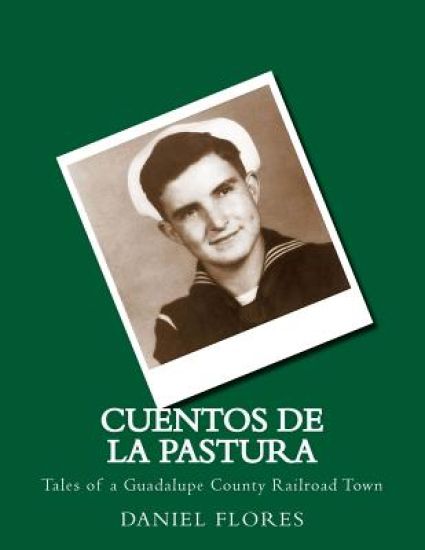
Pastura is a Spanish word meaning pasture, the community being located on rich grasslands in the rolling llanos, plains, of southern Guadalupe County. Pastura owes its existence to the El Paso and & Northeastern railway which came into the area in 1901. Pastura is located on U. S. Highway 54 about nineteen miles southwest of Santa Rosa. It once had several elementary schools located in its vicinity. It also had a post office from 1903-60. Early pioneers in the Pastura area were sheep ranchers or worked for some of the large sheep ranchers in the area. One of the sheep ranchers was the governor of the Territory of New Mexico, Miguel Otero. The entry of the railroad into the area made it easy for the sheep ranchers to transport their sheep and wool. The early railroad was high maintenance and many men from the area worked for the railroad. The economy of Pastura was driven by the sheep industry and the railroad. As the need for workers from the two main methods of employment began to decrease, so did the economy and population of Pastura. Today the Southern Pacific railroad passes through the once thriving village. Pastura was founded in 1901 by employees of the railroad and the Pintada Trading Co., owned by the Charles Ilfeld Co. The company name was later changed to the Pastura Trading Company. Cuentos de la Pastura, tales of Pastura in English, is a collection of vignettes about Pastura and the surrounding area. Most of the vignettes have been culled from old newspaper articles about Pastura and its people. Included in Cuentos are several stories about some of Pastura's military heroes dating back to World War I. The son of a Pastura rancher was killed in a ship board coal dust explosion in WWI. Another sailor from Pastura was killed when his submarine was sunk by Japanese destroyers near the end of WWII. A Pastura soldier made the supreme sacrifice during the Korean War. Many of the vignettes are about the trials and tribulations of some of the early Pastura pioneers. Some of the vignettes are accompanied by photographs which help tell a story.
Grzelachowski and Clancey: El Padre Polaco y el Capitán Clance

Grzelachowski and Clancey: El Padre Polaco y el Capitán Clance

Daniel B. Flores

Createspace Independent Publishing Platform
2015
nidottu
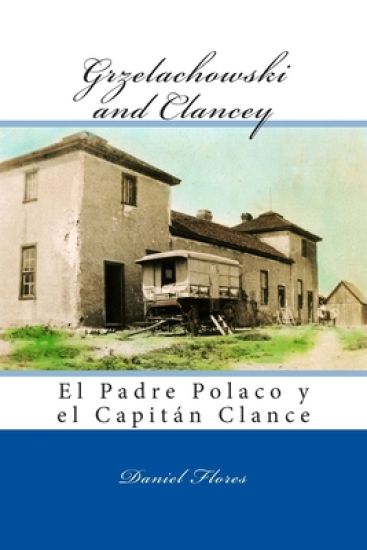
Alexander Grzelachowski and Capt. John G. Clancey were two pioneers in territorial New Mexico. Both of them lived in what was then San Miguel county in the area around Puerto de Luna. Grzelachowski established a business in Puerto de Luna in 1873. Capt. Clancey came to the area in the same year, shortly after Grzelachowski had established his mercantile business. Grzelachowski encouraged Capt. Clancey to go into the sheep business. The captain took the advice and began raising sheep in an area south of Puerto de Luna. He affectionately referred to the location of his ranch as "el Alamo Gordo." They were known by the Hispanic population of the area as el Padre Polaco and el Capit n Clance. Grzelachowski got his name because he had been a Catholic priest when he first came into New Mexico in 1851. After serving in several Catholic parishes in northern New Mexico he left the priesthood and settled in Las Vegas in 1863. He established a mercantile business on the Las Vegas Plaza. In 1873 he also opened a mercantile business in Puerto de Luna. He left his Las Vegas business interests in charge of his partner, Richard Dunn and relocated to Puerto de Luna with his small family, his wife, Secundina, a daughter, Adelina, and a son, Adolfo. His other children, Amelia, Emilia, Oscar, Leticia, Celina, and Florentina were all born in Puerto de Luna. Capt. Clancey had four children, his step-daughter, Camila Moore, Juan Jorge, who was his Spanish language namesake (John George), Carlos Cornelius, and Carolina. All four were born in Puerto de Luna. The area population also found it easier to refer to him as Padre Polaco because of the difficult pronunciation and even more difficult spelling of his surname, Grzelachowski. Likewise, Hispanics found it easier to call Clancey by the Spanish phonetic pronunciation of Capt. Clancey, Capit n Clance. Clancey's name was also widely spelled as Clancy without the "e." Eventually his two sons, Juan and Carlos, adopted the Clancy spelling.
Murder in Guadalupe County

Murder in Guadalupe County

Daniel B. Flores

Createspace Independent Publishing Platform
2015
nidottu
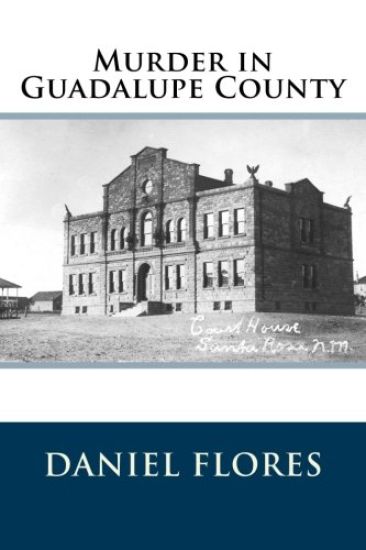
Murder in Guadalupe County includes the homicides of thirty-three males and seven females. Three of the victims were law enforcement officials---two Guadalupe county deputy sheriffs and one Santa Rosa town marshal. The three were all killed while carrying out their law enforcement duties. Only one of the cases included was committed by a female, a woman who killed her husband. The most famous of the murders was also the earliest one, the slaying of Juan Patr n in 1884 at a Puerto de Luna saloon. Juan Patr n had been a friend of Billy the Kid in Lincoln county during the days of the famous Lincoln County War. The infamous outlaw is known to have visited Patr n in Puerto de Luna. Patr n later served as speaker of the house in the New Mexico territorial legislature. The murders are all presented in alphabetical order according to the surname of the victim. They stand as a reminder that law and order did not always prevail in making Guadalupe county safe for its citizens. However, in most cases, the perpetrators were brought to justice.
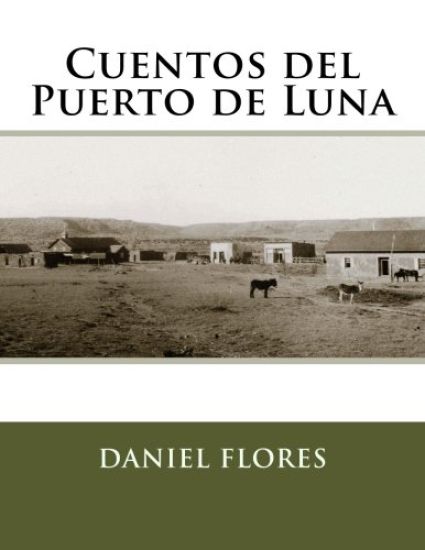
Cuentos del Puerto de Luna

Cuentos del Puerto de Luna

Daniel B. Flores

Createspace Independent Publishing Platform
2014
nidottu
Cuentos del Puerto de Luna relates many old cuentos, stories, and lore about the historic Guadalupe county village of Puerto de Luna. Puerto de Luna, founded in 1862, is rich in history and lore. The cuentos are presented as vignettes that each tell a story about an event or a happening in Puerto de Luna. Many are old newspaper articles that date back to the 1870s. Each helps preserve a part of the village's rich and colorful past. Some are also illustrated with period photographs. Included are sections on Defunciones and Enlasos, Deaths and Marriages. The defunciones and enlasos include many newspaper notices about funerals and marriages from area newspapers. During that period of time Spanish was the main spoken language in Puerto de Luna. Those news items, when written in Spanish, are presented in their original Spanish. The Spanish of the time was full of local color and translating the items into English would not have preserved that flavor. The notices are also full of Catholic religion connotations, Catholicism being the prevalent religion in the Puerto de Luna and northern New Mexico. Several vignettes provide an insight into the lore of the area. The beliefs, often based on superstition, were important in the everyday life of rural New Mexicans in that period of time. The area lore was also rich in religious beliefs such as the Corpus Christi celebration, the los pastores Christmas presentation and other religious fiestas. Two corridos, ballads, one about Billy the Kid and the second lamenting a marriage tragedy are included, both in Spanish. Several recreational activities such as la corrida del gallo and a game called tejas are included in Cuentos. Cuentos vignettes also include stories about some of the leading citizens during that period of time, people such as Lorenzo Labadie, James Madison Giddings, Juan Patr n, Billy the Kid, Celso Baca, and Paco Baca.