Kirjojen hintavertailu. Mukana 12 115 684 kirjaa ja 12 kauppaa.

Kirjailija

Daniel C. Dennett

Kirjat ja teokset yhdessä paikassa: 38 kirjaa, julkaisuja vuosilta 1985-2025, suosituimpien joukossa Darwin's Dangerous Idea. Vertaile teosten hintoja ja tarkista saatavuus suomalaisista kirjakaupoista.

38 kirjaa

Kirjojen julkaisuhaarukka 1985-2025.

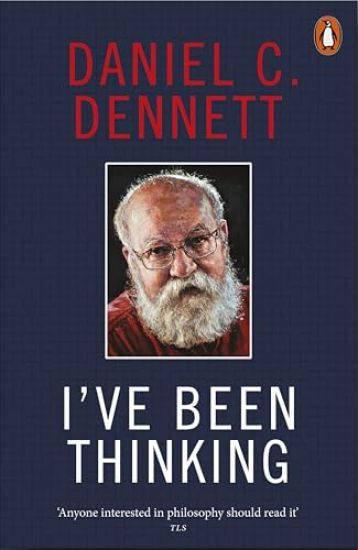
I've Been Thinking

I've Been Thinking

Daniel C. Dennett

PENGUIN BOOKS LTD
2025
pokkari
'A generous book written by a figure who has made a significant impact on philosophy ... Anyone interested in philosophy should read it' Nigel Warburton, Times Literary Supplement'One of today's most readable, intellectually nimble and scientifically literate philosophers' Nature'Who would have guessed that a philosopher's life could be so full of adventures?'Daniel C. Dennett, philosopher and cognitive scientist, has spent his career considering consciousness. I've Been Thinking traces the development of Dennett's own intellect and instructs us how we too can become good thinkers.Dennett's restless curiosity leads him from his childhood in Beirut to Harvard, and from Parisian jazz clubs to 'tillosophy' on his tractor in Maine. Along the way, he encounters and debates with a host of legendary thinkers, and reveals the breakthroughs and misjudgments that shaped his paradigm-shifting philosophies. Thinking, Dennett argues, is hard, and risky. In fact, all good philosophical thinking is inevitably accompanied by bafflement, frustration and self-doubt. It is only in getting it wrong that we, very occasionally, find a way to get it right.This memoir by one of the greatest philosophers of our time will speak to anyone who seeks a life of the mind with adventure and creativity.
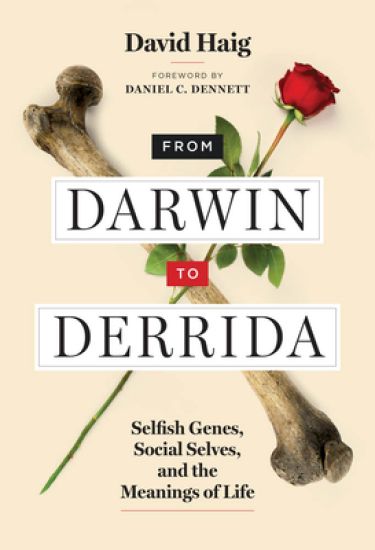
From Darwin to Derrida

From Darwin to Derrida

David Haig; Daniel C. Dennett

MIT Press
2020
sidottu
How the meaningless process of natural selection produces purposeful beings who find meaning in the world.In From Darwin to Derrida, evolutionary biologist David Haig explains how a physical world of matter in motion gave rise to a living world of purpose and meaning. Natural selection, a process without purpose, gives rise to purposeful beings who find meaning in the world. The key to this, Haig proposes, is the origin of mutable "texts"-genes-that preserve a record of what has worked in the world. These texts become the specifications for the intricate mechanisms of living beings.Haig draws on a wide range of sources-from Laurence Sterne's Tristram Shandy to Immanuel Kant's Critique of the Power of Judgment to the work of Jacques Derrida to the latest findings on gene transmission, duplication, and expression-to make his argument. Genes and their effects, he explains, are like eggs and chickens. Eggs exist for the sake of becoming chickens and chickens for the sake of laying eggs. A gene's effects have a causal role in determining which genes are copied. A gene (considered as a lineage of material copies) persists if its lineage has been consistently associated with survival and reproduction. Organisms can be understood as interpreters that link information from the environment to meaningful action in the environment. Meaning, Haig argues, is the output of a process of interpretation; there is a continuum from the very simplest forms of interpretation, instantiated in single RNA molecules near the origins of life, to the most sophisticated. Life is interpretation-the use of information in choice.
Intuition Pumps and Other Tools for Thinking

Intuition Pumps and Other Tools for Thinking

Daniel C. Dennett

WW Norton Co
2013
sidottu
Over a storied career, Daniel C. Dennett has engaged questions about science and the workings of the mind. His answers have combined rigorous argument with strong empirical grounding. And a lot of fun. Intuition Pumps and Other Tools for Thinking offers seventy-seven of Dennett s most successful "imagination-extenders and focus-holders" meant to guide you through some of life s most treacherous subject matter: evolution, meaning, mind, and free will. With patience and wit, Dennett deftly deploys his thinking tools to gain traction on these thorny issues while offering readers insight into how and why each tool was built. Alongside well-known favorites like Occam s Razor and reductio ad absurdum lie thrilling descriptions of Dennett s own creations: Trapped in the Robot Control Room, Beware of the Prime Mammal, and The Wandering Two-Bitser. Ranging across disciplines as diverse as psychology, biology, computer science, and physics, Dennett s tools embrace in equal measure light-heartedness and accessibility as they welcome uninitiated and seasoned readers alike. As always, his goal remains to teach you how to "think reliably and even gracefully about really hard questions." A sweeping work of intellectual seriousness that s also studded with impish delights, Intuition Pumps offers intrepid thinkers in all walks of life delicious opportunities to explore their pet ideas with new powers."
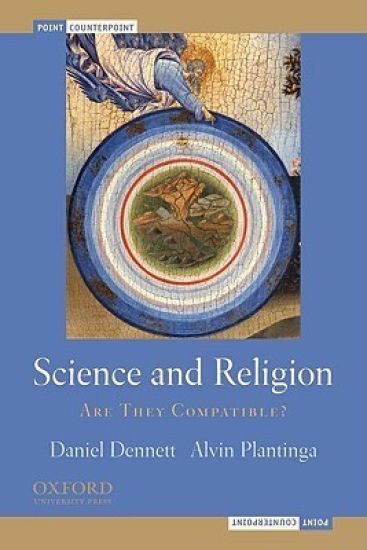
Science and Religion

Science and Religion

Daniel C. Dennett; Alvin Plantinga

Oxford University Press Inc
2011
nidottu
One of today's most controversial and heated issues is whether or not the conflict between science and religion can be reconciled. In Science and Religion: Are They Compatible?, renowned philosophers Daniel C. Dennett and Alvin Plantinga expand upon the arguments that they presented in an exciting live debate held at the 2009 American Philosophical Association Central Division conference. An enlightening discussion that will motivate students to think critically, Science and Religion: Are They Compatible? opens with Plantinga's assertion that Christianity is compatible with evolutionary theory because Christians believe that God created the living world, and it is entirely possible that God did so by using a process of evolution. Dennett vigorously rejects this argument, provoking a reply from Plantinga, another response from Dennett, and final statements from both sides. As philosophers, the authors possess expert skills in critical analysis; their arguments provide a model of dialogue between those who strongly disagree. Ideal for courses in philosophy of religion, science and religion, and philosophy of science, Science and Religion is also captivating reading for general readers.
Breaking the Spell

Breaking the Spell

Daniel C. Dennett

Penguin Books Ltd
2007
pokkari
What is religion and how did it evolve? Is it the product of blind evolutionary instinct or of rational choice? Is the only way to live a good life through religion? In this title, the author explores how the great ideas of religion have enthralled us for thousands of years - and whether we could (or should) break free.
Sweet Dreams

Sweet Dreams

Daniel C. Dennett

MIT Press
2006
pokkari
In the years since Daniel Dennett's influential Consciousness Explained was published in 1991, scientific research on consciousness has been a hotly contested battleground of rival theories-"so rambunctious," Dennett observes, "that several people are writing books just about the tumult." With Sweet Dreams, Dennett returns to the subject for "revision and renewal" of his theory of consciousness, taking into account major empirical advances in the field since 1991 as well as recent theoretical challenges.In Consciousness Explained, Dennett proposed to replace the ubiquitous but bankrupt Cartesian Theater model (which posits a privileged place in the brain where "it all comes together" for the magic show of consciousness) with the Multiple Drafts Model. Drawing on psychology, cognitive neuroscience, and artificial intelligence, he asserted that human consciousness is essentially the mental software that reorganizes the functional architecture of the brain. In Sweet Dreams, he recasts the Multiple Drafts Model as the "fame in the brain" model, as a background against which to examine the philosophical issues that "continue to bedevil the field."With his usual clarity and brio, Dennett enlivens his arguments with a variety of vivid examples. He isolates the "Zombic Hunch" that distorts much of the theorizing of both philosophers and scientists, and defends heterophenomenology, his "third-person" approach to the science of consciousness, against persistent misinterpretations and objections. The old challenge of Frank Jackson's thought experiment about Mary the color scientist is given a new rebuttal in the form of "RoboMary," while his discussion of a famous card trick, "The Tuned Deck," is designed to show that David Chalmers's Hard Problem is probably just a figment of theorists' misexploited imagination. In the final essay, the "intrinsic" nature of "qualia" is compared with the naively imagined "intrinsic value" of a dollar in "Consciousness-How Much is That in Real Money?"
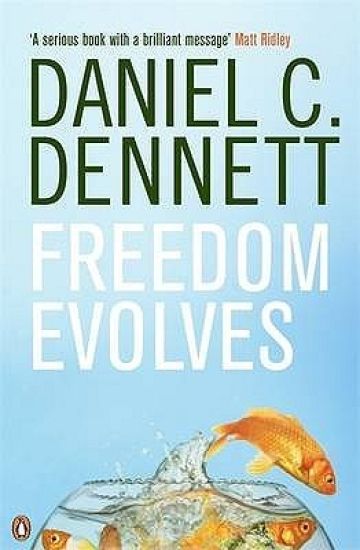
Freedom Evolves

Freedom Evolves

Daniel C. Dennett

Penguin Books Ltd
2004
pokkari
Daniel C. Dennett's Freedom Evolves tackles the most important question of human existence - is there really such a thing as free will? How can humans make genuinely independent choices if we are just a cluster of cells and genes in a world determined by scientific laws? Here, Daniel Dennett provides an impassioned defense of free will. But rather than freedom being an eternal, unchanging condition of our existence, in reality, he reveals, it has evolved: just like life on the planet and the air we breathe. Evolution is the key to resolving this greatest of philosophical questions - and to understanding our place in the world as uniquely free agents. Dennett shows that far from there being an incompatibility between contemporary science and the traditional vision of freedom and morality, it is only recently that science has advanced to the point where we can see how we came to have our unique kind of freedom. 'A serious book with a brilliant message' Matt Ridley, author of The Red Queen 'Powerful and ingenious ... The definitive argument that the human mind is a product of evolution' John Gray, Independent 'A book of sparkling brio and seemingly effortless panache ... Dennett at his best is as good as it gets' Spectator Daniel C. Dennett is one of the most original and provocative thinkers in the world. A brilliant polemicist and philosopher, he is famous for challenging unexamined orthodoxies, and an outspoken supporter of the Brights movement. His books include Brainstorms, Brainchildren, Elbow Room, Breaking the Spell, Darwin's Dangerous Idea and Freedom Evolves.
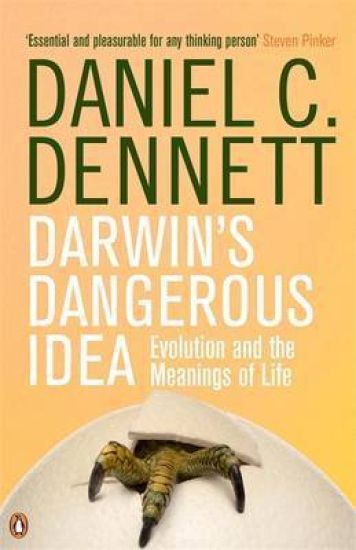
Darwin's Dangerous Idea

Darwin's Dangerous Idea

Daniel C. Dennett

Penguin Books Ltd
1996
pokkari
In Darwin's Dangerous Idea: Evolution and the Meanings of Life Daniel C. Dennett argues that the theory of evolution can demystify the miracles of life without devaluing our most cherished beliefs. From the moment it first appeared, Charles Darwin's theory of evolution by natural selection has been controversial: misrepresented, abused, denied and fiercely debated. In this powerful defence of Darwin, Daniel C. Dennett explores every aspect of evolutionary thinking to show why it is so fundamental to our existence, and why it affirms - not threatens - our convictions about the meaning of life. 'Essential and pleasurable for any thinking person'Stephen Pinker 'A surpassingly brilliant book. Where creative, it lifts the reader to new intellectual heights. Where critical, it is devastating'Richard Dawkins 'A brilliant piece of persuasion, excitingly argued and compulsively readable'The Times Higher Education Supplement 'Superb ... This is the best single-author overview of all the implications of evolution by natural selection available ... deserves a place on the bookshelves of every thinking person'John Gribbin, Sunday Times 'Dennett's book brings together science and philosophy with wit, complex clarity and an infectious sense that these ideas matter, to us and the way we live now'A.S. Byatt, Sunday Times Books of the Year Daniel C. Dennett is one of the most original and provocative thinkers in the world. A brilliant polemicist and philosopher, he is famous for challenging unexamined orthodoxies, and an outspoken supporter of the Brights movement. His books include Brainstorms, Brainchildren, Elbow Room, Breaking the Spell, Darwin's Dangerous Idea, Consciousness Explained and Freedom Evolves.
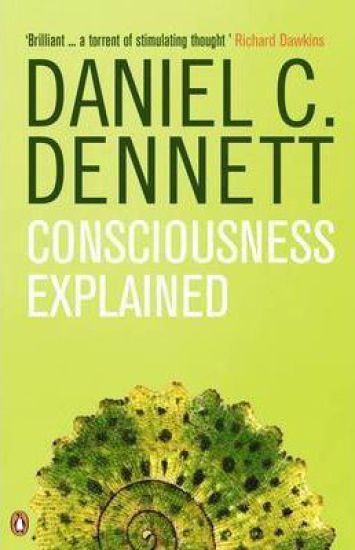
Consciousness Explained

Consciousness Explained

Daniel C. Dennett

Penguin Books Ltd
1993
pokkari
In Consciousness Explained, Daniel C. Dennett reveals the secrets of one of the last remaining mysteries of the universe: the human brain.Daniel C. Dennett's now-classic book blends philosophy, psychology and neuroscience - with the aid of numerous examples and thought-experiments - to explore how consciousness has evolved, and how a modern understanding of the human mind is radically different from conventional explanations of consciousness.What people think of as the stream of consciousness is not a single, unified sequence, the author argues, but 'multiple drafts' of reality composed by a computer-like 'virtual machine'. Dennett explains how science has exploded the classic mysteries of consciousness: the nature of introspection, the self or ego and its relation to thoughts and sensations, the problems posed by qualia, and the level of consciousness of non-human creatures. 'Brilliant ... a torrent of stimulating thought' Richard Dawkins 'Revolutionary ... one of the most mentally agile, intellectually resourceful books you are likely to read' Guardian 'A masterful tapestry of deep insights ... Dennett has written a profound and important book that is also clear, exciting and witty' Douglas R. Hofstadter, author of Gödel, Escher, Bach
I've Been Thinking

I've Been Thinking

Daniel C. Dennett

W. W. Norton Company
2025
nidottu
Daniel C. Dennett, preeminent philosopher and cognitive scientist, has spent his career considering the thorniest, most fundamental mysteries of the mind. Do we have free will? What is consciousness and how did it come about? What distinguishes human minds from the minds of animals? Dennett's answers have profoundly shaped our age of philosophical thought. In I've Been Thinking, he reflects on his amazing career and lifelong scientific fascinations.Dennett's relentless curiosity has taken him from a childhood in Beirut and the classrooms of Harvard, Oxford, and Tufts, to "Cognitive Cruises" on sailboats and the fields and orchards of Maine, and to laboratories and think tanks around the world. Along the way, I've Been Thinking provides a master class in the dominant themes of twentieth-century philosophy and cognitive science--including language, evolution, logic, religion, and AI--and reveals both the mistakes and breakthroughs that shaped Dennett's theories.Key to this journey are Dennett's interlocutors--Douglas Hofstadter, Marvin Minsky, Willard Van Orman Quine, Gilbert Ryle, Richard Rorty, Thomas Nagel, John Searle, Gerald Edelman, Stephen Jay Gould, Jerry Fodor, Rodney Brooks, and more--whose ideas, even when he disagreed with them, helped to form his convictions about the mind and consciousness. Studded with photographs and told with characteristic warmth, I've Been Thinking also instills the value of life beyond the university, one enriched by sculpture, music, farming, and deep connection to family.Dennett compels us to consider: What do I really think? And what if I'm wrong? This memoir by one of the greatest minds of our time will speak to anyone who seeks to balance a life of the mind with adventure and creativity.
I've Been Thinking

I've Been Thinking

Daniel C. Dennett

PENGUIN BOOKS LTD
2023
sidottu
'A generous book written by a figure who has made a significant impact on philosophy ... Anyone interested in philosophy should read it' Nigel Warburton, Times Literary Supplement'One of today's most readable, intellectually nimble and scientifically literate philosophers' Nature'Who would have guessed that a philosopher's life could be so full of adventures?'Daniel C. Dennett, philosopher and cognitive scientist, has spent his career considering consciousness. I've Been Thinking traces the development of Dennett's own intellect and instructs us how we too can become good thinkers.Dennett's restless curiosity leads him from his childhood in Beirut to Harvard, and from Parisian jazz clubs to 'tillosophy' on his tractor in Maine. Along the way, he encounters and debates with a host of legendary thinkers, and reveals the breakthroughs and misjudgments that shaped his paradigm-shifting philosophies. Thinking, Dennett argues, is hard, and risky. In fact, all good philosophical thinking is inevitably accompanied by bafflement, frustration and self-doubt. It is only in getting it wrong that we, very occasionally, find a way to get it right.This memoir by one of the greatest philosophers of our time will speak to anyone who seeks a life of the mind with adventure and creativity.
I've Been Thinking

I've Been Thinking

Daniel C. Dennett

W. W. Norton Company
2023
sidottu
Daniel C. Dennett, preeminent philosopher and cognitive scientist, has spent his career considering the thorniest, most fundamental mysteries of the mind. Do we have free will? What is consciousness and how did it come about? What distinguishes human minds from the minds of animals? Dennett's answers have profoundly shaped our age of philosophical thought. In I've Been Thinking, he reflects on his amazing career and lifelong scientific fascinations.Dennett's relentless curiosity has taken him from a childhood in Beirut and the classrooms of Harvard, Oxford, and Tufts, to "Cognitive Cruises" on sailboats and the fields and orchards of Maine, and to laboratories and think tanks around the world. Along the way, I've Been Thinking provides a master class in the dominant themes of twentieth-century philosophy and cognitive science--including language, evolution, logic, religion, and AI--and reveals both the mistakes and breakthroughs that shaped Dennett's theories.Key to this journey are Dennett's interlocutors--Douglas Hofstadter, Marvin Minsky, Willard Van Orman Quine, Gilbert Ryle, Richard Rorty, Thomas Nagel, John Searle, Gerald Edelman, Stephen Jay Gould, Jerry Fodor, Rodney Brooks, and more--whose ideas, even when he disagreed with them, helped to form his convictions about the mind and consciousness. Studded with photographs and told with characteristic warmth, I've Been Thinking also instills the value of life beyond the university, one enriched by sculpture, music, farming, and deep connection to family.Dennett compels us to consider: What do I really think? And what if I'm wrong? This memoir by one of the greatest minds of our time will speak to anyone who seeks to balance a life of the mind with adventure and creativity.
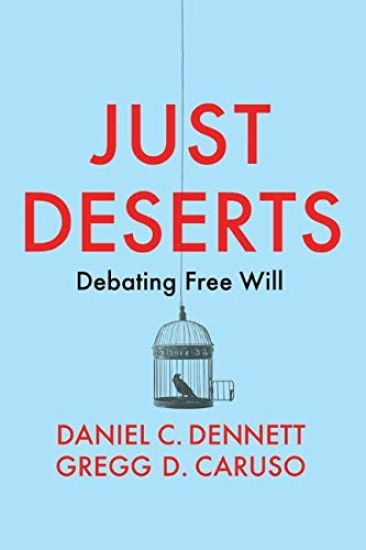
Just Deserts

Just Deserts

Daniel C. Dennett; Gregg D. Caruso

Polity Press
2021
nidottu
The concept of free will is profoundly important to our self-understanding, our interpersonal relationships, and our moral and legal practices. If it turns out that no one is ever free and morally responsible, what would that mean for society, morality, meaning, and the law? Just Deserts brings together two philosophers – Daniel C. Dennett and Gregg D. Caruso – to debate their respective views on free will, moral responsibility, and legal punishment. In three extended conversations, Dennett and Caruso present their arguments for and against the existence of free will and debate their implications. Dennett argues that the kind of free will required for moral responsibility is compatible with determinism – for him, self-control is key; we are not responsible for becoming responsible, but are responsible for staying responsible, for keeping would-be puppeteers at bay. Caruso takes the opposite view, arguing that who we are and what we do is ultimately the result of factors beyond our control, and because of this we are never morally responsible for our actions in the sense that would make us truly deserving of blame and praise, punishment and reward. Just Deserts introduces the concepts central to the debate about free will and moral responsibility by way of an entertaining, rigorous, and sometimes heated philosophical dialogue between two leading thinkers.
Just Deserts

Just Deserts

Daniel C. Dennett; Gregg D. Caruso

Polity Press
2021
sidottu
The concept of free will is profoundly important to our self-understanding, our interpersonal relationships, and our moral and legal practices. If it turns out that no one is ever free and morally responsible, what would that mean for society, morality, meaning, and the law? Just Deserts brings together two philosophers – Daniel C. Dennett and Gregg D. Caruso – to debate their respective views on free will, moral responsibility, and legal punishment. In three extended conversations, Dennett and Caruso present their arguments for and against the existence of free will and debate their implications. Dennett argues that the kind of free will required for moral responsibility is compatible with determinism – for him, self-control is key; we are not responsible for becoming responsible, but are responsible for staying responsible, for keeping would-be puppeteers at bay. Caruso takes the opposite view, arguing that who we are and what we do is ultimately the result of factors beyond our control, and because of this we are never morally responsible for our actions in the sense that would make us truly deserving of blame and praise, punishment and reward. Just Deserts introduces the concepts central to the debate about free will and moral responsibility by way of an entertaining, rigorous, and sometimes heated philosophical dialogue between two leading thinkers.
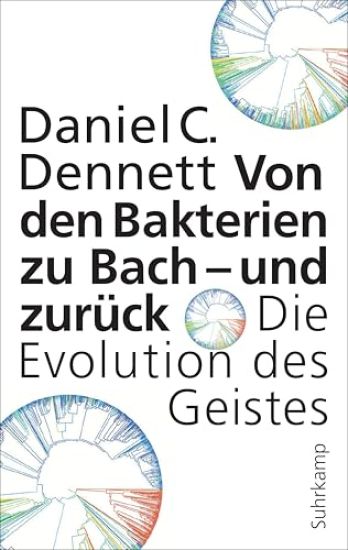
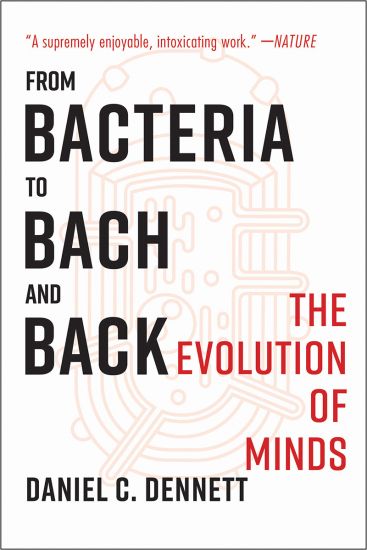
From Bacteria to Bach and Back: The Evolution of Minds

From Bacteria to Bach and Back: The Evolution of Minds

Daniel C. Dennett

W. W. Norton Company
2018
nidottu
How did we come to have minds? For centuries, poets, philosophers, psychologists, and physicists have wondered how the human mind developed its unrivaled abilities. Disciples of Darwin have explained how natural selection produced plants, but what about the human mind?In From Bacteria to Bach and Back, Daniel C. Dennett builds on recent discoveries from biology and computer science to show, step by step, how a comprehending mind could in fact have arisen from a mindless process of natural selection. A crucial shift occurred when humans developed the ability to share memes, or ways of doing things not based in genetic instinct. Competition among memes produced thinking tools powerful enough that our minds don't just perceive and react, they create and comprehend.An agenda-setting book for a new generation of philosophers and scientists, From Bacteria to Bach and Back will delight and entertain all those curious about how the mind works.
From Bacteria to Bach and Back

From Bacteria to Bach and Back

Daniel C. Dennett

Penguin Books Ltd
2018
pokkari
'Required reading for anyone remotely curious about how they came to be remotely curious' Observer'Enthralling' Spectator What is human consciousness and how is it possible? These questions fascinate thinking people from poets and painters to physicists, psychologists, and philosophers. This is Daniel C. Dennett's brilliant answer, extending perspectives from his earlier work in surprising directions, exploring the deep interactions of evolution, brains and human culture. Part philosophical whodunnit, part bold scientific conjecture, this landmark work enlarges themes that have sustained Dennett's career at the forefront of philosophical thought. In his inimitable style, laced with wit and thought experiments, Dennett shows how culture enables reflection by installing a profusion of thinking tools, or memes, in our brains, and how language turbocharges this process. The result: a mind that can comprehend the questions it poses, has emerged from a process of cultural evolution. An agenda-setting book for a new generation of philosophers and thinkers, From Bacteria to Bach and Back is essential for anyone who hopes to understand human creativity in all its applications.