Kirjailija
David A. J. Richards
Kirjat ja teokset yhdessä paikassa: 31 kirjaa, julkaisuja vuosilta 1989-2026, suosituimpien joukossa Conscience and the Constitution. Vertaile teosten hintoja ja tarkista saatavuus suomalaisista kirjakaupoista.
Mukana myös kirjoitusasut: David A.J. Richards, David A J Richards
31 kirjaa
Kirjojen julkaisuhaarukka 1989-2026.
At stage center of the American drama, maintains David A. J. Richards, is the attempt to understand the implications of the Reconstruction Amendments--Amendments Thirteen, Fourteen, and Fifteen to the United States Constitution. Richards evaluates previous efforts to interpret the amendments and then proposes his own view: together the amendments embodied a self-conscious rebirth of America's revolutionary, rights-based constitutionalism. Building on an approach to constitutional law developed in his Toleration and the Constitution and Foundations of American Constitutionalism, Richards links history, law, and political theory. In Conscience and the Constitution, this method leads from an analysis of the Reconstruction Amendments to a broad discussion of the American constitutional system as a whole. Richards's interpretation focuses on the abolitionists and their radical commitment to the "dissenting conscience." In his view, the Reconstruction Amendments expressed not only the constitutional arguments of a particular historical period but also a general political theory developed by the abolitionists, who restructured the American political community in terms of respect for universal human rights. He argues further that the amendments make a claim on our generation to keep faith with the vision of the "founders of 1865." In specific terms he points out what such allegiance would mean in the context of present-day constitutional issues. Originally published in 1993. The Princeton Legacy Library uses the latest print-on-demand technology to again make available previously out-of-print books from the distinguished backlist of Princeton University Press. These editions preserve the original texts of these important books while presenting them in durable paperback and hardcover editions. The goal of the Princeton Legacy Library is to vastly increase access to the rich scholarly heritage found in the thousands of books published by Princeton University Press since its founding in 1905.

Revolution and Constitutionalism in Britain and the U.S.
David A. J. Richards
TAYLOR FRANCIS LTD
2025
nidottu
In Revolution and Constitutionalism in Britain and the U.S.: Burke and Madison and Their Contemporary Legacies, David A. J. Richards offers an investigative comparison of two central figures in late eighteenth-century constitutionalism, Edmund Burke and James Madison, at a time when two great constitutional experiments were in play: the Constitution of the Glorious Revolution of 1688 and the U.S. Constitution of 1787.Richards assesses how much, as liberal Lockean constitutionalists, Burke and Madison shared and yet differed regarding violent revolution, offering three pathbreaking and original contributions about Burke’s importance. First, the book defends Burke as a central figure in the development and understanding of liberal constitutionalism; second, it explores the psychology that led to his liberal voice, including Burke’s own long-term loving relationship to another man; and third, it shows how Burke’s understanding of the political psychology of the violence of “political religions” is an enduring contribution to understanding fascist threats to political liberalism from the eighteenth-century onwards, including the contemporary constitutional crises in the U.S. and U.K. deriving from populist movements.Mixing thorough research with personal experiences, this book will be an invaluable resource to scholars of political science and theory, constitutional law, history, political psychology, and LGBTQ+ issues.
Revolution and Constitutionalism in Britain and the U.S.
David A. J. Richards
TAYLOR FRANCIS LTD
2023
sidottu
In Revolution and Constitutionalism in Britain and the U.S.: Burke and Madison and Their Contemporary Legacies, David A. J. Richards offers an investigative comparison of two central figures in late eighteenth-century constitutionalism, Edmund Burke and James Madison, at a time when two great constitutional experiments were in play: the Constitution of the Glorious Revolution of 1688 and the U.S. Constitution of 1787.Richards assesses how much, as liberal Lockean constitutionalists, Burke and Madison shared and yet differed regarding violent revolution, offering three pathbreaking and original contributions about Burke’s importance. First, the book defends Burke as a central figure in the development and understanding of liberal constitutionalism; second, it explores the psychology that led to his liberal voice, including Burke’s own long-term loving relationship to another man; and third, it shows how Burke’s understanding of the political psychology of the violence of “political religions” is an enduring contribution to understanding fascist threats to political liberalism from the eighteenth-century onwards, including the contemporary constitutional crises in the U.S. and U.K. deriving from populist movements.Mixing thorough research with personal experiences, this book will be an invaluable resource to scholars of political science and theory, constitutional law, history, political psychology, and LGBTQ+ issues.
Holding a Mirror up to Nature
James Gilligan; David A.J. Richards
Cambridge University Press
2021
sidottu
Shakespeare has been dubbed the greatest psychologist of all time. This book seeks to prove that statement by comparing the playwright's fictional characters with real-life examples of violent individuals, from criminals to political actors. For Gilligan and Richards, the propensity to kill others, even (or especially) when it results in the killer's own death, is the most serious threat to the continued survival of humanity. In this volume, the authors show how humiliated men, with their desire for retribution and revenge, apocryphal violence and political religions, justify and commit violence, and how love and restorative justice can prevent violence. Although our destructive power is far greater than anything that existed in his day, Shakespeare has much to teach us about the psychological and cultural roots of all violence. In this book the authors tell what Shakespeare shows, through the stories of his characters: what causes violence and what prevents it.
Holding a Mirror up to Nature
James Gilligan; David A.J. Richards
Cambridge University Press
2021
pokkari
Shakespeare has been dubbed the greatest psychologist of all time. This book seeks to prove that statement by comparing the playwright's fictional characters with real-life examples of violent individuals, from criminals to political actors. For Gilligan and Richards, the propensity to kill others, even (or especially) when it results in the killer's own death, is the most serious threat to the continued survival of humanity. In this volume, the authors show how humiliated men, with their desire for retribution and revenge, apocryphal violence and political religions, justify and commit violence, and how love and restorative justice can prevent violence. Although our destructive power is far greater than anything that existed in his day, Shakespeare has much to teach us about the psychological and cultural roots of all violence. In this book the authors tell what Shakespeare shows, through the stories of his characters: what causes violence and what prevents it.
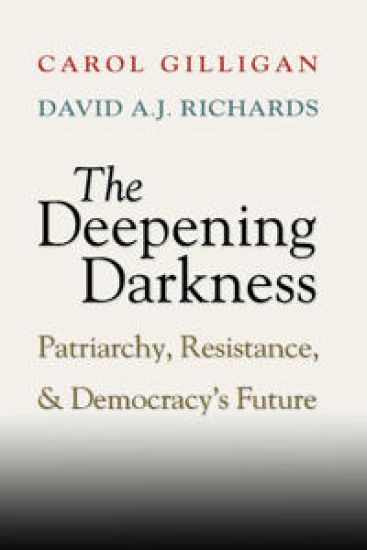
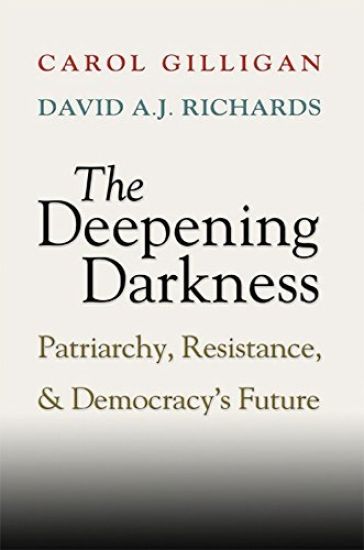
In the fall of 2016 those promoting patriarchal ideals saw their champion Donald Trump elected president of the United States and showed us how powerful patriarchy still is in American society and culture. Darkness Now Visible: Patriarchy's Resurgence and Feminist Resistance explains how patriarchy and its embrace of misogyny, racism, xenophobia, homophobia, and violence are starkly visible and must be recognized and resisted. Carol Gilligan and David A. J. Richards offer a bold and original thesis: that gender is the linchpin that holds in place the structures of unjust oppression through the codes of masculinity and femininity that subvert the capacity to resist injustice. Feminism is not an issue of women only, or a battle of women versus men - it is the key ethical movement of our age.
Boys' Secrets and Men's Loves is the memoir of a law professor who has written over twenty books on the basic rights of American constitutionalism. He has been a prominent advocate of gay rights and feminism, which joins men and women in resistance. A gay man born into an Italian American family in New Jersey, he relates in this book his own experience on how the initiation of boys into patriarchy inflicts trauma, leading them to mindlessly accept patriarchal codes of masculinity, and how (through art, philosophy, and experience-including mutual love) he and others (straight and gay men) come to join women in resisting patriarchy through the discovery of how deeply it harms men as well as women.
In the fall of 2016 those promoting patriarchal ideals saw their champion Donald Trump elected president of the United States and showed us how powerful patriarchy still is in American society and culture. Darkness Now Visible: Patriarchy's Resurgence and Feminist Resistance explains how patriarchy and its embrace of misogyny, racism, xenophobia, homophobia, and violence are starkly visible and must be recognized and resisted. Carol Gilligan and David A. J. Richards offer a bold and original thesis: that gender is the linchpin that holds in place the structures of unjust oppression through the codes of masculinity and femininity that subvert the capacity to resist injustice. Feminism is not an issue of women only, or a battle of women versus men - it is the key ethical movement of our age.
This book tells the stories of notable historical figures who, by resisting patriarchal laws condemning adultery, gay and lesbian sex, and sex across the boundaries of religion and race, brought about lasting social and political change. Constitutional scholar David A. J. Richards investigates the lives of leading transgressive artists, social critics, and activists including George Eliot, Benjamin Britten, Christopher Isherwood, Bayard Rustin, James Baldwin, Eleanor Roosevelt, and Margaret Mead. Richards shows how ethical empowerment, motivated by love, allowed these figures to resist the injustices of anti-Semitism, racism, sexism, and homophobia, leading to the constitutional condemnation of these political evils in the United States, Britain, and beyond. Love and law thus grow together, and this book shows how and why. Drawing from developmental psychology (including studies of trauma), political theory, the history of social movements, literature, biography, and law, this book will be a thought-provoking tool for anyone interested in civil rights.
Resisting Injustice and the Feminist Ethics of Care in the Age of Obama
David A.J. Richards
Routledge
2015
nidottu
David A. J. Richards’s Resisting Injustice and The Feminist Ethics of Care in The Age of Obama: "Suddenly,…All The Truth Was Coming Out" builds on his and Carol Gilligan’s The Deepening Darkness to examine the roots of the resistance movements of the 1960s, the political psychology behind contemporary conservatism, and President Obama’s present-day appeal as well as the reasons for the reactionary politics against him.Richards begins by laying out the basics of the ethics of care and proposing an alternative basis for ethics: relationality, which is based in convergent findings in infant research, neuroscience, and evolutionary psychology. He critically analyzes patriarchal politics and states that they are rooted in a reactionary psychology that attacks human relationality and ethics. From there, the book examines the 1960s resistance movements and argues that they were fundamentally oriented around challenging patriarchy. Richards asserts that the reactionary politics in America from the 1960s to the present are in service of an American patriarchy threatened by the resistance movements ranging from the 1960s civil rights movements to the present gay rights movement. Reactionary politics intend to marginalize and even reverse the ethical achievements accomplished by resistance movements—creating, in effect, a system of patriarchy hiding in democracy. Richards consequently argues that Obama’s appeal is connected to his challenge to this system of patriarchy and will examine both Obama’s appeal and the reactions against him in light of the 2012 presidential election.This book positions recent American political development in a broad analysis of the role of patriarchy in human oppression throughout history, and argues that a feminist-based ethics of care is necessary to form a more humane and inclusive democratic politics.
This book tells the stories of notable historical figures who, by resisting patriarchal laws condemning adultery, gay and lesbian sex, and sex across the boundaries of religion and race, brought about lasting social and political change. Constitutional scholar David A. J. Richards investigates the lives of leading transgressive artists, social critics, and activists including George Eliot, Benjamin Britten, Christopher Isherwood, Bayard Rustin, James Baldwin, Eleanor Roosevelt, and Margaret Mead. Richards shows how ethical empowerment, motivated by love, allowed these figures to resist the injustices of anti-Semitism, racism, sexism, and homophobia, leading to the constitutional condemnation of these political evils in the United States, Britain, and beyond. Love and law thus grow together, and this book shows how and why. Drawing from developmental psychology (including studies of trauma), political theory, the history of social movements, literature, biography, and law, this book will be a thought-provoking tool for anyone interested in civil rights.
Why is America again unjustly at war? Why is its politics distorted by wedge issues like abortion and gay marriage? Why is anti-Semitism still so powerfully resurgent? Such contradictions within democracies arise from a patriarchal psychology still alive in our personal and political lives in tension with the equal voice that is the basis of democracy. This book joins a psychological approach with a political-theoretical one that traces both this psychology (based on loss in intimate life) and resistance to it (based on the love of equals) to the Roman Republic and Empire and to three Latin masterpieces: Virgil's Aeneid, Apuleius's The Golden Ass, and Augustine's Confessions. In addition, this book explains many other aspects of our present situation including why movements of ethical resistance are often accompanied by a freeing of sexuality and why we are witnessing an aggressive fundamentalism at home and abroad.
The Rise of Gay Rights and the Fall of the British Empire
David A. J. Richards
Cambridge University Press
2013
pokkari
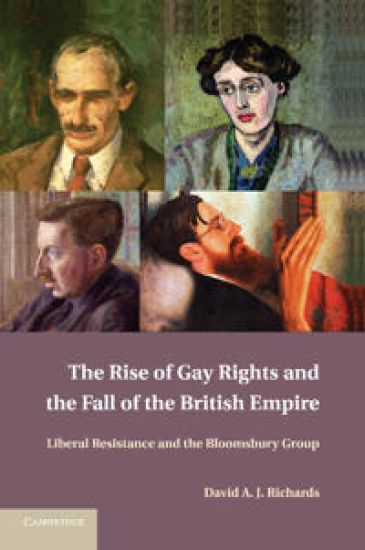
This book argues that there is an important connection between ethical resistance to British imperialism and the ethical discovery of gay rights. It examines the roots of liberal resistance in Britain and resistance to patriarchy in the USA, showing the importance of fighting the demands of patriarchal manhood and womanhood to countering imperialism. Advocates of feminism and gay rights are key because they resist the gender binary's role in rationalizing sexism and homophobia. The connection between the rise of gay rights and the fall of empire illuminates questions of the meaning of democracy and universal human rights as shared human values that have appeared since World War II. The book casts doubt on the thesis that arguments for gay rights must be extrinsic to democracy and reflect Western values. To the contrary, gay rights arise from within liberal democracy, and its critics polemically use such opposition to cover and rationalize their own failures of democracy.
Resisting Injustice and the Feminist Ethics of Care in the Age of Obama
David A.J. Richards
Routledge
2013
sidottu
David A. J. Richards’s Resisting Injustice and The Feminist Ethics of Care in The Age of Obama: "Suddenly,…All The Truth Was Coming Out" builds on his and Carol Gilligan’s The Deepening Darkness to examine the roots of the resistance movements of the 1960s, the political psychology behind contemporary conservatism, and President Obama’s present-day appeal as well as the reasons for the reactionary politics against him.Richards begins by laying out the basics of the ethics of care and proposing an alternative basis for ethics: relationality, which is based in convergent findings in infant research, neuroscience, and evolutionary psychology. He critically analyzes patriarchal politics and states that they are rooted in a reactionary psychology that attacks human relationality and ethics. From there, the book examines the 1960s resistance movements and argues that they were fundamentally oriented around challenging patriarchy. Richards asserts that the reactionary politics in America from the 1960s to the present are in service of an American patriarchy threatened by the resistance movements ranging from the 1960s civil rights movements to the present gay rights movement. Reactionary politics intend to marginalize and even reverse the ethical achievements accomplished by resistance movements—creating, in effect, a system of patriarchy hiding in democracy. Richards consequently argues that Obama’s appeal is connected to his challenge to this system of patriarchy and will examine both Obama’s appeal and the reactions against him in light of the 2012 presidential election.This book positions recent American political development in a broad analysis of the role of patriarchy in human oppression throughout history, and argues that a feminist-based ethics of care is necessary to form a more humane and inclusive democratic politics.
Patriarchal Religion, Sexuality, and Gender
Nicholas Bamforth; David A. J. Richards
Cambridge University Press
2011
pokkari
Legal theorists are familiar with John Finnis's book Natural Law and Natural Rights, but usually overlook his interventions in US constitutional debates and his membership of a group of conservative Catholic thinkers, the 'new natural lawyers', led by theologian Germain Grisez. In fact, Finnis has repeatedly advocated conservative positions concerning lesbian and gay rights, contraception and abortion, and his substantive moral theory (as he himself acknowledges) derives from Grisez. Bamforth and Richards provide a detailed explanation of the work of the new natural lawyers within and outside the Catholic Church - the first truly comprehensive explanation available to legal theorists - and criticize Grisez's and Finnis's arguments concerning sexuality and gender. New natural law is, they argue, a theology rather than a secular theory, and one which is unappealing in a modern constitutional democracy. This book will be of interest to legal and political theorists, ethicists, theologians and scholars of religious history.
Fundamentalism in American Religion and Law
David A. J. Richards
Cambridge University Press
2010
sidottu
Why, from Reagan to George Bush, have fundamentalists in religion and in law (originalists) exercised such political power and influence in the United States? Why has the Republican Party forged an ideology of judicial appointments (originalism) hostile to abortion and gay rights? Why and how did Barack Obama distinguish himself among Democratic candidates not only by his opposition to the Iraq war but by his opposition to originalism? This book argues that fundamentalism in both religion and law threatens democratic values and draws its appeal from a patriarchal psychology still alive in our personal and political lives and at threat from the constitutional developments since the 1960s. The argument analyzes this psychology (based on traumatic loss in intimate life) and resistance to it (based on the love of equals). Obama's resistance to originalism arises from his developmental history as a democratic, as opposed to patriarchal, man who resists the patriarchal demands on men and women that originalism enforces - in particular, the patriarchal love laws that tell people who and how and how much they may love.
Why is America again unjustly at war? Why is its politics distorted by wedge issues like abortion and gay marriage? Why is anti-Semitism still so powerfully resurgent? Such contradictions within democracies arise from a patriarchal psychology still alive in our personal and political lives in tension with the equal voice that is the basis of democracy. This book joins a psychological approach with a political-theoretical one that traces both this psychology (based on loss in intimate life) and resistance to it (based on the love of equals) to the Roman Republic and Empire and to three Latin masterpieces: Virgil's Aeneid, Apuleius's The Golden Ass, and Augustine's Confessions. In addition, this book explains many other aspects of our present situation including why movements of ethical resistance are often accompanied by a freeing of sexuality and why we are witnessing an aggressive fundamentalism at home and abroad.