Kirjojen hintavertailu. Mukana 12 657 676 kirjaa ja 12 kauppaa.

Kirjailija

David Arnold

Kirjat ja teokset yhdessä paikassa: 71 kirjaa, julkaisuja vuosilta 1988-2026, suosituimpien joukossa Macroeconomics. Vertaile teosten hintoja ja tarkista saatavuus suomalaisista kirjakaupoista.

71 kirjaa

Kirjojen julkaisuhaarukka 1988-2026.

Everyday Technology

Everyday Technology

David Arnold

University of Chicago Press
2015
nidottu
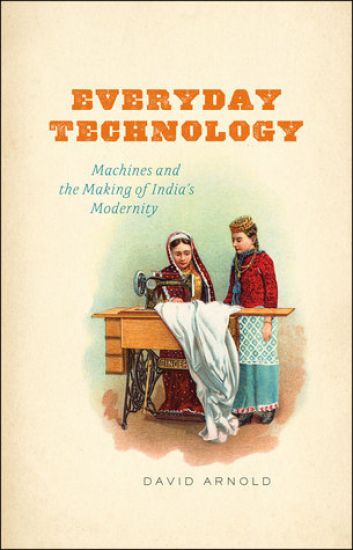
Everyday Technology is a pioneering account of how small machines and consumer goods that originated in Europe and North America became objects of everyday use in India in the late nineteenth and early twentieth centuries. Rather than investigate "big" technologies such as railways and irrigation projects, Arnold examines the assimilation and appropriation of bicycles, rice mills, sewing machines, and typewriters in India, and follows their impact on the ways in which people worked and travelled, the clothes they wore, and the kind of food they ate. But the effects of these machines were not limited to the daily rituals of Indian society, and Arnold demonstrates how such small-scale technologies became integral to new ways of thinking about class, race, and gender, as well as about the politics of colonial rule and Indian nationhood.
Differential Equations with Boundary Value Problems

Differential Equations with Boundary Value Problems

John Polking; Al Boggess; David Arnold

PEARSON EDUCATION LIMITED
2013
pokkari
Combining traditional differential equation material with a modern qualitative and systems approach, this new edition continues to deliver flexibility of use and extensive problem sets. The second editionâ??s refreshed presentation includes extensive new visuals, as well as updated exercises throughout.
Everyday Technology

Everyday Technology

David Arnold

University of Chicago Press
2013
sidottu
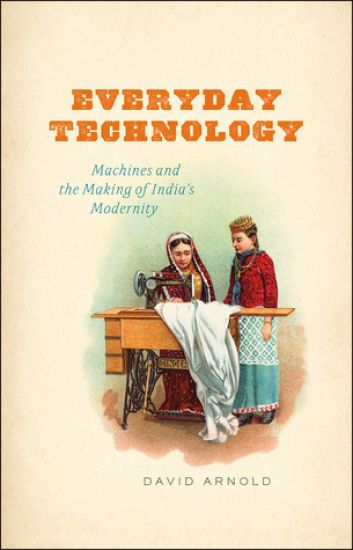
In 1909 Mohandas Karamchand Gandhi, on his way back to South Africa from London, wrote his now celebrated tract Hind Swaraj, laying out his vision for the future of India and famously rejecting the technological innovations of Western civilization. Despite his protestations, Western technology endured and helped to make India one of the leading economies in our globalized world. Few would question the dominant role that technology plays in modern life, but to fully understand how India first advanced into technological modernity, argues David Arnold, we must consider the technology of the everyday. "Everyday Technology" is a pioneering account of how small machines and consumer goods that originated in Europe and North America became objects of everyday use in India in the late nineteenth and early twentieth centuries. Rather than investigate "big" technologies such as railways and irrigation projects, Arnold examines the assimilation and appropriation of bicycles, rice mills, sewing machines, and typewriters in India, and follows their impact on the ways in which people worked and traveled, the clothes they wore, and the kinds of food they ate. But the effects of these machines were not limited to the daily rituals of Indian society, and Arnold demonstrates how such small-scale technologies became integral to new ways of thinking about class, race, and gender, as well as about the politics of colonial rule and Indian nationhood. Arnold's fascinating book offers new perspectives on the globalization of modern technologies and shows us that to truly understand what modernity became, we need to look at the everyday experiences of people in all walks of life, taking stock of how they repurposed small technologies to reinvent their world and themselves.
The Book of Daniel

The Book of Daniel

David Arnold

Createspace Independent Publishing Platform
2013
nidottu
Few people have had the opportunity to be given a detailed account of the future as the prophet Daniel. Through specific dreams and visions from God, he saw world history from a divine viewpoint. His account of the rise and fall of earthly empires, the rule of Antichrist, the second coming of Jesus Christ, and the final days, are all explained by David Arnold, enabling us to see that "The Most High Rules In The Affairs of Men".
Love and War

Love and War

David Arnold

Strategic Book Publishing Rights Agency, LLC
2012
pokkari
Love and War tells the tale of British Naval Officer Warwick Hursey through an emotional and graphic portrait of the naval theatre during World War II. Receiving rapid wartime promotion from Junior Officer to Commander with heroic accomplishments in battle, Warwick navigates not only his ship but the passions of the heart as well. His lifelong love of an innkeeper named Sarah fuels a complicated romance. As the war escalates Warwick must fight to save both his country and his love. Will he have the resolve to lead his crew and his heart to victory? David Arnold was born in June, 1939 and is a retired Royal Naval Reserve Commander who served on passenger ships, frigates and nuclear submarines as a specialist navigator. Mr. Arnold holds a British Merchant Marine Extra Master's Certificate and since leaving the service has sailed in many ocean races all over the world, including the British Americas Cup Trials in Australia in 1986/7. He lives with his wife, Andrea, to whom this book is dedicated, in rural Sussex, United Kingdom. Love and War is the author's first work of fiction. He has previously published a technical book on sailing, Tides and Currents.Publisher's website: http://sbpra.com/DavidArnold
Abelian Groups and Representations of Finite Partially Ordered Sets
A recurring theme in a traditional introductory graduate algebra course is the existence and consequences of relationships between different algebraic structures. This is also the theme of this book, an exposition of connections between representations of finite partially ordered sets and abelian groups. Emphasis is placed throughout on classification, a description of the objects up to isomorphism, and computation of representation type, a measure of when classification is feasible. David M. Arnold is the Ralph and Jean Storm Professor of Mathematics at Baylor University. He is the author of "Finite Rank Torsion Free Abelian Groups and Rings" published in the Springer-Verlag Lecture Notes in Mathematics series, a co-editor for two volumes of conference proceedings, and the author of numerous articles in mathematical research journals. His research interests are in abelian group theory and related topics, such as representations of partially ordered sets and modules over discrete valuation rings, subrings of algebraic number fields, and pullback rings. He received his Ph. D. from the University of Illinois, Urbana and was a member of the faculty at New Mexico State University for many years.
Poetry & Language Writing

Poetry & Language Writing

David Arnold

Liverpool University Press
2007
sidottu
It has been variously labelled ‘Language Poetry’, ‘Language Writing’, ‘L=A=N=G=U=A=G=E writing’ (after the magazine that ran from 1978 to 1981), and ‘language-centred writing’. It has been placed according to its geographical positions, on East or West coasts; its venues in small magazines, independent presses and performance spaces, and its descent from historical precursors, be they the Objectivists, the composers-by-field of the Black Mountain School, the Russian Constructivists or American modernism à la William Carlos Williams and Gertrude Stein. Indeed, one of the few statements that can be made about it with little qualification is that ‘it’ has both fostered and endured a crisis in representation more or less since it first became visible in the 1970s. In Poetry & Language Writing David Arnold grasps the nettle of Language poetry, reassessing its relationship with surrealism and providing a scholarly, intelligent way of understanding the movement. Poets discussed include Charles Bernstein, Susan Howe, Michael Palmer and Barrett Watten.
Science, Technology and Medicine in Colonial India

Science, Technology and Medicine in Colonial India

David Arnold

Cambridge University Press
2004
pokkari
Interest in the science, technology and medicine of India under British rule has grown in recent years and has played an ever-increasing part in the reinterpretation of modern South Asian history. Spanning the period from the establishment of East India Company rule through to Independence, David Arnold’s wide-ranging and analytical survey demonstrates the importance of examining the role of science, technology and medicine in conjunction with the development of the British engagement in India and in the formation of Indian responses to western intervention. One of the first works to analyse the colonial era as a whole from the perspective of science, the book investigates the relationship between Indian and western science, the nature of science, technology and medicine under the Company, the creation of state-scientific services, ‘imperial science’ and the rise of an Indian scientific community, the impact of scientific and medical research and the dilemmas of nationalist science.