Kirjojen hintavertailu. Mukana 12 390 323 kirjaa ja 12 kauppaa.

Kirjailija

David Arnold

Kirjat ja teokset yhdessä paikassa: 71 kirjaa, julkaisuja vuosilta 1988-2026, suosituimpien joukossa Macroeconomics. Vertaile teosten hintoja ja tarkista saatavuus suomalaisista kirjakaupoista.

71 kirjaa

Kirjojen julkaisuhaarukka 1988-2026.

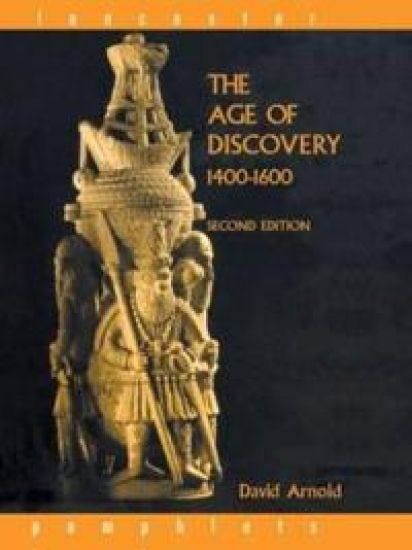
The Age of Discovery, 1400-1600

The Age of Discovery, 1400-1600

David Arnold

Routledge
2002
sidottu
The Age of Discovery explores one of the most dramatic features of the late medieval and early modern period: when voyagers from Western Europe led by Spain and Portugal set out across the world and established links with Africa, Asia and the Americas. This book examines the main motivations behind the voyages and discusses the developments in navigation expertise and technology that made them possible.This second edition brings the scholarship up to date and includes two new chapters on the important topics of the idea of "discovery" and on biological and environmental factors which favoured or limited European expansion.
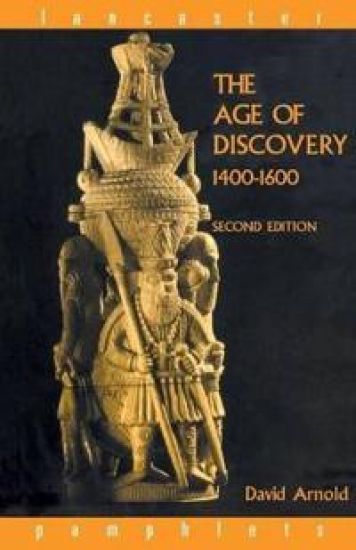
The Age of Discovery, 1400-1600

The Age of Discovery, 1400-1600

David Arnold

Routledge
2002
nidottu
The Age of Discovery explores one of the most dramatic features of the late medieval and early modern period: when voyagers from Western Europe led by Spain and Portugal set out across the world and established links with Africa, Asia and the Americas. This book examines the main motivations behind the voyages and discusses the developments in navigation expertise and technology that made them possible.This second edition brings the scholarship up to date and includes two new chapters on the important topics of the idea of "discovery" and on biological and environmental factors which favoured or limited European expansion.
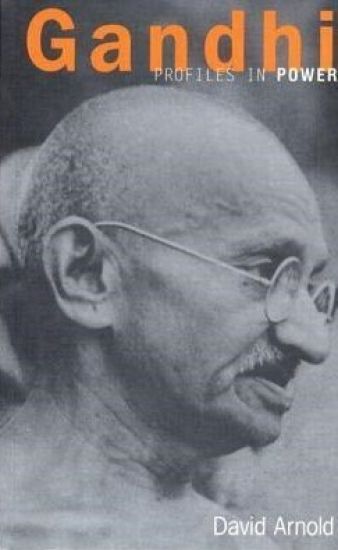
Gandhi

Gandhi

David Arnold

Routledge
2001
nidottu
Gandhi's is an extraordinary and compelling story. Few individuals in history have made so great a mark upon their times. And yet Gandhi never held high political office, commanded no armies and was not even a compelling orator. His 'power' therefore makes a particularly fascinating subject for investigation. David Arnold explains how and why the shy student and affluent lawyer became one of the most powerful anti-colonial figures Western empires in Asia ever faced and why he aroused such intense affection, loyalty (and at times much bitter hatred) among Indians and Westerners alike. Attaching as much influence to the idea and image of Gandhi as to the man himself, Arnold sees Gandhi not just as a Hindu saint but as a colonial subject, whose attitudes and experiences expressed much that was common to countless others in India and elsewhere who sought to grapple with the overwhelming power and cultural authority of the West.A vivid and highly readable introducation to Gandhi's life and times, Arnold's book opens up fascinating insights into one of the twentieth century's most remarkable men.
Abelian Groups and Representations of Finite Partially Ordered Sets
A recurring theme in a traditional introductory graduate algebra course is the existence and consequences of relationships between different algebraic structures. This is also the theme of this book, an exposition of connections between representations of finite partially ordered sets and abelian groups. Emphasis is placed throughout on classification, a description of the objects up to isomorphism, and computation of representation type, a measure of when classification is feasible. David M. Arnold is the Ralph and Jean Storm Professor of Mathematics at Baylor University. He is the author of "Finite Rank Torsion Free Abelian Groups and Rings" published in the Springer-Verlag Lecture Notes in Mathematics series, a co-editor for two volumes of conference proceedings, and the author of numerous articles in mathematical research journals. His research interests are in abelian group theory and related topics, such as representations of partially ordered sets and modules over discrete valuation rings, subrings of algebraic number fields, and pullback rings. He received his Ph. D. from the University of Illinois, Urbana and was a member of the faculty at New Mexico State University for many years.
Science, Technology and Medicine in Colonial India

Science, Technology and Medicine in Colonial India

David Arnold

Cambridge University Press
2000
sidottu
Interest in the science, technology and medicine of India under British rule has grown in recent years and has played an ever-increasing part in the reinterpretation of modern South Asian history. Spanning the period from the establishment of East India Company rule through to Independence, David Arnold’s wide-ranging and analytical survey demonstrates the importance of examining the role of science, technology and medicine in conjunction with the development of the British engagement in India and in the formation of Indian responses to western intervention. One of the first works to analyse the colonial era as a whole from the perspective of science, the book investigates the relationship between Indian and western science, the nature of science, technology and medicine under the Company, the creation of state-scientific services, ‘imperial science’ and the rise of an Indian scientific community, the impact of scientific and medical research and the dilemmas of nationalist science.
The Problem of Nature

The Problem of Nature

David Arnold

Blackwell Publishers
1996
nidottu
This book considers how nature - in both its biological and environmental manifestations - has been invoked as a dynamic force in human history. It shows how historians, philosophers, geographers, anthropologists and scientists have used ideas of nature to explain the evolution of cultures, to understand cultural difference, and to justify or condemn colonization, slavery and racial superiority. It examines the central part that ideas of environmental and biological determinism have played in theory, and describes how these ideas have served in different ways at different times as instruments of authority, identity and defiance. The book shows how powerful and problematic the invocation of nature can be.
Colonizing the Body

Colonizing the Body

David Arnold

University of California Press
1993
pokkari
In this innovative analysis of medicine and disease in colonial India, David Arnold explores the vital role of the state in medical and public health activities, arguing that Western medicine became a critical battleground between the colonized and the colonizers. Focusing on three major epidemic diseases - smallpox, cholera, and plague - Arnold analyzes the impact of medical interventionism. He demonstrates that Western medicine as practiced in India was not simply transferred from West to East, but was also fashioned in response to local needs and Indian conditions. By emphasizing this colonial dimension of medicine, Arnold highlights the centrality of the body to political authority in British India and shows how medicine both influenced and articulated the intrinsic contradictions of colonial rule.
The Handbook Of Brand Management

The Handbook Of Brand Management

David Arnold

Westview Press Inc
1993
sidottu
Establishing a brand name is the goal of anyone introducing a new product, and maintaining a brand over time is even more profitable. Established brands are now major corporate assets, as shown when Philip Morris bought Kraft for four times its book value. The Handbook of Brand Management explains the ins and outs of managing brand names in today's fast-changing, competitive marketplace. Developed by marketing expert David Arnold to answer managers' actual questions about brands, this essential guide combines expert advice with the stories of thirteen successful companies from around the world.This book describes how to research, target, budget, and promote new brand. It presents detailed analyses of marketing plans used in situations both good (how did Anheuser-Busch introduce Michelob Dry so successfully?) and bad (how could Perrier survive the benzene scare?).For established brands, managers learn tactics to reverse a market-share decline, to extend brands internationally, and to appraise a brand name's financial value. They find insights in the examples of Schering-Plough stretching" the Coppertone brand to include sunscreens for children, Birds Eye freezing out competitors by how it positioned a new meal in consumers' minds, and many other popular brand-name products.
Famine

Famine

David Arnold

Blackwell Publishers
1988
nidottu
In this original and timely work, David Arnold draws upon the history of Asia, Africa, Latin America and Europe, to explain the origins and characteristics of famine. He considers whether some societies are more vulnerable to famine than others, and contests the assumption that those affected by famine are simply passive 'victims'. He compares the ways in which individuals and states have responded to the threat of mass starvation, and the relation of famine to political and social power.