Kirjojen hintavertailu. Mukana 12 390 323 kirjaa ja 12 kauppaa.

Kirjailija

David Bordwell

Kirjat ja teokset yhdessä paikassa: 26 kirjaa, julkaisuja vuosilta 1987-2025, suosituimpien joukossa ISE Film History: An Introduction. Vertaile teosten hintoja ja tarkista saatavuus suomalaisista kirjakaupoista.

26 kirjaa

Kirjojen julkaisuhaarukka 1987-2025.

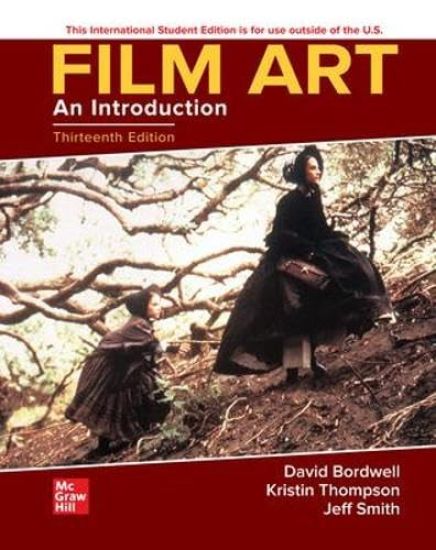
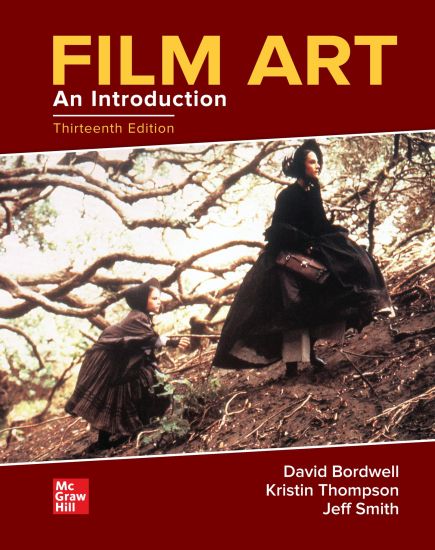
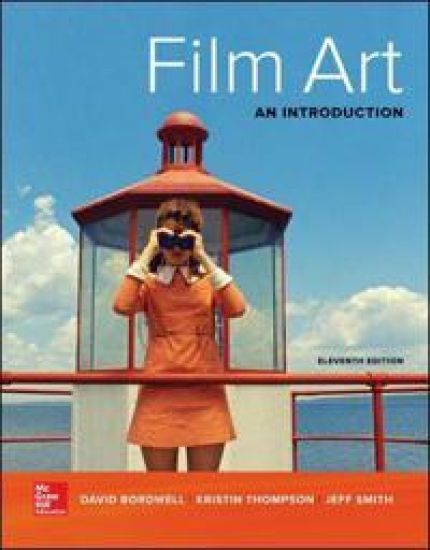
Loose Leaf for Film Art: An Introduction

Loose Leaf for Film Art: An Introduction

David Bordwell; Kristin Thompson; Jeff Smith

McGraw-Hill Companies
2023
irtolehti
Film is an art form with a language and an aesthetic all its own. Since 1979, Film Art has been the best-selling and most widely respected introduction to the analysis of cinema. Taking a skills-centered approach supported by examples from many periods and countries, the authors help students develop a core set of analytical skills that will enrich their understanding of any film, in any genre. In-depth examples deepen students' appreciation for how creative choices by filmmakers affect what viewers experience and how they respond. Film Art is generously illustrated with more than 1,000 frame enlargements taken directly from completed films, providing concrete illustrations of key concepts. Its Connect program includes invaluable tutorials featuring canonic film clips from the Criterion Collection. The thirteenth edition of Film Art includes extensively updated examples, and expanded coverage of digital filmmaking and the artistic and commercial implications of streaming.
Perplexing Plots

Perplexing Plots

David Bordwell

Columbia University Press
2023
pokkari
Nominated, 2024 Edgar Allan Poe Award in the category of best critical/biographical, Mystery Writers of AmericaShortlisted, 2024 Agatha Awards - Best Mystery Nonfiction, Malice DomesticPosthumous Winner - 2023 IFCA Book Prize, International Crime Fiction AssociationNarrative innovation is typically seen as the domain of the avant-garde. However, techniques such as nonlinear timelines, multiple points of view, and unreliable narration have long been part of American popular culture. How did forms and styles once regarded as “difficult” become familiar to audiences?In Perplexing Plots, David Bordwell reveals how crime fiction, plays, and films made unconventional narrative mainstream. He shows that since the nineteenth century, detective stories and suspense thrillers have allowed ambitious storytellers to experiment with narrative. Tales of crime and mystery became a training ground where audiences learned to appreciate artifice. These genres demand a sophisticated awareness of storytelling conventions: they play games with narrative form and toy with audience expectations. Bordwell examines how writers and directors have pushed, pulled, and collaborated with their audiences to change popular storytelling. He explores the plot engineering of figures such as Raymond Chandler, Agatha Christie, Dashiell Hammett, Patricia Highsmith, Alfred Hitchcock, Dorothy Sayers, and Quentin Tarantino, and traces how mainstream storytellers and modernist experimenters influenced one another’s work. A sweeping, kaleidoscopic account written in a lively, conversational style, Perplexing Plots offers an ambitious new understanding of how movies, literature, theater, and popular culture have evolved over the past century.
Perplexing Plots

Perplexing Plots

David Bordwell

Columbia University Press
2023
sidottu
Nominated, 2024 Edgar Allan Poe Award in the category of best critical/biographical, Mystery Writers of AmericaShortlisted, 2024 Agatha Awards - Best Mystery Nonfiction, Malice DomesticPosthumous Winner - 2023 IFCA Book Prize, International Crime Fiction AssociationNarrative innovation is typically seen as the domain of the avant-garde. However, techniques such as nonlinear timelines, multiple points of view, and unreliable narration have long been part of American popular culture. How did forms and styles once regarded as “difficult” become familiar to audiences?In Perplexing Plots, David Bordwell reveals how crime fiction, plays, and films made unconventional narrative mainstream. He shows that since the nineteenth century, detective stories and suspense thrillers have allowed ambitious storytellers to experiment with narrative. Tales of crime and mystery became a training ground where audiences learned to appreciate artifice. These genres demand a sophisticated awareness of storytelling conventions: they play games with narrative form and toy with audience expectations. Bordwell examines how writers and directors have pushed, pulled, and collaborated with their audiences to change popular storytelling. He explores the plot engineering of figures such as Raymond Chandler, Agatha Christie, Dashiell Hammett, Patricia Highsmith, Alfred Hitchcock, Dorothy Sayers, and Quentin Tarantino, and traces how mainstream storytellers and modernist experimenters influenced one another’s work. A sweeping, kaleidoscopic account written in a lively, conversational style, Perplexing Plots offers an ambitious new understanding of how movies, literature, theater, and popular culture have evolved over the past century.
Film History: An Introduction ISE

Film History: An Introduction ISE

Kristin Thompson; David Bordwell

McGraw-Hill Education
2021
nidottu
This new edition of Film History has been revised to include recent films, new examples, and updated comprehensive overviews of the rise of streaming services as purveyors of cinematic content as well as the massive disruptions of film production, distribution, and exhibition caused by the COVID-19 pandemic. It is a comprehensive global survey of film and its many genres – from drama and comedy to documentary and experimental – written by three of the discipline’s leading scholars. Concepts and events are illustrated with frame enlargements taken from the original sources, giving students more realistic and relevant points of reference than publicity stills. There are 100 new film clips with commentary in McGraw Hill Connect® – the web-based assignment and assessment platform that helps you connect your students to their coursework. Film History is a text that any serious film scholar – professor, undergraduate, or graduate student – will want to read and keep.
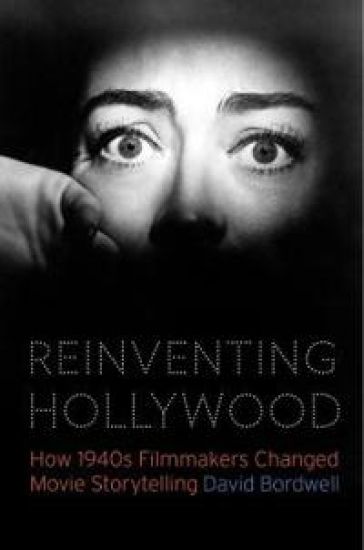
Reinventing Hollywood

Reinventing Hollywood

David Bordwell

University of Chicago Press
2019
pokkari
In the 1940s, American movies changed. Flashbacks began to be used in outrageous, unpredictable ways. Soundtracks flaunted voice-over commentary, and characters might pivot from a scene to address the viewer. Incidents were replayed from different characters' viewpoints, and sometimes those versions proved to be false. Films now plunged viewers into characters' memories, dreams, and hallucinations. Some films didn't have protagonists, while others centered on anti-heroes or psychopaths. Women might be on the verge of madness, and neurotic heroes lurched into violent confrontations. Combining many of these ingredients, a new genre emerged--the psychological thriller, populated by women in peril and innocent bystanders targeted for death. If this sounds like today's cinema, that's because it is. In Reinventing Hollywood, David Bordwell examines for the first time the full range and depth of trends that crystallized into traditions. He shows how the Christopher Nolans and Quentin Tarantinos of today owe an immense debt to the dynamic, occasionally delirious narrative experiments of the Forties. With verve and wit, Bordwell examines how a booming movie market during World War II allowed ambitious writers and directors to push narrative boundaries. Although those experiments are usually credited to the influence of Citizen Kane, Bordwell shows that similar impulses had begun in the late 1930s in radio, fiction, and theatre before migrating to film. And despite the postwar recession in the industry, the momentum for innovation continued. Some of the boldest films of the era came in the late forties and early fifties, as filmmakers sought to outdo their peers. Through in-depth analyses of films both famous and virtually unknown, from Our Town and All About Eve to Swell Guy and The Guilt of Janet Ames, Bordwell assesses the era's unique achievements and its legacy for future filmmakers. The result is a groundbreaking study of how Hollywood storytelling became a more complex art. Reinventing Hollywood is essential reading for all lovers of popular cinema.
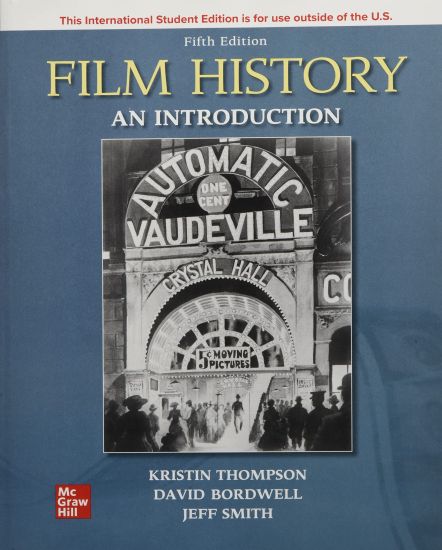
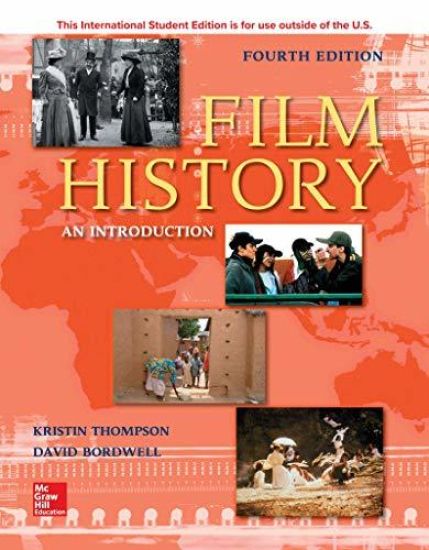
ISE Film History: An Introduction

ISE Film History: An Introduction

Kristin Thompson; David Bordwell

McGraw-Hill Education
2018
nidottu
Written by two of the leading scholars in film studies, Film History: An Introduction 4e is a comprehensive, global survey of the medium that covers the development of every genre in film, from drama and comedy to documentary and experimental. Concepts and events are illustrated with frame enlargements taken from the original sources, giving students more realistic points of reference.
Awake in the Dark

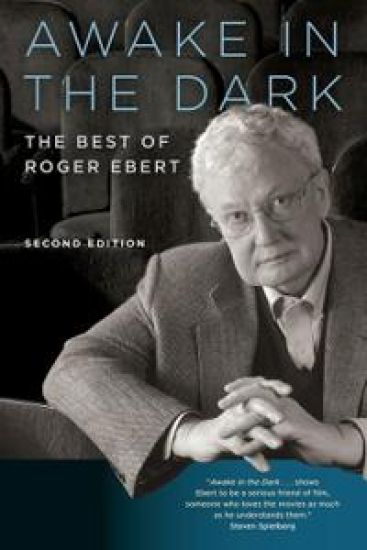
Awake in the Dark

Roger Ebert; David Bordwell

University of Chicago Press
2017
nidottu
For nearly half a century, Roger Ebert's wide knowledge, keen judgment, prodigious energy, and sharp sense of humor made him America's most renowned and beloved film critic. From Ebert's Pulitzer Prize to his star on the Hollywood Walk of Fame, from his astonishing output of daily reviews to his pioneering work on television with Gene Siskel, his was a career in cinema criticism without peer. Arriving fifty years after Ebert published his first film review in 1967, this second edition of Awake in the Dark collects Ebert's essential writings into a single, irresistible volume. Featuring new Top Ten Lists and reviews of the years' finest films through 2012, this edition allows both fans and film buffs to bask in the best of an extraordinary lifetime's work.Including reviews from The Godfather to GoodFellas and interviews with everyone from Martin Scorsese to Meryl Streep, as well as showcasing some of Ebert's most admired essays among them a moving appreciation of John Cassavetes and a loving tribute to the virtues of black-and-white films Ebert's Awake in the Dark is a treasure trove not just for fans of this era-defining critic, but for anyone desiring a compulsively readable chronicle of the silver screen. Stretching from the dramatic rise of rebel Hollywood and the heyday of the auteur to the triumph of blockbuster films such as Star Wars and Raiders of the Lost Ark, to the indie revolution that is still with us today, Awake in the Dark reveals a writer whose exceptional intelligence and daily bursts of insight and enthusiasm helped shape the way we think about the movies. But more than this, Awake in the Dark is a celebration of Ebert's inimitable voice a voice still cherished and missed.
The Cinema of Eisenstein

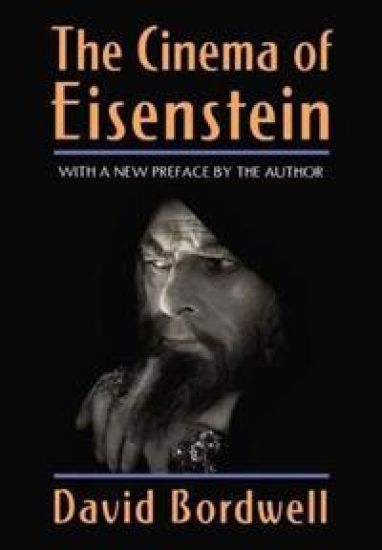
The Cinema of Eisenstein

David Bordwell

Routledge
2016
sidottu
The Cinema of Eisenstein is David Bordwell's comprehensive analysis of the films of Sergei Eisenstein, arguably the key figure in the entire history of film. The director of such classics as Potemkin,Ivan the Terrible, October, Strike, and Alexander Nevsky, Eisenstein theorized montage, presented Soviet realism to the world, and mastered the concept of film epic. Comprehensive, authoritative, and illustrated throughout, this classic work deserves to be on the shelf of every serious student of cinema.
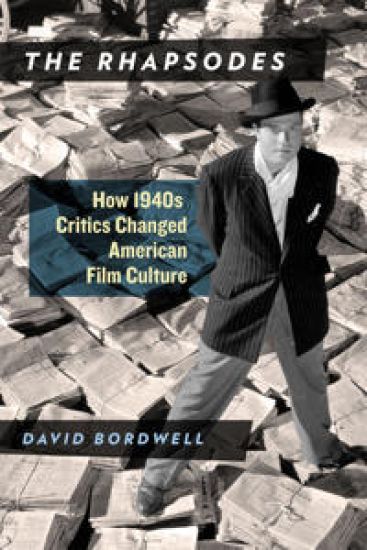
The Rhapsodes

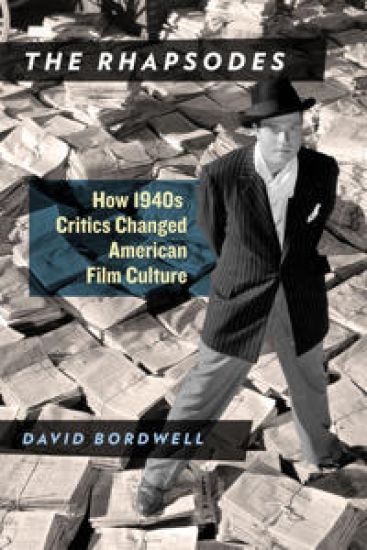
The Rhapsodes

David Bordwell

University of Chicago Press
2016
nidottu
Pauline Kael, Andrew Sarris, and Roger Ebert were three of America’s most revered and widely read film critics, more famous than many of the movies they wrote about. But their remarkable contributions to the burgeoning American film criticism of the 1960s and beyond were deeply influenced by four earlier critics: Otis Ferguson, James Agee, Manny Farber, and Parker Tyler. Throughout the 1930s and ’40s, Ferguson, Agee, Farber, and Tyler scrutinized what was on the screen with an intensity not previously seen in popular reviewing. Although largely ignored by the arts media of the day, they honed the sort of serious discussion of films that would be made popular decades later by Kael, Sarris, Ebert and their contemporaries. With The Rhapsodes, renowned film scholar and critic David Bordwell—an heir to both those legacies—restores to a wider audience the work of Ferguson, Agee, Farber, and Tyler, critics he calls the “Rhapsodes” for the passionate and deliberately offbeat nature of their vernacular prose. Each broke with prevailing currents in criticism in order to find new ways to talk about the popular films that contemporaries often saw at best as trivial, at worst as a betrayal of art. Ferguson saw in Hollywood an engaging, adroit mode of popular storytelling. Agee sought in cinema the lyrical epiphanies found in romantic poetry. Farber, trained as a painter, brought a pictorial intelligence to bear on film. A surrealist, Tyler treated classic Hollywood as a collective hallucination that invited both audience and critic to find moments of subversive pleasure. With his customary clarity and brio, Bordwell takes readers through the relevant cultural and critical landscape and considers the critics’ writing styles, their conceptions of films, and their quarrels. He concludes by examining the profound impact of Ferguson, Agee, Farber, and Tyler on later generations of film writers.The Rhapsodes allows readers to rediscover these remarkable critics who broke with convention to capture what they found moving, artful, or disappointing in classic Hollywood cinema and explores their robust—and continuing—influence.
The Rhapsodes

The Rhapsodes

David Bordwell

University of Chicago Press
2016
sidottu
Pauline Kael, Andrew Sarris, and Roger Ebert were three of America’s most revered and widely read film critics, more famous than many of the movies they wrote about. But their remarkable contributions to the burgeoning American film criticism of the 1960s and beyond were deeply influenced by four earlier critics: Otis Ferguson, James Agee, Manny Farber, and Parker Tyler. Throughout the 1930s and ’40s, Ferguson, Agee, Farber, and Tyler scrutinized what was on the screen with an intensity not previously seen in popular reviewing. Although largely ignored by the arts media of the day, they honed the sort of serious discussion of films that would be made popular decades later by Kael, Sarris, Ebert and their contemporaries. With The Rhapsodes, renowned film scholar and critic David Bordwell—an heir to both those legacies—restores to a wider audience the work of Ferguson, Agee, Farber, and Tyler, critics he calls the “Rhapsodes” for the passionate and deliberately offbeat nature of their vernacular prose. Each broke with prevailing currents in criticism in order to find new ways to talk about the popular films that contemporaries often saw at best as trivial, at worst as a betrayal of art. Ferguson saw in Hollywood an engaging, adroit mode of popular storytelling. Agee sought in cinema the lyrical epiphanies found in romantic poetry. Farber, trained as a painter, brought a pictorial intelligence to bear on film. A surrealist, Tyler treated classic Hollywood as a collective hallucination that invited both audience and critic to find moments of subversive pleasure. With his customary clarity and brio, Bordwell takes readers through the relevant cultural and critical landscape and considers the critics’ writing styles, their conceptions of films, and their quarrels. He concludes by examining the profound impact of Ferguson, Agee, Farber, and Tyler on later generations of film writers.The Rhapsodes allows readers to rediscover these remarkable critics who broke with convention to capture what they found moving, artful, or disappointing in classic Hollywood cinema and explores their robust—and continuing—influence.
Film Art: An Introduction

Film Art: An Introduction

David Bordwell

McGraw-Hill Education
2016
nidottu
Connect is the only integrated learning system that empowers students by continuously adapting to deliver precisely what they need, when they need it, and how they need it, so that your class time is more engaging and effective. Film is an art form with a language and an aesthetic all its own. Since 1979, David Bordwell and Kristin Thompson'sFilm Art has been the best-selling and most widely respected introduction to the analysis of cinema. Taking a skills-centered approach supported by examples from many periods and countries, the authors help students develop a core set of analytical skills that will enrich their understanding of any film, in any genre. In-depth examples deepen students' appreciation for how creative choices by filmmakers affect what viewers experience and how they respond. Film Art is generously illustrated with more than 1,000 frame enlargements taken directly from completed films, providing concrete illustrations of key concepts. Along with updated examples and expanded coverage of digital filmmaking, the tenth edition also offers Connect for Film Art, a digital solution that includes multimedia tutorials along with web-based assignment and assessment tools.
Narration in the Fiction Film

Narration in the Fiction Film

David Bordwell

Routledge
2015
sidottu
Most films tell tales, but what does that involve? How do motion pictures tease us into building what we all agree to call stories? In this study, David Bordwell offers the first comprehensive account of how movies use fundamental principles of narrative representation, unique features of the film medium, and diverse storytelling patterns to construct their fictional narratives. The result is a pioneering, far reaching work which will change the way we perceive narrative film and which every serious film scholar, student or fan will welcome. Bordwell begins his study with an overview of general approaches to narration. Drawing on the insights of certain theories- in particular Russian formalist aesthetic theory and cognitive psychology for its notion of how the viewer contributes to the process of narrative comprehension- he formulates a new concept of narration that is uniquely applicable to fictional cinema. Films, Bordwell argues, are patterned systems that prompt spectators versed in narrative conventions to construct a story. Since cinema is a medium involving both time and place, he considers how these factors affect the concrete process of film narration and help shape the spectators’ story comprehension.If the conventions of story making very from medium to medium, they also vary historically. Dominant modes of film narration, Bordwell suggests have furnished tacit conventions for film makers and audiences at different periods. Characterising four of these modes as classical Hollywood cinema, the European ‘art cinema’, the Soviet historical materialist film and parametric narration, he examines the history and specific strategies of each.Ultimately, however, Bordwell offers more than abstract theory. Demonstrating how his concept of narration can aid in the critical analysis of particular films and film makers, he provides fresh discussions of such movies as ‘His Girl Friday’, ‘The Big Sleep’, ‘Rear Window’ and ‘La Guerre est Finie’. In director Jean-Luc Goddard, Bordwell finds particularly telling reference point; the Frenchman's films derive their particular difficulty and charm, he argued, by parodying, mixing and subverting those narrative conventions which audiences have learnt to trust.
The Classical Hollywood Cinema

The Classical Hollywood Cinema

David Bordwell; Janet Staiger; Kristin Thompson

Routledge
2015
sidottu
'A dense, challenging and important book.' Philip French Observer'At the very least, this blockbuster is probably the best single volume history of Hollywood we're likely to get for a very long time.' Paul Kerr City Limits'Persuasively argued, the book is also packed with facts, figures and photographs.' Nigel Andrews Financial TimesAcclaimed for their breakthrough approach, Bordwell, Staiger and Thompson analyze the basic conditions of American film-making as a historical institution and consider to what extent Hollywood film production constitutes a systematic enterprise, in both its style and its business operations.Despite differences of director, genre or studio, most Hollywood films operate within a set of shared assumptions about how a film should look and sound. Such assumptions are neither natural nor inevitable; but because classical-style films have been the type most widely seen, they have come to be accepted as the 'norm' of film-making and viewing.The authors show how these classical conventions were formulated and standardized, and how they responded to the arrival of sound, colour, widescreen ratios and stereophonic sound. They argue that each new technological development has served a function within an existing narrational system.The authors also examine how the Hollywood cinema standardized the film-making process itself. They describe how, over the course of its history, Hollywood developed distinct modes of production in a constant search for maximum efficiency, predictability and novelty.Set apart by its combination of theoretical analysis and empirical evidence, this book is the standard work on the classical Hollywood cinema style of film-making from the silent era to the 1960s. Now available in paperback, it is a 'must' for film students, lecturers and all those seriously interested in the development of the film industry.
Minding Movies

Minding Movies

David Bordwell; Kristin Thompson

University of Chicago Press
2011
sidottu
David Bordwell and Kristin Thompson are two of America's preeminent film scholars. You would be hard pressed to find a serious student of the cinema who hasn't spent at least a few hours huddled with their seminal introduction to the field-Film Art, now in its ninth edition-or a cable television junkie unaware that the Independent Film Channel sagely christened them the 'Critics of the Naughts.' Since launching their blog, Observations on Film Art, in 2006, the two have added web virtuosos to their growing list of accolades, creating unconventional long-form pieces engaged with film artistry that have helped to redefine cinematic storytelling for a new age and audience. "Minding Movies" presents a selection from over three hundred essays on genre movies, art films, animation, and the business of Hollywood that have graced Bordwell and Thompson's blog. Informal pieces, conversational in tone but grounded in three decades of authoritative research, the essays gathered here range from in-depth analyses of individual films such as "Slumdog Millionaire" and "Inglourious Basterds" to adjustments of Hollywood media claims and forays into cinematic humor. For Bordwell and Thompson, the most fruitful place to begin is how movies are made, how they work, and how they work on us. Written for film lovers, these essays-on topics ranging from Borat to blockbusters and back again-will delight current fans and gain new enthusiasts. Serious but not solemn, vibrantly informative without condescension, and above all illuminating reading, Minding Movies offers ideas sure to set film lovers thinking-and keep them returning to the silver screen.
Minding Movies

Minding Movies

David Bordwell; Kristin Thompson

University of Chicago Press
2011
nidottu
David Bordwell and Kristin Thompson are two of America's preeminent film scholars. You would be hard pressed to find a serious student of the cinema who hasn't spent at least a few hours huddled with their seminal introduction to the field - Film Art, now in its ninth edition - or a cable television junkie unaware that the Independent Film Channel sagely christened them the 'Critics of the Naughts.' Since launching their blog, Observations on Film Art, in 2006, the two have added web virtuosos to their growing list of accolades, creating unconventional long-form pieces engaged with film artistry that have helped to redefine cinematic storytelling for a new age and audience. "Minding Movies" presents a selection from over three hundred essays on genre movies, art films, animation, and the business of Hollywood that have graced Bordwell and Thompson's blog. Informal pieces, conversational in tone but grounded in three decades of authoritative research, the essays gathered here range from in-depth analyses of individual films such as Slumdog Millionaire and Inglourious Basterds to adjustments of Hollywood media claims and forays into cinematic humor. For Bordwell and Thompson, the most fruitful place to begin is how movies are made, how they work, and how they work on us. Written for film lovers, these essays - on topics ranging from Borat to blockbusters and back again - will delight current fans and gain new enthusiasts. Serious but not solemn, vibrantly informative without condescension, and above all illuminating reading, "Minding Movies" offers ideas sure to set film lovers thinking-and keep them returning to the silver screen.
Poetics of Cinema

Poetics of Cinema

David Bordwell

Routledge
2007
sidottu
Bringing together twenty-five years of work on what he has called the "historical poetics of cinema," David Bordwell presents an extended analysis of a key question for film studies: how are films made, in particular historical contexts, in order to achieve certain effects? For Bordwell, films are made things, existing within historical contexts, and aim to create determinate effects. Beginning with this central thesis, Bordwell works out a full understanding of how films channel and recast cultural influences for their cinematic purposes. With more than five hundred film stills, Poetics of Cinema is a must-have for any student of cinema.
Poetics of Cinema

Poetics of Cinema

David Bordwell

Routledge
2007
nidottu
Bringing together twenty-five years of work on what he has called the "historical poetics of cinema," David Bordwell presents an extended analysis of a key question for film studies: how are films made, in particular historical contexts, in order to achieve certain effects? For Bordwell, films are made things, existing within historical contexts, and aim to create determinate effects. Beginning with this central thesis, Bordwell works out a full understanding of how films channel and recast cultural influences for their cinematic purposes. With more than five hundred film stills, Poetics of Cinema is a must-have for any student of cinema.
The Way Hollywood Tells It

The Way Hollywood Tells It

David Bordwell

University of California Press
2006
pokkari
Hollywood moviemaking is one of the constants of American life, but how much has it changed since the glory days of the big studios? David Bordwell argues that the principles of visual storytelling created in the studio era are alive and well, even in today's bloated blockbusters. American filmmakers have created a durable tradition-one that we should not be ashamed to call artistic, and one that survives in both mainstream entertainment and niche-marketed indie cinema. Bordwell traces the continuity of this tradition in a wide array of films made since 1960, from romantic comedies like Jerry Maguire and Love Actually to more imposing efforts like A Beautiful Mind. He also draws upon testimony from writers, directors, and editors who are acutely conscious of employing proven principles of plot and visual style. Within the limits of the "classical" approach, innovation can flourish. Bordwell examines how imaginative filmmakers have pushed the premises of the system in films such as JFK, Memento, and Magnolia. He discusses generational, technological, and economic factors leading to stability and change in Hollywood cinema and includes close analyses of selected shots and sequences. As it ranges across four decades, examining classics like American Graffiti and The Godfather as well as more recent success like The Lord of the Rings: The Two Towers, this book provides a vivid and engaging interpretation of how Hollywood moviemakers have created a vigorous, resourceful tradition of cinematic storytelling that continues to engage audiences around the world.