

Kirjailija
David Evans
Kirjat ja teokset yhdessä paikassa: 92 kirjaa, julkaisuja vuosilta 1986-2027, suosituimpien joukossa Dark Minds. Vertaile teosten hintoja ja tarkista saatavuus suomalaisista kirjakaupoista.
92 kirjaa
Kirjojen julkaisuhaarukka 1986-2027.
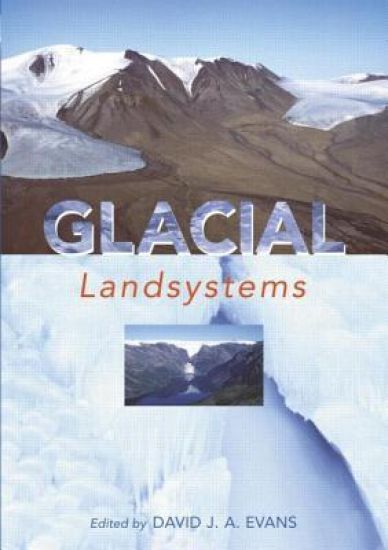
This book is a comprehensive overview of the ever-captivating field of glaciation from the perspective of glacial landsystems. This approach models the many processes, forms and interactions that can be found in glaciated landscapes throughout the world. Landsystems models allow the glacial geologist and geomorphologist to evaluate these landscapes in relation to the dynamics of glaciation and to climate and geology. Glacial Landsystems brings together the expertise of an international range of specialists to provide an up-to-date summary of landsystems relevant to both modern and ancient glacier systems and also in the reconstruction and interpretation of former glacial environments. The models are applicable at all scales from ice sheets to small valley glaciers.This book is an essential reference for students of glaciation.

Rhythm, Illusion and the Poetic Idea: Baudelaire, Rimbaud, Mallarmé
David Evans
Editions Rodopi B.V.
2004
nidottu
Rhythm, Illusion and the Poetic Idea explores the concept of rhythm and its central yet problematic role in defining modern French poetry. Forging innovative lines of inquiry linking the detailed analysis of poetic form to the evolution of fundamental aesthetic principles, David Evans offers extensive new readings of the literary and critical writings of the three major poets at the centre of France’s most important poetic revolution. The volume is of interest to all students and readers of Baudelaire, Rimbaud and Mallarmé, since here is presented for the first time a thorough comparative study of developments in each writer’s poetic form and theory, focusing on the themes of illusion, deception and the musical metaphor. The book is also intended to stimulate wider critical debate on the interpretation of metrical verse, prose poetry and vers libre, and offers original analytical methods which facilitate the study of poetic form. The author proposes a radical shift in our understanding of the role and mechanisms of poetic rhythm, suggesting that its very resistance to definition and fixity provides a conveniently opaque veil over the difficulties of defining poetry in the nineteenth and twentieth centuries.
Plant Cell Culture
Julian Coleman; David Evans; Anne Kearns
Bios Scientific Publishers Ltd
2003
nidottu
Plant cell culture is an essential methodology in plant sciences, with numerous variant techniques depending on the cell type and organism. Plant Cell Culture provides the reader with a concise overview of these techniques, including basic plant biology for cell culture, basic sterile technique and media preparation, specific techniques for various plant cell and tissue types including applications, tissue culture in agriculture, horticulture and forestry and culture for genetic engineering and biotechnology. This book will be an essential addition to any plant science laboratory's bookshelf.
". . . massively researched . . . those seeking a richly detailed journal of the cavalry's role in one of the war's crucial campaigns will find this book irreplaceable." —Blue & Gray Magazine "This volume is meticulously detailed and comes to some convincing conclusions." —The Journal of American History "A vivid account of the campaign that helped decide the outcome of the Civil War. . . . A rich narrative that will delight students of the Civil War." —Kirkus Reviews Attempting a quick, decisive victory in the 1864 struggle for Atlanta, William Tecumseh Sherman's cavalry wreaked havoc in the countryside around the city. This book, based largely upon previously unpublished materials, tells the story of Sherman's raids. Through exhaustive research, David Evans has been able to recreate a vivid, captivating, and meticulously detailed image of the day-by-day life of the Yankee horse soldier.

Our attitudes towards `nature' and the countryside are fickle. The conservation movement, despite enjoying its highest membership ever, has achieved only limited success over the last one hundred years of campaigning. Can conservationists now shake off their insular, disunited and negative image so as to gain the influence that the size of their movement warrants?A History of Nature Conservation in Britain traces the rise of the conservation movement from its beginnings in Victorian coffee houses to today's societies with their membership numbering in the millions. The first complete history of the British, and oldest, branch of the movement, David Evans's book offers invaluable insights into the campaigns for countryside protection and access, from battles against the use of pesticides, against pollution and genetic engineering through to legislation for the protection of our wildlife and the freedom to walk the mountains. The 2nd Edition has been fully revised and updated. Topical issues are considered afresh; and new chapters reflect the rapid changes throughout the 1990s both in social attitudes, conservation practices, legislation, funding and within conservation organizations themselves. In the light of recent developments, Evans also looks at some difficult choices to be made in years ahead and asks how the conservation movement will fare on the new global stage.
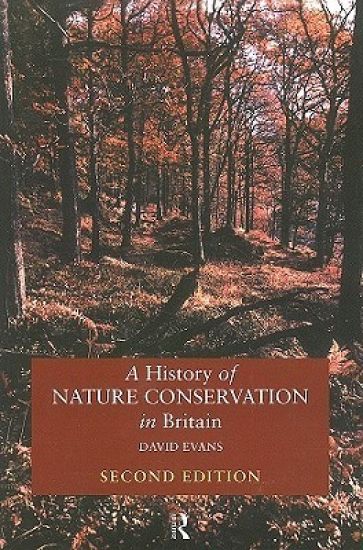
Our attitudes towards `nature' and the countryside are fickle. The conservation movement, despite enjoying its highest membership ever, has achieved only limited success over the last one hundred years of campaigning. Can conservationists now shake off their insular, disunited and negative image so as to gain the influence that the size of their movement warrants?A History of Nature Conservation in Britain traces the rise of the conservation movement from its beginnings in Victorian coffee houses to today's societies with their membership numbering in the millions. The first complete history of the British, and oldest, branch of the movement, David Evans's book offers invaluable insights into the campaigns for countryside protection and access, from battles against the use of pesticides, against pollution and genetic engineering through to legislation for the protection of our wildlife and the freedom to walk the mountains. The 2nd Edition has been fully revised and updated. Topical issues are considered afresh; and new chapters reflect the rapid changes throughout the 1990s both in social attitudes, conservation practices, legislation, funding and within conservation organizations themselves. In the light of recent developments, Evans also looks at some difficult choices to be made in years ahead and asks how the conservation movement will fare on the new global stage.

Object Oriented Computer Systems Engineering
Derrick Morris; David Evans; Peter Green; Colin Theaker
Springer-Verlag Berlin and Heidelberg GmbH Co. K
1996
nidottu
This book addresses issues concerning the engineering of system prod ucts that make use of computing technology. These systems may be prod ucts in their own right, for example a computer, or they may be the computerised control systems inside larger products, such as factory automation systems, transportation systems and vehicles, and personal appliances such as portable telephones. In using the term engineering the authors have in mind a development process that operates in an integrated sequence of steps, employing defined techniques that have some scientific basis. Furthermore we expect the operation of the stages to be subject to controls and standards that result in a product fit for its intended purpose, both in the hands of its users and as a business venture. Thus the process must take account of a wide range of requirements relating to function, cost, size, reliabili ty and so on. It is more difficult to define the meaning of computing technology. These days this involves much more than computers and software. For example, many tasks that might be performed by software running in a general purpose computer can also be performed directly by the basic technology used to construct a computer, namely digital hardware. However, hardware need not always be digital; we live in an analogue world, hence analogue signals appear on the boundaries of our systems and it can sometimes be advantageous to allow them to penetrate further.
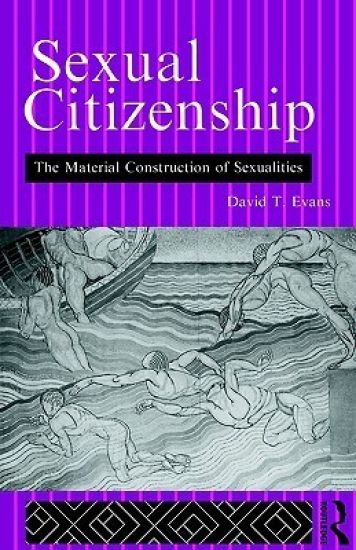
This enthralling and provocative book provides a new grounding for the understanding of sexual rights. It argues that all varieties of sexuality under capitalism are materially constructed out of the complex interrelationship between the market and the state. The examples of different sexual rights and lack of rights that it examines include the experience of male homosexuals, bisexuals, transvestites, transsexualists and children. Meticulous, focused and challenging, it will be required reading for anyone interested in modern human sexualities.

This book analyzes the process of composition, learning and performance of the Southern folk blues of black America. Never before has this musical form been examined so scrupulously. Evans traces the impact of commercialism, especially the phonograph record, on blues history, as well as the various local traditions that produce a given blues tune and text. The author has done extensive field work in Mississippi and provides here a structure for understanding not only the blues but almost any other oral literature from other cultures. This book won the University of Chicago Folklore Prize. All of the greatest blues singers - Robert Johnson, Tommy Johnson, Muddy Waters, Blink Willie McTell, Blind Lemon Jefferson - are discussed in relation to their predecessors and followers.
Nonmetallic Materials and Composites at Low Temperatures
Günther Hartwig; David Evans
Kluwer Academic/Plenum Publishers
1986
sidottu
This was the third meeting in the series of special topical conferences on Non-Metallic materials at low temperatures. The first meeting was in Munich in 1978, the second in Geneva (1980) and so Heidelberg 1984 seemed an obvious time to review some of the hopes and objectives of the earlier meetings. It is also appropriate to consider the changing needs of the cryogenic community and how best the theory and practice of Non-metallic materials can be applied to suit this dynamic young science. The aims and objectives of the International Cryogenic Materials Board in sponsoring this meeting remain the same. Namely, to provide a forum where practicing Engineers can meet with materials suppliers and researchers in an attempt to ensure that a real understanding exists between the two sides of the Cryogenic Materials Community. In this atmosphere, real problems can be addressed together with full discussions of tried and tested practical solutions. It is in this way that knowledge and confidence may grow hand in hand with the logical growth of the industry.