Kirjailija
David Held
Kirjat ja teokset yhdessä paikassa: 36 kirjaa, julkaisuja vuosilta 1980-2019, suosituimpien joukossa Kosmopolitism : ideal och verklighet. Vertaile teosten hintoja ja tarkista saatavuus suomalaisista kirjakaupoista.
36 kirjaa
Kirjojen julkaisuhaarukka 1980-2019.
Urban Landscape Entomology provides readers with the background needed to adequately understand and manage many of the complexities of urban landscape pest management. For those who need training in landscape entomology, this work serves as a practical guidebook and resource. Its chapters include quality color images of pests, along with pest management tactics, such as tree injection procedures. This topical arrangement facilitates easy extraction of information relevant to a particular situation (e.g., management of borers) and uses practical terms without oversimplifying the subject matter. This work is an invaluable resource for practitioners of landscape entomology, including technicians and operations that service local landscape management needs, such as horticultural and turfgrass management. In addition, it is also a useful reference for advanced courses in landscape entomology.
The world is becoming deeply interconnected, whereby actions in one part of the world can have profound repercussions elsewhere. In a world of overlapping communities of fate, there has been a renewed enthusiasm for thinking about what it is that human beings have in common, and to explore the ethical basis of this. This has led to a renewed interest in examining the normative principles that might underpin efforts to resolve global collective action problems and to ameliorate serious global risks. This project can be referred to as the project of cosmopolitanism. In response to this renewed cosmopolitan enthusiasm, this volume has brought together 25 seminal essays in the development of cosmopolitan thought by some of the world's most distinguished cosmopolitan thinkers and critics. It is divided into six sections: classical cosmopolitanism, global justice, culture and cosmopolitanism, political cosmopolitanism, cosmopolitan global governance and critical examinations. This volume thus provides a thorough and extensive introduction to contemporary cosmopolitan thought and acts as a definitive source for those interested in cosmopolitan thinking and its critics.
It is now conventional wisdom to see the great policy challenges of the 21st century as inherently transnational. It is equally common to note the failures of the international institutions the world relies on to address such challenges. As the acclaimed 2013 book Gridlock argued, the world increasingly needs effective international cooperation, but multilateralism appears unable to deliver it in the face of deepening interdependence, rising multipolarity, and the growing complexity and fragmentation that characterise the global order. The Gridlock authors have now partnered with a group of leading experts to offer a trenchant reassessment of elements of the argument. Comparing anomalies and exceptions to multilateral dysfunction across a number of spheres of world politics, Beyond Gridlock explores seven pathways through and beyond gridlock. While multilateralism continues to fall short, Beyond Gridlock identifies systematic means to avoid or resist these forces and turn them into collective solutions. This book offers a vital new perspective on world politics as well as a practical guide for positive change in global policy.
Climate Governance in the Developing World
David Held; Charles Roger; Eva-Maria Nag
Polity Press
2013
sidottu
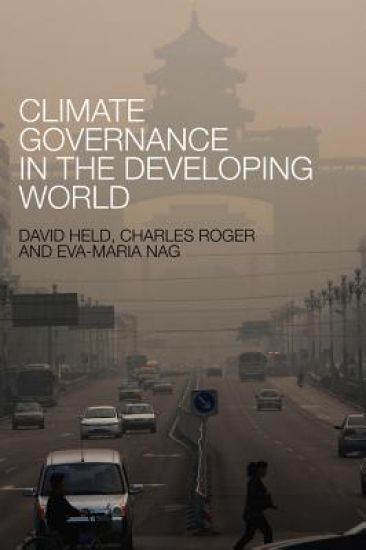
Since 2009, a diverse group of developing states that includes China, Brazil, Ethiopia and Costa Rica has been advancing unprecedented pledges to mitigate greenhouse gas emissions, offering new, unexpected signs of climate leadership. Some scholars have gone so far as to argue that these targets are now even more ambitious than those put forward by their wealthier counterparts. But what really lies behind these new pledges? What actions are being taken to meet them? And what stumbling blocks lie in the way of their realization? In this book, an international group of scholars seeks to address these questions by analyzing the experiences of twelve states from across Asia, the Americas and Africa. The authors map the evolution of climate policies in each country and examine the complex array of actors, interests, institutions and ideas that has shaped their approaches. Offering the most comprehensive analysis thus far of the unique challenges that developing countries face in the domain of climate change, Climate Governance in the Developing World reveals the political, economic and environmental realities that underpin the pledges made by developing states, and which together determine the chances of success and failure.
Climate Governance in the Developing World
David Held; Charles Roger; Eva-Maria Nag
Polity Press
2013
nidottu
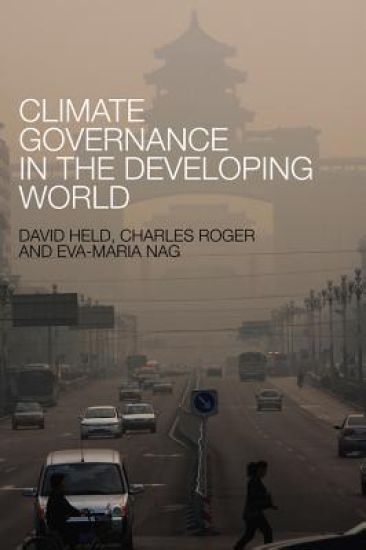
Since 2009, a diverse group of developing states that includes China, Brazil, Ethiopia and Costa Rica has been advancing unprecedented pledges to mitigate greenhouse gas emissions, offering new, unexpected signs of climate leadership. Some scholars have gone so far as to argue that these targets are now even more ambitious than those put forward by their wealthier counterparts. But what really lies behind these new pledges? What actions are being taken to meet them? And what stumbling blocks lie in the way of their realization? In this book, an international group of scholars seeks to address these questions by analyzing the experiences of twelve states from across Asia, the Americas and Africa. The authors map the evolution of climate policies in each country and examine the complex array of actors, interests, institutions and ideas that has shaped their approaches. Offering the most comprehensive analysis thus far of the unique challenges that developing countries face in the domain of climate change, Climate Governance in the Developing World reveals the political, economic and environmental realities that underpin the pledges made by developing states, and which together determine the chances of success and failure.
The issues that increasingly dominate the 21st century cannot be solved by any single country acting alone, no matter how powerful. To manage the global economy, prevent runaway environmental destruction, reign in nuclear proliferation, or confront other global challenges, we must cooperate. But at the same time, our tools for global policymaking - chiefly state-to-state negotiations over treaties and international institutions - have broken down. The result is gridlock, which manifests across areas via a number of common mechanisms. The rise of new powers representing a more diverse array of interests makes agreement more difficult. The problems themselves have also grown harder as global policy issues penetrate ever more deeply into core domestic concerns. Existing institutions, created for a different world, also lock-in pathological decision-making procedures and render the field ever more complex. All of these processes - in part a function of previous, successful efforts at cooperation - have led global cooperation to fail us even as we need it most. Ranging over the main areas of global concern, from security to the global economy and the environment, this book examines these mechanisms of gridlock and pathways beyond them. It is written in a highly accessible way, making it relevant not only to students of politics and international relations but also to a wider general readership.
Globalisering är en samlingsbeteckning för en rad processer som omformar mänskliga aktiviteter genom att utvidga de politiska, ekonomiska, sociala och kommunikativa nätverken över regioner och kontinenter. Makten kan inte längre hänföras till någon särskild geografisk plats, utan är utspridd över världen. Det som sker på en plats kan få återverkningar på många andra håll. Om demokrati uttrycker idén om självbestämmande inom ett avgränsat område, det lokala och nationella territoriet, betecknar globalisering interaktionsmönster som ger upphov till överlappande ödesgemenskaper ? en sammanlänkning av städernas och ländernas öden. Det kan förefalla som om demokrati och globalisering drar åt olika håll. Om demokratin så här långt utvecklats inom ramen för särskilda gemenskaper, hur kan den återuppfinnas för en global tidsålder? Hur hantera paradoxen att de frågor som vi måste ta itu med alltmer är gränsöverskridande problem som ingen nationalstat kan lösa på egen hand, samtidigt som de övernationella institutionerna och politiska medlen är svaga och bristfälliga? Om dessa problemställningar handlar David Helds "Kosmopolitism". Den ledtråd som han introducerar är idén om en kosmopolitisk ordning. Kosmopolitismen bygger på tanken att alla människor har samma moraliska status. Den lyfter fram det som vi alla har gemensamt, oberoende av familj, etik, nation och religion. Därmed inte sagt att vi bör sträva efter en enda global, demokratisk gemenskap. Det handlar snarare om att finna metoder och mekanismer som länkar samman de olika politiska gemenskaperna i ett förpliktande samarbete på grundval av kosmopolitiska principer
The world is becoming deeply interconnected, whereby actions in one part of the world can have profound repercussions elsewhere. In a world of overlapping communities of fate, there has been a renewed enthusiasm for thinking about what it is that human beings have in common, and to explore the ethical basis of this. This has led to a renewed interest in examining the normative principles that might underpin efforts to resolve global collective action problems and to ameliorate serious global risks. This project can be referred to as the project of cosmopolitanism. In response to this renewed cosmopolitan enthusiasm, this volume has brought together 25 seminal essays in the development of cosmopolitan thought by some of the world's most distinguished cosmopolitan thinkers and critics. It is divided into six sections: classical cosmopolitanism, global justice, culture and cosmopolitanism, political cosmopolitanism, cosmopolitan global governance and critical examinations. This volume thus provides a thorough and extensive introduction to contemporary cosmopolitan thought and acts as a definitive source for those interested in cosmopolitan thinking and its critics. See also David Held's Cosmopolitanism: Ideals and Realities.
This book sets out the case for a cosmopolitan approach to contemporary global politics. It presents a systematic theory of cosmopolitanism, explicating its core principles and justifications, and examines the role many of these principles have played in the development of global politics, such as framing the human rights regime. The framework is then used to address some of the most pressing issues of our time: the crisis of financial markets, climate change and the fallout from the wars in Afghanistan and Iraq. In each case, Held argues that realistic politics is exhausted, and that cosmopolitanism is the new realism. See also Garrett Wallace Brown and David Held's The Cosmopolitanism Reader.
In May 1997, the then UK Foreign Secretary, Robin Cook, famously said that foreign policy should have ‘an ethical dimension’, and that the Labour Government would ‘put human rights at the heart of foreign policy’. Although not described in these terms, these assertions were an attempt to articulate a ‘progressive’ conception of foreign policy for the UK. But how does the foreign policy record of the Labour Government stand when set against these declared principles? What role have ethics really played in Labour’s foreign policy? Why has Labour been so interventionist, from Kosovo to Iraq? What does this record tell us about the limits and the possibilities of progressive foreign policy? What does it tell us about the strengths and failures of Labour’s foreign policy? This timely book, published in association with the Institute for Public Policy Research and the Centre for Global Governance at the LSE, addresses these questions and provides an appraisal of Labour’s record in power. However, the book also looks forward. It provides a novel assessment of the international trends that will shape the global context of UK foreign policy. The contributors set out new perspectives and policy options in respect of international security, democracy, justice, human rights, and sustainability. In addition, the book offers fresh thinking on the UK’s relationship with key countries and regions, from the US to Europe, from the Middle East to China. Moreover, it suggests a radical new approach to global governance and to the way in which the UK makes and implements foreign policy. At a time of real flux in UK domestic politics and of rapid change in international politics, this book is an indispensable guide to the UK’s foreign policy options and to the prospects and possibilities of a more values-driven and effective UK foreign policy.
Is globalization being eclipsed by a resurgent geopolitics? Does the war on terror denote the end of globalization or a new phase of militarized globalization? Empire or globalization – are these the right terms to describe the current global order? The second edition of this highly successful book tests the claims of those who dismiss the continuing significance of globalization through a comprehensive assessment of contemporary global trends. In the aftermath of 9/11, and the war in Iraq, there has been much talk of the end of globalization. Held and McGrew argue that these post-mortems for globalization are entirely premature. They show this by focusing upon the primary structures of world order namely: patterns of governance, organized violence, the economy, culture and environmental degradation. Patterns of inequality, exclusion and domination are also assessed. Building upon this analysis, the authors present the case for continuing to take globalization seriously as both a description and explanation of our current global condition. They also ask the vital question: can globalization be tamed? Held and McGrew explore whether a more just and stable world order is either desirable or feasible and present an alternative ethical and political agenda for the twenty-first century – a global covenant of cosmopolitan social democracy. The second edition of this powerful and original book has been comprehensively updated, with three new chapters added. The book will appeal to all those who remain intrigued, confused or simply baffled by the controversy about globalization and its consequences for the twenty-first century world order.
In May 1997, the then UK Foreign Secretary, Robin Cook, famously said that foreign policy should have ‘an ethical dimension’, and that the Labour Government would ‘put human rights at the heart of foreign policy’. Although not described in these terms, these assertions were an attempt to articulate a ‘progressive’ conception of foreign policy for the UK. But how does the foreign policy record of the Labour Government stand when set against these declared principles? What role have ethics really played in Labour’s foreign policy? Why has Labour been so interventionist, from Kosovo to Iraq? What does this record tell us about the limits and the possibilities of progressive foreign policy? What does it tell us about the strengths and failures of Labour’s foreign policy? This timely book, published in association with the Institute for Public Policy Research and the Centre for Global Governance at the LSE, addresses these questions and provides an appraisal of Labour’s record in power. However, the book also looks forward. It provides a novel assessment of the international trends that will shape the global context of UK foreign policy. The contributors set out new perspectives and policy options in respect of international security, democracy, justice, human rights, and sustainability. In addition, the book offers fresh thinking on the UK’s relationship with key countries and regions, from the US to Europe, from the Middle East to China. Moreover, it suggests a radical new approach to global governance and to the way in which the UK makes and implements foreign policy. At a time of real flux in UK domestic politics and of rapid change in international politics, this book is an indispensable guide to the UK’s foreign policy options and to the prospects and possibilities of a more values-driven and effective UK foreign policy.

This is the fourth volume in the highly acclaimed Global Transformations series. It follows in the footsteps of Global Transformations, The Global Transformations Reader and Governing Globalization. All these volumes have been widely adopted in courses on globalization and global governance across the world, and Globalization Theory will find a place alongside these texts. This book focuses on elucidating leading theoretical approaches to understanding and explaining globalization, in both its current form and potential future shapes. It is divided into two parts: the first examines competing explanatory theories of globalization in its contemporary form, and the second looks at competing prescriptions for the future of globalization. The book’s contributors are world-renowned experts in their field, including : Chris Brown, Alex Callinicos ,Michael Doyle, David Held, G. John Ikenberry, Andrew Kuper, Anthony McGrew, Layna Mosley, Thomas Pogge, Thomas Risse, Saskia Sassen and John Tomlinson. This book is designed for courses on globalization and global governance at both the graduate and undergraduate levels. It will be of interest to students in politics, international relations, social geography, and sociology.